Understanding artificial intelligence and AI in animal welfare
Artificial intelligence (AI) describes algorithms that learn from data and make decisions. AI helps perform non-invasive welfare checks in a way that scales across farms, labs, and reserves. For animal welfare, AI provides continuous observation and context. It watches behaviour, posture, and facial cues and then flags what needs follow-up. Key welfare indicators include changes in posture, body condition, and shifts in animal movements. These signs often precede illness, so automated detection matters.
Farmers see clear benefits when a monitoring system captures continuous data. Spot inspections miss early signs that only appear between checks. Continuous camera monitoring enables continuous observation and lets teams act sooner. For example, early disease and lameness signals may appear in gait and feeding patterns. AI algorithms can detect subtle deviations in gait or head position and trigger an alert before the human eye would notice. This helps improve animal welfare and may improve animal health outcomes while reducing losses.
AI also supports formal animal welfare assessment. Models can quantify behaviours like feeding or social interactions, and then produce metrics for vets and auditors. That data-driven output helps track animal welfare outcomes over time. Eyes on animals becomes an automated promise rather than a sporadic task. When combined with properly labeled dataset records, AI systems provide reproducible records for audits and for standards that protect animals.
Using AI in practice requires attention to deployment and trust. Cameras installed on farms must respect privacy and data ownership. Visionplatform.ai helps enterprises turn existing CCTV into operational sensors, so video data stays local and auditable. The platform integrates with VMS and supports on-prem or edge devices for GDPR and EU AI Act readiness. For teams that want to learn more about integrating vision analytics with existing systems, our documentation on people counting and processing shows how events can feed dashboards and operations people counting in airports.
Computer vision, machine learning and automatic monitoring technologies
Computer vision extracts visual features from video frames and transforms them into signals that machines understand. With computer vision and deep learning, models learn to track posture, detect motion, and recognize specific behaviors like limping or reduced feed time. Machine learning models classify what the camera sees, and then the system interprets those classes as welfare signals. Combined, computer vision systems and deep learning models enable automated monitoring with increasing accuracy.
The pipeline starts with cameras and edge devices that stream video data to an AI camera system or to a smart camera on site. Then preprocessing removes noise, and an algorithm identifies objects and landmarks on the animal. Next, AI models map those landmarks into behaviors. The workflow produces structured events, which feed dashboards and operational systems. A typical workflow uses a curated dataset for training, testing, and validation so the model reduces false detections in real-world settings.
For wildlife projects, for example, researchers use MEWC, a user-friendly AI workflow that customizes wildlife-image processing and scales to thousands of images per day MEWC: A user-friendly AI workflow for customised wildlife-image …. For farms, machine learning models and deep learning models that analyze gait and posture can spot lameness with high accuracy. In dairy research, pedometry tools using video streams already show lameness detection above 85% accuracy, which helps vets intervene earlier Prospects & Applications of Artificial Intelligence in Livestock Sector.
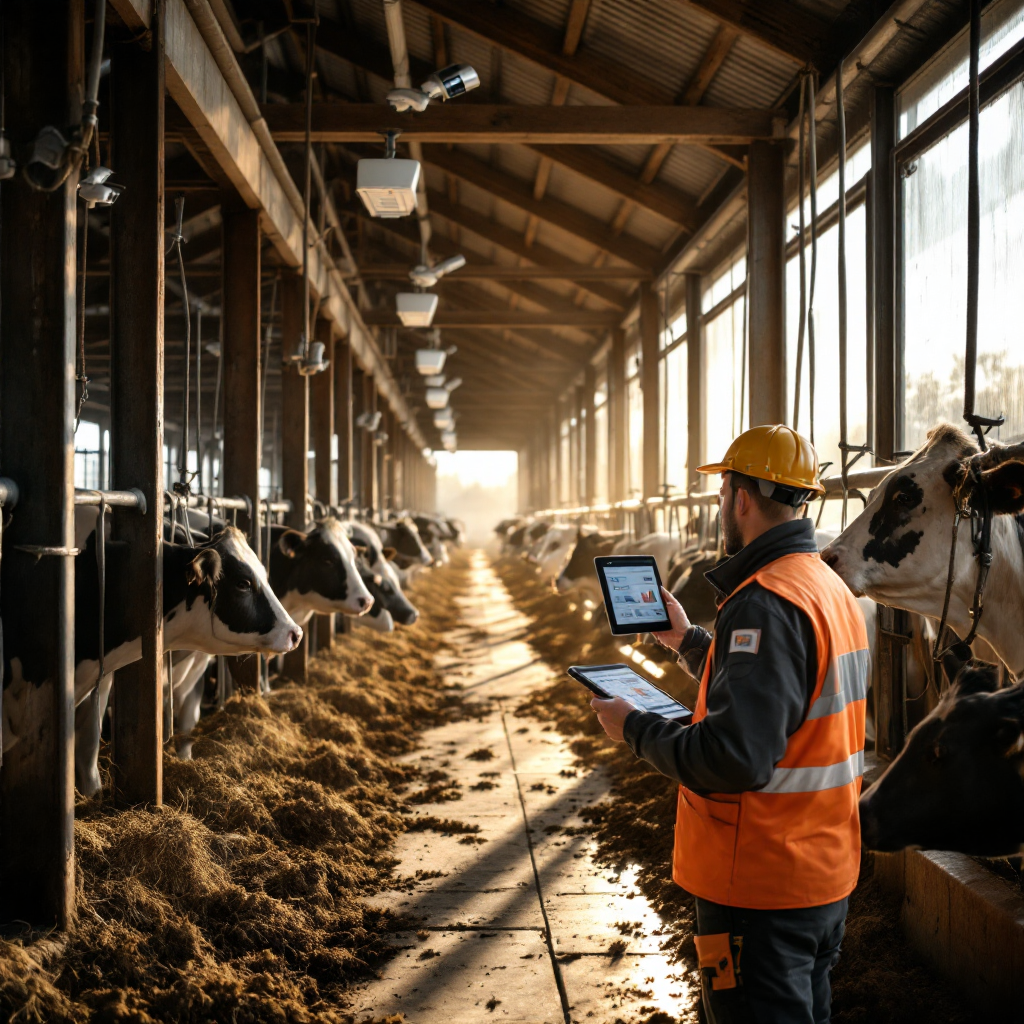
Computer vision systems run on edge devices or GPU servers. That choice affects latency, privacy, and cost. Edge inference keeps data on site and enables real-time monitoring for actions like disease detection alerts. Meanwhile, cloud workflows support heavy model training and large dataset management. Both paths benefit from clear labeling, robust algorithms, and continuous retraining on local video to reduce false alarms. Visionplatform.ai supports flexible model strategies so teams can pick or improve models on their own data, keeping training local and auditable.
AI vision within minutes?
With our no-code platform you can just focus on your data, we’ll do the rest
Sensor detect detection of animal suffering in real time
Sensors include RGB cameras, thermal imaging, and depth sensors. Each sensor type adds value. RGB cameras give high-resolution visual detail. Thermal imaging highlights temperature changes that can indicate inflammation or fever. Depth sensors map three-dimensional posture and help quantify changes in posture or stride. Together, these several technologies build a richer picture of animal health and welfare. For instance, thermal trends plus movement patterns can strengthen a detect or a confirmation of illness.
Detect versus detection is an important distinction. To detect is to spot an anomaly in live feeds. Detection is the validated confirmation that a welfare issue exists and that a human or a vet should act. AI can detect abnormal gait, then the system can escalate that detection for a vet to confirm. In practice, an AI-powered monitoring system reduces false positive detect events by combining multiple sensors and algorithms, and then it issues an alert only when confidence passes thresholds.
Examples show the value. Lameness detection in dairy cows reaches over 85% accuracy in many pedometry studies, enabling early intervention and reduced suffering Prospects & Applications of Artificial Intelligence in Livestock Sector. Pain cues in dogs are being decoded by AI models trained on facial expressions, a method that aims to detect animal suffering earlier than routine checks do Can AI read pain and other emotions in your dog’s face?. These are real-time capabilities when systems run on edge devices and stream events to operations and veterinary staff.
Real-time monitoring matters in places like lairage and high-throughput farms because one or more animals may show acute distress between inspections. An automated monitoring approach enables continuous observation and quick unload and treatment decisions. When an algorithm flags lameness or respiratory signs, operators get an alert so they can unload an animal for care. The final stage protects animals by linking detection to timely human response, which supports the protection of animals and a high level of animal welfare.
Applications of computer vision to monitor animal welfare
On-farm use cases are now common. Cameras installed in cattle farms track feeding, drinking, and social interactions. AI can track individual animals and count the number of times they visit feeders. This helps teams recognize trends and signs of illness. For example, reduced feeding or increased isolation are classic signs of disease and stress. Automated monitoring of such behaviors like social withdrawal helps vets schedule checks earlier. Collecting continuous data from cameras gives a clearer record of health and behavior than sporadic manual logs.
Wildlife and conservation benefit as well. Camera traps and camera surveillance produce large amounts of data. AI can sort and classify species and even count animals automatically, which frees researchers to focus on analysis. Citizen science projects show that AI-assisted sorting can increase data collection by over 50% versus manual workflows Engaging Citizen Scientists in Biodiversity Monitoring. Automated sorting reduces human workload and improves detection of rare events.

AI can track animal social networks, and it can flag animal welfare deviations like aggression or resource monopolization. Computer vision and deep learning combined with edge devices enable these systems to run in remote reserves or barns without constant internet. Many research teams now use data-driven dashboards to monitor animal health and welfare. They pair video data with sensors for temperature and weight to build a fuller view of animal well-being. For organizations that need robust forensic search across hours of footage, Visionplatform.ai can convert CCTV into a smart camera network and stream events to downstream operations; teams can learn how forensic search works with our integration guides forensic search in airports.
AI vision within minutes?
With our no-code platform you can just focus on your data, we’ll do the rest
Slaughterhouse: AI technology to monitor animal
Major slaughterhouses face legal and ethical pressure to ensure humane handling. AI technology offers tools to improve compliance during stunning and bleeding. Camera surveillance over lairage and handling lanes monitors animal handling and consciousness. AI systems can provide a continuous record of welfare and can trigger real-time alerts if an animal reacts or if protocols are not followed. In trials, AI-based camera monitoring has reduced non-compliance events by about 30% in monitored operations Animal welfare information frames US public perceptions of …. Those improvements translate to better animal welfare outcomes and to reduced legal risk for processors.
In practice, a smart camera positioned over a stun line works with a detection algorithm to confirm unconsciousness. If consciousness is detected, the system issues an alert and logs the event. That structured event stream helps managers review incidents and retrain staff. Cameras installed over lairage and bleed zones generate continuous data so auditors can review handling, timing, and staff performance. CCTV plus AI delivers an auditable trail that supports both welfare assessment and worker training.
Beyond compliance, automated monitoring increases throughput quality by reducing rework from non-compliance stops. Process anomaly detection and PPE-style integrations show how versatile vision data can be when teams treat cameras as sensors. Companies that need modular integrations can use Visionplatform.ai to publish events via MQTT to control rooms and BI systems, enabling camera surveillance to inform operations rather than only security process anomaly detection in airports. This approach supports protection of animals and better oversight at scale.
Terms of animal in AI system standards and future directions
The phrase terms of animal matters when teams label data. Clear labels reduce ambiguity and improve model fairness. For example, “lameness” must be defined precisely in annotation guides so algorithms learn consistent cues. A good dataset contains balanced examples across ages, breeds, and settings so models generalize beyond the original site. The community now emphasises standard protocols for annotation to ensure animal welfare assessment is reproducible and defensible.
Ethical guidelines must govern surveillance and data use. Using cameras and data to monitor animal welfare should respect worker privacy and keep video data under enterprise control. Visionplatform.ai supports on-prem processing so data does not leave the environment, which helps align with EU AI Act and GDPR expectations. Future work will improve interpretability so farmers and vets understand why an algorithm flagged an animal. Explainable AI will help teams trust alerts and will enable better follow-up care for animal well-being.
Challenges remain. Annotated datasets are costly to build, species vary widely, and models trained in one context can fail in another. Research focuses on cross-species models, edge-friendly deep learning, and compact algorithms that run on smart camera hardware. Next steps include broader adoption of standardized welfare indicators, more open datasets for disease detection, and partnerships between vets and data scientists. By combining machine learning models, sensor fusion, and human oversight, we can raise the bar toward a high level of animal welfare. If you are exploring integrations that keep models local and auditable, see how Visionplatform.ai supports edge deployments and integration with VMS for compliant, operational AI thermal people detection in airports.
FAQ
What is AI animal welfare monitoring via cameras?
AI animal welfare monitoring via cameras uses AI and computer vision to observe animals and detect deviations in behaviour, posture, or physiology. It turns video data into structured events that alert caretakers and vets so they can act faster.
How accurate are AI methods for lameness detection?
Accuracy varies by method, but pedometry and vision-based systems often exceed 85% for lameness detection in dairy trials, which supports early disease detection and treatment. Accuracy improves with quality datasets and multi-sensor fusion.
Can AI read pain or emotions in animals?
Researchers are developing models that infer pain signals from facial cues and posture, and early studies show promising results for dogs and other species. These tools aim to detect animal suffering earlier than traditional checks and to prompt humane care Can AI read pain and other emotions in your dog’s face?.
Are there privacy concerns with continuous camera monitoring?
Yes. Continuous monitoring may record workers and bystanders, so systems must ensure data stays within legal boundaries and that footage access is auditable. On-prem and edge processing reduce the need to send video offsite and improve compliance with data protection laws.
What sensors are most useful for welfare monitoring?
RGB cameras, thermal imaging, and depth sensors each add value; combining them yields better detection of signs such as temperature changes and changes in posture. Sensor fusion reduces false detections and increases confidence before issuing an alert.
How does AI help in slaughterhouses?
AI monitors compliance during stunning and bleeding, detects consciousness risks, and issues real-time alerts to staff. Studies indicate AI-supported camera monitoring can reduce non-compliance events by roughly 30%, improving welfare outcomes and legal compliance Animal welfare information frames US public perceptions of ….
Can small farms afford AI monitoring?
Edge devices and modular models have lowered costs and made systems feasible for smaller operations. Using existing CCTV and a flexible platform can reduce hardware expense and let farms scale analytics as budgets allow.
How do AI models stay accurate across different species?
They need diverse, annotated datasets and transfer learning approaches that adapt models to new breeds and environments. Cross-site retraining on local datasets helps avoid bias and keeps detection reliable.
What role do citizen scientists play?
Citizen science projects use AI to pre-sort camera-trap images, which increases data throughput by over 50% and engages volunteers in validation tasks. This partnership expands monitoring capacity for conservation projects Engaging Citizen Scientists in Biodiversity Monitoring.
How does Visionplatform.ai support animal welfare projects?
Visionplatform.ai turns existing CCTV into operational sensors, supports on-prem model training, and streams events to operational dashboards. The platform lets teams own their data and models, which helps meet compliance needs and makes camera systems useful for both security and operations.