Solution overview and architecture of Genetec Security Center
This chapter presents a clear solution overview for organizations that need unified control. The GENETEC Security Center unifies video, access control, and LPR into a single interface. It can unify feeds from many camera types and access systems so teams get a comprehensive situational view. The platform supports both on-prem and cloud services, including a security center saas offering for customers that choose cloud-hosted management. The modular design lets operators scale from a handful of streams to enterprise deployments without replacing core components.
The architecture separates edge processing from central services and from optional cloud components. Edge nodes handle immediate ingest and initial analytics so that footage stays local when required. Central servers provide indexing, storage, and the interface that operators use to analyze incidents. This hybrid architecture reduces bandwidth and supports strict privacy controls, which is essential for regulated sites. For example, many operators prefer on-prem processing to avoid sending raw video offsite and to comply with EU rules.
Genetec’s approach balances flexibility and resilience. The architecture allows fault-tolerant storage, load-balanced stream delivery, and graceful failover of analytic services. You can configure retention policies and automatic archival so the system meets compliance and operational objectives. The solution overview also explains how AI and human workflows integrate with alert handling and evidence export.
Visionplatform.ai complements this by adding an on-prem Vision Language Model and AI agents that turn detections into context and recommendations. Our technology helps teams reduce manual triage and improve investigation outcomes by surfacing the most relevant footage and contextual insight for each event. Together, these layers enable a predictable deployment and make configuring rules and incident templates intuitive for security teams.
Integration and automation: CAMERA and SOFTWARE in Security Center
Integration is a core design principle. The system accepts ONVIF and RTSP camera feeds and integrates third-party sensors via standard APIs. This lets organizations re-use existing camera hardware and add modern analytics without rip-and-replace projects. Device discovery, driver management, and plugin deployment happen through the central console so technicians can configure new devices quickly.
Automation transforms raw events into action. Administrators build event rules that route alarms to the right team and create tickets in external systems automatically. For example, when an access control failure coincides with a suspicious motion detection, a preconfigured workflow generates an incident record and notifies the duty operator. The architecture supports webhook callbacks, MQTT streams, and SDKs to exchange events and metadata with enterprise tools.
Scaling to hundreds of devices remains practical. The system distributes ingest and indexing across nodes, and it balances analytic workloads so new cameras join without manual reconfiguration. That reduces deployment time and cutover risk during expansions. Visionplatform.ai increases throughput by exposing video streams and descriptive metadata to AI agents. Agents then pre-fill reports, recommend actions, and help close cases faster. This combination reduces false positives and the time an operator needs to resolve an alarm.
For airport environments, specific sensor types such as people detection, ANPR/LPR, and loitering detection work alongside access logs. Read more about people detection in airports for a practical example of integration with common workflows: people detection in airports. For vehicle recognition at gates, see our ANPR details: ANPR/LPR in airports. When deep forensic search is needed, operators use indexed descriptions to find footage quickly; learn more here: forensic search in airports.
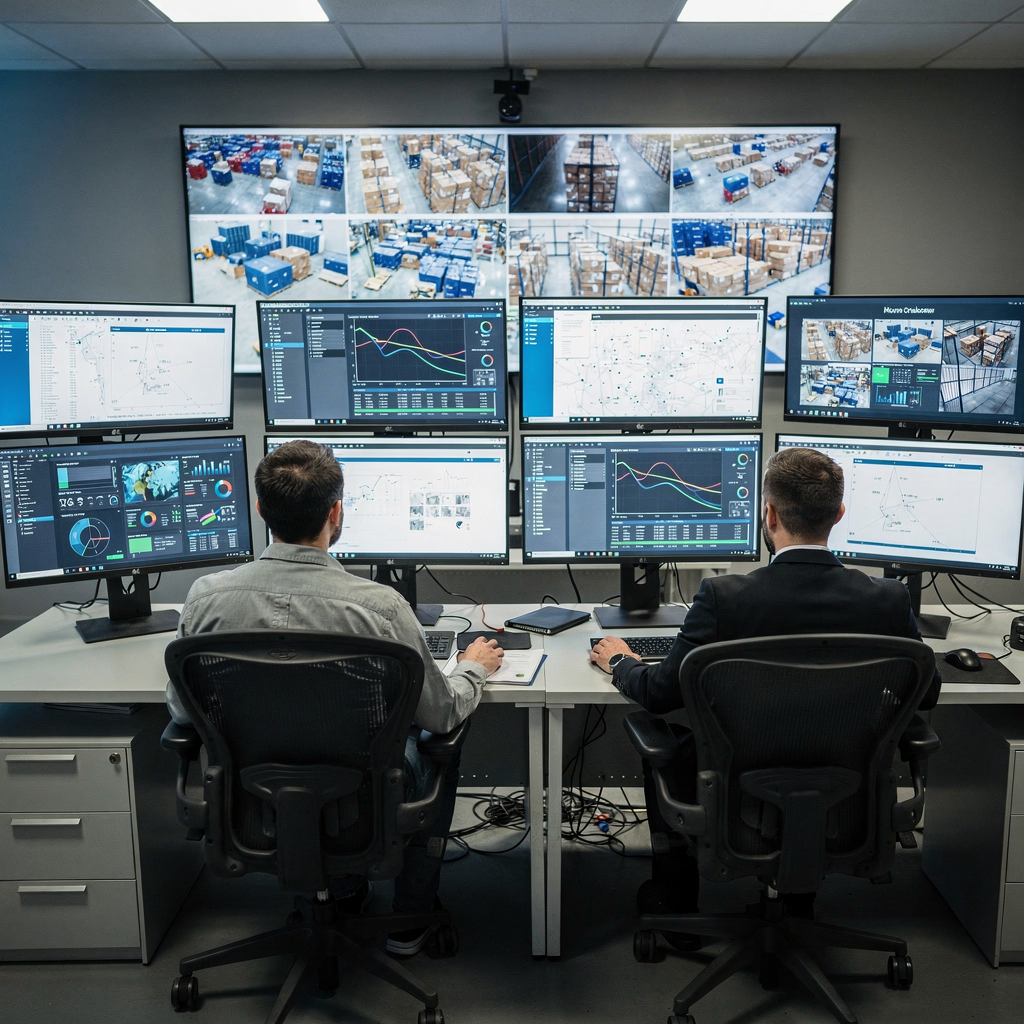
AI vision within minutes?
With our no-code platform you can just focus on your data, we’ll do the rest
AI-driven VIDEO ANALYTICS and DETECTION
AI models power modern detection and recognition tasks. The system runs machine learning models at the edge and at central nodes to identify objects, vehicles, and behaviors. Models perform object recognition and behaviour scoring so the system can detect suspicious motion, loitering, and perimeter breaches. In controlled evaluations, video analytics have demonstrated accuracy exceeding 90%, which helps teams reduce false alarms and focus on true incidents [source].
These detection functions include person, vehicle, and license plate recognition plus custom object classes. Models can be retrained with site-specific samples so accuracy improves over time. The design supports model workflows that either use pre-trained classifiers or accept curated training data from the operator. That advance reduces the gap between generic analytics and site realities.
Use cases are straightforward. Intrusion detection around perimeter fences triggers immediate operator alerts and can automatically lock affected doors. Crowd anomaly detection signals when density rises above a threshold and requests extra attention from staff. Loitering recognition helps teams spot suspicious dwell time near sensitive assets. These capabilities improve situational awareness and response times, and they reduce manual monitoring requirements by up to 40% in some deployments [source].
Artificial intelligence is applied carefully to respect privacy requirements. Systems filter and redact data where policy demands, and audit logs capture model decisions for review. The focus remains on accurate alarm generation and on giving operators the contextual evidence they need to act. That combination both enhances security and fosters trust with stakeholders.
Intelligent search APPLICATION and MONITORING capability
Intelligent search transforms how teams find footage. Instead of remembering camera IDs and timestamps, operators use natural language queries to locate relevant clips. This intelligent search includes free-text queries such as “person loitering near gate after hours” and returns ranked results across archives. The capability reduces time-to-find and makes the investigation experience faster and more intuitive.
Real-time monitoring dashboards display prioritized alerts and a concise event timeline. Operators see the most meaningful items first and can jump to exact key moments in footage. The interface shows contextual metadata, such as access control matches, recent object history, and nearby camera angles. This contextual insight helps an operator decide whether an alarm is valid and what action to take next.
When minutes matter, the system lets teams locate and export footage quickly for evidence. The intelligence layer can generate a case package automatically and pre-fill the incident report for reviewer approval. That workflow helps close cases in minutes instead of hours. For high-traffic venues, this saves hours of manual review and significantly improves efficiency for both investigations and daily monitoring tasks.
Visionplatform.ai enhances these capabilities by converting video into human-readable descriptions with an on-prem Vision Language Model. That conversion enables natural language search, richer situational summaries, and automated recommendations that support operator decision-making without sending video to external clouds. The result is a more precise and auditable monitoring experience for enterprise teams.
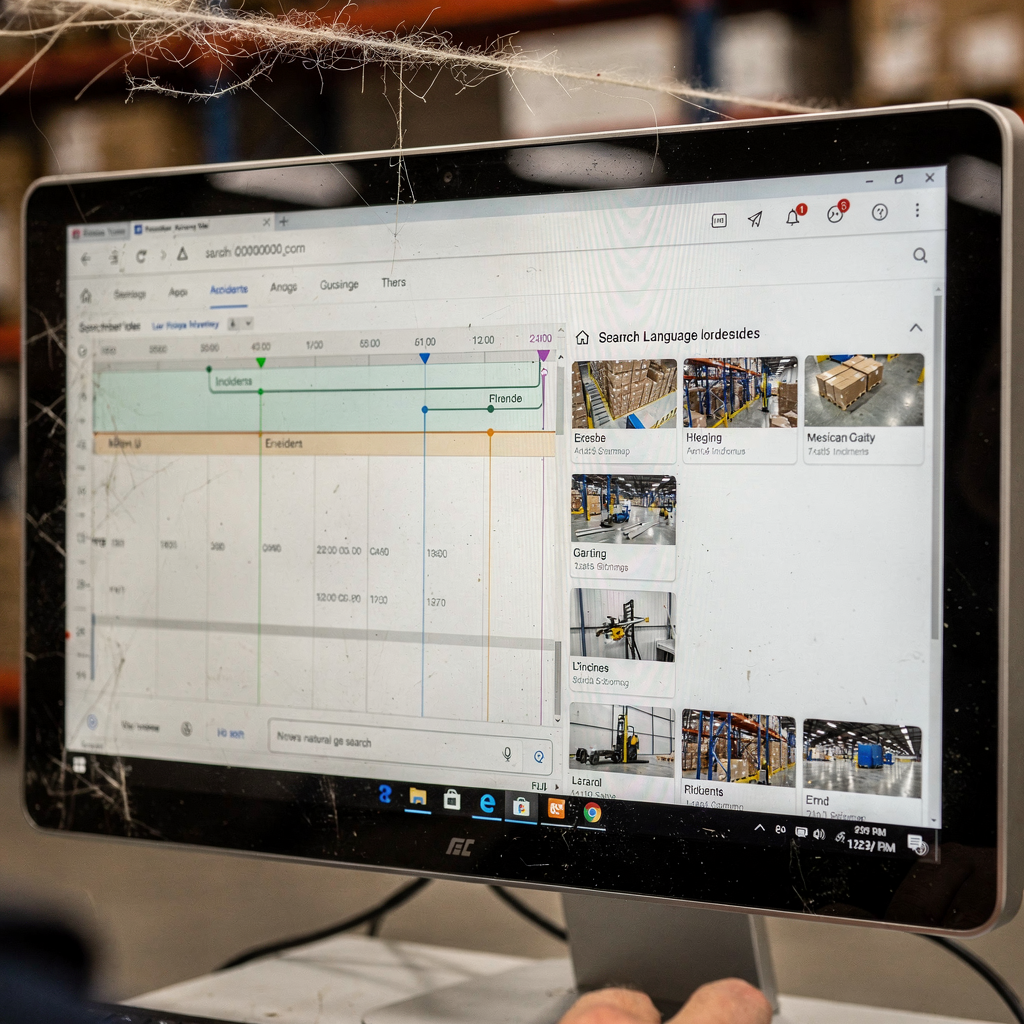
AI vision within minutes?
With our no-code platform you can just focus on your data, we’ll do the rest
Features and benefits: KEY MARKET and KEY MARKET APPLICATION
This section lists core features and benefits and ties them to target sectors. Key features and benefits include scalable ingest, on-prem processing, and automated workflows. The system supports high-availability deployment and an intuitive interface so security teams get rapid value. It also provides advanced search capabilities and an extendable web sdk for custom integrations.
Primary markets include critical infrastructure, law enforcement, and healthcare. Critical infrastructure sites benefit from robust perimeter detection and enterprise-grade retention. Law enforcement uses fast forensic search and consolidated evidence export to support investigations. Healthcare facilities apply PPE detection and fall analytics to protect patients and staff while improving operational flow [source].
Key market applications span perimeter security, investigations, and safety enforcement. Perimeter breach detection, vehicle classification at gates, and object-left-behind recognition are common examples. Investigative tasks benefit from automated indexing and pre-filled incident summaries that reduce manual steps. Safety enforcement uses analytics for slip, trip, and fall detection to reduce risk and improve outcomes.
The combined offering also provides an intuitive operator experience and a powerful set of tools to reduce workload. It helps teams generate evidence packages and locate footage quickly. Integration with access logs and ANPR increases confidence in alerts and the ability to correlate events across systems. Altogether, these features enhance situational awareness and overall operational efficiency for enterprise security programs.
Privacy, TEAM collaboration, use cases and KEY MOMENTS
Privacy controls are built into the architecture. Administrators can filter raw data and redact sensitive fields before export. Audit logs record who accessed footage and why, which helps with regulatory compliance and internal governance. These mechanisms support GDPR-style requirements and local regulations so organizations can maintain public trust.
Team roles and permissions govern who can view, edit, and share incidents. Collaborative investigation workflows let multiple reviewers annotate the same case, add evidence, and route tasks. That structure reduces duplication and ensures each investigator has the context they need. The investigation experience becomes more consistent and transparent as a result.
Use cases highlight key moments in operations. For example, during an incident, the system correlates video, access control, and vehicle recognition to produce a short situational brief. The brief includes contextual insights about what objects and people were present and indicates probable threat vectors. Teams can then follow a configured workflow to notify external providers, generate regulatory reports, and escalate incidents to executives.
Visionplatform.ai’s VP Agent Suite adds reasoning and actions so common incidents trigger suggested next steps. Agents can recommend closing a false alarm with justification or opening a new investigation when multiple corroborating signals appear. These new intelligent automation features let teams scale monitoring without sacrificing quality. They also allow operators to concentrate on higher-value decisions while routine actions run automatically under policy control.
FAQ
What is Genetec Security Center and how does it differ from standard VMS?
Genetec Security Center is a unified platform that integrates video, access control, and license plate recognition into one console. It differs from a standard VMS by combining multiple security domains and providing centralized rules, indexing, and reporting.
How does AI improve video monitoring in this platform?
AI improves monitoring by identifying objects, behaviours, and anomalies faster than manual review. It reduces routine review time and surfaces the most relevant footage for operator attention.
Can the system keep video on-premises for privacy reasons?
Yes. The architecture supports on-prem processing so video and models can remain inside your environment. That helps with compliance and reduces legal and operational risks.
How accurate are the AI-driven detections?
In controlled tests, video analytics have shown accuracy above 90% on common tasks, which reduces false alarms and increases trust in automated alerts [source]. Actual field accuracy depends on deployment and model tuning.
What integrations are available with third-party cameras and sensors?
The system supports ONVIF and RTSP cameras and integrates via APIs, webhooks, and MQTT. That enables reuse of existing cameras and adds modern analytic capabilities without replacing hardware.
How does intelligent search help investigators?
Intelligent search allows investigators to query archives in natural language and find footage by description rather than by camera ID or timestamp. This capability reduces time-to-evidence and improves the overall investigation experience.
Are there examples of deployments in critical environments?
Yes. Critical infrastructure and law enforcement agencies use this configuration for perimeter defence and forensic search. Public safety teams report substantial reductions in manual monitoring workload after deploying AI assistants [source].
How does the system support healthcare safety use cases?
Healthcare sites use analytics for fall detection, PPE compliance, and occupancy monitoring to improve patient and staff safety. Video-derived metrics feed operational dashboards and help reduce incidents [source].
What privacy features are included for audit and compliance?
Privacy features include redaction, filtered exports, and detailed audit logs that record access and actions. These controls help organisations meet GDPR-style obligations and internal policies.
How quickly can a team start using intelligent search and automated workflows?
Onboarding depends on scale and integration needs, but many sites enable core search and workflows within weeks. Adding site-specific model training and procedural automation typically follows in iterative deployments.