Understanding AI, Analytics and Machine Learning in Video Surveillance
AI defines systems that interpret data, learn patterns, and act on those patterns. First, AI inspects continuous camera streams and converts them into searchable descriptions. Second, machine learning builds models that learn from examples. Third, models apply learned rules to live events and to recorded footage. This chain lets operators move from raw video to meaning fast. For modern control rooms the promise is clear: faster verification, less manual search, and better observability.
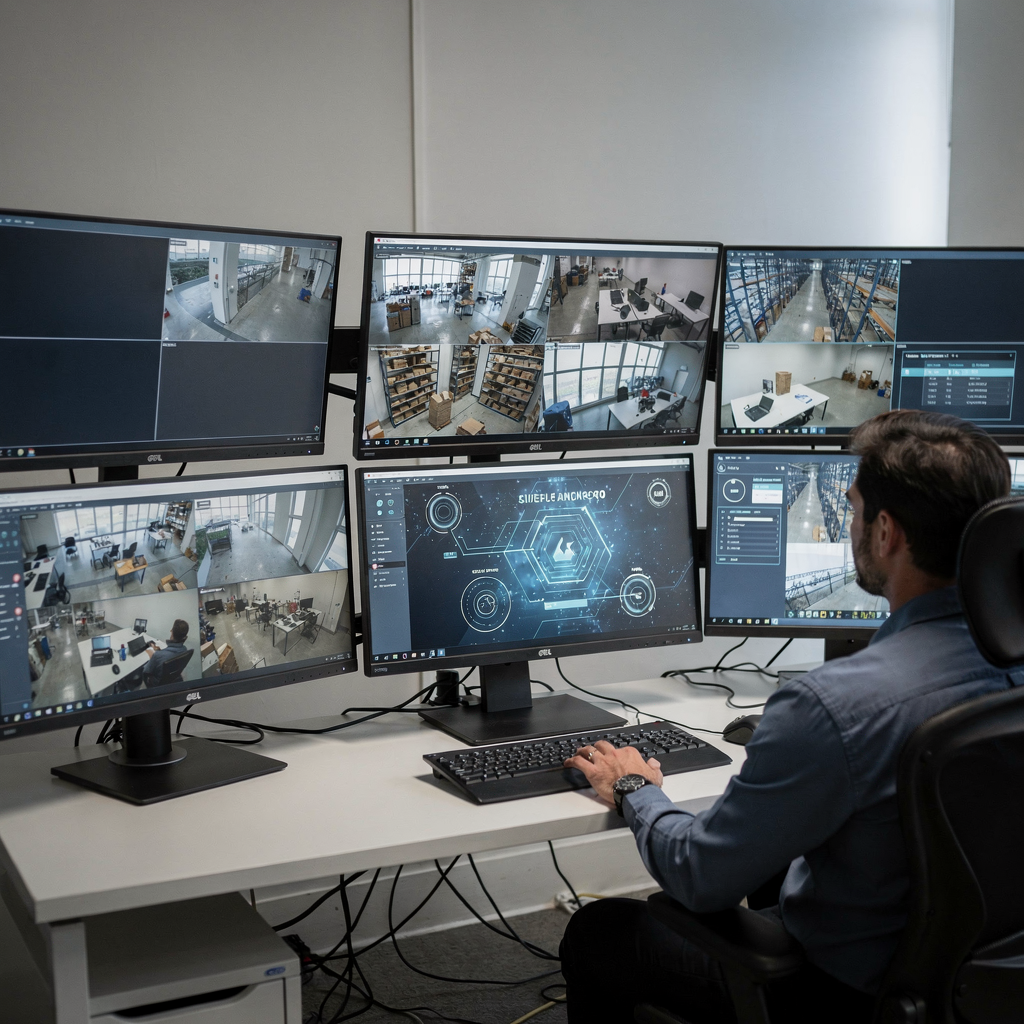
Video surveillance used to mean passive recording. Now, video analytics add structure. Edge-based analytics run inference at camera locations and on small servers. This reduces bandwidth and keeps sensitive video on-prem. Real-time processing matters when many streams feed a single control room. For example, a large airport might have thousands of camera views to monitor simultaneously. AI scans those feeds and flags events for human review.
AI and machine learning use pattern recognition, classification, and anomaly detection to spot deviations from normal activity. These methods scale where human attention cannot. They also support forensic search across hours of video with a single natural language query. visionplatform.ai turns existing cameras and VMS into an on-prem surveillance platform that makes video searchable and human-readable, so operators can find incidents like “person loitering near gate” without knowing camera IDs. This approach improves observability and speeds investigations.
Adoption grows because threats multiply. Security leaders expect daily AI-powered cyber risks, with 93% forecasting more intelligent attacks (source). Trust varies; almost half of organisations say trust depends on the tool (source). At the same time, studies show AI can present inaccuracies; a study found inaccurate outputs in 45% of news-related queries, which warns us to require human oversight (source). Therefore systems must combine AI with human review, audit trails, and clear performance metrics.
Finally, practical deployment asks for compatible camera system choices, careful model validation, and alignment with surveillance requirements. Use small experiments to validate machine learning models on your site before full rollout. This reduces false alarms and improves trust in the model’s outputs.
Enhancing Security Operations with an AI Assistant and AI-Powered Detection
An AI assistant helps operators triage events, not replace them. It provides context, recommended actions, and explanations. When an alarm triggers, the AI assistant can show why the system raised an alert and what evidence supports it. This reduces cognitive load and speeds decision making. For instance, an AI assistant can correlate video evidence with access control systems and then present a concise timeline.
AI-powered detection methods include facial recognition, license plate recognition, and behavior analytics. License plate recognition and ANPR are specific forms of license plate recognition that help track vehicle movement through sites. Anomaly detection and motion detection work together to detect unusual motion or stopped vehicles. Combined, these methods let security teams detect and verify incidents faster. Using AI-powered video, systems can prioritise genuine threats and suppress common false positives like shadows or weather.
Operators gain from dashboards that summarise events and provide actionable recommendations. A dashboard offers an instant view of active incidents and historical trends. visionplatform.ai integrates tightly with common VMS and can surface verified incidents inside the control room software. Then, an operator can run a forensic search or request context from the AI assistant. This streamlines procedures and reduces the number of clicks needed to resolve an event.
Faster response follows from better prioritisation. Research notes that AI “can augment human decision-making but cannot replace the nuanced judgment that experienced analysts provide” (source). Therefore the best deployments combine automated triage with human-in-the-loop verification. This hybrid workflow reduces false alarms and improves incident response while keeping control with security teams. For more on searching recorded incidents, see our forensic search case studies like the airport forensic search use described here forensic search in airports.
AI vision within minutes?
With our no-code platform you can just focus on your data, we’ll do the rest
Optimising Video Analytics and AI Video Analytics for Physical Security
Traditional rule-based video analytics used fixed thresholds and simple triggers. In contrast, advanced video analytics and AI video analytics use models that learn from examples. They classify objects, track movements, and reason about behaviour. This raises accuracy and cuts false positives, but it also requires continuous validation on site-specific data. Tailoring models to the environment improves real-world performance.
Use cases span crowd monitoring, perimeter protection, and asset tracking. Crowd detection density helps event teams prevent overcrowding and manage flow. Perimeter breach detection spots unauthorized entry near fences and gates. Vehicle analytics and license plate recognition support logistics and secure entry points. In retail, AI video analytics can support loss prevention by identifying suspicious patterns and objects left behind. These examples show how systems go beyond basic CCTV to provide operational insights.
Accuracy gains come from combining multiple signals. For example, visionplatform.ai fuses camera events, VMS metadata, and access control systems to clarify whether a detected person is authorized. This fusion reduces false alarms and improves situational awareness. However, challenges remain: changing light, occlusion, and diverse camera views require robust models and edge-based analytics that adapt to camera locations.
Best practices include continuous evaluation, human feedback loops, and targeted retraining. Implement a remediation process when a model underperforms: gather labeled examples, retrain, and redeploy. This cycle keeps the system aligned with evolving conditions. For perimeter scenarios consider our perimeter breach detection guidance which shows practical thresholds and validation steps perimeter breach detection in airports.
Selecting the Right Video Surveillance Software and Security Cameras for Your Use Case
Choosing video surveillance software starts with interoperability. Ensure the solution integrates with your video management system and supports common protocols like ONVIF and RTSP. The right video management software should scale, expose APIs, and provide a clear dashboard for operators. It should also allow VMS data to be accessed by AI agents for reasoning and action.
Pick cameras that match the mission. High-resolution ip cameras work well where detail matters. Wide field-of-view cameras reduce the number of camera locations needed to cover an area. Also consider cameras that support edge compute so the system can automatically adjusts video quality and run inference locally. This reduces latency and keeps live and recorded footage on-prem for compliance.
Match solutions to use cases. For retail loss prevention choose cameras with clear views of checkout lanes and support for behavior analytics. For critical infrastructure choose ruggedised cameras and a surveillance platform with strong audit trails. For airports, combine people counting and crowd detection density with ANPR to track passenger flows and vehicles. See our ANPR/LPR solutions and people detection pages for focused details ANPR LPR in airports and people detection in airports.
Finally, ensure the software supports policy-driven automation and remediation. A security platform should enable automated responses for low-risk events and human review for high-risk incidents. That approach helps balance automation with required audit and compliance steps. Test components end-to-end to validate that incident response and security management workflows perform as expected.
AI vision within minutes?
With our no-code platform you can just focus on your data, we’ll do the rest
Deploying Agentic AI Agents to Accelerate Response to Threats
Agentic AI agents add autonomous capabilities to a surveillance system. They can prioritise incidents, gather context, and even execute approved actions. Agentic tools differ from simple automation because they reason over multiple data sources and follow policies when making decisions. This accelerates triage and allows security teams to focus on complex incidents.
Agentic AI reduces time to verify events by collecting corroborating evidence automatically. For example, an agent can cross-check a camera detection with access control logs and then generate a recommended action. That recommendation might be to notify an on-site guard, create an incident ticket, or escalate to incident response. Such automated responses speed neutralisation of threats while keeping humans in the loop when needed.
When deploying agentic AI, follow best practices. First, define clear operational boundaries and permissions. Second, log every decision for audit and review. Third, keep fallbacks so humans can override actions. visionplatform.ai’s VP Agent Suite exposes VMS data and transforms detections into human-readable descriptions so agents can reason with the same context as operators. This design supports agentic deployment without losing auditability.
Use a gradual rollout. Start with low-risk scenarios and then expand. Train agents with site-specific procedures so they reflect local security measures and rules. Also include regular reviews where security teams assess agent performance and tune policies. Doing so will accelerate operator trust and allow the agentic layer to meaningfully empower staff.
Integrating AI-Driven Security Solutions to Extract Valuable Data
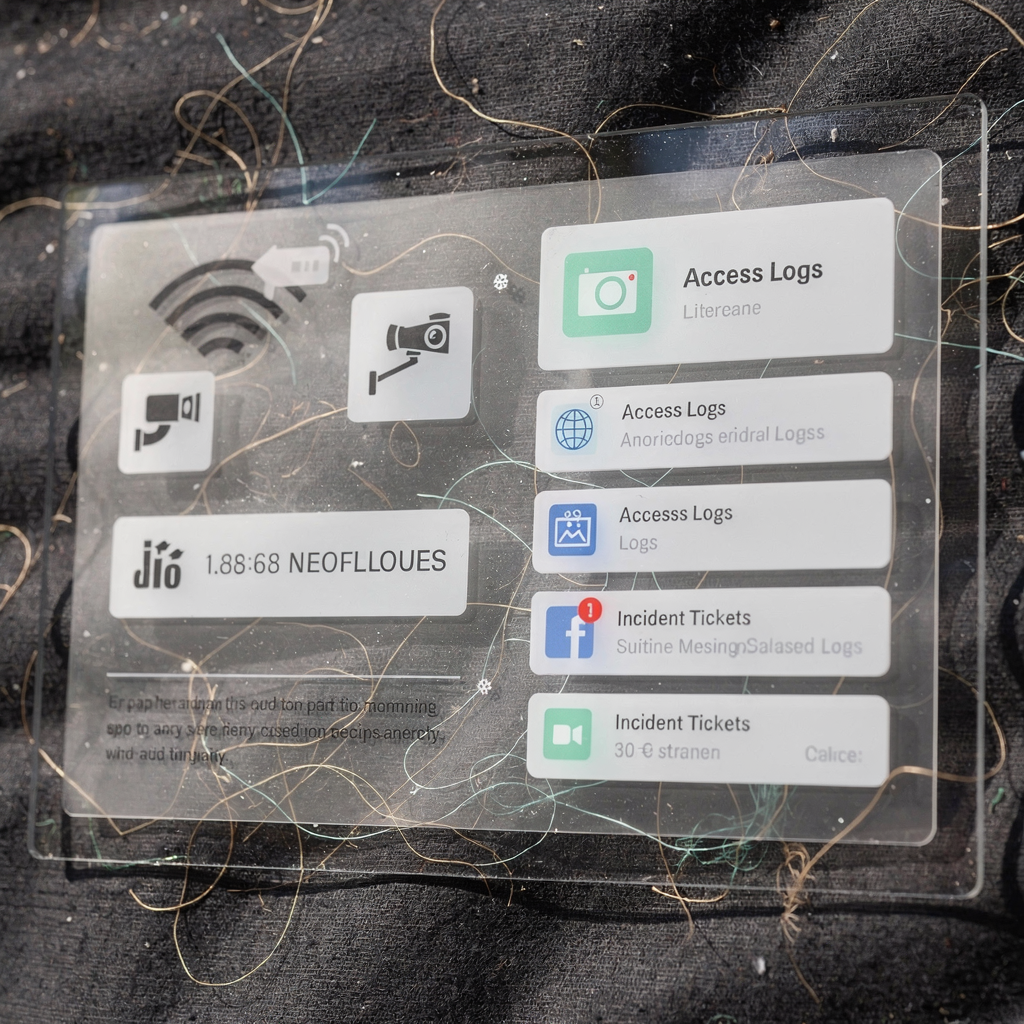
Integrating AI-driven components turns scattered sensors into a cohesive surveillance platform. A well-integrated stack consolidates video, sensors, and access control systems into a single view. Then the system can produce valuable data insights like incident frequency, false alarms by camera, and average response times. These insights support security management and operational efficiency.
Start by standardising data formats and APIs. Use event streaming methods such as MQTT, webhooks, or REST APIs to move events from cameras and VMS into a reasoning layer. Once data flows in, AI transforms raw video events into descriptions that humans and agents can understand. visionplatform.ai uses an on-prem large language model and LLMS-compatible components to convert video data into human-readable narratives. This lets teams query video history using natural language and retrieve exact clips and timelines for audits.
Next, implement feedback loops so models learn from resolved incidents. When operators close an incident as a false alarm, feed that label back into the training pipeline. Over time the system reduces false alarms and improves detection precision. For audit and compliance, retain an immutable log of agent actions and operator overrides. This supports regulatory requirements and provides traceability.
Finally, review outcomes regularly. Use dashboards to monitor analytics capabilities, behavior analytics trends, and performance of edge-based analytics. Then apply best practices for retraining and version control. This continuous improvement cycle is how modern security systems turn footage into long-term intelligence rather than transient alerts. The result is a control room that uses video data not only to detect, but to inform strategy and security measures across the organisation.
FAQ
What is an AI assistant for video surveillance?
An AI assistant is a tool that helps operators interpret camera events, prioritise incidents, and recommend actions. It provides context by correlating video with logs and access control data and then summarises what matters.
How accurate are AI-powered detections?
Accuracy varies by model and environment and improves with site-specific training. Independent studies show AI can be wrong; therefore human oversight and continuous validation are essential (source).
Can AI reduce false alarms?
Yes. By fusing multiple data sources and adding contextual rules, AI can reduce false alarms and give operators clearer recommendations. Systems that support feedback loops further lower false positives over time.
Do AI agents operate autonomously?
Agentic AI can operate autonomously for low-risk tasks but should run under configured policies and audit controls. Start with human-in-the-loop operations and expand autonomy based on performance.
How does on-prem deployment help with compliance?
On-prem keeps video and models inside your network, which reduces cloud-related risks and supports EU AI Act-style requirements. It also removes vendor lock-in and allows tighter audit control.
What role does a Vision Language Model play?
A Vision Language Model converts visual events into text that operators and agents can query with natural language. This enables fast forensic search and better decision support.
How do I choose the right cameras?
Choose cameras based on resolution, field of view, and edge compute capability. For license plate recognition and people detection pick high-resolution ip cameras and camera locations that provide clear lines of sight.
How do I measure improvement after AI deployment?
Track metrics like false alarm rate, mean time to verify, and incident resolution time. Dashboards and audit logs provide the data to measure operational efficiency and model drift.
What safeguards protect privacy?
Use on-prem processing, strict access controls, and data minimisation policies to reduce privacy risk. Keep logs for audit and limit retention to what regulations and policies allow.
Where can I learn more about practical use cases?
Explore targeted case studies such as people detection and ANPR for airports which show implementations and results. For airport forensic capabilities see our forensic search in airports page forensic search in airports.