AI: Basics of AI in Control Rooms
AI has become central to modern control rooms. It helps operators sense events, prioritize tasks, and act faster. In industrial operations, AI systems run continuously and flag anomalies before they escalate. For example, anomaly detection watches sensor streams and video feeds to spot unusual patterns. This function reduces false positives and helps the human operator focus on real incidents. AI also supports real time monitoring, so teams can track performance and safety without delay. The use of AI in control rooms shifts routine checks to automated systems, and it lets staff concentrate on judgment calls that require experience.
Core functions include anomaly detection, predictive analytics, and automated alarm triage. AI algorithms classify events, score risks, and suggest actions. These building blocks combine pattern recognition, rules, and contextual reasoning to work reliably. In many installations operators still receive the final call, but AI systems pre-filter noise and surface the actionable items. This reduces maintenance costs and helps safeguard people and assets.
The use of AI also helps adapt procedures and automate repetitive reporting. For example, AI can auto-generate incident summaries and route them to relevant teams. Systems integrate with access control and VMS platforms to create a single pane of glass. This reduces cognitive load and speeds response. Studies show that AI-driven automation increases manufacturing efficiency by roughly 20–25% [McKinsey], and Bosch deployments reflect those gains.
Operators benefit because AI can adapt thresholds and optimize alert rules as conditions change. AI also helps reduce human errors by filtering irrelevant alarms. In short, AI moves control rooms from reactive to proactive. It empowers teams to respond with confidence, and it encourages continuous improvement.
Artificial Intelligence: Key Concepts for Smart Buildings
Artificial intelligence in building systems transforms how we run HVAC, lighting, and security. Machine learning models learn from historic data and current inputs to control indoor environments. In commercial buildings, AI-based controllers optimize schedules and reduce wasted energy. These systems improve occupant comfort while lowering energy bills. Dashboards show trends, and building managers can tune policies rapidly. For example, an intelligent building can shift air conditioning setpoints when occupancy drops, and it can delay noncritical tasks when external weather conditions make that sensible. AI also supports sustainability goals by reducing peak loads and enabling smarter electrification strategies.
Key techniques include supervised learning, reinforcement learning, and semantic models that map building topology. Semantic models and ontology help relate sensors to building areas and systems, so controls act with context. This mapping lets a system recognize which zones need ventilation and which do not. AI-based routines adapt to seasonal shifts. They also prioritize ventilation and air conditioning where people gather. The result is better efficiency and comfort, and less wasted time on manual tuning.
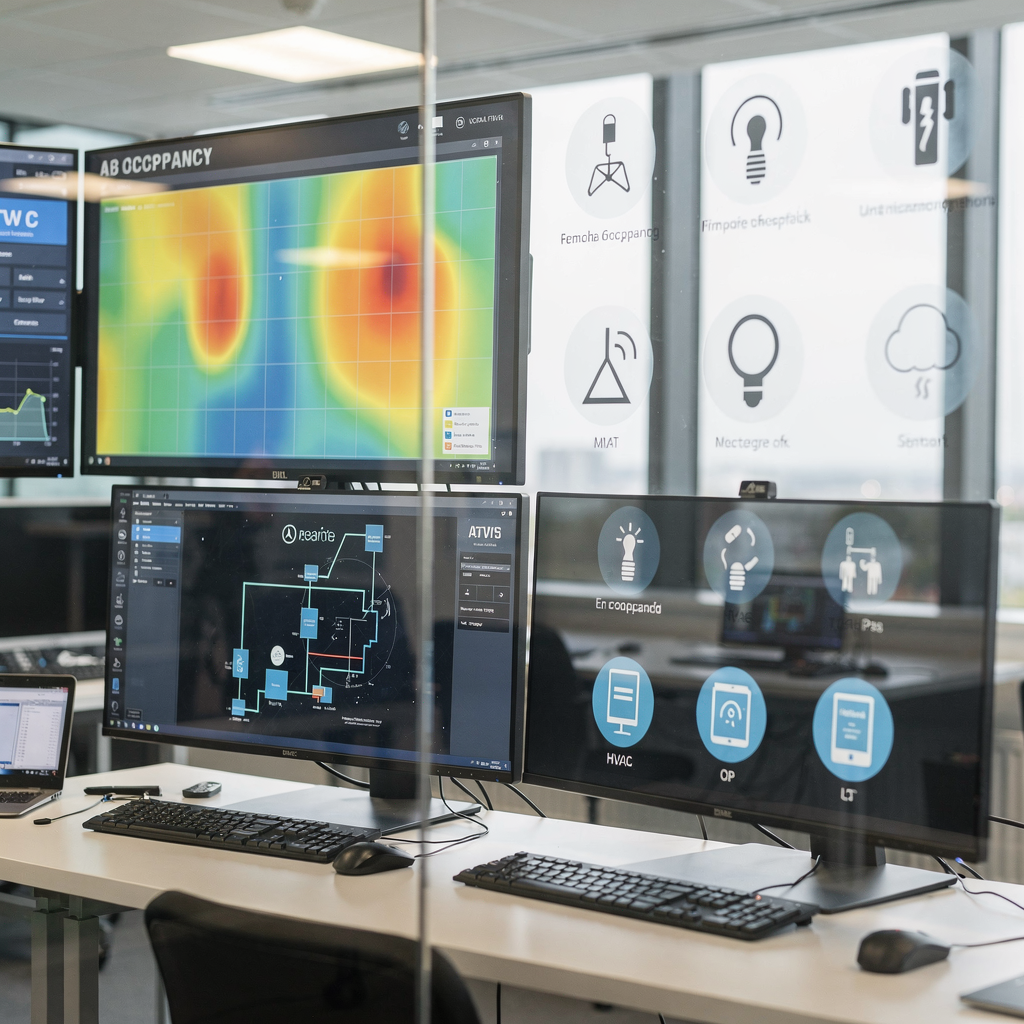
Smart deployments often create a digital building that links temperature sensors, video analytics, and occupancy data. For example, heatmap occupancy analytics can guide HVAC schedules by showing where people cluster during the day (see heatmap occupancy analytics). These insights let teams optimize maintenance and avoid unnecessary interventions. At the same time, AI training on site-specific data improves performance. An individual building benefits when models learn from its unique usage patterns.
Finally, semantic models support integration with building technologies and allow AI to recommend actions. The overall effect is a digitalization of control that helps managers make smarter, faster decisions. This supports occupant comfort and long-term operational goals.
AI vision within minutes?
With our no-code platform you can just focus on your data, we’ll do the rest
Bosch: Integrating Bosch AI in Control Rooms
Bosch Rexroth and related teams have pursued AI integration in control rooms through platforms such as ctrlX AUTOMATION. The platform is designed to integrate software-driven controls with hardware and field devices. Bosch focuses on seamless integration so teams can keep legacy PLCs and still adopt new capabilities. The result is that operators get advanced features without full system rip-and-replace projects. Bosch products now include modular controllers and software that connect to cloud or edge analytics depending on policy. This lets sites choose how much data leaves the premises and how much is processed locally.
Bosch AI modules expose models and APIs that integrate into existing workflows. They support secure connectivity and help operators access contextual insights quickly. Bosch control frameworks emphasize practical deployment. They balance performance, safety, and staff skill development. As Dr Markus Heyn put it, “Embracing AI in our control rooms is not just about technology; it’s about empowering our workforce with the right expertise and tools to drive innovation and operational excellence.” [Heyn quote].
Teams benefit from training programs and hands-on ai training modules that Bosch and partners provide. This training helps staff learn how to validate models and maintain them. Bosch also pursues a holistic approach to operations. That approach blends new AI with proven controls, and it aims to accelerate value while reducing risk. In practice, sites can integrate Bosch software with third-party intelligent solutions and local VMS systems. This open connectivity supports a mixed domain where old and new systems coexist.
Finally, Bosch continues to accelerate research into practical AI use cases. Their roadmap includes expanded model toolchains and better interoperability. Together, these efforts let organizations adopt AI at scale and keep operational continuity.
AI Models: Driving Predictive Maintenance
AI models power maintenance strategies that spot wear before failure. In hydraulic systems, for example, AI models analyze vibration, temperature, and pressure patterns to make predictions about component health. This predictive maintenance approach cuts unplanned downtime by up to 30% in some Bosch deployments, thanks to early fault detection based on IoT data and model analytics [Predictive Maintenance study]. Models also extend component life and reduce maintenance costs by targeting maintenance work only when it is needed.
Inputs for these ai models include sensor feeds, historical logs, and operational metadata. Teams ingest this data to train models and to evaluate performance over time. Evaluation metrics cover recall, precision, and mean time between failures. AI methods range from time-series forecasting to anomaly scoring and classification. In practice, models learn normal behavior and flag deviations so technicians can act proactively. Operators can then schedule repairs during planned windows rather than react to breakdowns.
Make predictions by combining edge preprocessing with cloud analytics. Edge nodes filter and compress raw streams. Cloud services run heavier training cycles and feed updated models back to the edge. This split reduces latency and keeps critical decisions local when necessary. The approach also supports data and information governance, since sensitive video can remain on-premises while aggregated metrics travel for analysis.
Finally, the right models reduce repetitive inspections and free technicians for higher-value tasks. They also enable continuous ai training as new failure modes appear. Together this allows teams to detect faults, act proactively, and keep systems running longer with less manual effort.
AI vision within minutes?
With our no-code platform you can just focus on your data, we’ll do the rest
Automation: Streamlining Control Room Workflows
Automation in control rooms handles repetitive tasks, so operators focus on exceptions. Automated workflows tackle alarm triage, report generation, and data correlation. They assemble context from cameras, sensors, and logs, and they propose next steps to operators. When policies permit, automation can close low-risk incidents autonomously. This reduces time-per-alarm and lowers operator stress.
New AI agents support actions and reasoning. They verify detections and explain why an alarm matters. visionplatform.ai, for example, transforms video cameras from simple triggers into sources of contextual knowledge. The platform exposes video events as textual descriptions and lets agents search and reason over historical footage. This makes investigations faster and simplifies routine evidence collection. For further detail on forensic search and natural language queries, see the forensic search in airports resource (forensic search).
Industry reports suggest that AI-driven workflows raise efficiency by about 20–25%, and Bosch implementations align with this trend [McKinsey]. Automation also helps enforce safety. When thresholds are exceeded, automated protocols trigger protective steps. Systems then notify teams and begin containment activities. Low-risk routines can run autonomously, and higher-risk incidents remain human-in-the-loop.
Automation reduces false alarms and improves situational awareness. It links video descriptions to access logs and process telemetry so operators see objects and people in context. This reduces unnecessary dispatches and accelerates resolution. As new AI capabilities appear, control rooms will shift further toward guided operations and away from manual-only workflows.
Sensor: Help Manage Data Needs in Building Management
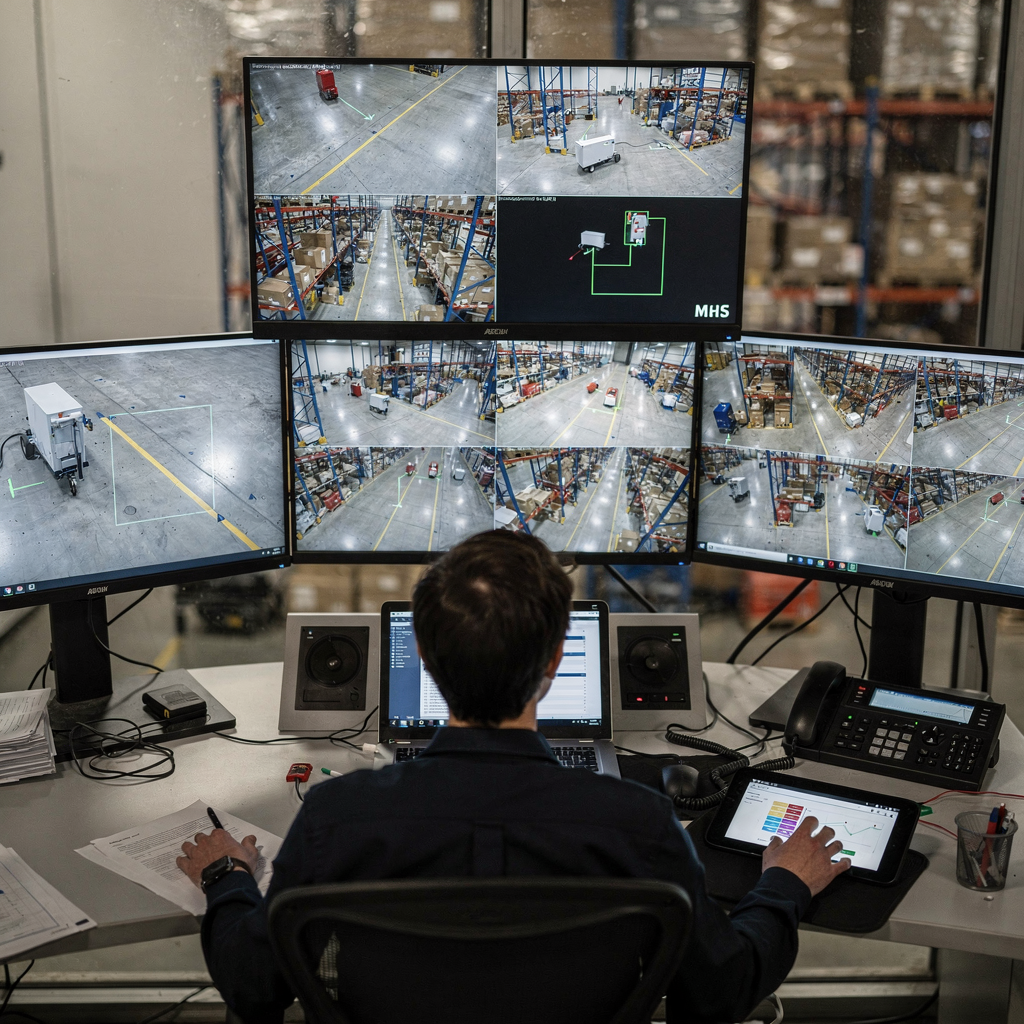
Sensors form the backbone of smart operations. Temperature, vibration, flow, and occupancy sensors provide the raw data that AI consumes. Proper sensor placement across building areas and systems ensures complete coverage. This lets teams detect early signs of wear, inefficiency, or safety issues. Sensors also feed systems that create a digital twin, which helps teams simulate and plan interventions.
Edge processing compliments sensors by handling immediate filtering. That reduces bandwidth and supports near-real time responses. Cloud analytics then handle trend analysis and long-term optimization. The split design helps manage data needs and keeps critical decisions local when they must be quick. This architecture also supports connectivity with existing VMS and access platforms so teams get unified views.
Sensors help safeguard assets and people. For example, fire detectors and smoke sensors integrate with ventilation controls to isolate zones quickly. Combined with camera analytics, teams can confirm events before evacuating. Sensors also enable condition-based maintenance and extend equipment lifecycles. When paired with topology-aware models, alerts include location context for faster dispatch.
Data governance matters. Teams must balance the benefits of rich telemetry with privacy and compliance constraints. On-prem processing reduces cloud exposure and supports audits. Such designs also help create a resilient topology that resists single points of failure. Finally, good sensor strategies help manage costs. They reduce unnecessary maintenance, improve optimization, and help organizations meet energy and sustainability targets.
FAQ
What is AI automation for control rooms?
AI automation uses machine intelligence to monitor systems, prioritize alerts, and assist decision-making in control rooms. It reduces manual work by automating routine tasks and by providing context to operators so they can act faster and with more confidence.
How does Bosch implement AI in control rooms?
Bosch implements AI through modular platforms like ctrlX AUTOMATION and targeted solutions for maintenance and monitoring. These systems integrate with existing control hardware and software so sites can adopt AI without major replacements [Bosch Annual Report].
Can AI reduce unplanned downtime?
Yes. AI models that analyze sensor data can detect early fault signatures and schedule maintenance proactively. Bosch Rexroth reports reductions in unplanned downtime by as much as 30% using such methods [study].
Are cameras useful beyond security?
Absolutely. Video cameras can supply occupancy, behavior, and safety data that feed AI agents. Platforms like visionplatform.ai turn camera feeds into searchable and explainable events, which supports operations beyond pure security. For examples of forensic search use, see the linked resource above (forensic search).
How do sensors and edge processing work together?
Sensors capture raw signals while edge processors filter and preprocess data locally. This reduces latency and bandwidth. It also allows urgent decisions to occur near the source, while long-term analytics run in centralized systems.
What is the role of AI models in maintenance?
AI models predict failures by learning normal and abnormal patterns from historic and live data. They generate alerts that technicians can act on, which reduces unnecessary maintenance work and improves uptime.
How do I keep sensitive video on-premises?
You can deploy on-prem Vision Language Models and edge agents to process video locally. This architecture keeps data and information inside your environment while still enabling advanced search and reasoning.
Can control rooms operate autonomously?
Some low-risk workflows can run autonomously under strict policies and audit trails. Higher-risk incidents should retain human oversight. Hybrid modes let agents act for routine events and escalate complex cases to operators.
How do I start integrating AI into my buildings?
Start with a small pilot that connects a few sensors and cameras to an AI agent. Use well-defined KPIs and iterate. Tools that integrate with existing systems reduce disruption and speed adoption.
Where can I find examples of process anomaly detection?
Practical examples and demo use cases are available that focus on anomaly detection in operational settings. For a relevant case study and detailed examples, see process anomaly detection resources (process anomaly detection).