using artificial intelligence for detection of animal remains in waste streams
Detecting animal remains in mixed waste matters for welfare and conservation. Using AI in waste processing can protect animal welfare and public health. Also, it can inform wildlife conservation and help forensic teams. The core scope is broad. It covers environmental impact, animal health, and regulatory compliance. In practice, teams need accurate, fast tools. AI offers those capabilities. An AI system can scan video and sensor feeds. It can flag organic material that needs further review. For example, Visionplatform.ai converts CCTV into an operational sensor network and can stream events to operations and forensic teams. Also, this preserves data privacy by keeping models on-premise.
Waste is complex. Mixed streams hide many items. Decomposition changes appearance. Remains may be obscured by packaging, liquids, or other debris. These factors create the core challenge for detection. AI needs robust training to cope with heterogeneity. A strong model must recognise varied textures and colours. It must tolerate damage and decay. Also, it must avoid false positives that waste staff must sort manually. Therefore, speed and precision matter. Quick decisions reduce environmental impact and improve response times.
The benefits are clear. AI gives faster analysis than manual inspection. It provides richer data for environmental agencies. This data supports welfare monitoring and animal health surveillance. Also, AI can link findings to location and time. Then, teams can act on trends. For instance, consistent finds at one site could signal animal disease or illegal disposal. As Dr Jane Smith notes, “The integration of AI in waste stream analysis allows us to detect biological materials with unprecedented precision, enabling better environmental protection and forensic investigations.” Source
Finally, this approach supports broader goals such as improving waste management and animal welfare assessment. It can inform policy and on-the-ground operations. AI analytics power better decisions. Also, careful design keeps data local and compliant with regulations like the EU AI Act and GDPR. Visionplatform.ai helps organisations own models and events on-site. That approach reduces risk and speeds action.
ai technologies and sensor integration in waste monitoring
Sensors and AI work together to turn noisy waste environments into actionable data. First, optical cameras capture visible features. Next, infrared and thermal cameras reveal heat signatures. Then, hyperspectral sensors detect chemical and organic signatures. Also, lidar can map pile geometry. Combined, these modalities improve the chance to detect animal remains. Integrating AI with multiple sensors creates a richer signal. It reduces ambiguity and improves classification accuracy.
Sensor fusion is the process that combines input from different sources. AI technologies can weight each input based on context. For instance, a thermal spike with an optical match raises confidence. A hyperspectral match can confirm organic matter. This layered approach allows a detection to be tagged as likely biological. Then, a human operator can review flagged frames. Real systems already separate organic from inorganic waste. For example, projects using AI to analyse plastic in waterways improved detection rates by over 30% compared to older methods Source. That success shows the potential of sensor fusion in other waste contexts.
Edge computing helps here. AI models can run close to the camera. That reduces latency for real-time alerts. Visionplatform.ai supports on-prem and edge deployments so video and data stay local. Also, on-edge processing aids compliance with the EU AI Act. An integrated monitoring system can publish structured events to dashboards and OT systems. That moves video from passive recording to active sensor data. In addition, this allows operations teams to use the same camera network for safety and waste insights. The implementation of AI technologies in this manner supports continuous monitoring and better resource allocation.
Finally, a mixed-sensor strategy helps with scale. Simple optical checks can triage many frames. Then, advanced sensors focus on ambiguous cases. This reduces compute needs and improves throughput. AI tools designed for this workflow will improve detection performance while keeping costs down.

AI vision within minutes?
With our no-code platform you can just focus on your data, we’ll do the rest
computer vision and deep learning for real-time detect of animal remains
Computer vision transforms camera feeds into structured information. Deep learning powers modern vision pipelines. Models like YOLO and Faster R-CNN excel at object recognition. These AI models can be adapted to find organic shapes and textures. They work well in cluttered scenes. For real-time tasks, YOLO variants offer speed. Faster R-CNN often gives higher accuracy. Both are useful depending on priorities.
Deep learning handles varied shapes and decay stages by learning hierarchical features. Early layers detect edges and textures. Later layers encode complex patterns such as bone structure or fur. The result is robust recognition across conditions. Also, augmentation strategies simulate decay, occlusion, and lighting changes. That strengthens model generalisation. Training must use labelled examples that span stages of decomposition and species. Edge deployments then run optimized models for real-time inference. Many systems use GPUs or accelerators like NVIDIA Jetson for this purpose.
Real-time pipelines include capture, pre-processing, inference, and alerting. Capture grabs frames from CCTV or handheld devices. Pre-processing normalises lighting and scales frames. Inference runs the AI model and outputs bounding boxes with confidence scores. Then, filtering rules decide whether to alert an operator. This chain must be low latency. It must also be auditable for compliance. Visionplatform.ai streams events via MQTT so operations and BI systems can act on detections. That makes video actionable beyond alarms. Also, such integration keeps data local and reduces cloud exposure.
Finally, combining analytics with human-in-the-loop review yields the best outcomes. In one study, object detection models achieved over 90% accuracy in wildlife monitoring tasks, suggesting similar potential for remains detection Source. Also, forensic AI work shows improvements in postmortem interval estimation by 15–20% when AI assists experts Source. This demonstrates that computer vision and deep learning can accelerate both environmental monitoring and forensic investigations.
algorithm development and ai use in livestock farming waste analysis
Algorithm design for remains detection starts with data. Developers need annotated datasets for training. These datasets should include varied species, decomposition levels, and common occlusions. Also, they must represent different lighting conditions and sensor types. Without such data, models will not generalise. Creating datasets requires collaboration with farms, waste processors, and forensic labs. Public and private data sharing accelerates progress, but it must respect privacy and legal limits set by the EU AI Act.
Training includes classic steps: data curation, augmentation, model selection, and hyperparameter tuning. Validation must use holdout sets from different sites. This avoids overfitting to one facility. Accuracy metrics include precision, recall, and F1 score. Operational metrics include false alarm rate and time-to-alert. AI algorithms should be optimised for both accuracy and operational cost. Edge deployments constrain model size, so model compression techniques are important.
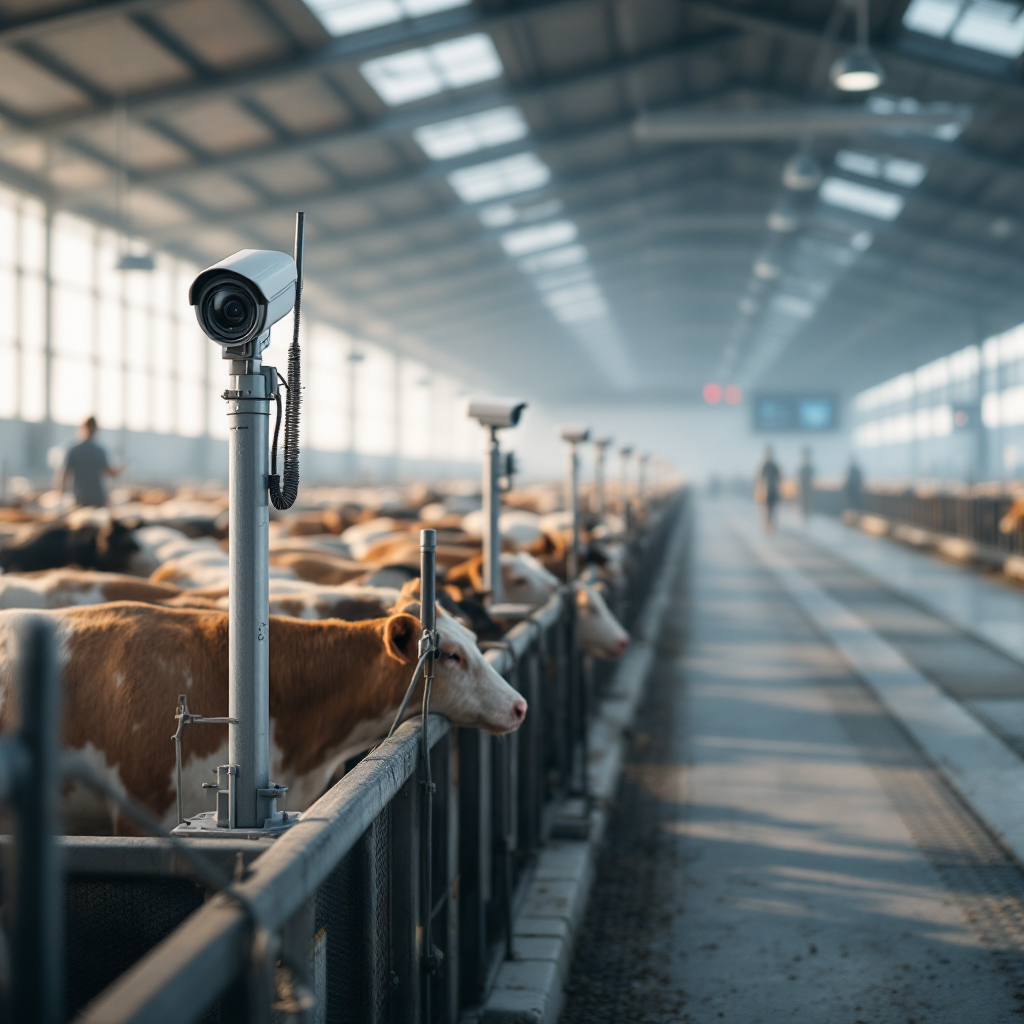
In livestock farming contexts, the stakes are high. Proper handling of by-products and mortalities reduces environmental impact. AI analytics can tag mortality events, record location, and link them to batch data. This supports traceability and biosecurity. For instance, early detection of unusual mortality clusters can prompt veterinary inspection and disease testing. That helps prevent larger outbreaks. Also, better handling reduces contamination risks to soil and water. AI use in these workflows helps farms comply with disposal regulations and welfare goals.
Governance matters too. Integrating AI should follow ethical and environmental guidelines. Cross-disciplinary teams with vets, engineers, and data scientists improve outcomes. Also, Visionplatform.ai’s approach of keeping models and training local helps manage data risk. This design supports adoption by farms concerned about vendor lock-in and cloud exposure. Overall, careful algorithm development and dataset curation enable reliable, deployable solutions in livestock farming and waste management.
AI vision within minutes?
With our no-code platform you can just focus on your data, we’ll do the rest
role of ai in improve animal welfare and monitoring animal health
AI can improve animal welfare and support animal health surveillance. Automated detection in waste streams provides clues about animal diseases and biosecurity breaches. For example, unusual numbers of carcasses in runoff points could signal a disease event. AI supports rapid triage of such signals so vets can act quickly. This approach strengthens animal health and welfare throughout the production chain.
Experts emphasise the opportunity. As Dr Michael Lee explains, “AI’s ability to analyse complex data patterns accelerates the identification process of biological remains, which is crucial for both environmental monitoring and forensic casework.” Source. Also, AI helps integrate diverse data streams like farm records, CCTV, and sensor outputs. This integrated view supports welfare monitoring and continuous monitoring of animal well-being.
In addition, AI-based systems can link to health monitoring and disease surveillance programmes. That supports faster containment and better epidemiological models. Early detection helps reduce spread and therefore improve welfare and productivity. AI detects subtle signals that humans miss. It can flag changes in disposal patterns or sudden clusters. Then, animal husbandry teams can investigate and act.
AI also supports welfare indicators used in assessments and audits. Analytics can report mortality rates, unusual disposal timing, and other welfare issues. These metrics inform welfare oversight and support compliance. Furthermore, automatic detection of pleurisy in slaughtered pigs using imaging is an emerging example of AI in postmortem assessment. Such tools help evaluate herd health and production practices. Finally, integrating AI into farming workflows supports continuous improvement and better animal well-being while respecting data governance and ethical frameworks.
artificial intelligence in agriculture: ai adoption, ai applications and technology and ai in waste management
Adoption of AI in agriculture is growing across the UK and EU. Many farms and processors now test AI for crop and waste tasks. However, adoption remains uneven. Small producers often lack resources. Also, regulatory uncertainty slows some deployments. The EU AI Act and GDPR shape choices about where processing happens. On-prem solutions ease compliance. Visionplatform.ai offers on-prem model control that many operations prefer.
AI applications in agriculture go beyond remains detection. They include soil health monitoring, crop disease detection, and automated sorting of crop waste. Also, AI assists in animal tracking and behaviour analysis. These functions link to animal health and welfare and to productivity. Artificial intelligence in agriculture can reduce losses and improve resource use. The potential of AI is large, but it requires careful governance and dataset sharing.
Specific to waste, AI improves waste management by automating sorting and prioritising inspection. AI analytics can spot contamination events and reduce environmental impact. For example, systems that identify plastics at sea improved detection by more than 30% in pilot projects Source. This suggests that similar gains are possible for organic waste streams.
Future directions include better dataset sharing, ethical frameworks, and cross-sector collaboration. Integrating AI with farm management software, VMS, and OT/BI stacks creates new operational flows. For instance, Visionplatform.ai streams structured events via MQTT so cameras serve as sensors for dashboards and SCADA. That integration of AI supports real-time monitoring and faster interventions. In time, AI will support welfare goals, reduce environmental impact, and offer transparent audits. Adoption of AI will be driven by practical value, regulatory clarity, and stakeholder trust.
FAQ
What is AI detection of animal remains in waste streams?
AI detection of animal remains in waste streams uses models and sensors to identify biological materials in mixed waste. It combines computer vision and analytics to flag items for review and action.
How do sensors and AI work together to find remains?
Sensors like optical, infrared, and hyperspectral devices capture different signal types. AI fuses these inputs to improve confidence and reduce false positives. Edge processing often runs models close to the cameras for speed.
Can AI detect decomposed or partial remains?
Yes. Deep learning models can learn features that persist through decomposition, such as bone texture or residual organ shapes. Training on varied datasets improves robustness.
Is this technology useful for livestock farming?
It is. AI helps farms monitor mortalities, improve disposal practices, and support biosecurity. These tools can link detections to farm records and prompt veterinary inspections.
Are there privacy or regulatory concerns?
Yes. Processing video and data must respect GDPR and the EU AI Act. On-prem deployments and auditable logs help manage compliance and reduce data export risks.
How accurate are these AI systems?
Accuracy varies by use case and data quality. Wildlife monitoring models have achieved over 90% in some tasks Source. Forensic AI has improved certain postmortem estimates by 15–20% Source.
What datasets are needed for training?
Datasets need annotated images covering species, decomposition stages, and occlusions. They should also include varied sensor types and environmental conditions to avoid bias.
How can small operators adopt this technology?
Small operators can use edge-first solutions and collaborate with vendors who offer on-site training and model adaptation. Local processing reduces cloud costs and eases compliance with the EU AI Act.
Can these systems help prevent disease outbreaks?
Yes. Early detection of unusual disposal patterns or clusters can trigger veterinary investigation. That can help contain disease and protect animal health and welfare.
Where can I learn more about practical deployments?
Look for case studies on integrated CCTV analytics and waste monitoring. For airport-grade people and object detection examples, see Visionplatform.ai’s solutions for people detection and forensic search in airports for comparable technical architectures: people detection and forensic search. For thermal approaches, see the platform’s thermal people detection overview thermal detection.