ai-powered framework for real-time data and real-time analysis
AI combines sensor fusion, machine learning, and edge compute to create a single system that provides continuous situational awareness. First, cameras and other sensors act as raw input. Then, on-device preprocessing reduces bandwidth and latency. Next, a framework assembles video feeds, radar, and IoT telemetry into unified streams for algorithmic interpretation. Also, models on the edge enable low latency responses so teams react in seconds rather than minutes. The design keeps collected data on-prem when needed, which helps meet compliance and encryption requirements.
Sensor pipelines classify objects, track motion, and flag anomalies. An AI model scores risk and forwards only contextual events for human review. This reduces cognitive overload for operators and lets them focus on actionable priorities. The architecture supports edge-based inferencing and centralized orchestration so deployments scale from a single site to an enterprise ecosystem. The system supports mission-critical command and control by maintaining high availability and low latency compute close to the camera.
visionplatform.ai helps deploy this approach by turning cameras and VMS systems into AI-assisted operational platforms. Our VP Agent Suite exposes events as structured inputs for AI agents, so the control room can search video history and verify alarms without cloud dependency. For teams that need searchable, explainable video, see our forensic search for detailed examples at forensic search in airports. Also, when intrusion risks rise, operators can consult integrated alerts from intrusion systems such as intrusion detection in airports.
Edge-first designs support adaptive model updates and continuous learning. Using AI and machine learning, systems can analyze new data while preserving privacy. This hybrid approach helps classify events at the source and then stream only verified incidents for deeper analytics or archival. As a result, operators can identify potential blind spots and scale monitoring without overwhelming staff. Finally, the architecture supports extensibility so teams can integrate access control, analytics dashboards, and OT control systems in one platform.
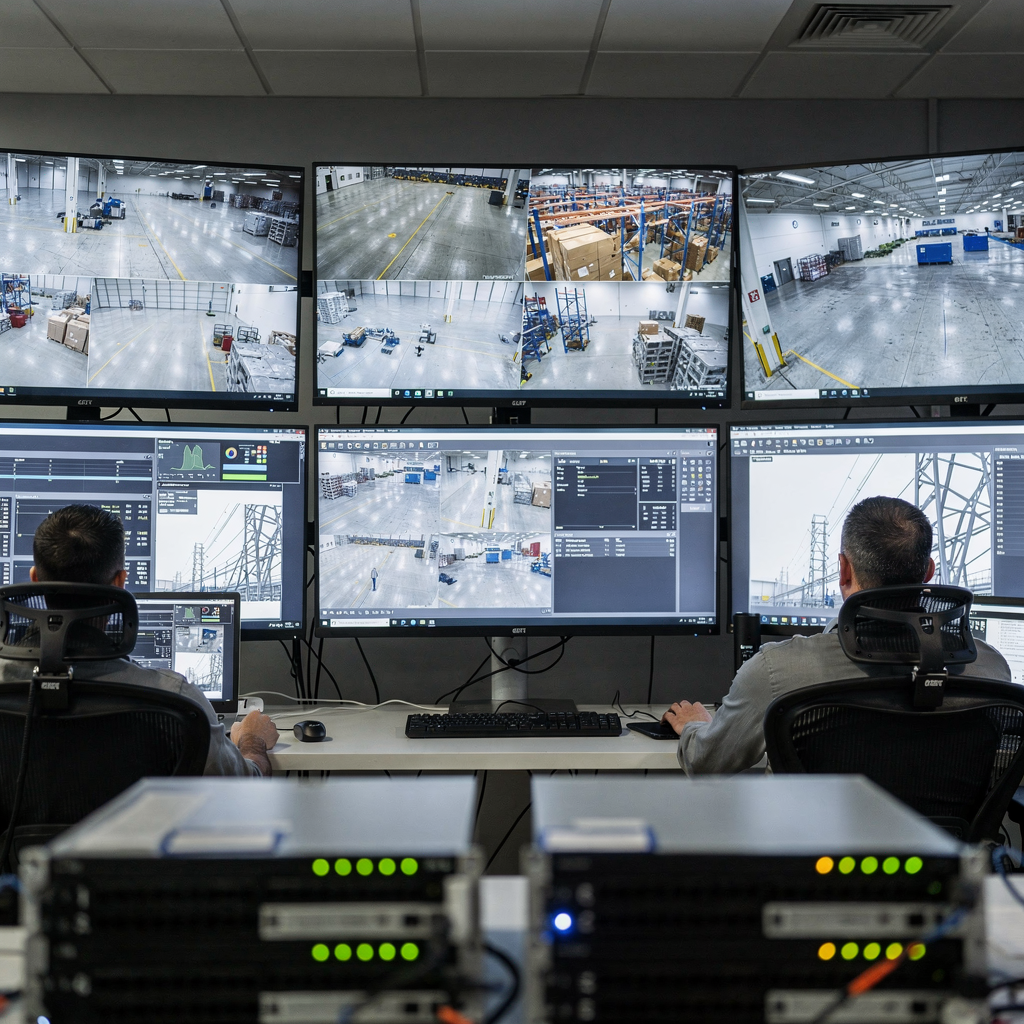
leveraging historical data for actionable insights in situational awareness
Historical data underpins predictive models and reduces false positives. When systems learn from past incidents, they spot repeating patterns that precede problems. For example, time-series analysis can reveal traffic flows that escalate into congestion, or repeated door-propping events that indicate potential security gaps. Also, archived video becomes a rich source of labeled examples for retraining models to handle site-specific conditions.
Training on historical data strengthens an algorithmic baseline so models better classify unusual behavior. Teams can analyze long-term trends such as peak occupancy and seasonal shifts. This business intelligence supports resource planning and operational optimization. In healthcare, for instance, longitudinal monitoring improves triage by revealing patient deterioration trends that single observations miss. A recent study found AI-driven symptom assessment increased diagnostic accuracy by about 25% (user perceptions and experiences), which shows the value of learning from many data points.
Historical data also supports simulation and what-if analysis. Analysts can run scenario tests that simulate drone or drone swarms in urban airspace and then tune detection thresholds. Next, teams can automate routine responses for low-risk events and keep humans focused on high-risk or mission-critical incidents. This approach reduces false alarms and improves the signal-to-noise ratio for operators.
Moreover, historical context empowers forensic search and response. visionplatform.ai transforms video into descriptive text so operators can query past events using natural language. If an analyst needs to reconstruct a sequence, they query for phrases like “red truck entering dock area yesterday evening” and find relevant clips fast. For more on people-focused models, consider reviewing our people detection overview at people detection in airports. Historical patterns can also expose networks of malicious actors and help identify potential threats before they escalate. Therefore, a disciplined archival strategy and robust data collection make situational awareness truly actionable.
AI vision within minutes?
With our no-code platform you can just focus on your data, we’ll do the rest
ai-driven real-time alert systems for analyst and security officer
AI-driven alert systems score risks and prioritize notifications so analysts and security officers act on the right items first. Agents combine detection outputs with contextual data to create explained alerts that state what was seen, why it matters, and recommended next steps. This reduces decision-making time and lets operators respond consistently. The system can also automate low-risk workflows while escalating high-risk events for human review.
On the desktop, an analyst uses a rich dashboard with timelines, cross-camera correlation, and searchable narratives. On the field, a security officer receives a concise push notification with a snapshot and a suggested action. Both views draw from the same event metadata, so teams share a single situational picture. A user-friendly interface matters. If an operator cannot assess an alert in seconds, the alert loses value. visionplatform.ai builds a control-room AI Agent that pre-fills incident reports and proposes actions, which speeds handling and reduces manual steps.
Alert scoring relies on calibrated models that weigh sensor reliability, historical context, and current threat levels. For enterprise deployments, the platform supports policy-driven automation and configurable escalation rules. When multiple sensors corroborate an event, the system raises confidence. Conversely, when signals conflict, the agent flags uncertainty and suggests verification steps. This approach helps to detect anomalies while keeping false positives manageable.
Different roles need different interfaces. Analysts prefer deep context and tools to analyze trends across days. Security officers want concise, actionable guidance for on-the-ground decisions. The platform supports both by exposing the same evidence in different formats. For workflow integration, the platform supports event streaming through MQTT and webhooks so control systems and incident management tools can integrate seamlessly. Overall, explained alerts augment human judgment, reduce cognitive overload, and help teams maintain situational awareness during high workload periods.
ai applications in national security and human trafficking detection
AI already supports national security by fusing multi-source data to track adversary movements and intentions. Modern military operations rely on rapid correlation of signals, imagery, and open-source indicators to build an operational picture. Intelligence is transforming how analysts prioritize leads. For example, automated correlation between video surveillance and access logs can reveal patterns of reconnaissance or covert access attempts.
In addition, AI assists investigations into human trafficking by linking transactional patterns, movement data, and digital traces across platforms. Analysts can use graph analytics to map networks, follow suspicious financial flows, and identify hubs where exploitation concentrates. Project teams also monitor dark web chatter and web intelligence to find recruitment sites and trafficking adverts. These techniques help expose trafficking networks and support targeted enforcement.
AI and machine learning models grade leads and surface those with higher probability of criminal coordination. For operational safety, systems run on-prem to avoid exposing sensitive feeds. visionplatform.ai emphasizes on-prem, explainable models to meet compliance and reduce potential risks associated with cloud processing. For airport operations, our platforms help detect loitering and unauthorized access, which are relevant signals in trafficking investigations. See how loitering detection can improve situational handling at loitering detection in airports.
Drone and drone swarms also create both challenges and opportunities. AI can classify drone signatures and predict flight paths to identify potential threats to critical infrastructure. At the same time, aerial sensors broaden coverage for hard-to-reach areas where trafficking routes operate. Using AI to cross-reference timestamped sightings with travel records or vehicle detection can reveal suspicious patterns. Finally, ethical safeguards and explainability remain essential to preserve civil liberties while enabling effective law enforcement.
AI vision within minutes?
With our no-code platform you can just focus on your data, we’ll do the rest
real-world use cases of ai in situation awareness and response
Emergency services use AI to spot anomalies in video and sensor streams, which shortens response times. For instance, dispatchers receive early indicators of crowd surges or ingress pattern shifts, and they reallocate resources before incidents escalate. In healthcare, continuous monitoring flags physiological trends, which helps clinicians intervene earlier. Autonomous vehicles use fused sensor data to predict pedestrian movements and avoid collisions, thereby improving safety and efficiency.
Case studies show measurable benefits. In high-stakes operations, AI-driven situational awareness systems have improved decision speed by up to 40% in military and emergency contexts (International AI Safety Report 2025). Also, a 2024 survey found 68% of organizations reported fewer operational errors after deploying such tools (survey on shifting attitudes). These results indicate tangible improvements in response times and decision accuracy across sectors.
visionplatform.ai has helped control rooms move from raw detections to context and action. For example, our VP Agent Reasoning reduces false alarms by cross-checking video analytics with access logs and procedural data. In transportation hubs, integrations with ANPR/LPR and people counting systems improve situational intelligence and throughput. For more on vehicle and people models, see vehicle detection and people counting examples at vehicle detection classification in airports and people counting in airports.
These deployments show another advantage: scale. Automation and AI agents let teams handle a larger volume of data without proportional staff increases. This supports agile operations and enables consistent handling of routine incidents. At the same time, human oversight remains essential for high-risk decisions. The combination yields faster, more consistent outcomes while reducing operator burnout and cognitive overload.
transforming data into actionable real-time insights
Actionable intelligence requires clear metrics and operational KPIs. Define indicators such as time-to-verify, false positive rate, and mean time to respond. Track accuracy, throughput, and the percentage of alarms that lead to confirmed incidents. These KPIs guide model retraining and resource allocation. They also help teams justify investment in AI solutions and ongoing optimization.
To transform raw signals into real-time insights, systems must integrate cross-domain sources and normalize data points for coherent analysis. Platform supports for APIs and event streaming let teams push verified events to BI tools and command dashboards. Additionally, explainable models build trust by showing why a classification occurred. As Nature notes, “Building transparent and explainable AI models is essential” to overcome distrust in critical applications (“Trust in AI”).
Future trends include tighter explainability, stronger ethical guardrails, and improved interoperability. Leading AI teams will emphasize on-prem options and auditable logs to meet regulatory needs. Simulation and synthetic data will augment historical data to prepare models for rare events. Also, web intelligence and dark web monitoring will feed enterprise risk assessments to spot malicious actors early. As McKinsey reports, human–AI partnerships will expand, with agents augmenting rather than replacing human judgment (“AI: Work partnerships”).
Finally, measure operational impact. Track reductions in response time, drops in false alarms, and improvements in incident resolution. These deliverables help commanders, security officers, and emergency management teams trust AI-driven insights. With clear metrics, robust governance, and adaptive pipelines, organizations can transform volume of data into timely, actionable insights that keep people and assets safe.
FAQ
What is AI-driven situational awareness?
AI-driven situational awareness uses AI to fuse sensor data and generate a shared understanding of an environment. It helps teams perceive, interpret, and act on events faster and with more context.
How does sensor fusion improve real-time analysis?
Sensor fusion combines video, radar, and IoT inputs to reduce blind spots and improve accuracy. By correlating multiple signals, the system raises confidence and lowers false positives.
Can historical data reduce false alarms?
Yes. Historical data trains models to recognize normal patterns, which reduces spurious alerts. It also enables time-series analysis that reveals trends useful for prediction.
How do AI alerts differ for analysts and security officers?
Analysts receive deep context and timelines for investigation, while security officers get concise, actionable alerts for field response. Both views draw on the same evidence set to keep the single system coherent.
Is AI useful for national security and human trafficking detection?
AI helps by mapping movement patterns and network indicators, which assists investigations and interdiction. It must operate within ethical and legal safeguards to protect rights and privacy.
What role do on-prem solutions play in situational systems?
On-prem solutions keep sensitive video and models inside the organization, which aids compliance and reduces exposure. They also lower latency for mission-critical responses.
How does explainability affect adoption?
Explainable models increase trust because operators can see why alerts occur. This transparency helps teams accept recommendations and reduces resistance to automation.
Can AI-handled workflows be fully automated?
Some low-risk routines can be automated with audit trails and escalation rules. High-risk decisions usually remain human-in-the-loop to ensure oversight and accountability.
What metrics show successful situational awareness?
Key metrics include time-to-verify, false positive rate, and mean time to respond. Improvements in these KPIs indicate better actionable insights and operational optimization.
How do organizations start implementing these systems?
Begin with clear objectives, pilot on representative sites, and integrate with existing VMS and control systems. Use explainable models, measure outcomes, and scale when KPIs show value.