ai and artificial intelligence: Setting the scene
AI has moved from lab experiments into everyday tools used by law enforcement. Artificial intelligence now helps analyse video, flag events, and propose written summaries. As surveillance expands, AI supports faster triage of incidents, and it can cut through hours of footage to find short clips of relevance, and then surface them for review. However, the technology still makes mistakes, and those errors can carry legal weight if they end up in a police report or a case file.
Surveillance camera networks have grown rapidly. For example, manufacturers and operators expect more intelligent analytics on PoE cameras in the near future, which lets organisations scale monitoring with fewer people. At the same time, a 2025 assessment found frequent errors in AI outputs and warned that “hallucinations” remain common in production systems International AI Safety Report 2025. Also, lists of AI incidents document weird transcriptions and false attributions, such as an extreme mis-transcription captured by researchers The AI Incident List. These public records push vendors and city officials to demand stricter oversight.
Adoption statistics vary, but pilots of ai tools in police settings show mixed results. One 2024 study reported no reduction in the time officers spend on report writing when they use AI assistance for transcribing body cams No Man’s Hand. Therefore, agencies considering AI must weigh the promised productivity gains against the risk of introducing errors into official documentation. Also, civil liberties advocates point to concerns about bias and facial recognition, and they insist on audits and transparency. To explore how video search and reasoning improve investigations, readers can review our forensic search capabilities for airports, which reflect similar technical challenges and solutions forensic search in airports.
police department and utah police: Deployment case study
The Utah Police trial of Draft One became a closely watched example of using AI in policing. Utah police and a city police department ran a pilot to evaluate whether a generative drafting engine could produce usable first drafts of incident narratives. The pilot included Heber City police and the Heber City Police Department in planning conversations, and the vendor delivered a test build that automatically generates police reports from body recordings and camera audio. The goal was to reduce the time officers spend writing reports while preserving accuracy and accountability.
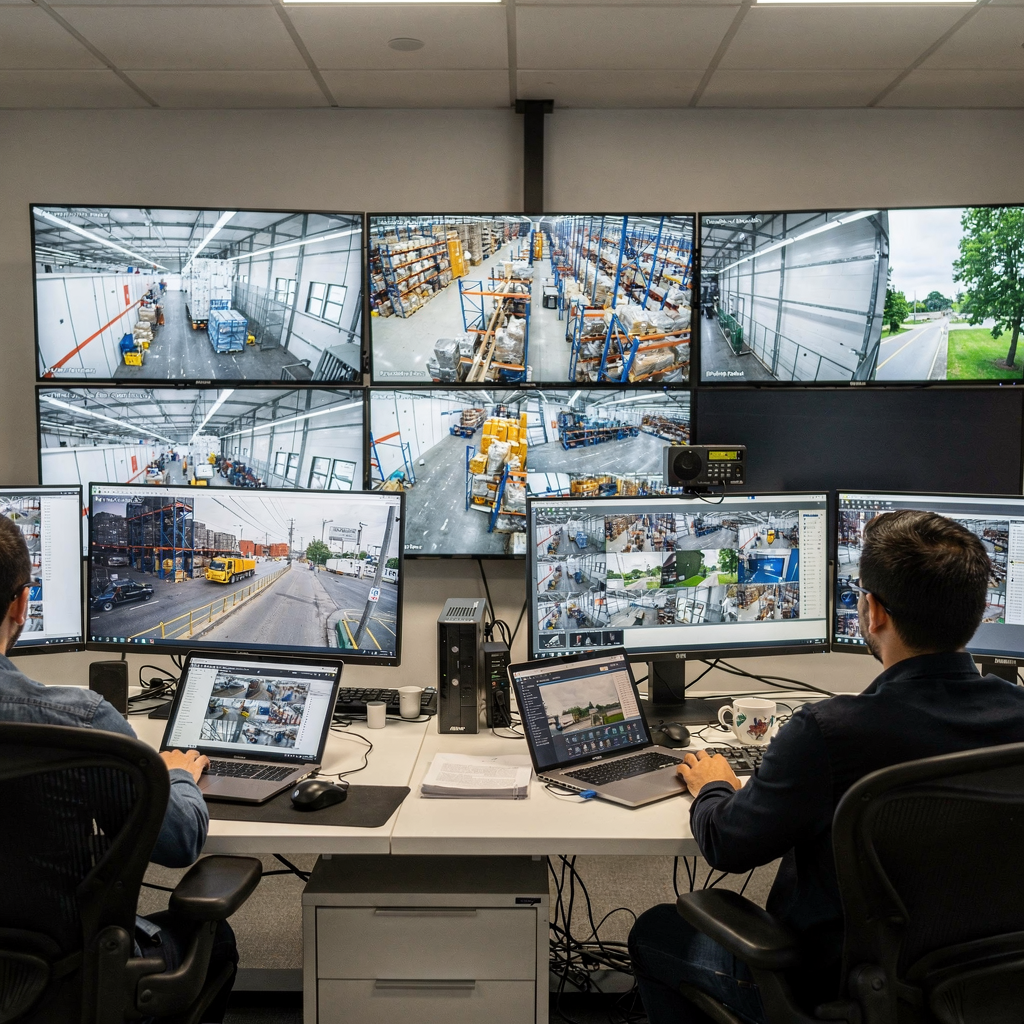
Deployment followed a staged approach. First, technical integration connected body camera feeds and the records management system to the test environment. Next, officers attended short hands-on sessions where trainers demonstrated the ai-powered user interface and the editing workflow. Training emphasised that officers must still sign off on the narrative’s accuracy before submission and must stick to the facts, and that humans remain responsible for final entries. The pilot stressed that officers should not use ai to write reports without verification.
Early findings were mixed. Some officers accepted the tool as useful for transcribe-heavy tasks and for pre-filling administrative fields. Yet the aggregated data showed no dramatic time savings in total report writing time, which matched findings from research that AI does not automatically shorten report completion time Artificial Intelligence Does Not Improve Police Report Writing Speed. Furthermore, the testing an ai-powered software called draft one revealed occasional weird insertions from background audio and media, which forced manual correction. As a result, the pilot emphasised stronger human review, and it recommended an audit trail for every generated report. The experience underlined the importance of systems that explain why they made a suggestion, and it echoes the VP Agent Suite approach of transparent on-prem reasoning so that control rooms keep records and avoid cloud dependencies.
AI vision within minutes?
With our no-code platform you can just focus on your data, we’ll do the rest
draft one and use ai: Tools and processes for report drafting
Draft One presented an interface that combined automatic transcription with a narrative generator. The ai-powered engine accepted camera audio and camera footage as inputs, then produced a generated report in draft form for an officer to edit. This workflow aimed to reduce repetitive typing while preserving officer judgment. However, the vendor documentation and pilot guidance made clear that the generated report required human validation, and that officers must sign off on the narrative’s accuracy before submission.
The typical workflow began with an upload of a body camera clip or other surveillance camera extract. The system would transcribe spoken words, tag timestamps, and extract context cues. Then, Draft One assembled a first draft narrative and pre-filled incident metadata. Officers could then open the draft, manually fill in missing information, correct errors, and finalise the police report. The company also emphasised integration with records management system exports so that approved narratives move into official case records without retyping. This model resembles automation features in advanced control room agents, which pre-fill forms and recommend actions while leaving final decisions to people.
Use cases for Draft One included routine thefts, traffic collisions, and low-risk disturbances where a high-quality first draft could accelerate processing. Nevertheless, the pilot and independent observers warned about overreliance. Prosecutors and defense attorneys must still examine the evidence and transcripts. Indeed, the electronic frontier foundation published concerns that AI-based narrative drafting could undermine legal processes if left unchecked Prosecutors in Washington State Warn Police. Therefore, departments adopting draft one or similar tools need policies that require human review, that document edits, and that keep an auditable history of how a report evolved.
body camera and camera transcripts: From video to text
Converting body camera footage into accurate text is central to any attempt to automate police documentation. The pipeline normally involves audio extraction, speech-to-text transcription, speaker diarisation, and contextual tagging. Then an ai system climbs from raw transcripts to a narrative draft. This multi-step chain can amplify small errors. For example, poor audio quality or overlapping speech can create hallucinations in the transcript. Also, music or a movie playing in the background of a body camera can bleed into the transcript if the model misattributes dialogue, which has happened in documented incidents.
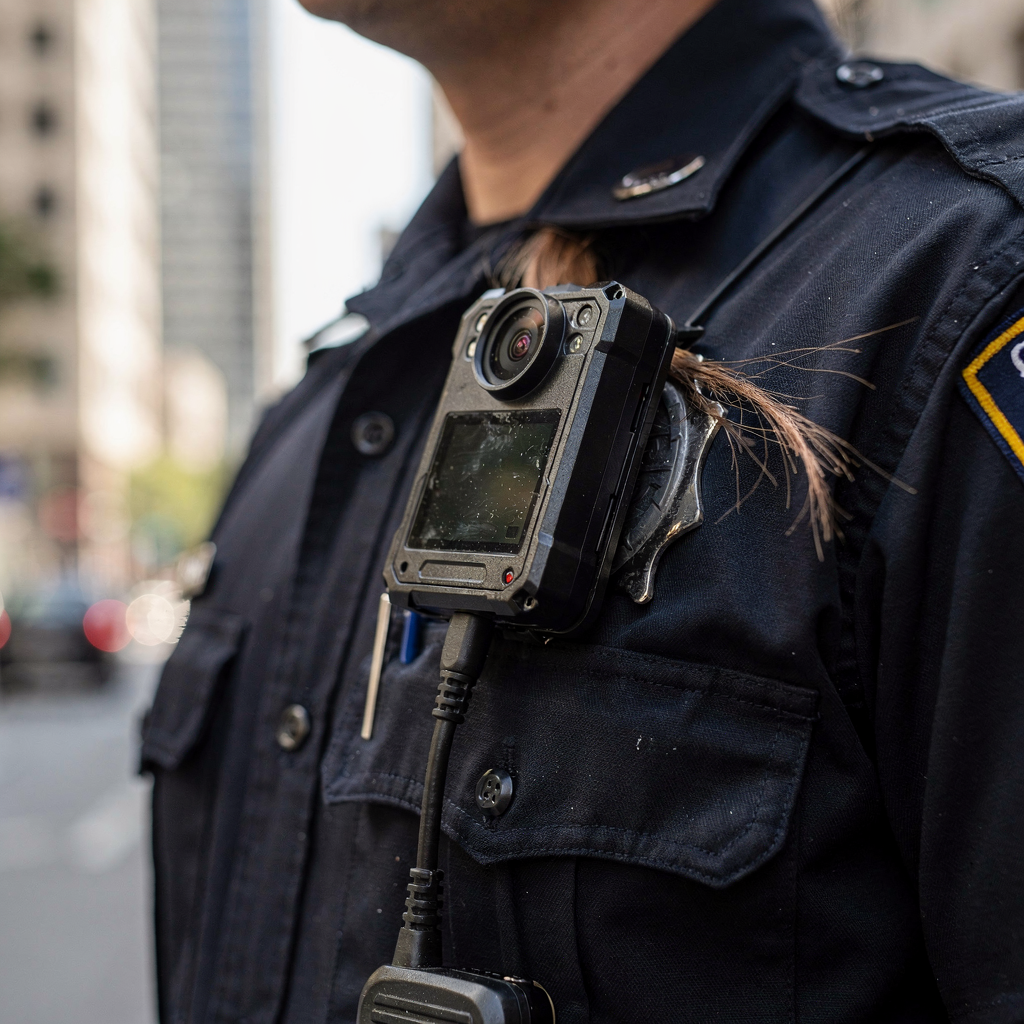
To mitigate transcription errors, agencies must combine technical measures with human review. Technical steps include noise reduction, speaker separation, and confidence scoring. Additionally, systems should mark low-confidence passages and surface them for manual review. Workflow design should require officers to review camera transcripts and to confirm any automatic assertions before they appear in official documents. Vendors must provide features that let users search transcripts and link phrases back to video segments, similar to forensic search tools that turn video into human-readable descriptions forensic search in airports.
Common transcription errors include misheard words, swapped speaker labels, and insertion of unrelated audio content. For instance, one ai-generated report famously included text suggesting an officer turned into a frog because the model transcribed unrelated sound or media incorrectly. That kind of error shows how an unvetted transcript can pollute a generated report. As a result, operators should be trained to treat camera transcripts as drafts that require verification. Also, records management system integrations must preserve original audio and video as evidentiary sources and not rely solely on text outputs. Finally, transparency features like exportable audit logs help provide context for reviewers, and they support defence attorneys and district attorneys who may challenge the provenance of statements in a case.
AI vision within minutes?
With our no-code platform you can just focus on your data, we’ll do the rest
ai police reports and police report: Assessing accuracy and reliability
Comparing AI police reports with traditional officer-written police report narratives reveals clear trade-offs. On one hand, AI can pre-fill routine sections and extract obvious facts, which reduces repetitive entry. On the other hand, AI outputs sometimes misrepresent intent, confuse events, or inject unrelated content. Quantitative studies have shown that AI assistance does not reliably shorten the time officers spend writing reports, even when the system transcribes body camera audio No Man’s Hand. Also, an international safety report emphasised the prevalence of errors in many production AI systems, calling for human oversight and robust validation International AI Safety Report 2025.
Notable misinterpretations underline the risk. A case arose where a movie playing in the background of a body cam clip fed lines into an automatic transcript, and those lines showed up in a draft narrative. Similarly, an early pilot produced a first draft that included improbable phrasing and required heavy editing. These incidents highlight the need for checks that force the officer to verify facts before the final report is created. For example, the app could flag any passage that the model rates below a confidence threshold and require manual confirmation for those lines. Such a policy helps preserve report quality and prevents the generation of ai-generated reports that misstate events.
Metrics help. Departments should track the number of edits per generated report, the time to finalise, and the rate of error corrections. Also, they should monitor whether the introduction of AI changes the distribution of mistakes that reach prosecutors. One external review by privacy advocates and the Electronic Frontier Foundation raised alarms about early deployments and urged restraint electronic frontier foundation. Departments that choose to adopt these systems ought to publish findings, apply audits, and run controlled trials with measurable quality of the reports goals. Finally, vendors like company axon have faced scrutiny for features that interact with body cameras, and any procurement should include contractual rights to inspect models and logs.
shapeshifted into a frog: Police AI hallucinations and error risks
AI hallucinations occur when a model asserts facts not supported by evidence. In policing, hallucinations translate to false claims inside reports, such as an improbable description pulled from unrelated audio. The notorious “shapeshifted into a frog” and similar officer turned into a frog incidents reveal how playful or irrelevant media can contaminate an automated narrative. In one well-documented case, an ai-generated police report included such an absurdity because the model misread background audio and inserted fictional content into the text. That outcome underscores a larger problem: models do not understand truth; they predict plausible sequences of words.
Risk mitigation starts with process controls. First, require that every generated report is reviewed and that an officer signs the final report written by an officer, not left as ai written. Second, demand that the system highlight low-confidence passages and link them to the original video and camera transcripts so a human can verify the source. Third, preserve the original media as evidence alongside the generated report; do not let the generated report replace the source. Departments should also maintain an audit that shows when the ai system suggested text, who edited it, and who approved the generated report.
Best practices also include conservative default settings. For example, configure the ai system to avoid speculative language, to stick to the facts, and to refuse to assert intent or motive. Train officers on how to use the tool safely, and create policies forbidding reliance on generative outputs for charging decisions without corroboration. Additionally, involve stakeholders such as defense attorneys and district attorneys early in policy design so that court processes acknowledge how reports were created. Finally, pursue technical improvements: tighter integration with VP Agent Reasoning-style contextual checks, on-prem models, and feature flags that prevent the cam software and the ai from auto-finalising narratives. Those combined human and technical steps reduce the odds that a report says something absurd or that a generated report reaches records as final without clear human approval.
FAQ
What is AI-generated incident reporting?
AI-generated incident reporting uses AI to analyse video and audio from surveillance systems and produce draft narratives for human review. The drafts are generated by an ai system and must be checked against original video and camera transcripts before they become official.
Can AI replace officers when they write police reports?
No. AI can assist to pre-fill fields and transcribe audio, but departments require that a human sign off on the final police report. Policies generally mandate that a report required for legal processes be written by an officer and verified rather than left solely as ai written.
What was the Utah police pilot with Draft One about?
The pilot tested Draft One’s capability to transcribe and draft narratives from body camera footage and camera audio, aiming to reduce the time officers spend writing reports. Early trials showed mixed results on time savings and raised questions about report quality and the need for manual edits, and testing an ai-powered software called draft one uncovered several surprising errors.
Are there documented errors with AI drafting systems?
Yes. Public incident lists and recent investigations describe hallucinations, transcription errors, and cases where background media influenced a generated report. A public example involved an officer turned into a frog in a draft due to a transcription error, and other reports have referenced movie audio playing in the background creating false text The AI Incident List.
How do departments manage transcription mistakes?
Departments require that officers review camera transcripts and manually fill in missing information when needed. Confidence scoring and flagged low-confidence passages help direct human attention, and integrations with records management system exports preserve source media for audits.
What oversight is recommended when agencies use AI?
Adopt audit logs, require human sign-off on the final narrative, run regular audits, and publish findings. The International AI Safety Report urges caution because errors are common and stresses strong human oversight International AI Safety Report 2025.
Do AI tools improve report writing speed?
Evidence so far suggests they do not reliably reduce the time officers spend on report writing. Studies found little or no reduction in total time, particularly when humans must correct hallucinations and transcribe unclear audio No Man’s Hand.
Are there legal concerns with AI-drafted narratives?
Yes. Prosecutors and defense attorneys expect accurate and auditable records. Recent statements from prosecutors warned against using generative ai to write narratives without safeguards, and privacy groups have urged restrictions on automatically generated police content electronic frontier foundation.
How can companies like visionplatform.ai help?
visionplatform.ai focuses on converting detections into contextual, auditable descriptions inside the control room. Its VP Agent Search and VP Agent Reasoning features help operators verify alarms, search video, and pre-fill incident reports while keeping video and models on-prem to support audits and reduce cloud risk. For related capabilities, readers can review our intrusion detection and ANPR examples, which show how structured video descriptions support investigations intrusion detection in airports and ANPR/LPR in airports.
What should agencies require from vendors?
Require transparent logs, auditability, the ability to export camera transcripts, and contractual rights to inspect the ai models. Also insist on features that prevent systems from automatically finalising narratives and that force human review for any passages flagged as low confidence.