power of ai: transforming security camera systems on Avigilon
First, AI is a set of technologies that includes machine learning and computer vision. Next, it gives CCTV networks the ability to interpret scenes, not just record them. AI analyzes pixels and metadata to detect people, vehicles, and behavior. Also, AI can turn raw footage into contextual alerts that matter. This matters for modern security camera systems because it shifts work from manual review to real-time, data-driven monitoring.
AI adds predictive capabilities to Avigilon by learning patterns across time. For example, AI models can flag loitering that precedes theft or identify unusual crowding before a safety incident. Therefore, security teams can act earlier and with more confidence. Avigilon’s analytics form a strong base. Yet adding an AI layer enhances those capabilities and reduces workload for security personnel.
Industry data supports this shift. Studies show AI-enhanced analytics can reduce false alarms by up to 90% (source). Also, AI-driven systems report improved detection accuracy above 95% on facial and object recognition tasks (source). These improvements mean fewer wasted responses, and more focus on real incidents.
visionplatform.ai builds on this approach. We turn existing cameras and VMS into AI-assisted operations. In practice, our platform allows control rooms to harness AI for reasoning, not just detection. As a result, operators receive contextual verification, prioritized alerts, and suggested actions. Thus, cameras stop being raw sensors and start informing decisions.
Finally, AI supports proactive security and better situational awareness. It helps detect potential threats in real-time and improves safety outcomes. In high-risk sites like airports, AI that integrates with Avigilon systems boosts operational readiness. For example, you can learn about people detection in airports to see how targeted AI models work with large venues: people detection in airports. Overall, the power of AI is not only to see more, but to help teams do more with what they see.
avigilon ai and video analytics: key features and stats
Avigilon provides a suite of analytics that already covers facial recognition, unusual motion, and object detection. First, facial recognition helps verify identities on a face watch list and speeds investigations. Next, object detection identifies left items, vehicles, and specific equipment. Also, unusual motion rules catch behavior that falls outside normal patterns. In short, these modules form the backbone of advanced video surveillance.
However, adding an AI layer refines those modules. AI models train on site-specific data so accuracy improves over time. As a result, detection rates can exceed 95% for facial recognition and object tasks, compared with traditional analytics at about 80% (source). Therefore, organizations experience significantly reducing false alarms while increasing true positives.
Operational gains follow. Organizations deploying AI layers on Avigilon report up to a 40% increase in operational efficiency through automated incident detection and streamlined alert handling (source). This improvement shortens response times, helps security teams to respond faster, and lowers operator fatigue. Also, AI-driven analytics can correlate events to give contextual, actionable alerts instead of raw alarms.
Key features to note include appearance search, license plate recognition, and analytics to detect and classify objects across multiple cameras. Avigilon appearance search accelerates investigations by finding a person or object across feeds. Meanwhile, license plate recognition supports access control and parking enforcement. For applied examples, see how ANPR and LPR integrate in airport environments: ANPR/LPR in airports.
Finally, avigilon ai appliances and on-camera AI bring analytics closer to the source. This hybrid approach balances bandwidth, cost, and scale. And it allows security managers to deploy advanced video and surveillance analytics where they are most effective. Overall, the right blend of Avigilon modules and an AI layer lifts security systems into a proactive posture.
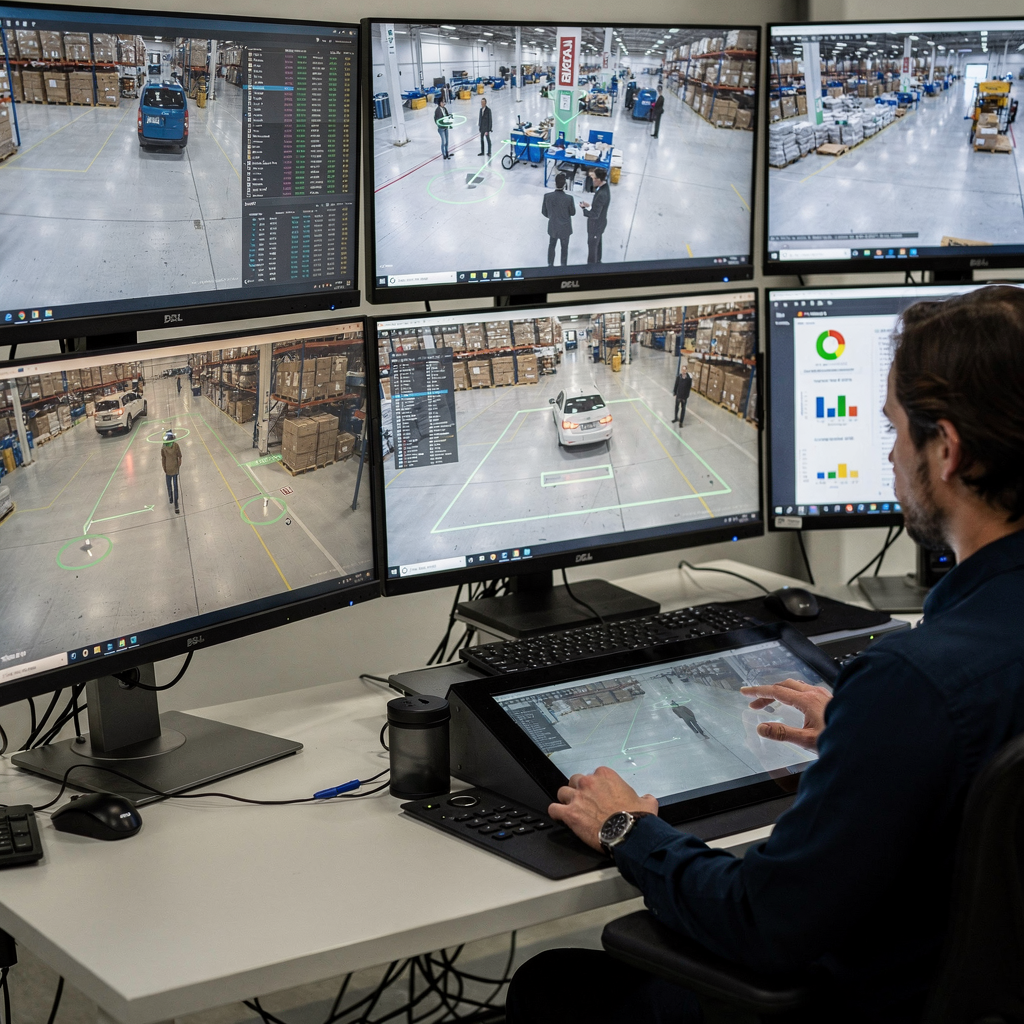
AI vision within minutes?
With our no-code platform you can just focus on your data, we’ll do the rest
ai-powered cameras and ai security cameras: boosting video security
First, the hardware layer matters. AI can run on the camera (edge) or on servers (central). Edge processing reduces network load and supports real-time alerts. Server-side analytics allow heavier models and cross-camera reasoning. Also, hybrid deployments combine both to balance latency and compute.
AI-powered cameras deliver initial detection and classification. They spot people, vehicles, helmets, and behaviors before streaming metadata. This lets VMS platforms like Avigilon consume concise event data instead of full video streams. As a result, networks use less bandwidth and security operators get faster, targeted alerts. visionplatform.ai supports these deployments by integrating cameras into an on-prem reasoning layer that keeps data local and private.
Integrations let ai security cameras feed Avigilon’s VMS for live insight. For example, AI can flag a person entering a restricted zone and the VMS can pull historical footage. Then, appearance search tracks that person across entrances and parking. This integration improves incident handling and forensic review. For airports, specialized detections such as PPE and people counting show how AI and cameras work together: PPE detection in airports and people counting in airports.
Real-world sites benefit from ai-powered cameras. Airports use on-edge analytics for crowd density and intrusion detection. Hospitals apply similar setups for indoor safety and IAQ monitoring while avoiding cloud processing (source). Therefore, AI helps protect people and assets while respecting data protection rules.
Finally, ai-powered cameras and connected analytics reduce noise in security operations. They detect breaking glass or gunshot sounds with integrated audio analytics, and they correlate those cues with video. Thus, the system issues real-time alerts that are more actionable. In practice, that means security operators receive verified situations rather than raw alarms, enabling faster, safer responses and better situational awareness.
transforming video with appearance search and predictive threat detection
Appearance search changes investigations. It finds the same person or object across dozens of cameras in minutes. First, metadata and visual descriptors index every appearance. Next, a search query returns time-stamped clips and camera paths. Avigilon appearance search accelerates this work. As a result, security teams can close investigations faster and reduce manual review.
Predictive threat detection uses pattern analysis over time. AI models detect trends that precede incidents. For example, repeated loitering near a loading dock may predict theft. Likewise, unusual crowd flows can forecast a safety hazard. Therefore, predictive analytics moves operations from reactive to proactive security.
One case study involved anomaly detection preventing an incident before it occurred. An airport deployment flagged abnormal movement near a perimeter gate. AI correlated small cues over multiple cameras and then raised an alert. Security personnel investigated and found attempts to bypass access control. The prompt response prevented escalation. This example shows how analytics to detect and classify objects and behaviors delivers preventive value.
Visionplatform.ai adds reasoning on top of these capabilities. Our VP Agent Reasoning verifies alarms, checks access control logs, and suggests actions. Thus, operators receive an explained situation: what was detected, what corroborates it, and what to do next. This reduces false positives and helps prioritize responses to potential threats in real-time.
Also, appearance search helps with license plate recognition tasks across entrances. It links vehicles to incidents and supports perimeter security and access control. For airports, forensic search tools show practical benefits for long investigations: forensic search in airports. Overall, combining appearance search with predictive threat detection raises detection quality and improves decision-making across security systems.
AI vision within minutes?
With our no-code platform you can just focus on your data, we’ll do the rest
considerations for implementing ai-powered video analytics on Avigilon
Technical requirements must be clear before rollout. First, camera resolution affects model accuracy. Next, network bandwidth and storage determine where analytics run—edge or server. Also, compute power, such as GPUs or avigilon ai appliance hardware, supports heavier models. Therefore, budget and site constraints guide architecture choices.
Security and data protection matter. Local, on-prem processing reduces cloud exposure and helps with EU AI Act compliance. visionplatform.ai emphasizes on-prem Vision Language Models so video and models remain inside customer environments. This approach helps with data protection and lowers cloud-based security risk. Also, it prevents sensitive footage from leaving the site while still enabling advanced reasoning.
Integration with other systems is essential. Analytics must tie into access control systems, incident management, and notification channels. For example, combining ANPR/LPR streams with gate logs strengthens access control and improves response. If you need examples, see our pages on ANPR integrations and intrusion detection in airports: ANPR/LPR in airports and intrusion detection in airports.
Training and phased roll-out reduce risk. Start with pilot zones, validate detection rates, and calibrate thresholds to site realities. Also, involve security operators early so they learn new workflows. This minimizes false positives and builds confidence. In addition, consider audit logs and explainable AI features to support security management and regulatory needs.
Finally, plan for scalability and maintenance. Models need updates and labeled data for continuous improvement. Also, ensure redundancy for critical streams and plan for incident responses that include both automated and human-in-the-loop options. With the right preparation, AI-powered solutions will enhance safety and operational outcomes while minimizing disruption to existing systems.
smarter security: transform video security with avigilon ai
Smarter security combines AI, Avigilon modules, and practical operations. First, AI improves detection quality and reduces false positives, which leads to fewer wasted responses. Also, this increases operational efficiency and supports better response times. In one study, organizations reported up to 40% efficiency gains after adding AI layers (source).
AI-powered video analytics and AI-driven analytics convert vast amounts of data into actionable insights. They detect and flag events like intrusion detection or a face on a watch list. When systems integrate, they allow security teams to respond with context and confidence. visionplatform.ai helps by exposing VMS data to AI agents that reason over events and recommend actions.
Look ahead at emerging trends. Edge AI will push more intelligence to cameras. Behavioural analytics will refine anomaly detection. Multi-sensor fusion will combine video, audio analytics, and environmental sensors to improve situational awareness. Also, hybrid on-prem architectures will balance privacy and scale. These trends will keep improving security technologies across sites and sectors.
Finally, practical benefits are clear. Smarter deployments minimize wasted patrols, speed investigations, and enhance safety. They allow security operators to focus on verified incidents and reduce cognitive load. As a result, security personnel can prioritize responses to potential threats and improve overall safety and security.
Overall, adding an AI layer on top of Avigilon is critical for next-generation security systems. It helps transform video into understanding, and understanding into action. For readers exploring real deployments, see examples such as vehicle detection and crowd density tools that work well with Avigilon platforms: vehicle detection in airports and crowd density detection in airports. Smarter security begins when AI meets practical operations.
FAQ
What is the main benefit of adding an AI layer to Avigilon?
The main benefit is improved detection accuracy and richer context for each event. AI turns raw video into actionable information, which helps teams respond faster and with more confidence.
How much can AI reduce false alarms?
AI-enhanced analytics can reduce false alarms dramatically, with studies showing reductions up to 90% (source). This reduction saves time and resources for security teams.
Do AI-powered cameras require cloud processing?
No. AI can run on-camera at the edge or on-prem servers to avoid cloud-based security concerns. In fact, on-prem models help with data protection and compliance.
Can AI work with existing Avigilon systems?
Yes. An AI layer can integrate with existing VMS and camera fleets to enhance capabilities without replacing hardware. visionplatform.ai focuses on integrating with existing systems for smoother adoption.
What is appearance search and how does it help?
Appearance search finds a person or object across multiple cameras quickly. It speeds investigations by linking sightings and timelines, making forensic work far more efficient.
Are there privacy risks with AI video analytics?
There are privacy considerations, and they must be addressed through policy, configuration, and on-prem deployment where required. Keeping processing local and maintaining audit logs helps with compliance and data protection.
How do AI systems improve response times?
AI filters noise and delivers contextual alerts, which reduces the time operators spend verifying incidents. Consequently, teams can act faster and focus on real incidents.
What technical requirements should I plan for?
Plan for sufficient camera resolution, network bandwidth, and compute resources such as GPUs. Also, consider whether edge or server processing best fits your site constraints and budget.
Can AI detect sounds like breaking glass or gunshots?
Yes. Integrated audio analytics can detect sounds such as breaking glass or gunshot and correlate them with video for faster verification. This capability improves situational awareness and speeds responses.
How should organizations roll out AI on Avigilon?
Start with pilot zones, validate detection thresholds, and involve operators in training. Also, phase deployments and use audits to track improvements and compliance, which helps ensure a successful long-term rollout.