ai Surveillance and modern forensic Video Analytics to speed up investigations
AI now converts traditional CCTV into actionable video analytics. It does so by running models on live streams and on recorded video. This turns passive cameras into sensors that report events, and then provide context and explanation. The shift matters because control rooms face thousands of hours of video and too many raw alerts. visionplatform.ai addresses that by adding a reasoning layer on top of existing cameras and VMS, so operators search across cameras and timelines in natural language, and then act with decision support.
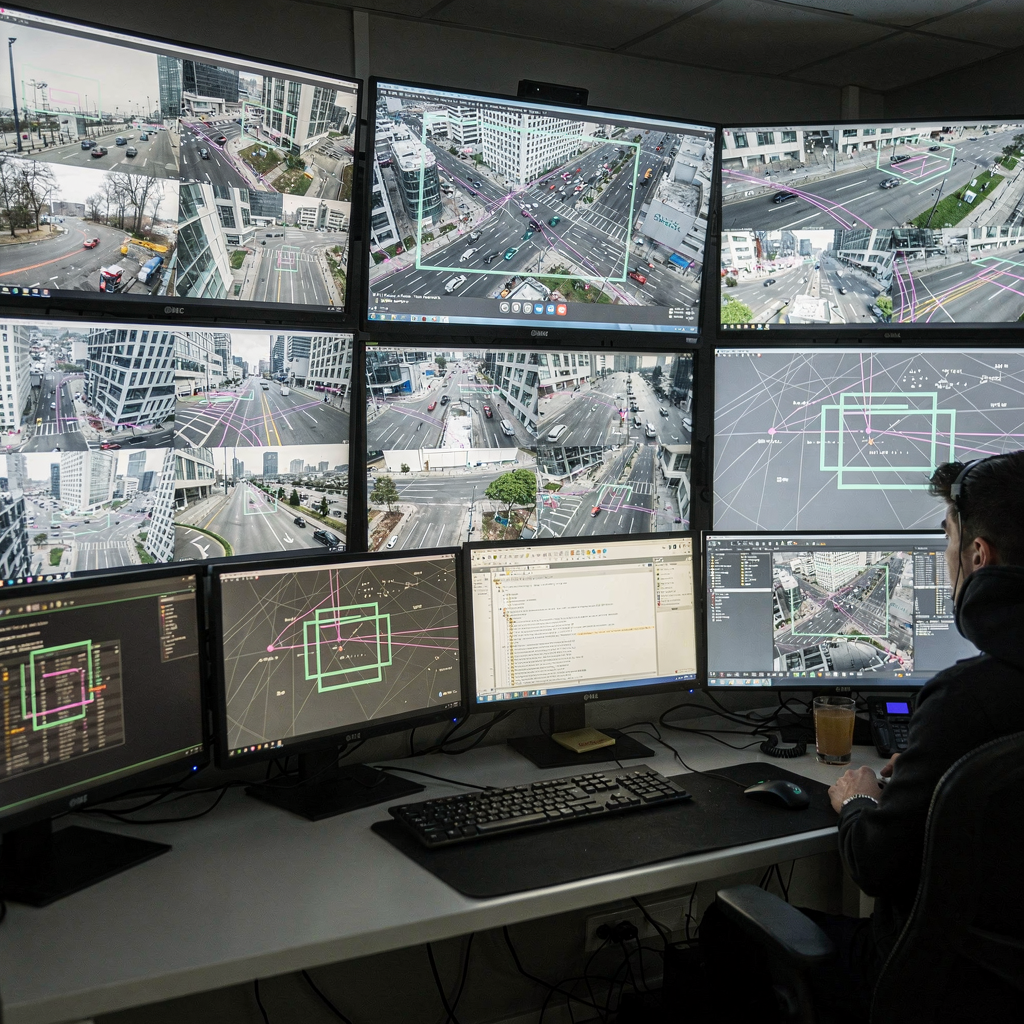
AI-enabled analytics speed up investigations and reduce false positives. For example, deployments report a 30 to 40 percent reduction in crime where smart cameras and related systems are used (Deloitte). Also, automated alerts can improve response times by about 50 percent compared with traditional monitoring (Horizon). These figures demonstrate why agencies adopt AI for safety and security.
How do AI systems work in modern forensic setups? First, AI models are trained on labeled images and video so they can classify people, vehicles, or behaviors. Then, pattern recognition and anomaly detection run continuously on incoming video data. The process uses both edge models and centralized servers, and it works with existing cameras and VMS to avoid rip-and-replace projects. Training uses curated datasets that reflect specific sites and lighting so that models match local reality.
AI analytics include motion detection, object classification, and behaviour scoring. They also generate rich metadata such as bounding boxes, object type, and confidence scores. This rich metadata makes every video searchable and reduces the time needed to locate relevant footage. Where a manual review might require scanning hours of video, AI can highlight suspect tracks within seconds. That near-instant visibility lets security teams focus on what matters, improving verification workflows and letting operators close cases faster.
Agencies must balance capability with governance. The NCSL and other bodies outline frameworks to ensure transparency and correct use, and to protect privacy rights while leveraging artificial intelligence for public safety (NCSL). For sites that require on-prem processing, visionplatform.ai supports control room AI agents and local model hosting so video, models, and reasoning remain inside the environment. This reduces cloud dependency and helps with EU AI Act alignment.
Forensic Video Search and advanced forensic search reduce investigation time with accurate results
The move from manual review to automated forensic search is dramatic. Previously, investigators would watch recorded video by hand. Now, forensic search platforms index events and convert them into searchable descriptions. This means teams can run natural language queries or targeted search queries to find incidents. VP Agent Search from visionplatform.ai, for instance, turns video frames into readable descriptions so operators can use plain language like “person loitering near gate after hours.” The search feature helps teams sift hours of video without memorizing camera IDs or timestamps.
Advanced forensic search can reduce video review by up to 90 percent in many workflows. Vendors and case studies report that AI-powered systems cut review time and let analysts concentrate on verification and contextual analysis (LVT). That reduction directly lowers investigation time and lets departments close cases faster. The search engines behind these platforms rely on indexed metadata, thumbnails, and extracted text to return precise search results. As a result, the process is much more efficient than traditional play-and-watch workflows.
Accuracy matters because video evidence must be admissible. Advanced pipelines include quality controls, audit logs, and model explainability to ensure that detected events are verifiable in court. Forensic video workflows often add timestamps, camera IDs, and hash checks to recorded video to preserve chain of custody. These safeguards reduce the risk of error and support the use of video evidence during legal proceedings. When AI shows how a match was made, investigators and legal teams gain confidence in the output.
Platforms integrate with video management systems and case management tools so that flagged clips flow directly into investigative workflows. For instance, an alert can spawn a case, create a clip with rich metadata, and attach that clip to an incident entry. This end-to-end path reduces administrative overhead. In practice, investigators shift from scanning hours of footage to reviewing short, relevant clips that include the context they need. The combined effect is faster, more accurate investigations and better use of analyst time.
AI vision within minutes?
With our no-code platform you can just focus on your data, we’ll do the rest
Video Search: search across cameras and search filters for granular investigations
Modern video search allows investigators to track an individual across all cameras and city networks. Multi-camera stitching and synchronized timelines provide an uninterrupted track of movement. Search across cameras is supported by cross-camera re-identification and timeline correlation. This capability makes it possible to locate an individual across multiple cameras without manual hopping from feed to feed.
Search filters enable granular queries by time span, object type, color, motion, and direction. You can search for a vehicle type or for a person wearing specific clothing. These targeted search filters help teams locate relevant video quickly. For large sites, search across multiple cameras saves hours because the system can follow a subject from parking to gate. The search allows operators to isolate near-instant movements and to extract relevant clips for analysis or evidence.
Workflows become specific and repeatable. For example, an investigator might run a targeted search for a red truck seen near a loading bay yesterday evening. The system will return thumbnails and video frame snippets ranked by confidence, and then provide links to the matching recorded video. That precise search reduces false leads and helps identify suspects. Search parameters include speed, direction, and dwell time, and they can be combined to create complex, but efficient, queries.
Integrations with VMS and camera manufacturers make it possible to query every video without exporting raw streams. When video management is centralized, enriched search results can be fed into case management and access control systems. For airports or transport hubs, see how people detection and ANPR/LPR features work for site operations in specialized deployments such as people detection in airports and ANPR implementations people detection in airports and ANPR/LPR in airports. These pages show practical applications of multi-camera search and how they support operational tasks and forensic investigations.
ai Video metadata and video evidence in forensic investigations
Automatic metadata tagging is central to modern forensic workflows. AI extracts timestamps, GPS where available, object counts, and behaviour labels, and then stores them as rich metadata. This metadata lets teams locate relevant footage using plain language or structured queries. Rich metadata also allows linking of separate events that share attributes. For instance, when a vehicle type and license plate appear in two locations, the system can propose a correlation and present the matching clips.
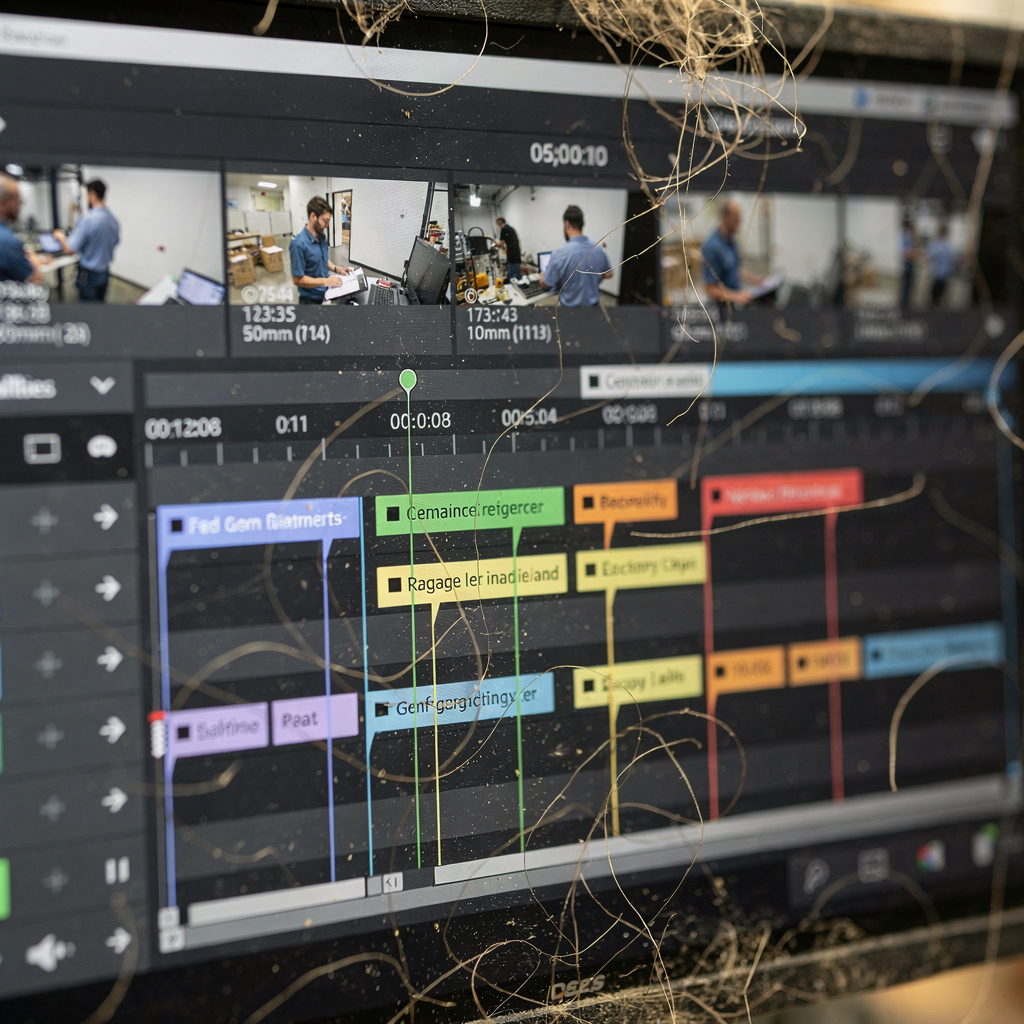
Metadata speeds case building. A single search can return thumbnails, timestamps, and short clips that summarize what happened. That saves hours of video review and simplifies the handover to prosecutors. The platform can also export video evidence with embedded metadata so that chain-of-custody and audit trails remain intact. This approach reduces time spent on administrative tasks and increases time available for substantive analysis.
Interoperability matters. Visionplatform.ai connects with common VMS platforms and exposes event streams via MQTT and webhooks so that video evidence flows into evidence systems and analytics dashboards. The platform also supports export formats required by courts and law enforcement. By integrating with access control and case management, investigators can correlate badge swipes with video and then build a timeline that includes both physical access logs and visual proof. This combined view strengthens investigative narratives and supports admissible evidence.
Storing rich metadata on-prem or in secure enclaves also supports compliance. Cloud-based processing is optional, and on-prem deployments keep video, models, and reasoning inside controlled boundaries. That reduces compliance risk while maintaining the benefits of automated indexing, precise search, and fast case progression. In practice, teams find this model enables faster linkage between events and suspects and reduces the time to identify suspects from days to hours.
AI vision within minutes?
With our no-code platform you can just focus on your data, we’ll do the rest
Facial Recognition and license plate recognition in ai-powered video surveillance
Facial recognition and license plate recognition are core ai-powered forensic capabilities. Facial recognition workflows begin with enrolment, where reference images are added to a secure watchlist. During operations, the system compares live or recorded video against these templates. Match thresholds and verification steps govern how alerts are generated so that operators get high-confidence hits instead of raw matches. These thresholds are configurable and must balance sensitivity with false positives.
License plate recognition supports vehicle investigations and traffic monitoring. The system reads plates from recorded video, normalizes characters, and then matches them against databases. Investigators can export license plate data and correlating clips for further inquiry. For details on ANPR use cases in transport environments see the practical examples from our airport integrations ANPR/LPR in airports.
Both facial recognition and license plate recognition require governance. Legal frameworks and policies define acceptable use, retention periods, and access controls. For example, systems deployed with on-prem processing can reduce privacy risk by keeping data local and auditable. visionplatform.ai offers on-prem Vision Language Models and agent workflows so that image matching and reasoning stay within the site. This supports compliance while allowing security teams to identify suspects and to locate relevant video quickly.
Deployment examples show real gains. When operators pair ANPR with geo-fencing, they can automatically flag suspicious vehicles and then pull relevant clips across cameras to confirm direction and speed. Similarly, when facial recognition returns a match above a set threshold, the platform can assemble a timeline that shows the individual’s path across cameras on the site. These workflows let investigators close cases faster while maintaining a clear record of how matches were obtained and verified.
Forensic search capabilities and video review: improve search results and reduce investigation
Forensic search capabilities now include behaviour analysis, motion alerts, and natural language search. These features create searchable, human-friendly descriptions from video frames so that operators can ask questions and get answers. The VP Agent Suite, for example, maps video events to textual descriptions so search queries return relevant clips and thumbnails. This searchable index turns every video into evidence that can be queried by plain language.
Compare manual vs AI-powered video review. Manual review requires staff to watch recorded video, often spending hours to find short events. AI-powered review lets the system sift, rank, and present relevant clips so that analysts focus on verification. The system can find people or vehicles across cameras on your site, and then assemble the clips into a single timeline for easy review. This makes the review process much more efficient and reduces investigation time.
AI model updates will continue to improve accuracy and reduce false alarms. Regular retraining on site-specific data and the use of custom models mean that systems get better over time. Operators can tweak search filters and search parameters to match local conditions, which improves precise search performance. Over time, the combination of better ai models and tighter workflows will make forensic investigations faster, more accurate, and less resource intensive.
Finally, practical features such as thumbnail previews, clip exports, and chain-of-custody logs make AI outputs usable in court. These tools ensure that search results are defensible and that video forensics meets evidentiary standards. With the right policies and integration, a platform becomes a powerful tool for both security teams and investigators, enabling them to locate relevant footage, identify suspects, and close cases faster while preserving auditability and compliance.
FAQ
What is AI-powered forensic CCTV and video search?
AI-powered forensic CCTV and video search is a set of systems that use artificial intelligence to index, analyse, and retrieve recorded video. These systems convert video into searchable metadata and human-readable descriptions so investigators can find relevant video quickly.
How much can AI reduce investigation time?
AI solutions commonly reduce video review time dramatically; some reports show cuts of up to 90% for routine review tasks (LVT). This frees analysts to focus on verification and case building.
Can these systems track an individual across multiple cameras?
Yes. Cross-camera re-identification and timeline stitching let systems follow an individual across a network. That feature supports city-scale investigations and site-level workflows such as those used in airports and transport hubs.
Are facial recognition and license plate recognition included?
Facial recognition and license plate recognition are common modules in AI surveillance platforms. They provide enrolment, matching, and configurable thresholds, and they can export license plate data for investigations (ANPR/LPR in airports).
How is video evidence preserved for court?
Platforms add timestamps, hashes, and audit logs to ensure chain of custody. They also allow clip export with embedded metadata so that video evidence remains verifiable and admissible.
What about privacy and legal compliance?
Governance policies, retention limits, and on-prem deployments help meet legal requirements. State and federal guidance, and frameworks from groups such as the NCSL, inform acceptable use and transparency (NCSL).
Can I use AI with my existing cameras and VMS?
Yes. Many providers integrate with existing camera fleets and major VMS platforms. For airport operations, integrations exist for people detection and ANPR to augment current systems (people detection in airports).
Do these systems require cloud processing?
No. On-prem options keep video, models, and reasoning inside the environment, which helps with compliance and reduces cloud dependency. visionplatform.ai offers on-prem Vision Language Models for local processing.
What are common forensic search filters?
Search filters include time span, object type, color, motion, and direction. Together they allow granular searches that return thumbnails, relevant clips, and precise search results quickly.
How do AI updates affect investigations?
AI model updates improve detection accuracy and reduce false alerts over time. Regular retraining with local data and custom classes increases performance and further reduces investigation time.