solution overview of genetec security center
Genetec built the Security Center as a unified platform for video surveillance and access control. The platform brings Omnicast for IP video and Synergis for access control together. First, it provides a common interface for multiple cameras and for access control devices. Next, it allows security teams to manage incidents from a single point. Also, the platform can integrate AI modules that process live camera output. For example, AI models analyze camera feed and convert video data into digital objects for faster decision making. Additionally, the architecture supports modular AI that runs at the edge or in data centers and that can integrate with on-site systems.
Genetec Security Center can scale to large environments. In fact, platforms like this handle vast numbers of video streams; a published analysis showed systems managing nearly 200,000 video streams simultaneously, which demonstrates the scale modern solutions must support [source]. Therefore, sites such as airports and city-wide deployments rely on such capacity to maintain continuous monitoring. Also, the resilient design offers failover, load balancing, and distributed recording to protect recorded video and to sustain operations during maintenance.
Genetec integrates AI modules directly into the security center architecture. These modules can detect objects, flag suspicious activity, and generate real-time alerts to operators. The system can detect unauthorized access and then raise an alarm with contextual metadata. Also, it can automatically detect movement in restricted zones and produce a notification for immediate review. In addition, the combined suite provides actionable data that speeds up investigations and supports forensic search across recorded video [source]. This approach aligns with the modern need for unified management and for turning raw video into useful intelligence.
For organizations planning large-scale deployments, integrating Genetec Security Center offers a clear solution overview. Visionplatform.ai can complement such deployments by adding a reasoning layer on top of video events. For example, our platform turns detections into context and decision support, which helps security teams handle higher alarm volumes while preserving operator attention. Finally, the combined architecture supports existing security infrastructure and allows for phased rollouts without replacing cameras or VMS.
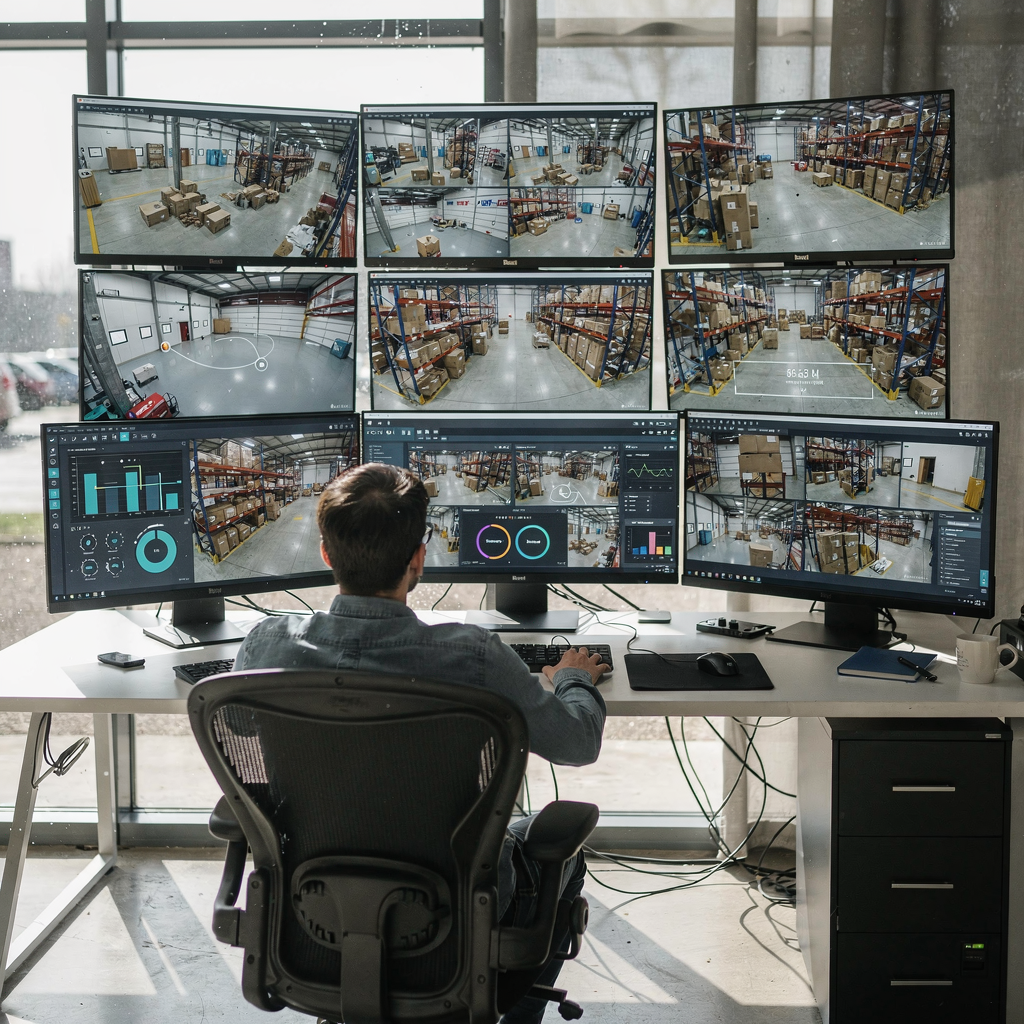
features and benefits of ai video analytics solution
Genetec’s suite delivers core AI features that transform surveillance into intelligent monitoring. First, object detection identifies people, vehicles, and items across multiple cameras. Next, behavior analysis recognizes movement patterns and can detect loiter or unusual actions. Also, facial recognition supports identity verification where policies permit. These capabilities work together to detect potential threats and to flag events for operator review. The suite provides a clear set of features and benefits for security operations, incident response, and post-incident analysis.
The platform produces real-time alerts and automated threat scoring. Consequently, security personnel receive context-rich alarms in the same unified interface. For example, a rule can raise an alert when a person crosses a restricted perimeter. Then, the system can attach object snapshots and timestamps to speed up triage. Also, organizations report significant reductions in false alarms; AI-driven rules cut nuisance alerts by up to 80% in similar deployments, which lowers operator fatigue and improves accuracy [source].
Operational gains follow naturally. First, faster incident response reduces dwell time for real events. Second, automated workflows reduce the monitoring workload and free security personnel for higher-value tasks. Additionally, features like forensic search let teams search recorded video using event metadata, which speeds up investigations. For sites that need people counting and occupancy levels, ambient analytics provide metrics that support business decisions. For healthcare, intelligent video analytics can lessen routine checks and reduce human error during monitoring [source]. As a result, safety and operational efficiency improve simultaneously.
Finally, the suite is designed for seamless integration into existing security systems. APIs and SDKs allow organizations to integrate the Genetec Security Center with third-party tools. Also, the platform supports rule-based automation and can trigger PTZ tracking, alarms, and centralized notifications. This makes the solution ideal for enterprises that require both security and operational oversight.
AI vision within minutes?
With our no-code platform you can just focus on your data, we’ll do the rest
surveillance detection with advanced video analytics
Advanced video analytics include multiple classes of detection technology. For instance, anomaly detection spots behavior that deviates from normal movement patterns. Also, line crossing detects when an object crosses a virtual boundary. Next, loiter and intrusion detection identify people who remain in an area unexpectedly or who enter restricted zones. These focused analytics let teams concentrate on what matters. Additionally, license plate recognition and weapon detection extend the coverage for transport hubs and critical sites. The suite provides advanced video analytics tools that enhance situational awareness and support real-time action.
In critical environments like airports and city-wide public safety networks, the detection capability matters. Airports use people detection and ANPR/LPR for flow management and security. For example, people-counting and crowd density analytics inform decisions during peak hours; operators also rely on forensic search to review incidents after the fact [internal]. City deployments use distributed detection to coordinate security responses across jurisdictions. In every case, analytics work together to provide timely notifications and to reduce false alarms overall.
Performance matters, too. Modern systems aim for high accuracy and low latency. For example, well-tuned pipelines can reach accuracy rates suitable for operational deployment and can process events with processing latency under 200 ms. Therefore, alerts reach operators quickly, and PTZ cameras can reposition without delay. Also, by combining analytics with human verification, teams can validate alarms faster. As one source observed, “AI-powered video analytics transform passive surveillance into proactive security, enabling organizations to anticipate and mitigate risks before they escalate” [quote]. This approach supports both detection of potential threats and the preservation of public safety.
For operators who need focused detection, visionplatform.ai complements these capabilities by translating detections into human-readable descriptions and by enabling natural language forensic search [internal]. Also, the control room agents reduce verification time and help to coordinate consistent security responses across teams.
ambient ai video analytics for operational efficiency
Ambient AI video analytics provide non-security insights that drive operational efficiency. First, people counting helps measure occupancy levels in retail, transport, and healthcare. Second, heat-mapping visualizes movement patterns and shows high-traffic zones. Also, queue management detects long waits and notifies staff to open more service lanes. These analytics support process improvements that benefit customers and operations alike.
In retail, occupancy levels and heat maps guide staff allocation and store layout changes. For instance, retailers can reassign staff during peak times to reduce queue length and to improve customer flow. Similarly, in transport hubs such as airports, operators use crowd detection and density analytics to balance passenger flows and to prevent bottlenecks [internal]. In healthcare, ambient analytics reduce the burden on staff by automating routine monitoring tasks. For example, fall detection and people counting free clinicians to focus on patient care rather than on constant camera watching [internal]. As a result, organizations save time and reduce errors through automation.
Ambient analytics also produce measurable gains. Automation of monitoring tasks can cut time spent on routine checks by a large margin. For example, AI-assisted monitoring in hospitals reduces manual observation and lowers staff workload, which results in faster responses and fewer missed events [source]. Therefore, the business case for ambient AI includes both safety and operational efficiency gains. Also, insights from ambient analytics feed business intelligence systems for long-term planning.
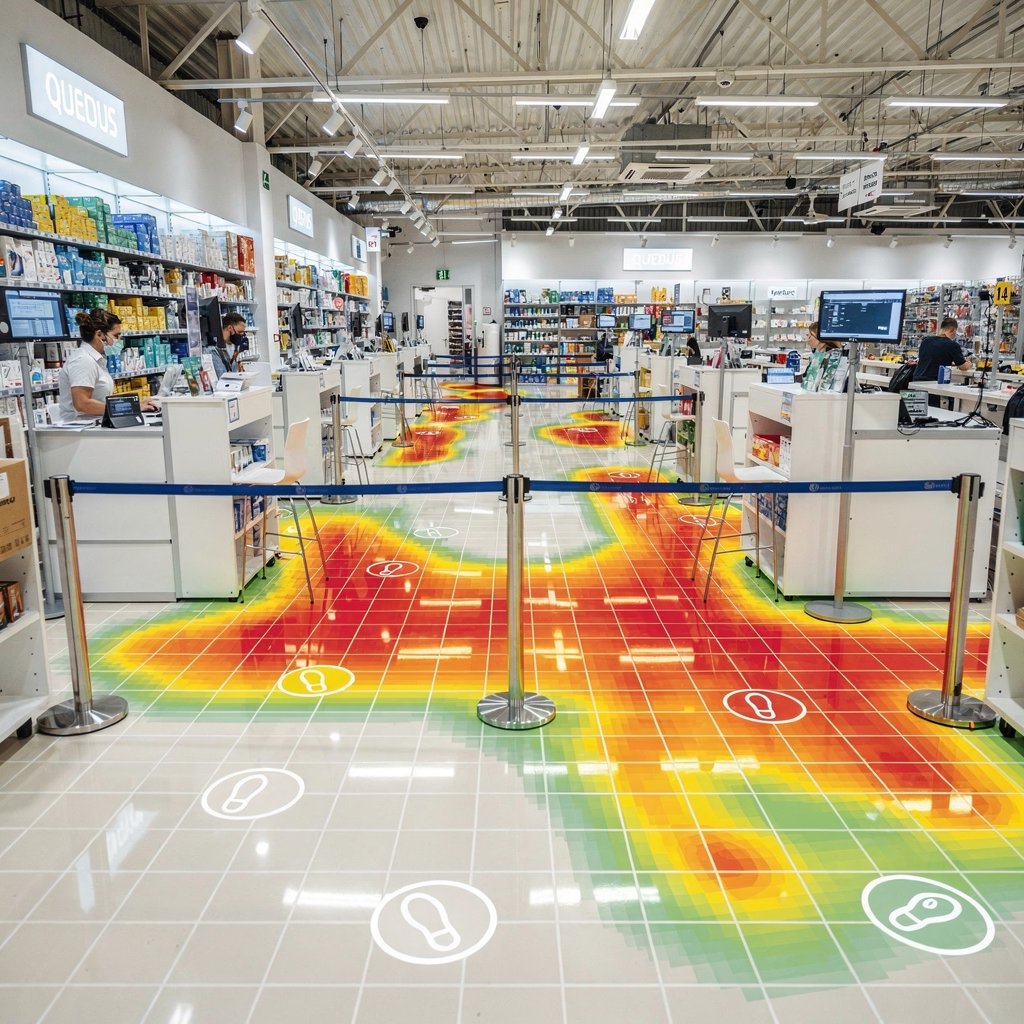
Finally, ambient analytics integrate with other systems to trigger action. For example, a dashboard can combine occupancy, access control events, and video analytics to provide a unified picture. This unified management enables teams to act on insights, and it helps security personnel to prioritize real incidents over incidental ones.
AI vision within minutes?
With our no-code platform you can just focus on your data, we’ll do the rest
integrate video management system and automation
Integrating AI analytics into the video management system is essential for seamless operations. The Genetec Security Center supports APIs and SDKs to expose events and to allow third-party automation. For example, rule-based automation can auto-trigger recording, start PTZ tracking, and send an alert to a mobile team. Also, the management system can forward notifications to facility systems, thereby connecting video data with building automation and with incident management workflows. This level of integration helps security teams respond faster and more consistently.
When integrating, teams should plan for event handling, logging, and permissions. Alarms in Genetec Security Center can be enriched with metadata, snapshots, and links to related access control events. In turn, this context speeds up verification and reduces unnecessary escalations. Also, solutions like visionplatform.ai offer a reasoning layer that verifies alarms and explains why an event matters. For example, the VP Agent Reasoning correlates analytics, VMS data, access control logs, and procedures to produce actionable intelligence that operators can use immediately.
Integrating Genetec VMS with AI pipelines often uses webhooks, MQTT streams, and REST APIs. Therefore, developers can build workflows that automatically detect suspicious activity and then trigger predefined actions. Additionally, forensic search capabilities let investigators find relevant video quickly without knowing camera IDs or exact timestamps. This functionality supports audits and long-form investigations. Also, integrating intelligent security into existing surveillance infrastructure allows teams to scale with fewer personnel.
Finally, rule-based automation improves consistency and frees resources. For instance, a rule can detect unauthorized access and immediately alert a guard team, while also creating a pre-filled incident report. In that way, automation both reduces manual steps and improves compliance with procedures. The result is faster, more reliable security operations that lower response times and increase situational awareness.
privacy protection and use cases for security solution
Privacy protection must be a core part of any AI deployment. Genetec and similar vendors emphasize privacy-by-design measures, including encryption at rest, data anonymisation, and role-based access to video footage. Also, operator training on data protection and ethical AI use is crucial. In fact, railway and transport operators document procedures for ethical AI deployment and operator education to ensure lawful processing [source]. Therefore, policies and technical controls together maintain compliance and build public trust.
Compliance with EU GDPR and with local privacy laws depends on clear data governance. For example, data retention rules, audit logs, and controlled access support regulatory needs. Also, solutions that process video on-prem reduce the need to transfer video off-site, which helps with EU AI Act alignment and with reducing cloud-related compliance risks. Visionplatform.ai emphasizes on-prem Vision Language Models and agent-based reasoning to keep video, models, and reasoning inside the environment by default. This approach supports privacy protection and minimizes external data exposure.
Real-world use cases show the breadth of application. City surveillance uses distributed detection to improve public safety and to coordinate first responders. In hospitals, video analytics support patient safety through fall detection and PPE detection while also improving staff workflows. Retail loss prevention benefits from object detection and forensic search to track suspicious behavior and to reduce shrinkage. For airports, ANPR/LPR and perimeter breach detection combine to protect restricted areas and to keep passenger flows safe [internal].
Finally, ethical deployment includes human oversight and clear escalation rules. AI to detect events should be transparent and auditable. Also, teams must limit data access and maintain logs for all security responses. With these controls, organizations can deploy intelligent security in a way that balances safety, privacy protection, and operational needs.
FAQ
What is Genetec Security Center?
Genetec Security Center is a unified platform that combines video surveillance and access control into one management system. It allows operators to manage alarms, recorded video, and access events from a single interface.
How does AI integrate with video management systems?
AI integrates via APIs, SDKs, and event streams that feed detections into the VMS. Then, rule-based automation can trigger recordings, PTZ tracking, and notifications automatically.
Can AI reduce false alarms?
Yes, AI can reduce false alarms by scoring detections and by adding contextual filters. As a result, operators spend less time on nuisance alerts and more time on verified incidents.
Are there privacy safeguards for AI-powered video analytics?
Privacy safeguards include encryption at rest, data anonymisation, and role-based access to recorded video. Also, on-prem processing can minimize cloud transfers and support regulatory compliance.
What are common use cases for ambient AI analytics?
Common use cases include people counting, heat-mapping, and queue management for retail, transport, and healthcare. These features improve operational efficiency and staff allocation.
How quickly do AI alerts reach operators?
Modern pipelines target low latency; many systems process events in under 200 ms. Therefore, alerts can reach operators in near real time, enabling faster responses.
Can existing cameras be used with AI systems?
Yes, many AI solutions work with ONVIF and RTSP cameras so you can use existing hardware. This approach reduces deployment costs and speeds up integration.
What training do operators need for ethical AI use?
Operators need training on data protection, privacy rules, and how to interpret AI outputs. Also, training should cover escalation procedures and audit logging for transparency.
How does forensic search improve investigations?
Forensic search lets investigators query recorded video using event metadata and descriptive terms. This speeds up finding relevant recorded video and reduces manual review time.
How can visionplatform.ai help control rooms?
visionplatform.ai adds a reasoning layer that converts detections into context and decision support. The platform helps operators verify alarms, search video in natural language, and automate incident workflows.