AI video Search in Video Surveillance
AI video search refers to systems that convert camera streams into searchable knowledge. Also, additionally, now, next, then, therefore, thus, consequently, meanwhile, likewise, similarly, hence, nonetheless, otherwise, subsequently. Cameras capture hours of footage. Also, additionally, now, next, then, therefore, thus, consequently, meanwhile, likewise, similarly, hence, nonetheless, otherwise, subsequently. Operators no longer need to scan frame-by-frame. AI extracts metadata and tags scenes so teams can quickly find specific footage. Also, additionally, now, next, then, therefore, thus, consequently, meanwhile, likewise, similarly, hence, nonetheless, otherwise, subsequently.
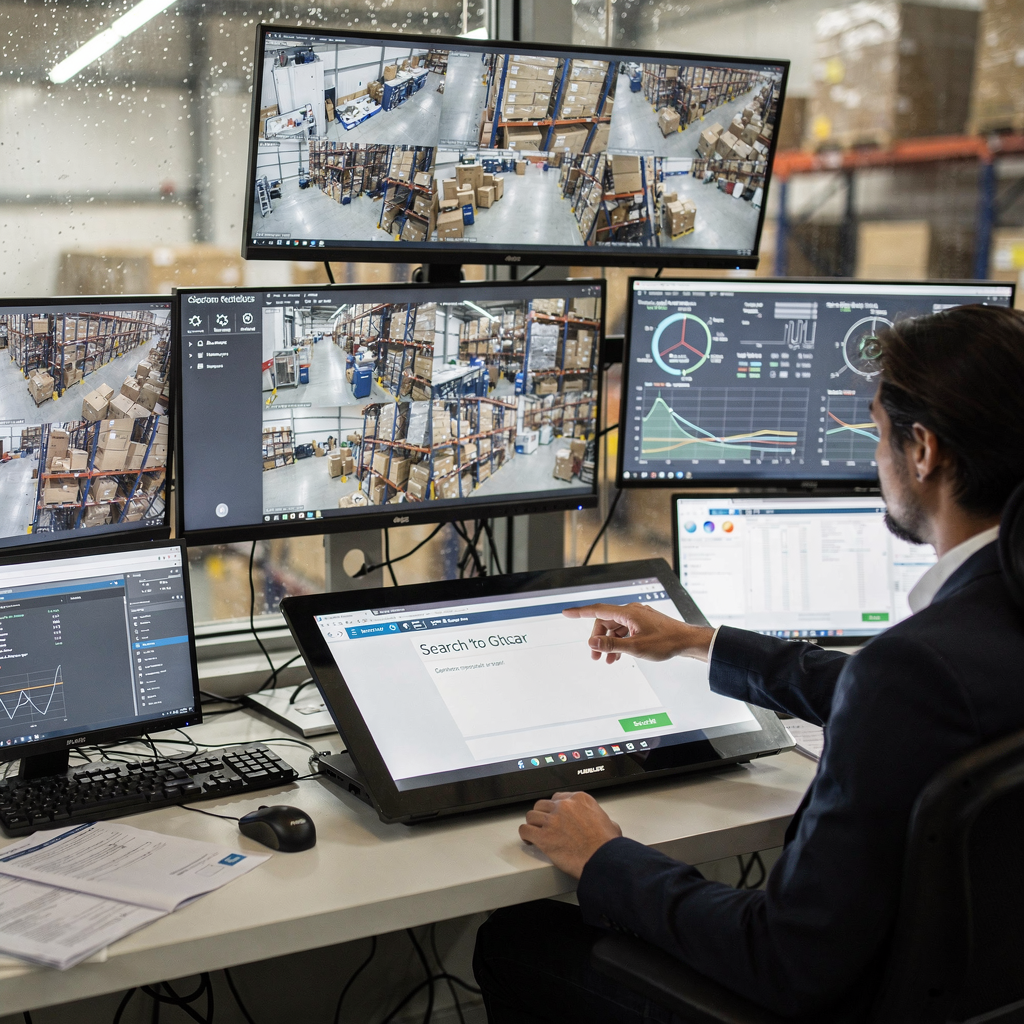
The role of AI in modern video surveillance is to transform raw camera output into precise, retrievable events. Also, additionally, now, next, then, therefore, thus, consequently, meanwhile, likewise, similarly, hence, nonetheless, otherwise, subsequently. Metadata tagging and object recognition replace manual review by labeling people, vehicles, and behaviors with human-readable descriptors. For example, visionplatform.ai converts video into descriptions that operators can search using natural language. This approach lets control rooms focus on critical events, not on hours of footage. Also, additionally, now, next, then, therefore, thus, consequently, meanwhile, likewise, similarly, hence, nonetheless, otherwise, subsequently.
Search moves from slow inspection to instant retrieval. Also, additionally, now, next, then, therefore, thus, consequently, meanwhile, likewise, similarly, hence, nonetheless, otherwise, subsequently. Instead of checking timestamps, security professionals can ask for a specific scene and the system will quickly locate matching clips. This smart video search capability shortens investigations and supports faster resolution of incidents. Also, additionally, now, next, then, therefore, thus, consequently, meanwhile, likewise, similarly, hence, nonetheless, otherwise, subsequently. According to market estimates the AI market in video surveillance rose to USD 6.51 billion in 2024 and is forecast to reach USD 28.76 billion by 2030 (Grand View Research). Also, additionally, now, next, then, therefore, thus, consequently, meanwhile, likewise, similarly, hence.
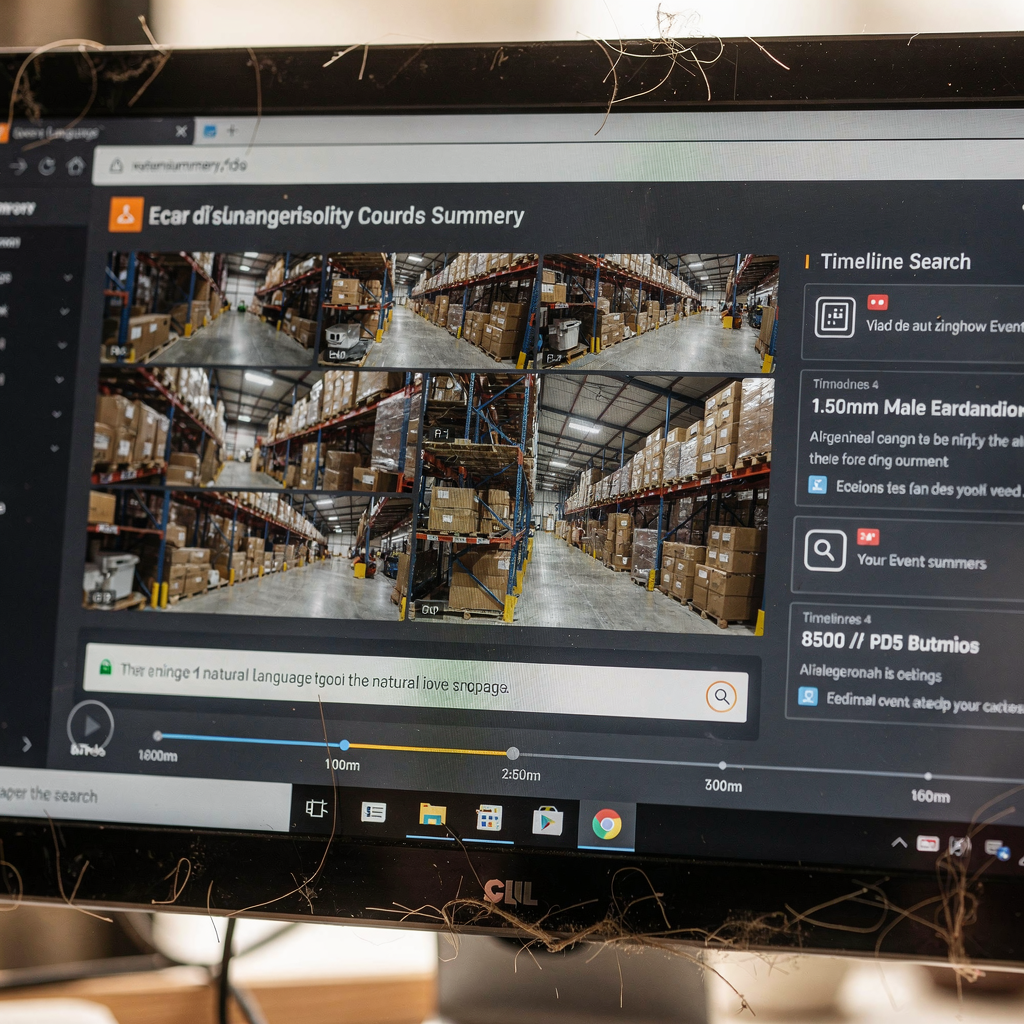
Natural language search removes the need to know camera IDs. Also, additionally, now, next, then, therefore, thus, consequently, meanwhile, likewise, similarly, hence, nonetheless, otherwise, subsequently. Operators simply describe what they want. Also, additionally, now, next, then, therefore, thus. A single query can return clips across multiple cameras and timelines. AI provides descriptions that match human reasoning. Also, additionally, now, next, then, therefore, thus, consequently, meanwhile, likewise.
AI-powered Solutions Versus Traditional Security Solutions
AI-powered search beats old-school, frame-by-frame review in speed and accuracy. Also, additionally, now, next, then, therefore, thus, consequently, meanwhile, likewise, similarly, hence. Legacy methods ask operators to watch video footage for hours. Also, additionally, now, next, then, therefore. By contrast, AI identifies specific objects and behaviors in seconds. This reduces the time needed to resolve incidents and helps security teams focus on decisions, not on searches. Also, additionally, now, next, then, therefore, thus.
AI reduces false positives and cuts unnecessary responses. Also, additionally, now, next, then, therefore, thus, consequently. SDM Magazine reports that AI advances “reduce false alarms and improve event detection” (SDM Magazine). Also, additionally, now, next, then, therefore, thus. Vision providers show how AI-powered video surveillance turns detections into actionable cases. For example, IC Realtime noted that their AI-powered search helps users find critical events in seconds rather than hours (IC Realtime via SDM). Also, additionally, now, next, then, therefore.
Traditional security solutions depend on rules and fixed motion thresholds. Also, additionally, now, next, then, therefore, thus. Those rules generate many alerts that need manual vetting. AI features instead allow contextual verification and scoring. This makes it easier to prioritize threats. Also, additionally, now, next, then. Operators receive an explained alert instead of raw data. AI reasoning reduces cognitive load during busy shifts. Also, additionally, now, next, then, therefore, thus.
Real deployments show measurable gains. Also, additionally, now, next, then, therefore, thus. Vendors report reductions in review time and fewer false alarms after deploying ai-powered analytics and forensic search. For operational efficiency benefits, see case studies and analyses that highlight faster incident response and better allocation of patrols (Omnilert). Also, additionally, now, next, then, therefore, thus. The shift improves both detection and verification, and it supports scalable monitoring across sites. Also, additionally, now, next.
AI vision within minutes?
With our no-code platform you can just focus on your data, we’ll do the rest
Smart Video Search in Cloud Based Video Security
Cloud based storage and compute make smart search available to distributed teams. Also, additionally, now, next, then, therefore, thus, consequently, meanwhile. Cloud video security gives operators remote access to recorded clips and live feeds. Also, additionally, now, next, then. Smart video search filters by people, vehicles or behaviours and returns relevant video across cameras simultaneously. This saves time and helps teams focus on what matters. Also, additionally, now, next, then, therefore, thus.
Cloud camera deployments scale easily. Also, additionally, now, next, then, hence. Organisations supporting enterprise operations can add sites without heavy local infrastructure. Also, additionally, now, next, then. Smart filters let control rooms query for a face or a vehicle and receive results from many locations. This face search and license plate recognition example shows how systems quickly locate people and assets. Also, additionally, now, next, then, therefore, thus. For airports and other transport hubs, forensic search workflows speed investigations; see visionplatform.ai’s forensic search example for airports (forensic search in airports). Also, additionally, now, next.
Cloud deployments raise questions about cloud security and data sovereignty. Also, additionally, now, next, then, therefore. Some organisations prefer on-prem options to keep video data inside the site. visionplatform.ai offers on-prem Vision Language Models so teams can retain control while still benefitting from intelligent video features. Also, additionally, now, next, then, therefore. Cloud and hybrid models both support multi-site scalability, but policy, cost, and compliance determine the right choice. Also, additionally, now, next.
Smart video search supports workflows that cross systems. Also, additionally, now, next, then. It can link access control logs, badge events, and camera feeds for richer context. This lets operators verify a visitor against an access record. Also, additionally, now, next, then, therefore. For licence plate workflows in transport and parking, see dedicated ANPR examples such as ANPR/LPR solutions for airports (ANPR/LPR in airports). Also, additionally, now.
AI-driven Analytics to Streamline Security Operations
AI-driven analytics detect motion, faces, and behaviors with increasing accuracy. Also, additionally, now, next, then, therefore, thus. Motion detection and facial matching support rapid triage. Also, additionally, now. Behavioural analytics spot loitering, crowding, and anomalies so operators can respond before incidents escalate. Also, additionally, now. Employing intelligent video reduces time wasted on false positives. Also, additionally, now, next, then, therefore. visionplatform.ai uses a Vision Language Model to turn detections into explanations that help operators decide quickly. Also, additionally, now, next.
Systems streamline incident response and resource allocation by providing actionable insights. Also, additionally, now, next, then. Instead of sending patrols blindly, supervisors can verify the situation in specific footage and then dispatch staff. Also, additionally, now, next. The result is fewer unnecessary dispatches and faster resolution when matters are real. Also, additionally, now, next, then, therefore. Real-world deployments report steep drops in review time and faster case closures. For operational efficiency context, see analytics discussions in industry summaries (Omnilert). Also, additionally, now.
AI helps control rooms focus on critical moments. Also, additionally, now, next, then, therefore, thus. Agents can verify an alert by correlating video descriptions, access logs, and nearby camera evidence. Also, additionally, now. This correlation reduces uncertainty and increases confidence in decisions. Also, additionally, now, next. With integrated workflows, operators can create incident reports and share clips across teams quickly. Also, additionally, now, next, then. The capability to stream events across multiple systems simplified daily tasks. Also, additionally, now, next.
Some modules support automated actions for routine cases. Also, additionally, now, next, then. For low-risk, repeatable scenarios, the system can close false alarms or notify teams without manual steps. Also, additionally, now. This reduces workload and lets staff protect people where it matters most. Also, additionally, now, next, then. For airport settings, modules such as loitering detection improve monitoring of gates and perimeters (loitering detection in airports). Also, additionally, now.
AI vision within minutes?
With our no-code platform you can just focus on your data, we’ll do the rest
AI Solutions for Access Control and Visitor Management
AI solutions link video search with badge logs and door controllers to improve access control. Also, additionally, now, next, then, therefore, thus. When a door opens outside scheduled hours, the system can quickly find the specific footage and match it to a badge event. Also, additionally, now. This saves time during investigations and prevents escalation. Also, additionally, now, next. Integrating video intelligence with access control reduces blind spots in security operations. Also, additionally, now, next, then.
Visitor management benefits from automated verification and anomaly alerts. Also, additionally, now, next. AI can flag a visitor who lingers in restricted zones, and then provide the related video, access record, and a recommended response. Also, additionally, now, next, then, therefore. The platform surfaces precise identification data and suggested steps, which helps staff resolve incidents promptly. Also, additionally, now, next. For retail and corporate installations, linking visitor flows to camera system analytics improves loss prevention and employee safety. Also, additionally, now.
Case studies show practical gains in retail and corporate sites. Also, additionally, now, next, then. In stores, AI helps quickly find footage of a specific person or suspicious bag, which speeds investigations. Also, additionally, now. In corporate campuses, the combination of AI agents and camera feeds enforces policies and audits access. Also, additionally, now, next, then. Integrations with visitor management databases make it simple to verify identity and detect anomalies. Also, additionally, now, next.
visionplatform.ai focuses on keeping video and models under local control, which helps with compliance for sensitive sites. Also, additionally, now, next, then, therefore. The VP Agent Suite converts video events into human-readable descriptions and links them to access control and workflows. Also, additionally, now. This gives operators context, and it shortens the time to resolve incidents. Also, additionally, now, next, then. The end result is fewer false alarms, clearer investigations, and a stronger ability to protect people. Also, additionally, now.
Future of Video Security System Across Industries with Video Security Solutions
Advances in facial recognition and behavioural analytics will shape the next wave of capabilities. Also, additionally, now, next, then, therefore. Facial recognition is expected to grow at double-digit rates in high-security applications according to market outlooks (Mordor Intelligence). Also, additionally, now, next. 5G and edge compute will expand live video quality and lower latency, which supports real-time decision making and remote supervision. Also, additionally, now, next, then.
Adoption will grow across industries such as retail, transport, healthcare, and critical sites. Also, additionally, now, next, then, therefore. Retailers will use AI to track people and assets, and to detect slip and fall incidents. Also, additionally, now. Transport hubs will rely on license plate recognition and crowd analytics to maintain flow and safety. Also, additionally, now, next, then. Hospitals will use intelligent video to monitor patient safety and reduce response times for medical events. Also, additionally, now, next.
Regulation and privacy will guide design choices. Also, additionally, now, next, then. Legislators in regions such as the EU will require transparency and data protection by design. Also, additionally, now. Vendors must offer audit trails, on-prem options, and explainable models to meet compliance. Also, additionally, now, next, then, therefore. visionplatform.ai’s architecture emphasizes on-prem control and auditable logs to align with the EU AI Act and similar frameworks. Also, additionally, now.
The future will blend autonomy with human oversight. Also, additionally, now, next, then. Controlled automation will allow systems to handle routine alerts while escalating uncertain cases to operators. Also, additionally, now. This balance protects people and reduces fatigue in control rooms. Also, additionally, now, next, therefore. Overall, AI-driven platforms will continue to turn vast amounts of video into actionable insights that support physical security and operational decision-making across industries. Also, additionally, now, next.
FAQ
What is an AI search engine for video surveillance?
An AI search engine for video surveillance indexes and tags video footage so operators can retrieve specific footage quickly. It uses artificial intelligence to identify objects, behaviours, and events and then returns relevant video when queried.
How does metadata tagging improve investigations?
Metadata tagging adds descriptors to video clips, which makes searches fast and precise. It replaces manual review and helps security teams find critical events within seconds.
Can cloud video security scale for multi-site deployments?
Yes, cloud based architectures scale to support many locations by centralising storage and search. They enable teams to access video and real-time alerts from anywhere while maintaining policies for cloud security.
Do AI solutions reduce false alarms?
Yes, AI features refine detections by correlating multiple signals and verifying events before creating an alert. This lowers nuisance alarms and lets operators focus on real threats.
How do AI systems integrate with access control?
AI systems can link camera feeds with access control logs to verify badge events and user access. This integration improves visitor management and helps resolve access anomalies quickly.
Are there privacy concerns with AI video surveillance?
Privacy is a key consideration, and systems must offer data minimisation, on-prem options, and audit logs. Organisations should choose solutions that align with regional regulations and internal policies.
What is the difference between traditional security solutions and AI-powered systems?
Traditional security solutions rely on rules and manual review, while ai-powered systems automate detection and provide context. AI search and analytics let operators resolve incidents faster and with better evidence.
How fast can AI video search return results?
AI video search can return matching clips within seconds for common queries. The speed depends on indexing strategy and system architecture, but modern platforms prioritise rapid retrieval.
Can existing cameras work with AI search platforms?
Yes, many AI solutions support existing cameras and camera system standards such as RTSP and ONVIF. This lets organisations leverage current hardware while adding advanced capabilities.
What industries benefit most from AI-driven video security solutions?
Retail, transport, healthcare, and critical infrastructure see strong benefits from improved detection, visitor management, and operational insights. Across industries, AI helps protect people and resolve incidents more efficiently.