Thermal Cameras Work with Infrared Thermal Imaging to Detect Body Temperature
Thermal cameras work by capturing infrared thermal imaging that maps heat radiated from the skin. Sensors in modern infrared cameras measure emitted infrared energy and convert it to a visual thermal image, so operators can see temperature patterns across a face or forehead. This non-contact approach gives a fast temperature measurement and reduces cross-contamination risk. For public screening, the aim is to estimate body temperature from the exposed surface temperature, and then flag people who exceed a threshold. Typical fever thresholds used in screening policies sit around 37.5°C (99.5°F), and systems often generate a real-time alert when a measured surface temperature reaches that level or higher.
To detect small temperature changes accurately, thermal imaging systems calibrate to an internal reference or to a blackbody source on site. Calibration compensates for ambient temperature, emissivity of skin, and sensor drift. While surface temperature is not the same as core temperature, careful placement of the camera and consistent environmental control improve correlation to body temperature. For example, placing the camera to capture the inner canthus of the eye or the forehead reduces measurement error.
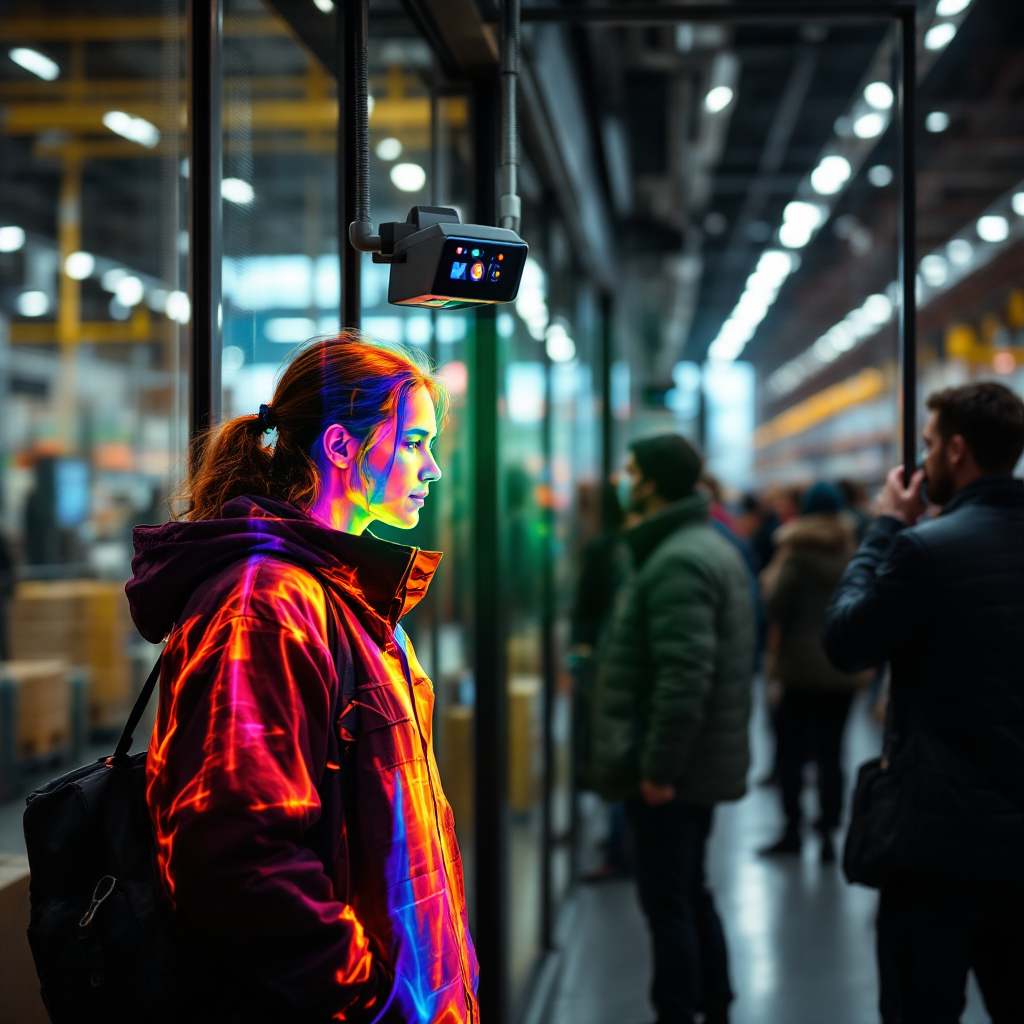
Using thermal screening in busy entrances requires clear workflows. Systems must handle queueing, alignment markers, and clear signage to help people present at the right distance. Then the thermal camera and processing software will detect a face, estimate the surface temperature, and log the result. If fever detection occurs, staff receive an automated flag and protocols can proceed. Airports and hospitals use this model to scan passengers at scale, and you can learn how Visionplatform.ai supports people detection and thermal people detection in airport settings with embedded analytics for operational use thermal people detection in airports. For organizations that want to combine occupancy and thermal workflows, our platform also streams events for dashboards and building systems, which helps maintain consistent temperature screening and rapid response.
Understanding ai and Artificial Intelligence in Thermal Image Analysis for Quality Control
Basic image processing treats a thermal image as a matrix of pixels and applies filters. By contrast, artificial intelligence adds pattern recognition, adaptive thresholds, and context-aware corrections. AI systems can learn how to filter out reflections, compensate for ambient skew, and focus on the facial region that best estimates core temperature. That is why teams implement quality control steps to validate thermal readings against gold-standard devices such as medical thermometers and clinical-grade sensors.
Quality control starts with dataset curation and controlled comparisons. Operators capture paired thermal imagery and reference readings, then train AI models to reduce systematic bias. During validation, technicians check detection accuracy, false alarms, and repeatability under varying ambient temperature and humidity. They also verify thermal data logging to ensure auditable records. Visionplatform.ai helps clients keep their training data on-prem and retrain models on site, which supports EU compliance and improves local detection performance.
When evaluating systems, labs look at detection accuracy and NETD metrics to quantify sensitivity. Advanced AI methods such as denoising and super-resolution improve the effective thermal imagery resolution and precision of temperature readings. In a clinical context, studies show that AI-enhanced thermography reaches very high accuracy in tasks like breast cancer and pressure ulcer staging; such results support the feasibility of applying those ai models to fever screening and early detection workflows accuracy in medical thermography. To make thermal imaging robust, teams also use explainable AI so clinicians and operators can inspect why the model flagged a reading. Explainable AI helps reduce false alarms and builds trust in automated temperature programs.
AI vision within minutes?
With our no-code platform you can just focus on your data, we’ll do the rest
AI-Powered Thermal Solutions for Reliable Detection and Thermal Screening
Turnkey solutions combine advanced thermal cameras, edge compute, and a decision layer that automates detection workflows. An AI-powered thermal stack typically runs on a local GPU or edge device, so images do not leave the site. These systems perform face detection, measure the surface temperature, and then flag non-compliance. The automated detection workflow follows three steps: identify the person, estimate the temperature, and trigger a compliance flag or an operational alert. When deployed at lobbies and checkpoints, these pipelines maintain throughput and minimize friction for people moving through.
Large installations in airports need high throughput and low false alarms. For these sites, operators combine AI-based person detection with CCTV analytics so thermal events become structured telemetry for operations teams. For example, Visionplatform.ai converts camera streams into sensor-style events that feed dashboards and building systems, which improves operational efficiency and enables follow-up workflows such as secondary checks or triage. Integration with people-detection solutions in airports allows teams to correlate thermal events with crowd density, which helps manage queues and secondary screening people detection in airports.
High-volume case studies show that well-tuned systems reduce screening time per person while preserving detection accuracy. Airports and factories implemented these systems during recent outbreaks to protect staff and passengers. Hardware choices matter too: advanced thermal cameras with NETD values below 20 mK provide clearer thermal imagery and better subtle temperature recognition, which the vendor Hanwha Vision highlights in descriptions of their next-generation sensors NETD below 20mK. For operators, the combination of thermal sensors, edge AI, and operational integrations delivers a practical path to reliable detection and documented compliance.
Thermography and Thermal Imaging Methods Using ai Technology
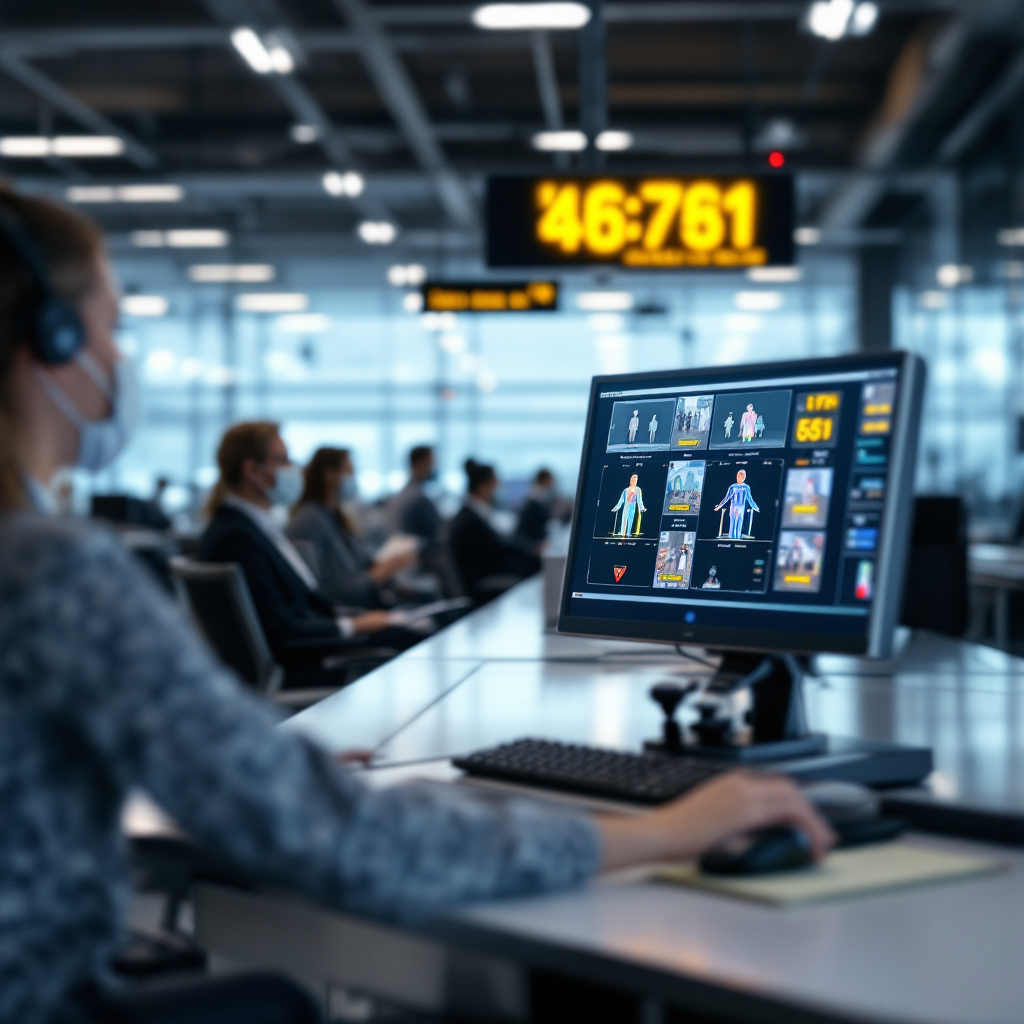
Thermography applies thermal imagery to diagnose conditions or inspect equipment. In medicine, thermography supports applications such as cancer detection and wound assessment, and in industry it supports defect detection and preventive maintenance. Traditional thermal imaging methods rely on human interpretation of heat signatures and contrast. Using AI technology enables automated thermal imaging for early detection and ranking of anomalies across large datasets.
AI-enhanced super-resolution and denoising transform low-resolution thermal frames into sharper thermal imagery that reveal subtle temperature gradients. These improvements matter when teams measure subtle temperature differences or look for localized thermal anomalies. Performance is often reported in NETD and in accuracy rates for specific tasks. Market analyses also reflect how demand for thermal imaging solutions is growing; the AI-based fever detection camera market is projected to expand at a CAGR exceeding 15%, a rate driven by public health needs and sensor advances market growth projection.
Some thermal imaging sensors are uncooled thermal designs that balance cost and sensitivity. For higher-end inspection, advanced thermal cameras paired with AI models detect thermal signatures linked to electrical hotspots, mechanical wear, or human fever. In building applications, teams combine thermal imaging for early fire detection and to map temperature distribution across equipment racks. For medical screening, models trained for thermal pattern recognition can support temperature screening and flagging while validation against clinical references ensures appropriate sensitivity. As research shows, artificial intelligence in IR thermal imaging can boost imaging and sensing capabilities in medical fields and beyond AI in IR thermal imaging.
AI vision within minutes?
With our no-code platform you can just focus on your data, we’ll do the rest
Computer Vision and ai in Thermal Camera Compliance
Computer vision brings tracking, identity matching, and event generation to thermal camera streams. AI in thermal workflows can detect and track individuals, then match events to access logs or badge systems for auditing. When combined with LPR/ANPR and people analytics, teams get a richer picture of movements and potential compliance breaches. Visionplatform.ai makes it practical to use your existing VMS and cameras to produce structured events for security and operations, keeping data and models local to meet EU privacy and governance expectations ANPR/LPR in airports.
AI with thermal processing often includes explainable AI elements so operators can inspect why a reading triggered. That reduces false alarms and improves acceptance. For privacy, systems can log an event without storing identifiable thermal imagery, or they can anonymize metadata while preserving the detection timestamp and compliance flag. Generative AI tools are also entering analytics pipelines for synthetic-data augmentation, which helps train systems for rare scenes under controlled conditions. The combination of artificial intelligence and machine learning enables better anomaly detection and fewer false alarms when models receive ongoing feedback and retraining.
Deployment best practices ask for edge processing, encrypted logs, and clear retention policies. Using a camera-as-sensor architecture, teams feed thermal events into building management and OT systems for automated responses. This architecture means thermal cameras monitor zones continuously and publish events that operations can action, and it supports audits and model tuning. That way, automated detection becomes operationally useful and respects privacy and compliance requirements.
Transform Thermal Imaging Solutions with ai-Powered Monitoring and Detection
To transform thermal programs, combine thermal imaging systems with AI analytics and building systems. Integration of AI with IoT and BMS layers lets teams translate thermal anomalies into maintenance tickets, alerts, or occupancy insights. These integrations improve operational efficiency and can reduce mean time to repair when thermal behavior indicates a failing component. By combining thermal imagery with other data streams, organizations gain richer diagnostic context and automated workflows that act on subtle thermal signatures before they escalate.
Emerging features include adaptive thresholding that compensates for ambient temperature and dynamic backgrounds. Multi-spectral fusion joins visible and thermal feeds to improve face localization and reduce false positives. Predictive alerts use historical temperature patterns and temperature variations to forecast unusual temperature distribution or an approaching high temperature event. Vendors also plan next-generation sensors and tighter integration with building management: the thermal imaging market continues to expand as organizations demand actionable thermal imaging solutions that support both safety and operations.
For teams implementing AI methods, we recommend starting with a pilot, validating thermal measurements against reference devices, and deploying on-prem edge processing to preserve data control. Visionplatform.ai supports these steps by converting existing cameras into operational sensors and by streaming structured events for dashboards and SCADA systems. With careful model management, explainable ai, and scheduled retraining, organizations can keep detection accuracy high while reducing false alarms and scaling up to thousands of streams. This practical approach makes thermal imaging for early screening a repeatable part of your safety and operations stack.
FAQ
What is the difference between a thermal camera and an infrared camera?
A thermal camera is a type of infrared camera focused on sensing emitted heat and producing a thermal image. Both measure infrared radiation, but thermal cameras are optimized for temperature measurement and thermal imaging applications.
Can thermal imaging detect fever reliably?
Thermal imaging can detect elevated surface temperatures and is useful for screening large groups quickly. For clinical diagnosis, thermal readings should be validated against medical thermometers and follow-up checks.
How does AI improve thermal image analysis?
AI removes noise, compensates for environmental effects, and focuses on the regions of interest to improve detection accuracy. AI models also reduce false alarms and support scalable, real-time screening workflows.
Are thermal systems safe for privacy?
Yes. Systems can be configured to anonymize or avoid storing identifiable imagery while logging events and timestamps. On-prem processing and strict retention policies further protect personal data.
What environmental factors affect thermal measurements?
Ambient temperature, humidity, and direct sunlight can skew surface temperature readings. Calibrations and consistent screening setups help maintain accuracy despite these variables.
How should organizations validate thermal screening accuracy?
They should run side-by-side tests with clinical thermometers, collect representative datasets, and retrain models as needed. Auditable logs and quality control steps are essential for reliable deployment.
Can thermal imagery detect equipment faults as well as fever?
Yes. Thermography supports defect detection in electrical panels and machines by spotting hotspots and abnormal thermal behavior. AI can automate these inspections and prioritize alerts.
What is NETD and why does it matter?
NETD measures sensor sensitivity to temperature difference; a lower NETD means the sensor can discern smaller changes. Sensors with low NETD produce clearer thermal imagery for subtle detection work.
How do thermal systems integrate with existing security cameras?
Many solutions convert existing camera feeds into sensor-style events and stream them to enterprise systems. Integrations can include VMS, MQTT, and building management for operational use.
What are practical first steps for deploying AI thermal screening?
Start with a pilot, define thresholds and protocols, validate measurements, and choose edge processing for data control. Use incremental rollouts and continuous model tuning to improve detection accuracy.