nvidia: GPU Acceleration and Custom Model Performance
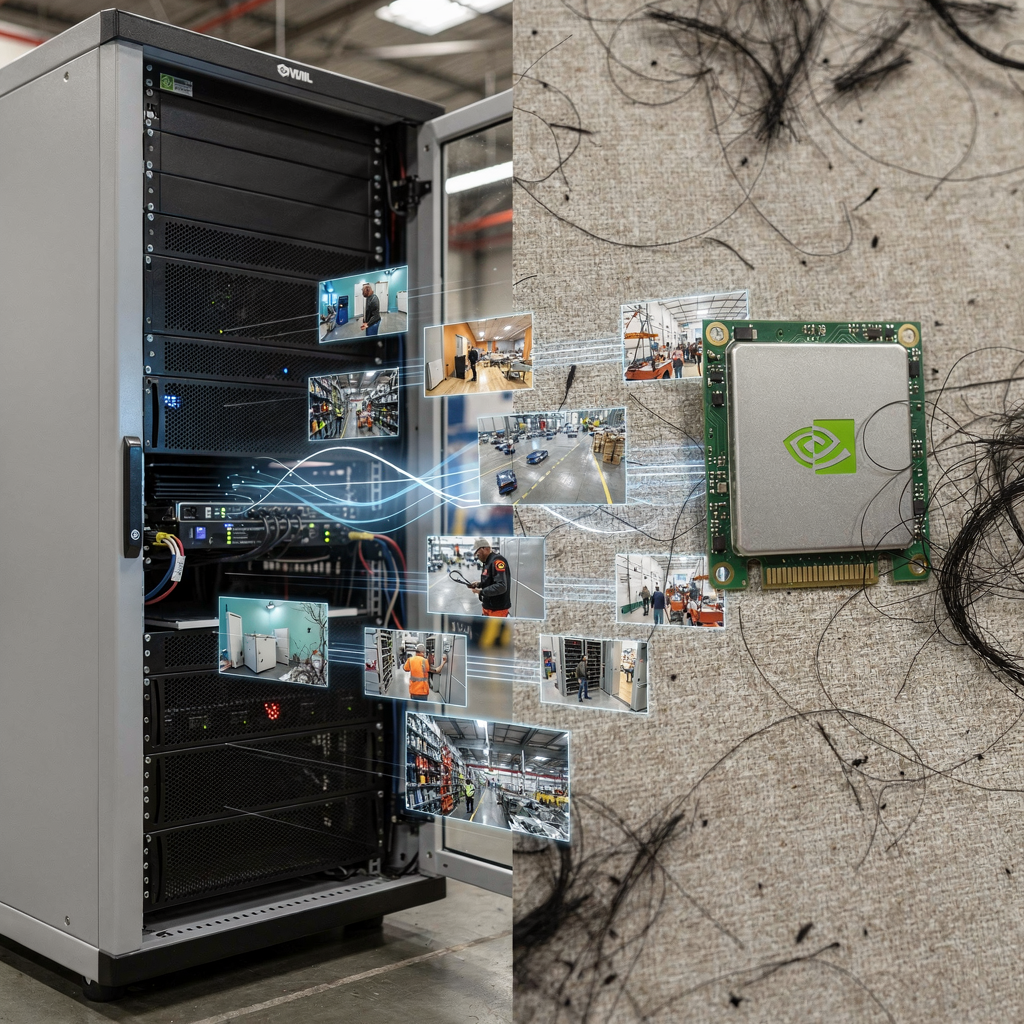
First, GPU acceleration shapes modern AI model performance. For teams building custom computer vision models, access to strong Gpus and NVIDIA toolchains matters. Aicuda supports developer workflows that tap into NVIDIA GPUs for training and inference on server-class hardware. At the same time, visionplatform.ai emphasizes edge-level NVIDIA Jetson modules for on-device inference, which reduces latency and keeps video processing localAI computer vision in minutes – effortless — visionplatform. Both approaches serve different needs. Aicuda’s server approach targets heavy training, while edge inference on Jetson targets continuous live inference.
Next, compare precision and resource efficiency. Training on NVIDIA’s CUDA stack lets teams squeeze higher accuracy from deep learning architectures. This matters for ANPR, license plate recognition, or PPE checks where small gains in detection yield large operational benefits. Conversely, on-device processing with Jetson and optimized models trims power draw and bandwidth. In practice, deploying a compact model to Jetson can deliver near real-time outputs on live video streams with low latency. For many customers the trade-off favors edge computing because it reduces cloud costs and improves data privacyInside AI: No-Code Computer Vision and Edge Computing.
Also consider tooling and pipeline. Aicuda technology supports complex training pipelines, custom datasets, and hyperparameter tuning on GPU servers. Visionplatform.ai ships prebuilt optimizations for Jetson, and it lets users deploy without code to get AI analytics on IP camera feeds fastAI computer vision in minutes – effortless — visionplatform. For organizations that need both, hybrid deployments run training on GPU servers and inference on Jetson-class edge devices. This pattern improves overall throughput and lets teams optimize models centrally and then push lightweight engines to the edge.
Finally, ecosystem and vendor support matter. NVIDIA’s ecosystem delivers libraries, profiling tools, and certification programs, and nvidia’s relationships with vendors accelerate optimization. Teams that want extreme accuracy can train on multi-GPU servers and then quantize models for edge deploy. For integrators and system architects, this combination produces higher accuracy while managing compute and server costs.
milestone: Deployment Speed and Time-to-Value
First, deployment speed shapes project outcomes and ROI. For example, visionplatform.ai advertises rapid, no-code deployments that enable users to build and deploy AI computer vision systems in under 10 minutesAI computer vision in minutes – effortless — visionplatform. This milestone compresses setup time from days to minutes. In contrast, Aicuda typically requires developer involvement. Teams must code, test, and integrate, which lengthens the timeline. Therefore, project managers should map both approaches against deadlines and resourcing.
Second, track setup milestones from account creation to live analytics. With a no-code path, a user can create an account, select cameras, choose a detection rule, and start live analytics within a single session. This reduces the milestone count and clears blockers early. For bespoke systems, milestones expand. You must collect labeled data, train models, validate results, and then deploy to server or edge. This adds weeks or months. As a result, time-to-market extends and planning becomes more complex.
Also examine time-to-value. Quick deployments deliver immediate benefits such as early alerts, basic analytics, and stakeholder buy-in. For high-complexity projects, Aicuda’s flexibility yields long-term value because custom models can reach higher accuracy and integrate deeply with other tools. However, that value appears later. For teams chasing fast pilots in retail analytics, or a proof of concept for manufacturing QC, a no-code system often returns measurable results faster. For example, rapid rollouts reduce hours spent on setup and accelerate training for operations staff.
Next, consider project risk and iteration. Rapid deployments let teams test hypotheses, tune rules, and iterate quickly. Conversely, heavy custom builds require longer testing cycles but allow for fine-grained optimization. Integrators benefit from both paths. They can run a quick pilot with a no-code edge system, and then transition demanding detection tasks to a custom Aicuda model. This hybrid tactic shortens the feedback loop and helps teams meet both short-term and long-term milestones.
Finally, include operational touches such as mobile app access, real time alerts, and integration with existing VMS. These features shorten the distance from deployment to day-to-day use. For public sector customers or defense departments, the faster a pilot becomes operational, the sooner agencies can evaluate compliance and GDPR implications.
AI vision within minutes?
With our no-code platform you can just focus on your data, we’ll do the rest
genetec: Integration Flexibility and Ecosystem Compatibility
First, consider API design and third-party compatibility. Aicuda typically promotes an API-first approach that helps integrators build deep, bespoke integration with enterprise platforms such as Genetec. That model lets teams ingest metadata, push events to enterprise workflows, and adapt models to site-specific needs. In contrast, visionplatform.ai prioritizes plug-and-play modules that work with common VMS and IoT systems out of the box. This design lowers the barrier for integrator partners and 3rd party vendors to adopt the platform quickly.
Next, weigh customization against simplicity. Aicuda allows integrators to tailor detection classes, tune neural network thresholds, and connect to access control or other security solution stacks. This favors projects requiring complex business logic or specialized recognition such as license plates or custom object classes. Visionplatform.ai, by contrast, provides tight VMS integration and prebuilt connectors that simplify operations. For example, the VP Agent exposes Milestone XProtect data as a live datasource so AI agents can reason over events; that functionality speeds up operational adoption and reduces integration time.
Also look at ecosystem breadth. Open platform support helps teams avoid vendor lock-in. Visionplatform.ai works with ONVIF cameras, RTSP streams, and common video management systems. It integrates via MQTT, webhooks, and APIs, so dashboards and BI tools can consume events. For a VMS-heavy site, this plug-and-play behavior reduces integration work and lowers project costs. Conversely, Aicuda’s API-first stance suits customers that need deep hooks into ERP, SCADA, or enterprise access control systems.
Furthermore, integration impacts performance. Seamless connectors can create real-time alert flows from detection engines into operator consoles. They can also feed AI agents for automated responses. Integrators appreciate predictable interfaces because they reduce testing cycles. For complex sites like critical infrastructure, an integrator may prefer the control and auditable logs from a custom integration. Meanwhile, organizations with thousands of cameras can benefit from prebuilt modules that scale without heavy custom coding.
Finally, consider long-term maintenance. API-first systems may require more developer oversight, and plug-and-play platforms require careful version management. Both routes provide options; choosing one depends on internal capability and integrator partnerships. For teams that want a balance, you can start with a plug-and-play deployment and then integrate deeper over time.
qognify: Security, Privacy and Edge Computing
First, security standards impact adoption in the physical security industry and beyond. Solutions that follow Qognify-style practices focus on audit trails, role-based access, and secure data flows. Visionplatform.ai addresses those concerns by emphasizing edge computing so video, models, and reasoning stay on-prem by default. That design supports GDPR and reduces cloud exposure for sensitive footage. It also helps defense departments and public sector agencies meet compliance needs while enabling AI-assisted workflows.
Second, edge processing improves privacy and performance. When analytics run on-device, raw video does not leave the site. As a result, teams lower the risk of data leakage, and they reduce the bandwidth required to send video to cloud servers. This approach also supports low latency inference for high-performance use cases such as intrusion detection or license plate recognition. Edge computing allows live video streams to be processed close to cameras and then only metadata passes to central systems, which lowers bandwidth consumption.
Also consider deployment models. Aicuda supports on-premise and private cloud deployments, which gives customers options to meet security policies. Deploy choices affect data storage and auditability. Visionplatform.ai’s default on-prem architecture and the VP Agent Suite provide an EU AI Act–aligned architecture. This alignment helps customers that must keep video inside their environment and want full control over data storage. That pattern reduces risk when sensitive surveillance cameras monitor critical infrastructure or schools and campuses.
Next, evaluate incident handling and alerts. Control rooms often receive many detections. AI that processes on edge and then feeds verified events reduces false alarms. Visionplatform.ai adds reasoning and context so operators get explained situations rather than raw detections. This feature reduces cognitive load and speeds response. For organizations implementing access control integrations, the result is fewer unnecessary dispatches and faster verification.
Finally, enterprise security demands auditable logs and integration with existing security stacks. Both vendors support secure connectors, but the edge-first model typically reduces the attack surface. For companies focused on world a safer place outcomes, keeping video local and enforcing strong device-level encryption supports both privacy and operational resilience.

AI vision within minutes?
With our no-code platform you can just focus on your data, we’ll do the rest
network optix: Streaming Performance and Latency
First, streaming performance depends on where processing occurs. Edge-centric systems handle high-fps video at the camera edge. This reduces round trips and achieves low latency for immediate decisions. Cloud-based or server-centric systems must move video files across networks, which increases transport time and bandwidth. For surveillance cameras that stream continuously, the difference between edge and cloud processing can mean the difference between a real-time intervention and a delayed response.
Second, measure latency for use cases. In video surveillance and industrial automation, low latency matters. Visionplatform.ai’s edge processing minimizes latency and supports live video streams with high fps. That design suits scenarios such as intrusion, loiter, or fast-moving events where split-second detection leads to action. In contrast, a cloud-forward process can still serve forensic video search or batch analytics where latency is less critical.
Also analyse bandwidth and network optimization. When you run analytics at the edge, only metadata and alerts traverse the network. This approach drastically reduces bandwidth usage, which helps sites that manage thousands of cameras or remote locations with limited links. Network Optix style architectures favor efficient video transport; combining them with on-device analytics optimizes into a scalable, lower-cost solution. For integrators planning large rollouts, this reduces recorder and hard drive costs for long-term storage.
Next, consider resilience. Edge devices continue to analyze even when the central server has intermittent connectivity. They buffer events and sync metadata when links return. This behavior helps protect amounts of data and ensures critical alerts reach operators. For example, a retail store running queue detection benefits from consistent inference even during network outages.
Finally, balancing server horsepower and edge capacity delivers the best of both worlds. Heavy compute for model training occurs on GPU servers, while inference runs on Jetson-class devices. This pattern lowers both bandwidth and server load, and it helps teams improve security because less raw video departs the premises. For system architects, that balance optimizes cost and performance while ensuring real-time alerts reach the right operator at the right moment.
luxriot: Target Use Cases and Industry ROI
First, select the platform that matches your use case. Aicuda fits organizations that need highly custom solutions. Its API-first model supports deep integrations for enterprise workflows. By contrast, visionplatform.ai shines for fast, no-code rollout in retail analytics, manufacturing QC, and security monitoring. The VP Agent Suite adds reasoning and search so operators do more than just receive detections. They get context and suggestions. This difference affects return on investment and speed of adoption.
Second, map real-world examples. In retail, rapid deployment can enable people counting, heatmap occupancy analytics, and loss prevention quickly. For airports or large facilities, features such as vehicle detection classification, license plate recognition, and forensic search reduce investigation time. Visionplatform.ai provides forensic search using natural language so operators can find incidents without complex queries; see the VP Agent Search for examples of how to search across recorded timelines. In manufacturing, process anomaly detection and PPE detection reduce downtime and improve compliance.
Also consider ROI metrics. Quick pilots show value in reduced false positives, fewer wasted patrols, and faster incident resolution. For example, operators who receive explained alarms spend less time on each event. This yields labor savings and faster time-to-closure. For large-scale deployments with thousands of cameras, storage and bandwidth savings compound into tangible infrastructure cost reductions. On the other hand, a dedicated bespoke model can deliver higher accuracy for niche detection tasks, which may translate into lower long-term operational costs when accuracy prevents costly incidents.
Next, factor industry needs. In the security industry and physical security industry, integrators demand systems that tie into VMS and access control. Visionplatform.ai integrates tightly with leading video management systems and can deploy on GPU server or Jetson edge. Aicuda appeals to defense departments and enterprise customers that need tailored models and certified compliance. Both paths aim to improve security and to make the world a safer by improving detection and response.
Finally, think about scale and support. Whether you want to start small with a free newsletter sign-up or scale to thousands of cameras, plan for training, maintenance, and vendor support. Combining edge computing, agent-based reasoning, and robust integration yields practical ROI and helps organizations move from raw detections to actionable operations. That outcome helps operators, integrators, and customers around the world adopt AI-enabled workflows that improve security and operational efficiency.
FAQ
What are the main performance differences between Aicuda and visionplatform.ai?
Aicuda focuses on developer-driven customization and training on GPU servers, which can yield higher accuracy for specialized tasks. Visionplatform.ai emphasizes no-code deployment and edge computing, which shortens time-to-value and reduces latency for live video streams.
Can visionplatform.ai run entirely on-premise?
Yes. Visionplatform.ai supports on-prem deployment to keep video and models inside the customer environment for compliance and GDPR considerations. This on-prem model helps organizations that must avoid cloud-based video processing.
Does either platform support NVIDIA Jetson devices?
Visionplatform.ai supports Jetson-class edge devices for on-device inference, which reduces bandwidth and enables low latency. Aicuda supports NVIDIA GPUs for training and server-based inference as part of custom deployments.
How quickly can I deploy a pilot with visionplatform.ai?
Visionplatform.ai advertises the ability to build and deploy AI computer vision systems in under 10 minutes, making it suitable for rapid pilots and proof-of-concept trialsAI computer vision in minutes – effortless — visionplatform. This speed helps stakeholders evaluate results promptly.
Does visionplatform.ai integrate with common VMS platforms like Genetec?
Yes. Visionplatform.ai integrates with leading VMS platforms and exposes data for AI agents, while Aicuda offers API-first integration that can tie deeply into Genetec and other enterprise systems. These options let integrators choose the best fit for their workflows.
Which platform is better for license plate recognition?
Both platforms can handle license plates, but the best choice depends on scale and latency needs. For high-throughput, low-latency LPR at the edge, visionplatform.ai with Jetson modules provides a strong option. For highly specialized LPR models, Aicuda’s custom training can reach higher accuracy.
How do these platforms affect bandwidth and storage?
Edge-first processing reduces bandwidth because only metadata and alerts traverse the network. This lowers long-term data storage needs on servers and helps with recorder and hard drive usage. Cloud-based analytics typically require more bandwidth and storage for video files.
Can I search recorded video naturally with visionplatform.ai?
Yes. The VP Agent Search converts video into human-readable descriptions so operators can perform forensic search using natural language queries. This speeds investigations and reduces manual review time.
Are these solutions suitable for the public sector and defense?
Both solutions can serve public sector use cases, but deployment choices matter. On-prem, auditable systems that follow GDPR and stricter controls are often preferable for defense departments. Visionplatform.ai’s architecture supports these constraints by default.
How do I get support for integration with third-party systems?
Integrators can rely on prebuilt connectors or API-first endpoints depending on the platform. Visionplatform.ai offers plug-and-play modules and documentation for common video management systems, while Aicuda provides APIs for deep custom integrations and specialist integrator support.