Introduction to video surveillance and attribute search
Video surveillance plays a core role in modern security. It records activity across entryways, perimeters, public spaces, and critical infrastructure. Security teams use it to monitor, verify, and respond. However, traditional review methods force operators to scrub hours of recorded video. This slows response. It also wastes valuable time when an incident requires fast attention.
Attribute search changes that. Attribute search uses AI to find people and objects by descriptive details. For example, operators can search for a red jacket, a hat, or a specific backpack. The system can search by face or clothing color and identify a person of interest across connected cameras. This leads to faster investigations. For instance, implementing attribute-based search can reduce manual review time by up to 70% according to industry analysis.
Technically, attribute search relies on object classification and metadata extraction. It converts video into searchable descriptions. Then operators can quickly locate clips that match witness descriptions. This makes video footage searchable the way humans reason about events. At scale, such search avoids the need to watch hours of footage. Instead, teams filter by attributes such as clothing color, gender, accessories, and behavior. The result is more precise search results and faster incident resolution.
Deep learning powers this capability. As noted in a wide review, “deep learning techniques have revolutionized video analytics by enabling automatic feature extraction and real-time processing” source. Therefore, AI models can detect faces, license plates, and vehicle color across complex scenes. They can also adapt to lighting changes and wide field of view variance. In practice, visionplatform.ai helps operators by turning existing cameras and VMS systems into AI-assisted operational systems. The platform makes video intelligence searchable, actionable, and explainable. As a result, control rooms move from raw detection overload to clear context and decision support.
Leveraging camera feeds and object classification
Cameras form the foundation of any attribute search workflow. Choosing the right camera types matters. IP cameras deliver flexible deployment over networks. PTZ and dome cameras provide pan-tilt-zoom for focused observation. Dome cameras work well in crowded terminals because they offer wide coverage with discreet form factors. Resolution also matters. Higher resolution yields more pixels per subject. That improves face recognition, vehicle detection, and license plates capture. Still, modern AI models can extract attributes from modest streams. Edge servers or a central server can process them.
Object classification identifies vehicles, faces, luggage, and unattended items. Advanced object classification models tag each clip with metadata. Then operators can filter by people and vehicles or by vehicle type and vehicle color. For example, a search for vehicles of interest can match a specific vehicle color or license plates. This tagging reduces the need to manually inspect recorded video. Instead, teams use attribute filters to narrow results within minutes.
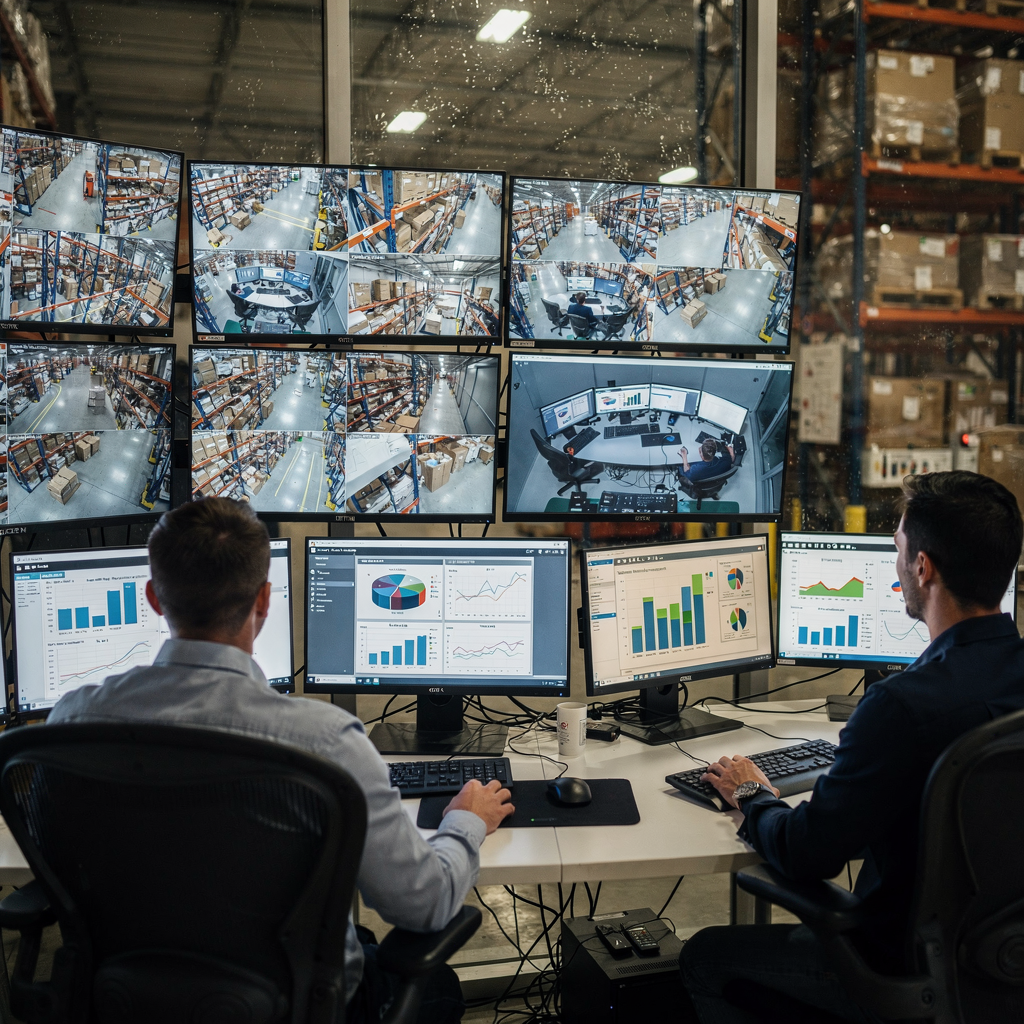
Camera deployment affects storage and bandwidth. High-resolution streams require more recorder capacity and network throughput. Cloud-based storage can scale, but many organizations prefer on-prem servers for compliance and latency reasons. visionplatform.ai supports both on-prem and scalable server deployments. That design lets sites keep video inside their environment and still leverage advanced ai processing. Consequently, organizations avoid unnecessary cloud exposure while they leverage edge analytics and central servers. In practice, matched camera selection, smart compression, and selective recording reduce costs and optimize operations.
Finally, connected cameras supply continuous context. When combined with object classification, they create searchable records across all cameras. This makes it easier to quickly identify suspect movements, follow a person across multiple fields of view, and reconstruct incident timelines. For those interested in airport deployments, see our applications for people detection and vehicle detection classification in airports for practical guidance people detection in airports and vehicle detection and classification in airports.
AI vision within minutes?
With our no-code platform you can just focus on your data, we’ll do the rest
AI-driven smart search for CCTV
AI drives smart search through deep learning models and tailored inference pipelines. Convolutional neural networks and transformer-based vision models extract features at scale. These models power ai-powered video analytics that tag faces, clothing, accessories, and behaviors. They also support search by face and license plates. For example, AI can flag a person who is loitering or an unauthorized individual near a restricted exit. The system can then create an alert and send a notification to an operator.
Smart search can run in real-time at the edge or on a central server. Real-time processing ensures that alerts arrive as incidents unfold. Real-time models can run on GPUs or compact devices like NVIDIA Jetson. Alternatively, cloud processing suits large-scale historical analysis for forensic review. visionplatform.ai blends both approaches. We run an on-prem Vision Language Model to turn video into human-readable descriptions. Then VP Agent Search allows operators to search recorded video, events, and timelines using free-text queries. This brings searchable video intelligence closer to how humans think.
Continuous learning keeps models accurate. AI-driven systems fine-tune models with labeled examples from site cameras. That process helps adapt to local lighting, camera angles, and unique uniforms. Data labeling remains key. The quality of labeled data directly impacts performance, and teams should follow best practices for annotation according to authoritative guidance. As models improve, they reduce false positives and speed validation. This force multiplier frees operators to focus on meaningful tasks.
Smart search also integrates with legacy VMS and recorders. It enriches recorded video with metadata so operators can quickly find clips. Forensic queries then return precise clips rather than long searches. For example, a query for a person of interest wearing a blue jacket near an entryway can return a short list of clips across multiple cameras. This reduces time from detection to verification. It helps organizations optimize operations and accelerate investigation timelines.
Improving search results and speeding investigation
Search quality depends on clear metrics. Teams measure precision, recall, and overall accuracy. Modern systems reach recognition accuracies above 90% for common attributes like clothing color and gender classification according to benchmarks. High precision reduces wasted review time. High recall ensures that investigators do not miss the person or vehicle they search for. Balancing these metrics requires careful tuning and strong labeled data.
Automated incident alerts streamline workflows. An alert can trigger a timeline reconstruction that assembles related clips across cameras. Then VP Agent Reasoning can verify alarms by correlating video, access control logs, and local procedures. This approach reduces false alarms and supplies context. Consequently, operators receive an explained situation instead of a raw detection. That improves decision speed and reduces cognitive load.
Search relies on rich metadata and natural language descriptions. Vision language models generate textual descriptions that make video searchable using everyday phrases. This way, operators can quickly find a clip by typing “person loitering near gate after hours” or “red truck entering dock area yesterday evening.” For deeper forensic work, teams can filter by people or vehicles, by vehicle color, or by license plates. The searchable index turns hours of footage into focused evidence. It helps investigators quickly find a person of interest or vehicles of interest in complex scenes.
Overall, these capabilities accelerate investigations and improve security operations. They let security teams rapidly verify incidents, close false alarms with justification, and compile evidence. The result is faster investigations, higher operational efficiency, and better public safety outcomes. For more airport-specific forensic workflows, review our forensic search in airports page forensic search in airports.
AI vision within minutes?
With our no-code platform you can just focus on your data, we’ll do the rest
Transform business operations and optimize operations
AI transforms security into operational intelligence. Companies move from reactive monitoring to proactive management. AI assists with loss prevention, logistics tracking, and crowd management. In retail, attribute search supports loss prevention by identifying suspected shoplifting patterns. It also improves customer experience by analyzing queues, wait times, and common paths. In transportation hubs, AI helps with traffic flow, vehicle detection at loading docks, and intrusion monitoring. These applications reduce costs and boost safety compliance.
Cost savings appear in reduced staff hours and faster incident processing. With smarter search and automated alerts, teams need fewer analysts to handle the same volume of recorded video. That reduction lowers review costs and shortens time to actionable intelligence. Additionally, ai-driven analytics deliver operational KPIs. Management can track occupancy, peak flows, and compliance with safety rules. These insights help optimize operations across all your locations and make resource planning simpler.
Use cases include retail loss prevention and traffic monitoring. In retail, attribute filters help isolate repeat behavior and suspicious movement. In traffic monitoring, vehicle detection and vehicle type classification support enforcement and logistics. Both use cases benefit from faster identification of unauthorized vehicles or suspicious behavior. For airport-specific safety features, see our pages on ANPR/LPR and PPE detection to understand how AI supports passenger safety and asset protection ANPR/LPR in airports and PPE detection in airports.
Finally, AI acts as a force multiplier for operators. It recommends actions, pre-fills incident reports, and notifies response teams. That speeds workflows from alert to resolution. When paired with scalable architecture and clear audit trails, AI both optimizes operations and supports safety compliance.
Case studies and demo in airport security
Case studies show measurable benefits. A major city CCTV deployment used attribute search to reduce manual review by a large margin. The project combined high-resolution cameras, edge servers, and custom models to identify vehicles of interest. As a result, investigators could track a suspect vehicle across neighborhoods instead of watching hours of footage. Likewise, a retail chain integrated attribute filters and saw measurable drops in shrink and in time to identify incidents. These examples illustrate how AI assists both security operations and business operations.
For an airport demo, consider filtering footage by attribute at a busy terminal. First, select the time window and the set of connected cameras that cover a terminal’s entryways. Next, apply an attribute filter such as clothing color or vehicle color and set additional constraints like location or direction of travel. The system returns a short list of clips. Then, analysts reconstruct the timeline and link related clips into a coherent sequence. This demo highlights how teams can quickly find a person of interest, verify identity, and coordinate response. It also demonstrates how AI can uncover patterns across hours of footage.
Measured ROI often includes faster suspect identification and improved passenger safety. The platform can automatically detect intrusion, unauthorized access, and suspicious baggage. It can also flag license plates and log vehicle movements for logistics. These capabilities improve throughput and reduce the burden on human operators. They also support faster investigations and ensure auditability for compliance reviews.
visionplatform.ai supports airport deployments end to end. The VP Agent Suite integrates with VMS, runs on servers or edge devices, and keeps data on-prem by default. That approach aligns with EU and other safety compliance requirements. It also allows sites to scale from a few cameras to thousands across all cameras. For more airport-focused detection types and case studies, explore our pages on intrusion detection and crowd density analytics intrusion detection in airports and crowd detection & density in airports.
FAQ
What is attribute search and how does it work?
Attribute search identifies video segments based on descriptive features like clothing color, accessories, or vehicle color. It works by running object classification and vision models on camera feeds to tag clips with searchable metadata and text descriptions.
Can attribute search run in real-time?
Yes. Systems can perform real-time processing at the edge or on a server for immediate alerts and timeline reconstruction. Real-time models enable quicker response and actionable alerts to operators.
How accurate are attribute-based searches?
Accuracy varies by attribute and deployment, but benchmarks show recognition accuracies above 90% for common attributes such as clothing color and gender classification source. Careful labeling and tuning improve precision and recall.
Does attribute search require cloud processing?
No. You can run models on-premise to keep recorded video and metadata inside your environment. visionplatform.ai supports on-prem deployments and edge devices to meet safety compliance and EU AI Act considerations.
How does attribute search help loss prevention?
It identifies suspicious behaviors and repeat patterns by filtering clips with attribute filters like clothing or carried items. Retail teams then quickly find relevant clips and reduce the time spent reviewing hours of footage.
Can I search across multiple cameras?
Yes. Smart search aggregates metadata across connected cameras and creates a searchable index. This lets operators quickly locate a person of interest or vehicle across all cameras without manually opening each recorder.
What datasets are needed to train models?
High-quality labeled images and video frames are essential. The quality of labeled data directly impacts model performance, so follow best practices for annotation and validation source.
How does this support airport security?
Attribute search helps airports detect intrusions, identify unauthorized individuals, and track vehicle movements in real time. It also integrates with ANPR/LPR and people detection workflows to improve passenger safety and operational efficiency ANPR/LPR in airports.
What happens after an alert?
Alerts trigger timeline reconstruction and contextual verification. Agents can recommend actions, notify teams, and pre-fill incident reports to accelerate response. This reduces false alarms and supports faster investigations.
How do I get started with attribute search?
Begin by evaluating your camera network and recorder capacity, then pilot attribute filters on a subset of cameras. Use an on-prem AI platform that integrates with VMS to keep data local and to scale across all your locations as needed.