Defining audit and auditability in AI video systems
Audit and auditability matter when an AI inspects video and then makes a choice. An audit starts as a structured review of logs, data, models, and decisions. In the context of AI video systems, an audit validates what the system detected, why it acted, and whether the outcome met policy. It therefore supports ACCOUNTABILITY and trust. For example, behavioural research shows widespread errors in video-based studies, with roughly 50% of psychology papers including statistical mistakes. That statistic underscores the need for systematic review and is drawn from published research Speeding up to keep up: exploring the use of AI in the research ….
Auditability means that every stage of the AI decision is recorded so a reviewer can reconstruct the chain of events. Audit trails capture raw frames, derived metadata, timestamps, model versions, and operator actions. With audit trails, auditors can reproduce an AI decision, test it under different inputs, and check for bias. Auditability also enables transparency and a clear decision trail. That strengthens confidence in AI outcomes and helps meet regulatory expectations like the EU AI Act. Companies must take steps to ensure the audit scope covers data collection, model training, and real-time inference. In practice, this means defining what must be logged, who reviews logs, and how long logs remain available.
Audit processes should combine automated checks and human review. For instance, visionplatform.ai embeds on-prem Vision Language Models so video stays inside the environment. That approach helps organisations maintain data quality and supporting logs while reducing cloud exposure. In short, auditing AI video systems makes them auditable AI solutions rather than black boxes. It makes it possible to verify bias in AI, to trace an AI decision back to its inputs, and to prove governance controls worked. As a result, auditability improves trust in their AI and supports broader AI governance.
Essential components of an AI audit
An AI audit requires clear components. First, data logging must record video inputs, metadata, and any pre-processing. Second, model documentation must store model architecture, training data summaries, and version history. Third, decision traceability must link detections to outputs and operator actions. Fourth, bias checks must measure and report performance across demographics and contexts. These components of an AI audit are practical and repeatable. They make it easier to detect errors and bias in AI outputs. For example, facial-recognition systems can show large disparities, sometimes with error rates up to 35% for some demographic groups and below 1% for others Ethics and discrimination in artificial intelligence-enabled … – Nature. Audit processes must surface those gaps.
Data logging supports reproducibility. It also helps when an auditor needs to rerun inputs against a different AI model. Model documentation explains the design choices and data provenance. Decision traceability ties a video frame to the AI model, to the ai model version, and to any rules that influenced a final outcome. Bias checks quantify bias in AI by measuring false positive and false negative rates across groups. That in turn guides remediation and model retraining.
Human-in-the-loop review matters next. Automated checks catch many issues, and human reviewers validate findings, provide context, and make final calls. A human can confirm that an alert was a true alarm. Moreover, human oversight reduces the risk that an AI solution will act on faulty inputs. In business operations, audited AI systems have reduced false positives by up to 25% in video-based fraud and detection workflows Examining the limitations of AI in business and the need for human …. Together, these components create an audit process that reveals how an AI system reached a conclusion and whether that conclusion was fair and correct.

AI vision within minutes?
With our no-code platform you can just focus on your data, we’ll do the rest
Building an AI auditing framework for video decisions
An AI auditing framework sets goals and rules for consistent review. Its goals should include fairness, consistency, and compliance. The framework defines what to measure and how to act on results. It therefore supports an organisation’s audit quality and provides a roadmap for continual improvement. To build the framework, start by scoping the video use cases. Decide whether the AI is used for access control, perimeter monitoring, forensic search, or operational analytics. For example, if you need searchable historical video, see how VP Agent Search turns video into textual descriptions for forensic work forensic search in airports.
Next, select audit metrics. Use accuracy, false positive rate, false negative rate, and fairness metrics across demographic slices. Include measures for data quality, latency, and logging completeness. Third, map the AI lifecycle from data collection to model retirement. Ensure that every ai model has documentation, test suites, and a roll-back plan. Then define audit standards and procedures. These include who runs the audit, the frequency, and the reporting format. You can align these procedures with external audit standards and with internal policies.
Also, integrate bias management practices. Follow guidance that recommends “fair decision-making through diverse data sources and transparent algorithmic processes” Towards a Standard for Identifying and Managing Bias in Artificial …. That phrase highlights why dataset diversity and explainable model outputs matter. Finally, design human review gates and automated monitoring. Together, they enforce that AI decisions remain auditable AI outputs and that the framework drives consistent, repeatable audits.
Internal audit and oversight of AI systems
An internal audit covers policies, workflows, and scheduled reviews inside the organisation. Internal audit teams need to verify that AI components adhere to policy. They also test logging, model documentation, and decision traceability. Internal audits should include a risk assessment of AI operations and an AI risk management framework. The internal audit function must report findings to governance bodies and to the audit committee. That creates clear escalation paths when issues arise.
Oversight structures should involve multidisciplinary stakeholders. Include technical leads, legal counsel, privacy officers, and operations managers. Form an audit committee or a governance board that reviews audit findings. That committee oversees AI lifecycle controls and approves remediation plans. Annual audit planning helps prioritise high-risk AI projects and allocates resources. For operational video AI, continuous monitoring and periodic reviews reduce false positives and improve operator trust. Indeed, audited AI applications in business have shown measurable reductions in erroneous alerts Auditing of AI – Erasmus University Thesis Repository.
Internal oversight must also connect to responsible AI governance. Build policies for data retention, for human review thresholds, and for escalation when an AI decision could impact rights. For organisations that deploy AI, the internal audit process should include a review of AI systems are developed, tested, and deployed. Make sure the internal audit function can call for model retraining and for changes to decision thresholds. In addition, provide operators with tools for quick verification. For example, visionplatform.ai’s VP Agent Reasoning correlates video analytics with procedures and context. This reduces cognitive load and helps the internal audit and oversight teams understand AI decision-making in practice.
AI vision within minutes?
With our no-code platform you can just focus on your data, we’ll do the rest
External audit and annual audit practices
External audit brings impartiality to the review of AI systems. An external audit firm or third-party reviewer can validate internal findings and look for blind spots. External reviewers assess whether the audit plan and audits meet audit standards, and whether the organisation adheres to regulation. Yet surveys show that only about 30% of AI systems used in video surveillance had any external verification Auditing of AI – Erasmus University Thesis Repository. That low coverage highlights a gap in accountability for many deployments.
Annual audit cycles help maintain compliance and public accountability. An annual audit should test model performance, bias in AI, data quality, and logging completeness. External auditors bring specialist methods for stress-testing the system and for validating audit findings. They also check whether controls align with broader governance frameworks and the EU AI Act. Regular cycles create a rhythm for remediation and for updating policies as technology changes.
Compare internal and external coverage. Internal audits focus on day-to-day controls and operations. External audits provide a fresh perspective and independent certification. For high-risk AI uses, combine both approaches. Use internal audit teams for continuous monitoring and use external audit for deep annual checks. This hybrid model balances speed, cost, and impartiality. Finally, keep evidence of both internal and external audits in organised audit trails. That evidence supports regulators, boards, and the public when questions about AI accountability arise.
Key aspects of AI governance and audit framework
AI governance intersects many domains, and an audit framework ties them together. Key aspects include risk management, policy alignment, reporting, and compliance. Risk management must identify risks associated with AI and set mitigation actions. Policies must define acceptable use, retention, and human-in-the-loop thresholds. Reporting should deliver clear dashboards for audit teams and for senior leaders. The governance framework should also align with national rules and with the EU AI Act when relevant.
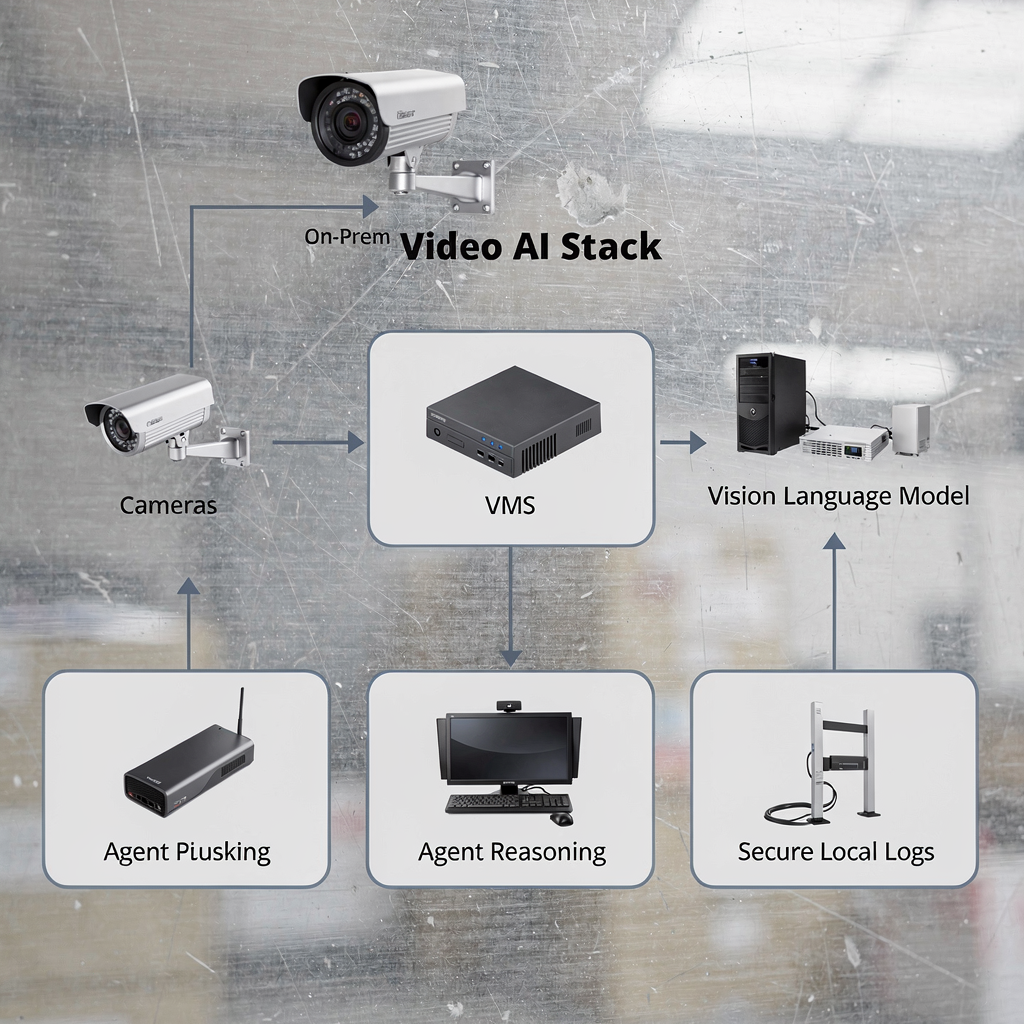
An effective audit framework supports accountability and transparency. It ensures that every AI project has an audit scope and clear metrics. It also ensures that every ai model is documented, that audit trails exist, and that review cycles run on schedule. In addition, the framework should mandate regular bias in AI tests, data quality checks, and incident reporting. For organisations building ai-enabled control rooms, consider a governance framework that locks data on-prem and keeps models and logs auditable. That aligns well with responsible ai governance and with the needs of regulated sectors.
Continuous improvement loops are essential. After each audit, use findings to refine controls, to change training data, and to update thresholds. This creates auditable AI that evolves safely. Include stakeholders in those loops and document changes. Also map the framework to audit standards and to the organisation’s approach to AI. As AI technologies change, update the ai risk management framework and the audit standards you follow. Finally, promote transparency and accountability by publishing non-sensitive summary reports. That builds public trust and demonstrates compliance with the eu ai act and other rules.
FAQ
What does auditability mean for video AI?
Auditability means you can reconstruct and verify how a video AI reached a decision. This includes logs, model versions, decision traceability, and operator actions.
Why is an AI audit necessary for video systems?
An AI audit identifies errors, bias, and compliance gaps in AI decision-making. It also supports accountability and helps meet regulatory and governance expectations.
Which components must an audit cover?
An audit should cover data logging, model documentation, decision traceability, and bias checks. It should also test data quality and human review gates.
How often should organisations run audits?
Run continuous monitoring and periodic reviews, with at least an annual audit for high-risk AI. Use external audit for independent validation.
What role does human review play in auditing AI?
Human reviewers validate automated findings, provide context, and make final decisions in ambiguous cases. Human-in-the-loop review reduces false positives and supports accountability.
How do external audits differ from internal audits?
External audits provide impartial validation and specialised testing methods. Internal audits focus on day-to-day controls and continuous monitoring.
Can an AI audit detect bias in facial recognition?
Yes. Audits measure error rates across demographic groups and expose disparities. For example, some systems show significantly higher error rates for certain groups research.
How does on-prem processing help auditability?
On-prem processing keeps video, models, and logs inside your environment. This simplifies data quality controls, supports audit trails, and eases compliance with rules such as the EU AI Act.
What is an AI auditing framework?
An AI auditing framework defines goals, scope, metrics, and procedures for audits. It aligns audits with governance, risk management, and compliance requirements.
Where can I learn about practical AI tools for forensic search?
If you need searchable video history, review solutions that convert video to human-readable descriptions. For forensic search in operational contexts, see the VP Agent Search example forensic search in airports. Also explore related detections for perimeter or loitering scenarios, such as loitering detection in airports and intrusion detection in airports.