AI and automation in the control room: A purpose-built bridge to smarter operations
Control rooms have evolved rapidly. First, simple consoles gave way to networked systems. Next, SCADA and VMS added telemetry and dashboards. Now, AI and purpose-built bridges connect legacy systems to new capabilities. As a result, control rooms become hubs for reasoning, not just displays for alarms. Furthermore, a purpose-built bridge reduces manual handovers between systems. It correlates camera detections with access logs and process tags. In practice, this bridge turns raw events into actionable context and quick corrective actions.
Advanced sensors feed large datasets into models. Then AI systems parse those inputs with analytics and simulation. For example, mathematical models and simulation improve scenario planning and response timing From automated to autonomous process operations. Also, on-prem Vision Language Models let video become searchable text. visionplatform.ai uses that approach to make cameras sources of understanding. The VP Agent Suite exposes VMS data as a real-time datasource for AI agents. Consequently, operators get a coherent dashboard that supports informed decisions and incident response.
Measurable gains follow. Studies report up to a 25% improvement in efficiency and a 40% reduction in downtime when systems move from reactive to predictive maintenance science report. Therefore, AI-powered orchestration reduces manual steps and accelerates response. In addition, the bridge supports explainability and auditable logs, which help with EU compliance and cybersecurity. Finally, control rooms must keep control over data and models. visionplatform.ai keeps video and reasoning on-prem, which helps customers maintain auditable processes and local domain expertise.
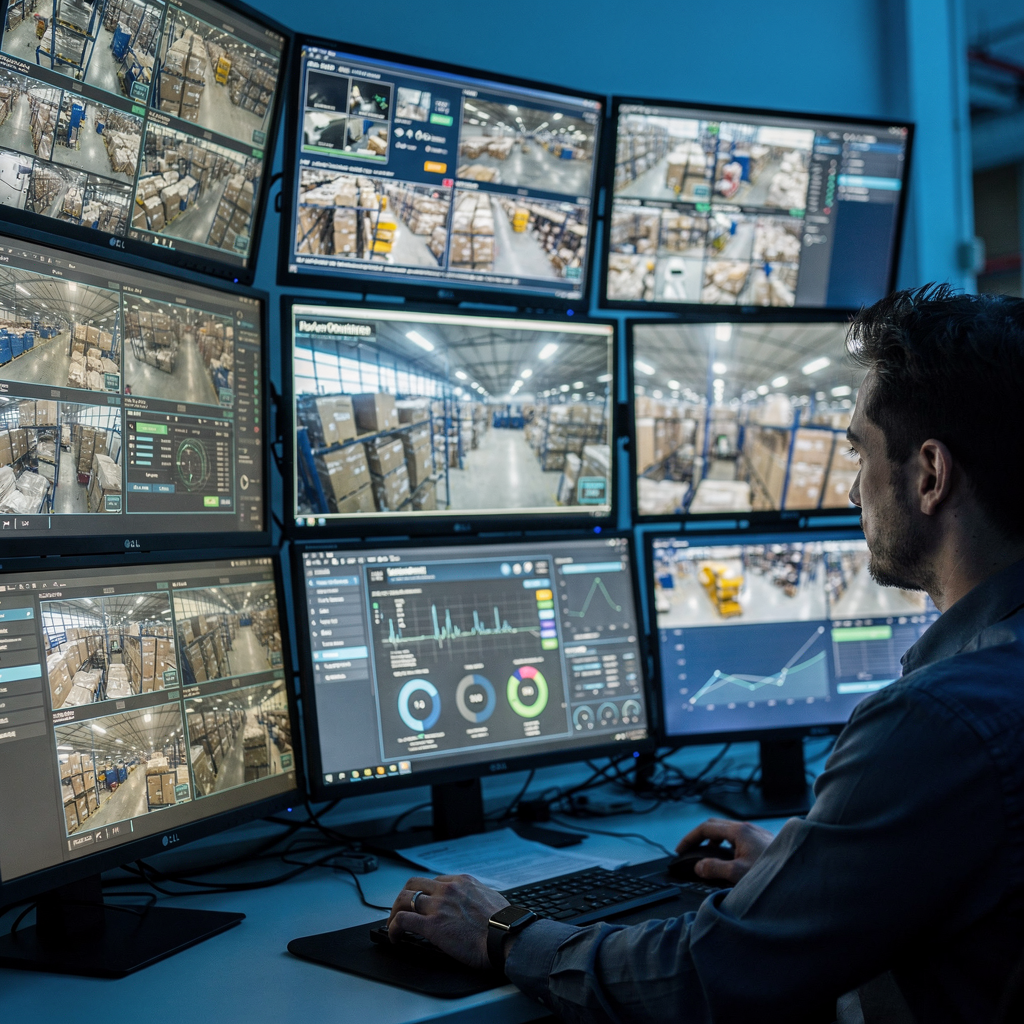
Operator roles in AI-powered autonomous control: Redefining energy management
Operators now work alongside AI agents. The role shifts from manual monitoring to supervision and exception handling. Human operators still validate edge decisions and escalate when policy requires. At the same time, AI-assisted workflows reduce cognitive load and speed incident response. For example, VP Agent Reasoning explains alarms by correlating video, access control, and procedures. As a result, operators receive actionable insights rather than raw alarm streams.
Training and upskilling become central. Operators need new skills in system performance evaluation and cause analysis. Therefore, training programs blend domain expertise with AI fundamentals. This mix maintains operator proficiency while letting AI extend capacity. Also, hands-on simulation and scenario drills help sustain skills. In one report, organisations that embraced AI reported a 15–20% reduction in human-error incidents, which improved uptime and safer operations impact study.
Collaboration matters. AI agents flag anomaly detection and suggest corrective actions. Human operators verify decisions and troubleshoot exceptions. In addition, the system can escalate unusual patterns to specialists for deeper cause analysis. For airports and large sites, forensic search enables quick investigation across recorded streams. For more on searching video history with natural language, see the forensic search case for airports forensic search in airports. Likewise, intrusion scenarios benefit from combined human and machine reasoning; learn more about intrusion detection in airports intrusion detection.
Finally, the vision is forward-looking. AI-assisted control room operations help teams manage variability in supply and demand. In sum, AI-assisted tools transform operator workflows and help sustain operational excellence.
AI vision within minutes?
With our no-code platform you can just focus on your data, we’ll do the rest
AI agents and predictive maintenance to transform downtime management
AI agents analyse equipment signals continuously. They detect anomalies early and issue predictive alerts. Consequently, teams can move from reactive maintenance to planned interventions. Predictive algorithms forecast failures before they occur. For example, advanced models use vibration, temperature, and video-derived indicators to predict bearing faults. As a result, maintenance shifts from emergency repairs to scheduled service.
Evidence supports this shift. In manufacturing and energy, AI-driven control and predictive maintenance have reduced unplanned downtime by up to 40% process study. Furthermore, companies report improved uptime and reduced fuel waste when they optimise production with closed-loop control. visionplatform.ai adds context from video to those signals. The VP Agent Actions can pre-fill incident reports and trigger workflows. This capability reduces time per alarm and lowers cognitive load on staff.
Moreover, the platform supports predictive alerts, predictive insights, and actionable insights. The system correlates video descriptions, VMS events, and equipment telemetry to locate root causes. Then the operator or the orchestrator issues corrective actions. The record stays auditable and explainable. As a result, teams maintain trust in autonomous control. Also, the VP Agent Auto option can run low-risk workflows autonomously while preserving human oversight. This model keeps control rooms scalable and resilient.
Finally, AI agents improve planning. They feed forecasts into spare-parts logistics and maintenance schedules. In turn, this reduces the need for urgent escalations. Overall, combining AI agents with predictive maintenance creates measurable gains in uptime, reduced downtime, and operational excellence.
Variability management for grid operators through proactive decision-making
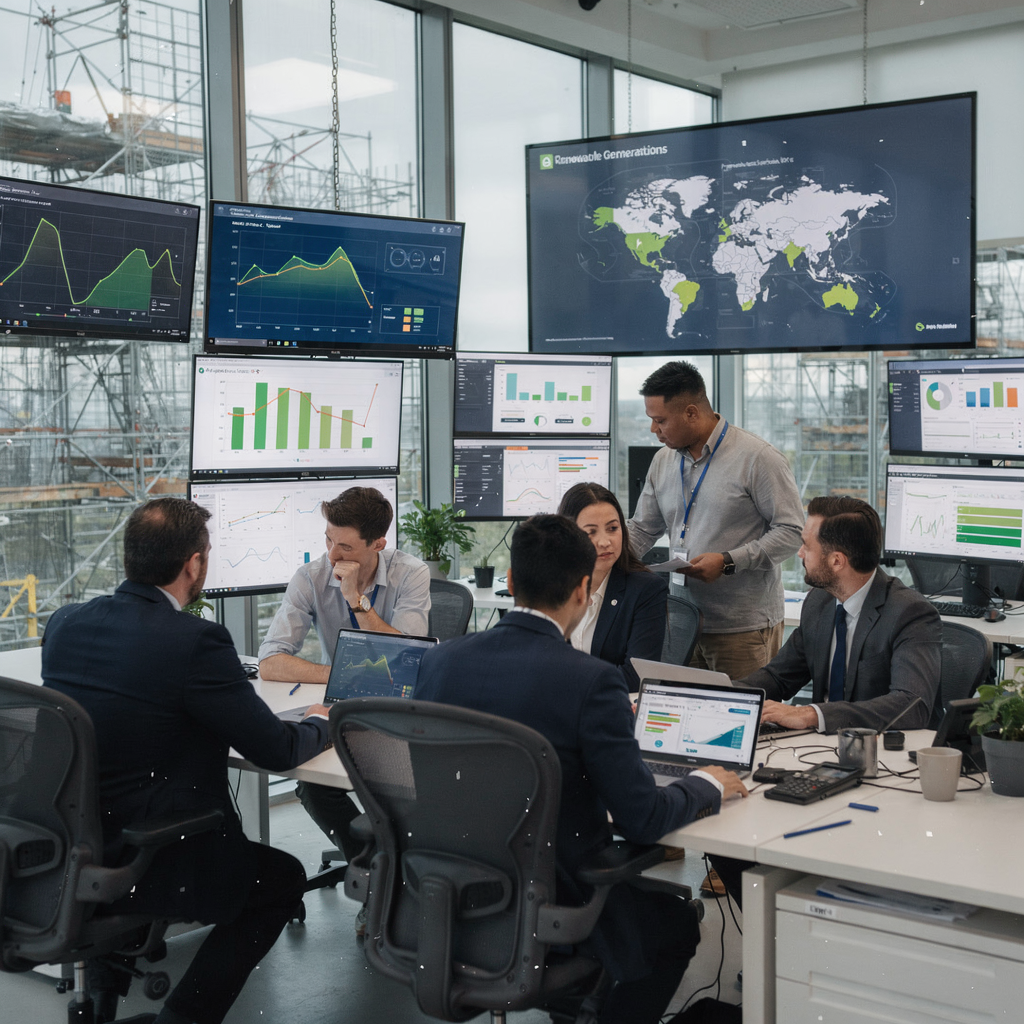
Grid operators face growing variability from renewables. Wind turbines and distributed energy resources introduce fluctuations in supply. Therefore, proactive decision-making becomes essential. AI models forecast short-term load and generation, and they support what-if scenario planning. As a result, grid operator teams balance variability more effectively.
Tools like dynamic load forecasting and simulation enable forward-looking control. For example, scenario planners test ramp rates and dispatch options. Then the system recommends actions that optimise system performance. In practice, operators use an AI-enabled dashboard to weigh trade-offs. Also, AI in control rooms helps orchestrate dispatch across thermal plants, batteries, and demand response.
Studies show improved stability with these methods. Some deployments achieve roughly 25% more stable grid performance under high renewable penetration AI sector study. Consequently, AI-driven orchestration reduces reserve requirements and lowers costs. In addition, the models help reduce emissions by optimising when plants run and how energy resources are used.
Security and transparency remain priorities. AI systems must be auditable and explainable to support incident response and regulatory review. For this reason, control rooms must balance autonomy with human oversight and clear escalation paths. Finally, the next generation of control will blend agentic AI with operator judgement to achieve smarter and safer grids.
AI vision within minutes?
With our no-code platform you can just focus on your data, we’ll do the rest
Optimise workflows for energy producers powered by AI autonomous control
Energy producers can optimise generation and distribution with AI. Autonomous control loops adjust output in real-time. They react to demand swings and to asset constraints. As a result, plants operate closer to optimal points. For example, AI-assisted scheduling can cut operational costs by around 20% when it matches dispatch to market and plant capability.
AI-enabled orchestration coordinates boilers, turbines, and storage. It also integrates building automation and site-level control. Then systems reduce fuel consumption and improve plant efficiency. Additionally, large datasets from sensors and cameras feed models that produce actionable insights. The result is a reduction in manual control actions and improved system performance.
visionplatform.ai contributes by turning cameras into operational sensors. The VP Agent Search and VP Agent Reasoning let teams search and verify events quickly. For instance, when a thermal anomaly appears near a generator, the system can cross-check access logs and video. Then it recommends corrective actions or escalates to a specialist. This workflow cuts investigation time and reduces false alerts.
Moreover, autonomous control supports scalable operations. The orchestrator can apply consistent rules across sites. It keeps records auditable and explains why actions happened. Therefore, energy producers gain reliability and improved uptime. Finally, combining AI agents with operator oversight enables safe scaling of autonomy while preserving accountability.
The future of artificial intelligence: Transforming the grid and control room integration
Looking ahead, the next generation of control will use agentic AI and self-learning control systems. These systems handle complex tasks and adapt to changing environments. They will scale from plants to city grids. At the same time, transparency and explainability will grow in importance. Experts call for auditable models and strong cybersecurity to maintain trust. For example, Toyota Research Institute notes that “Implementing robust controls to understand and govern autonomous decision-making is critical to ensuring trust and safety in AI-powered control environments” Accenture Tech Vision.
Energy and industry will see tighter integration between SCADA, VMS, and AI agents. Systems will support complex orchestration across assets. They will also enable predictive insights and better incident response. In addition, on-prem deployments and EU-aligned designs will address privacy and compliance pressures. This approach helps avoid cloud dependencies while accelerating adoption.
Researchers project significant growth in compute and energy capacity dedicated to AI development AI Index. As a result, more sophisticated models will run at the edge and on servers. However, balancing autonomy with human oversight remains essential. Dr. Emily Chen captures this point: “Autonomous control rooms are not just about automation; they represent a paradigm shift where AI systems actively learn and adapt to complex environments, enabling safer and more efficient operations than ever before.” Dr. Chen quote.
Finally, the outlook is forward-looking. AI solutions will accelerate decision-making and optimize production while keeping human operators in the loop. In short, the combination of agentic AI, robust cybersecurity, explainability, and on-prem architectures will usher in the next generation of control. As a result, control rooms become scalable, auditable, and smarter and safer by design.
FAQ
What is an autonomous control room?
An autonomous control room integrates AI agents, sensors, and orchestration tools to manage operations with reduced human intervention. It combines analytics, telemetry, and decision support so teams can respond faster and maintain auditable records.
How do AI agents help operators?
AI agents verify detections, correlate data sources, and recommend corrective actions. They reduce cognitive load by turning raw alerts into contextual, actionable guidance and by pre-filling reports or triggering workflows.
Can autonomous control reduce downtime?
Yes. When AI anticipates failures and schedules maintenance, organisations can see up to 40% reduction in unplanned downtime according to industry reports study. Predictive maintenance is a key enabler of this outcome.
Are these solutions secure and auditable?
They can be. On-prem deployments and auditable logs support compliance and cybersecurity. For example, an on-prem Vision Language Model keeps video and reasoning inside controlled environments to limit risk.
How do control rooms manage renewable variability?
Grid operators use dynamic load forecasting and scenario planning to balance variability. AI-driven orchestration helps optimise dispatch across wind turbines, storage, and thermal generation to stabilise the grid.
Do AI systems replace human operators?
No. AI systems augment human operators by handling routine tasks and surfacing exceptions. Humans retain oversight, handle complex decisions, and provide domain expertise.
What is predictive alerts and how do they work?
Predictive alerts use models that detect early signs of equipment degradation or process drift. They notify teams before failures occur so maintenance can move from reactive to proactive modes.
Can I integrate AI with existing VMS and cameras?
Yes. Platforms like visionplatform.ai integrate with VMS, ONVIF cameras, and existing event streams. They turn cameras into operational sensors and enable VP Agent Search and VP Agent Actions for faster decisions.
How do I ensure explainability in autonomous operations?
Design systems with transparent models, auditable decision logs, and human-readable explanations. VP Agent Reasoning, for example, explains why an alarm was validated by correlating video and access logs.
What industries benefit most from smarter control rooms?
Manufacturing, energy, transportation, and large security operations benefit significantly. These sectors gain improved uptime, reduced downtime, and better operational excellence through AI-driven orchestration and optimisation.