object detection in video surveillance: bounding boxes and role of object detection
Object detection in video surveillance begins with an image. Systems scan each frame and generate bounding boxes and class probabilities to show where targets appear. At the core, detection is a computer vision task that helps identify and locate objects quickly, and it supports downstream workflows for security operations. In practice, early systems produced boxes only. Then engineers added class labels to classify people, vehicles, and packages. Today, modern object detection models can predict bounding boxes and class labels in a single pass, and they run on embedded systems or on servers depending on deployment needs.
Object detection plays a crucial role in reducing false alarms. For example, rule-based motion detection triggers an alarm when pixels change. By contrast, object detection can distinguish a person from a waving tree branch. This difference improves detection performance and lowers nuisance alerts for human operators. Many solutions use single-stage pipelines such as SSD or single regression problem formulations. Other approaches generate region proposals with a region proposal network and then refine each candidate. The object detection model choice impacts speed and accuracy, and teams often balance those factors when they design a live system.
Object detection technology has matured with the adoption of convolutional neural networks and image classification backbones. When teams combine object recognition with lightweight trackers, systems can follow a person across video frames and across multiple cameras. That link matters because security personnel depend on continuity of view to verify a suspected intruder or unauthorized vehicle. Unlike traditional cctv, modern deployments often run some analytics at the edge to cut latency. For mission-critical sites such as an airport, operators need predictable throughput and low response time. For example, edge-enabled CCTV and analytics platforms can reduce response times by roughly 60% in some deployments, improving situational response when seconds count (edge-enabled systems reduce response times by approximately 60%).
In short, the role of object detection goes beyond marking boxes. It enables object recognition, localization, and the first layer of context for higher-level analysis. When teams use object detection to identify and locate objects, they create the metadata that powers searchable video footage and automated workflows. Companies such as visionplatform.ai take these detections and add reasoning, so operators receive not just an alarm but an explained situation. This shift helps control rooms move from raw detections to decision support and reduces cognitive load during high-pressure incidents.
object tracking and intelligent video for modern surveillance
Object tracking keeps a detected object linked across successive video frames. Trackers assign IDs and update positions so a system can follow a person or vehicle across the field of view. Techniques include simple overlap-based trackers, Kalman filters, and modern neural trackers that combine appearance and motion cues. When a tracker maintains identity, it supports behavior analysis, people-counting, and forensic search. For example, follow a person scenarios rely on persistent IDs to reconstruct a path across multiple cameras and time windows.
Intelligent video adds context. It merges object tracking with rule engines, temporal models, and scene understanding to highlight relevant events. Intelligent video informs operators by prioritizing incidents that match risk profiles. This approach reduces alarm fatigue and speeds verification. In crowded areas, crowd detection and density metrics detect growing bottlenecks. In perimeter work, a combined tracker and rule set can catch unauthorized attempts while ignoring harmless activity. Control rooms use these capabilities to maintain situational awareness without excessive manual monitoring.
Use cases are practical and varied. In crowd monitoring, intelligent video counts people, flags surges, and feeds heatmap occupancy analytics into operations dashboards. For perimeter defence, object tracking helps confirm whether an intruder crossed multiple zones before escalating to an alert. For anomaly detection, trackers feed short-term trajectory data to behavior models that detect loitering, sudden dispersal, or an object left behind. Research shows that integrating behavioral analytics with object detection significantly improves threat detection accuracy and reduces false alarms by up to 40% (behavioral analytics with object detection significantly improves threat detection accuracy).
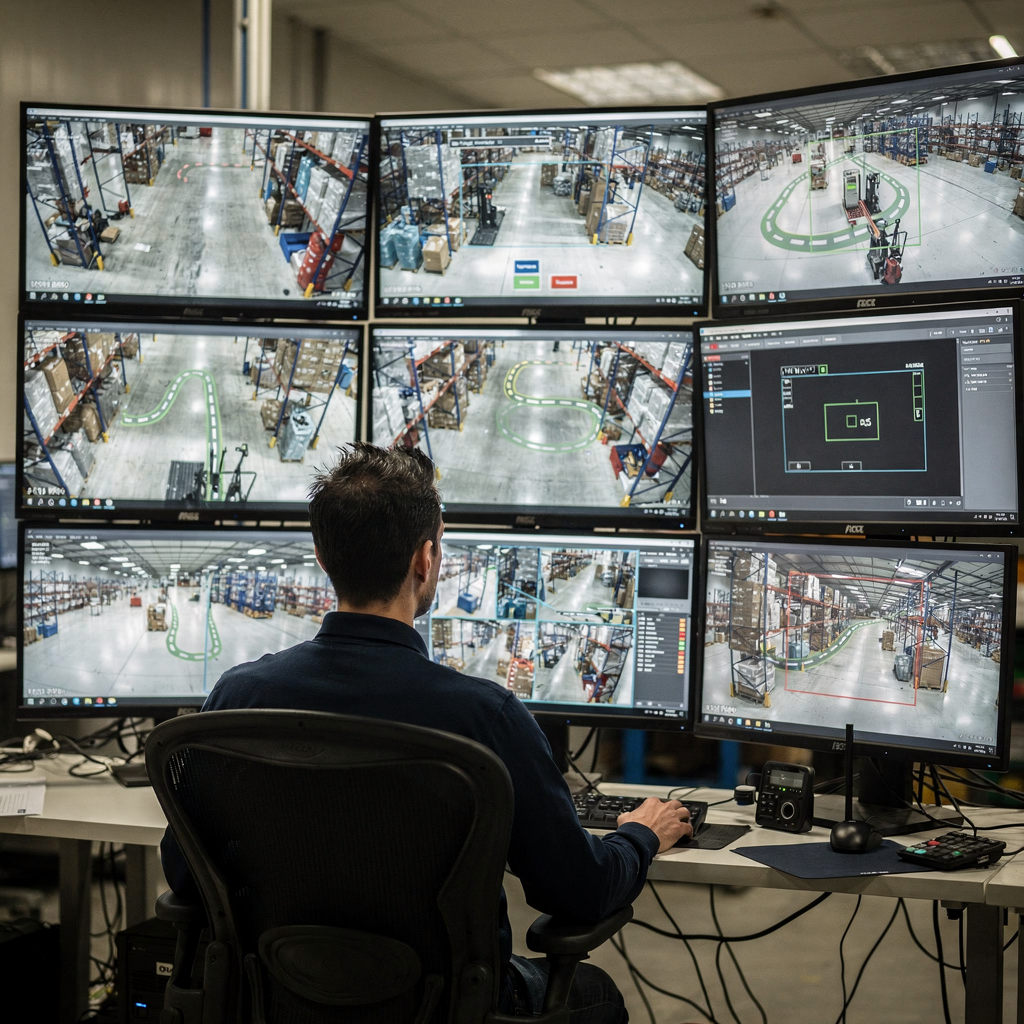
Systems that combine object tracking and intelligent video also support automation. For instance, when a tracked person approaches a restricted zone, the system can auto-generate a prioritized incident with video snippets and suggested actions. visionplatform.ai layers reasoning on top of these signals so operators receive a verified situation rather than a raw alarm. As a result, teams get faster confirmation and can coordinate a measured response. Overall, object tracking and intelligent video turn streams into actionable insights and boost the operational value of video surveillance systems.
AI vision within minutes?
With our no-code platform you can just focus on your data, we’ll do the rest
ai and deep learning analytics to enhance surveillance systems
AI and deep learning power advanced feature extraction in surveillance. Convolutional neural networks learn hierarchical features that distinguish people from bags and vehicles from bicycles. Deep learning enables robust object recognition even under occlusion and in varied lighting. When teams train models on domain-specific data, performance improves for site realities such as uniforms, vehicle liveries, and unusual angles. Organizations often use a mix of pre-trained backbones and fine-tuning with a site-specific dataset to reach operational accuracy.
Deploying neural networks enables real-time threat recognition. Architectures such as YOLO provide fast detections with low latency, so systems can perform real-time object detection at the edge. Many deployments use a cascade: an initial fast detector flags candidates, then a more precise model verifies them. This design balances speed and accuracy while reducing false positives. For some use cases, teams deploy SSD or YOLO variants on on-prem GPU servers or Jetson-class edge devices to keep inference local and compliant with regulations.
Quantitative gains are measurable. Deep learning-based detection methods have achieved accuracy rates exceeding 90% in controlled conditions, and ongoing research pushes performance in the wild (accuracy rates exceeding 90% in controlled environments). Additionally, modern pipelines that combine classification with tracking and contextual models reduce false positives and improve true positive rates. When teams combine models with procedural rules and operator feedback, they see consistent detection performance improvements and better verification outcomes.
AI also creates new operational tools. For example, visionplatform.ai couples an on-prem Vision Language Model with live detections to turn video events into searchable text. This approach lets operators query incidents in natural language rather than hunting through hours of footage. The VP Agent Reasoning layer correlates video analytics with access control and logs to verify alarms and suggest next steps. As a result, AI-powered analytics not only detect threats but also supply context and recommendations, improving the speed and accuracy of responses and reducing time per alarm.
video analytics and use object detection for real-time insights
Bridging object detection with video analytics dashboards turns raw detections into operational views. Video analytics platforms ingest detections and metadata, tag events, and generate timelines for rapid review. Event classification groups detections into meaningful buckets—such as trespass, loitering, or vehicle stop—to streamline operator workflows. Dashboards present ranked incidents, video snippets, and relevant metadata so teams can triage faster.
Event classification and metadata tagging create searchable records. For forensic work, operators rely on tags and time-indexed clips to find incidents quickly. For example, forensic search capabilities let teams look for “red truck entering dock” or “person loitering near gate after hours,” saving hours of manual review. visionplatform.ai offers VP Agent Search to translate video into human-readable descriptions, enabling natural language queries across recorded video and events. This capability shifts the paradigm from manual scrub to rapid search and verification.
Alert generation must balance sensitivity and operator load. Systems tune thresholds to minimize false alerts while ensuring real-time threat detection. Measuring latency and throughput matters; designers monitor end-to-end time from detection to alert delivery. Real deployments aim for sub-second detection-to-alert cycles for critical scenarios and higher throughput when scaling to thousands of cameras. Cloud-based video architectures can scale but add privacy risk. For that reason, many sites prefer on-prem analytics platforms to keep video and models within the environment.
Latency, throughput, and usability intersect. A high-throughput system that floods operators with low-value alerts fails. Conversely, a tuned pipeline that streams prioritized incidents and contextual metadata helps security teams act. By combining object detection systems with event classification, control rooms gain actionable insights and better situational awareness. This linkage transforms video feeds from raw imagery into a live operational resource for security operations and incident management.
AI vision within minutes?
With our no-code platform you can just focus on your data, we’ll do the rest
multi-sensor fusion: enhance video surveillance systems and physical security
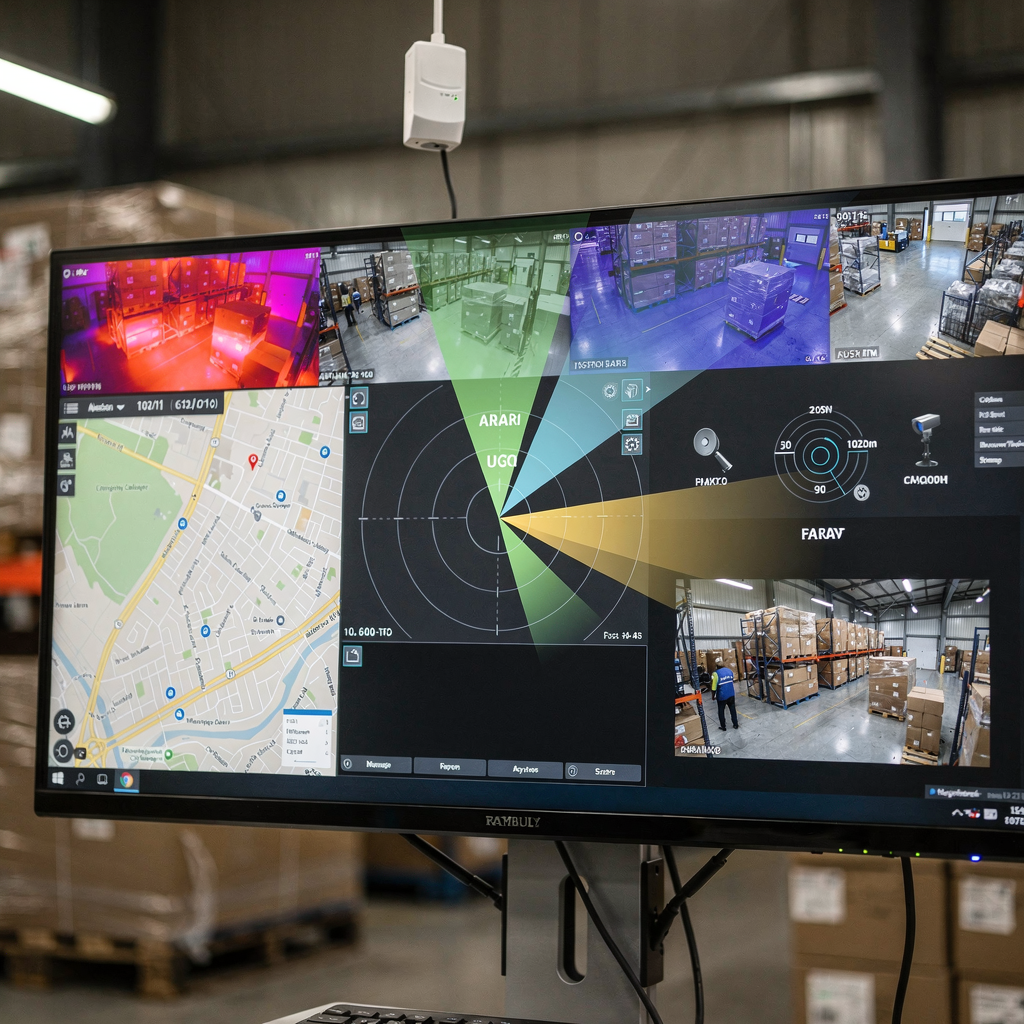
Combining thermal, audio, and radar data with visual feeds improves detection robustness. Multi-sensor fusion provides complementary views that fill gaps when a single sensor struggles. For instance, thermal cameras detect heat signatures at night, and radar senses motion in poor weather. When fused, the system cross-validates signals to reduce false positives and to confirm an intruder even when visual conditions are marginal. This approach directly enhances physical security by reducing blind spots and improving confidence in automated decisions.
Contextual awareness grows when systems fuse modalities. A detected footstep or audio cue can trigger a focused visual verification. Likewise, a thermal hotspot can highlight an animal versus a human. The fusion process uses sensor-specific models and a higher-level fusion engine that reasons over outputs. This architecture boosts detection accuracy in low light and adverse weather, and it provides richer metadata for subsequent analytics and reporting. Because of these benefits, many airports and critical sites adopt multi-sensor deployments for perimeter protection.
Multi-sensor strategies cut response time and improve verification. When sensors corroborate an event, the system can confidently generate a higher-priority alert and provide curated video footage. For example, integrating perimeter radar with camera analytics reduces false intruder alerts while ensuring that real attempts to breach a fence are escalated immediately. Research highlights the importance of contextual awareness via sensor fusion for distinguishing benign from suspicious activities (contextual awareness in surveillance systems is pivotal for distinguishing behaviors).
Deployments must also account for operations and data handling. Systems like the VP Agent Suite let organizations keep processing on-prem, maintain control over datasets, and meet regulatory needs such as the EU AI Act. In practice, fusion improves threat detection and reduces operator load. It also extends coverage in environments where a single camera cannot reliably detect objects. By combining object detection with thermal and radar cues, teams achieve faster response and a more complete security posture.
balancing analytics and privacy in video surveillance
Advanced analytics raise ethical and regulatory questions. Public concern about data misuse remains high; a recent report noted that over 65% of people voiced privacy concerns related to advanced surveillance technologies (over 65% expressed concerns about privacy and data misuse). Organizations must design systems with privacy in mind and implement safeguards that align with law and public expectations. For many sites, on-prem processing and strict access controls reduce the risk of inappropriate data exposure.
Techniques for anonymisation and secure data handling help. Masking faces, hashing identifiers, or storing only event metadata can minimise exposure while retaining operational value. Systems should log access and provide audit trails so human operators and automated agents remain accountable. For regulated environments, an architecture that keeps video and models in the facility simplifies compliance and reduces cloud-related complexity. visionplatform.ai emphasises an EU AI Act–aligned architecture with on-prem models and auditable event logs to support compliance.
Designers must balance capability with transparency. Explainable analytics that provide context and reasoning help build trust. When an AI agent explains why it raised an alert and which sensors corroborated it, stakeholders can evaluate the decision. This transparency reduces false claims and improves operator confidence. Moreover, controlled data retention, purpose limitation, and robust encryption are essential practices for any responsible deployment.
Looking ahead, trust-building will determine adoption. Systems that combine strong privacy controls with clear operational benefits will gain acceptance. By providing operators with context, search, and decision support—rather than raw, unverified alarms—AI-powered surveillance can reduce unnecessary interventions and protect civil liberties. Ultimately, the most successful systems will balance analytics and privacy while delivering measurable improvements in safety and efficiency.
FAQ
What is the difference between object detection and object tracking?
Object detection locates objects in single images or video frames and assigns class labels. Object tracking links those detections across frames so the system can follow a person or vehicle over time.
How does AI improve traditional CCTV?
AI adds feature extraction, classification, and contextual reasoning to video feeds. It turns raw video into searchable events, reduces false alarms, and helps operators verify incidents faster.
Can modern systems work without sending video to the cloud?
Yes. Many deployments use on-prem processing and edge devices to keep video local, which helps with privacy and compliance. For example, visionplatform.ai supports on-prem Vision Language Models and agents to avoid cloud-based video.
What role does multi-sensor fusion play in perimeter security?
Fusion combines visual, thermal, audio, or radar inputs to validate events and cover blind spots. This redundancy lowers false positives and enables faster, higher-confidence alerts for perimeter breaches.
Are AI detections reliable enough for real-time response?
AI and deep learning models can reach high accuracy, especially when fine-tuned with site-specific datasets. When systems combine detection with verification and context, they support real-time threat detection effectively.
How do systems reduce operator overload and false alarms?
Systems prioritise incidents, provide context, and verify alerts against multiple data sources. VP Agent Reasoning, for instance, explains alarms and suggests actions so operators handle fewer low-value alerts.
What privacy measures should organisations implement?
Implement anonymisation, access controls, audit logs, and strict retention policies. On-prem processing and transparent documentation also help meet regulatory requirements and public expectations.
Can I search recorded video with natural language?
Yes. Vision Language Models can convert video events into text, enabling natural language forensic search. That feature saves operators time and reduces manual review.
Which models power fast detections at the edge?
Single-shot detectors like SSD and YOLO variants provide low-latency detections suitable for edge devices. Teams often choose architectures that balance speed and accuracy for their site.
How do I ensure compliance with local regulations?
Work with legal and privacy teams, adopt on-prem architectures when needed, and keep audit trails for model decisions and data access. Transparent configurations and controlled datasets make compliance easier.