Bosch Video Management System Overview
The Bosch Video Management System gives organisations a single place to manage cameras, streams, and events. It centralises camera feeds and metadata and it simplifies how teams monitor, search, and act. BVMS supports both live and recorded video and scales from small sites to enterprise deployments. The system coordinates feeds from Bosch cameras and third-party devices so operators see consolidated views. As a result, operators spend less time switching screens and more time responding.
Bosch built BVMS to work with analytics engines such as IVA and Intelligent Insights. The platform records comprehensive metadata at the edge. This metadata includes object type, movement vectors, clothing color tags, and time stamps. That makes it easier to locate relevant video when teams perform forensic search or routine audits. Bosch describes this capability in its product materials and notes the real-time tagging and indexing that drive valuable insights from Intelligent Insights. The company also highlights privacy and product safety commitments in its annual reporting on data protection.
BVMS exposes role-based controls and audit trails so administrators can set permissions and log every access. These management systems features help with compliance, investigations, and internal reviews. The architecture supports both on-premise and hybrid deployments and it can integrate with access control and other security layers. Many organisations choose BVMS because it pairs a mature VMS with modular analytics and open interfaces. For teams that need a tightly coupled solution, the bosch video management system option offers vendor-grade integration and a consistent operator experience.
visionplatform.ai complements BVMS by turning detection streams into reasoning and decision support. For example, our VP Agent Search works with BVMS metadata so operators can search across cameras using natural language and to perform forensic search quickly. If you want an example of how detectors and reasoning combine, see our forensic search in airports page for a sector-specific use case forensic search in airports. This kind of VMS-centred workflow reduces time-to-evidence and improves situational awareness.
AI and Video Analytics in Security Setups
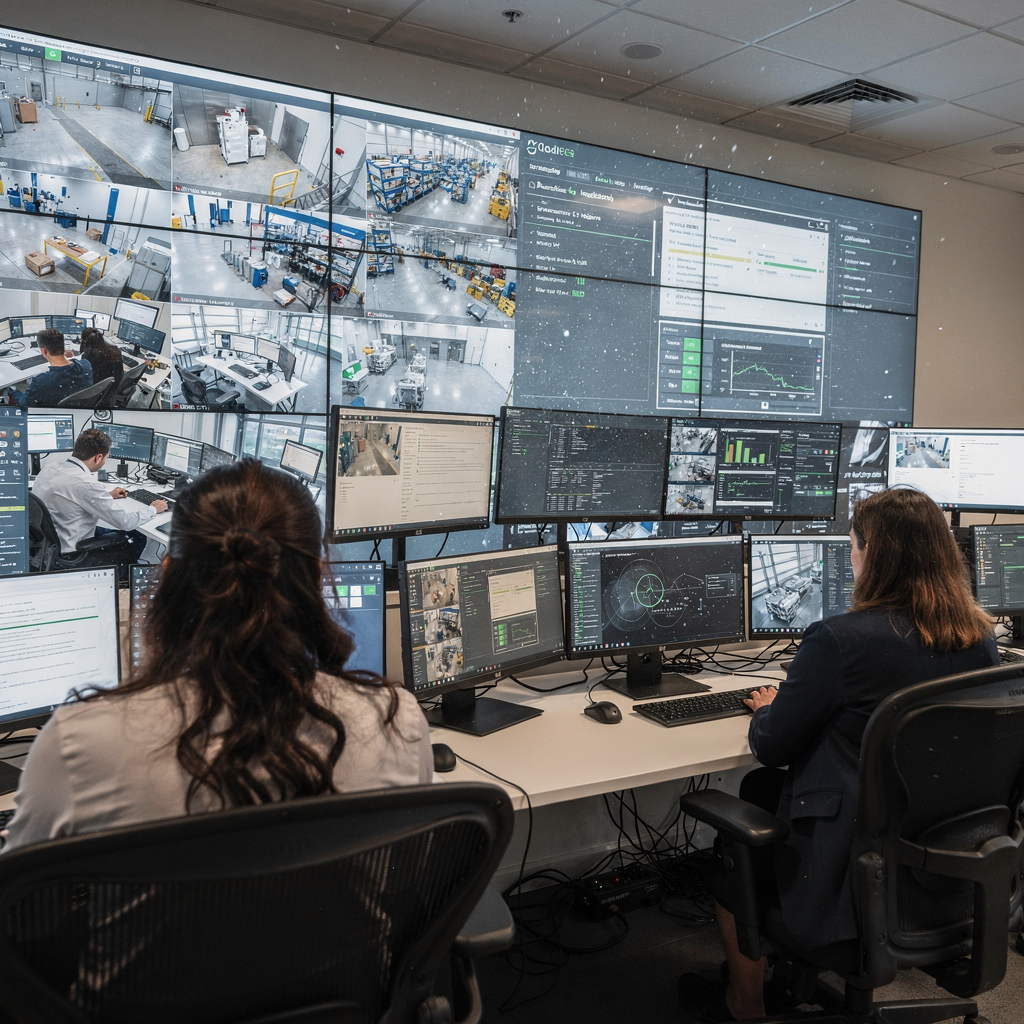
AI now plays a core role in modern CCTV networks. It powers analytics that tag objects, measure crowd density, and spot anomalous movement. Systems use AI models to recognise people, vehicles, and specific behaviours. Those models run at the edge and in servers, and they prioritise events for operators. The result is fewer hours spent manually reviewing video footage and more time spent on action.
Key features include object recognition, motion detection, and behavioural analysis. Object recognition differentiates people from vehicles, and it identifies specific objects when models are trained for those classes. Motion detection filters routine activity from meaningful movement. Behavioural analysis spots patterns such as loitering or unusual routes, and it triggers an early alert for investigation. These capabilities let security teams detect and verify incidents faster, and they reduce false positives through contextual rules.
Market trends show rapid adoption. The broader AI-powered video analytics market is forecast to grow at over a 20% CAGR, reflecting strong demand for automated search across large archives and live feeds (Bosch review of AI video trends). Independent analysis also highlights how AI extends human scale by analysing vast datasets that would overwhelm people “The Dawn of Robot Surveillance”. At the same time, researchers show how AI-enabled deception detection and multimodal analytics add value in forensic contexts by analysing video and audio.
Products that combine AI with a robust VMS deliver more than alerts. They create searchable metadata and they enable teams to integrate access control logs, business intelligence, and incident workflows. For organisations that run many cameras, this saves hours per day. visionplatform.ai’s VP Agent Search, for example, turns detections into rich textual descriptions so operators can search across recorded timelines with natural language and quickly locate events such as “person loitering near gate” or “red truck entering dock” loitering detection in airports. That search across timelines speeds investigation and improves operator confidence.
AI vision within minutes?
With our no-code platform you can just focus on your data, we’ll do the rest
Intelligent Video Forensic Search
Intelligent Insights captures and tags metadata in real time. The software annotates each frame with contextual fields and it stores those tags for fast retrieval. When investigators need to find a person or vehicle, they can query against clothing color, movement, and object properties. This intelligent video approach turns raw footage into structured data, and it makes forensic search both precise and fast.
Typical use cases include locating a specific person in hours of footage, tracking a vehicle across multiple cameras, and detecting unusual behaviour that merits review. Forensic teams use metadata tagging to narrow searches from days of footage down to minutes. That saves time and reduces the risk of missed evidence. Studies and market reports show that AI-driven indexing can reduce manual review time by an order of magnitude in many scenarios Bosch on real-time metadata and value. The technology also supports advanced queries such as searching for specific events, clothing descriptions, or patterns of movement across a site.
Comprehensive metadata allows operators to locate and preview candidate clips quickly. Thumbnails and timeline markers show where matching frames appear, and integrated playback opens the exact moment. Forensic search workflows often combine automated matches with human review. This hybrid method both accelerates search and preserves evidentiary quality. visionplatform.ai enhances this process by converting video into human-readable descriptions and by enabling natural language forensic search. The VP Agent Search helps teams find incidents without knowing camera IDs or exact timestamps, which speeds investigations in complex environments such as terminals and transport hubs forensic search in airports.
Because metadata stays linked to video systems, auditors and legal teams can trace how evidence was found. Audit logs and role controls record searches and exports. Those capabilities help maintain chain-of-custody and support defensible investigations. For organisations that must meet strict compliance standards, the combination of real-time tagging and clear traces reduces operational risk and improves investigatory throughput.
Forensic Search with IVA Pro: Detection and Alert
IVA Pro supplies detection algorithms for people, faces, and objects. It offers specialised models such as IVA Pro traffic and IVA Pro perimeter detection to address site-specific needs. The engine runs analytics on multiple streams and it creates events when rules match. Those events can then trigger an alert and start a response workflow. Operators receive clear context, and they can jump straight to the most relevant footage.
IVA Pro appearance and IVA Pro traffic modules provide targeted capabilities. For example, IVA Pro traffic helps teams detect vehicle direction and speeding. IVA Pro perimeter flags breaches and prompts immediate review. These modules work inside BVMS and feed events to management systems so teams can assign tasks and escalate as needed. The combination of IVA analytics and VMS orchestration creates an efficient incident lifecycle from detection to resolution.
Real-time alerting workflows typically follow a simple pattern: detect, verify, and act. Detection creates the initial event. Verification uses metadata and short clips to confirm relevance. Action follows with guided workflows or automated steps. This approach reduces operator load and shortens response times. In high-stakes scenarios, integrating IVA alerts with procedures and access control accelerates decisions and gets responders to the right place faster. The ACLU report on surveillance impact discusses how automation scales analysis across many cameras and why oversight matters.
False alarms decrease when IVA models include context and when teams tune rules. IVA supports customizable thresholds, and systems can combine IVA events with other signals. For example, a door forced event plus a perimeter detection produces a higher-confidence alert. visionplatform.ai integrates IVA detections into agent workflows so operators receive explained situations, not raw alarms. That improves decision quality and lets teams focus on actionable incidents.
AI vision within minutes?
With our no-code platform you can just focus on your data, we’ll do the rest
Integration of BVMS, IVA Pro and Security Camera Networks
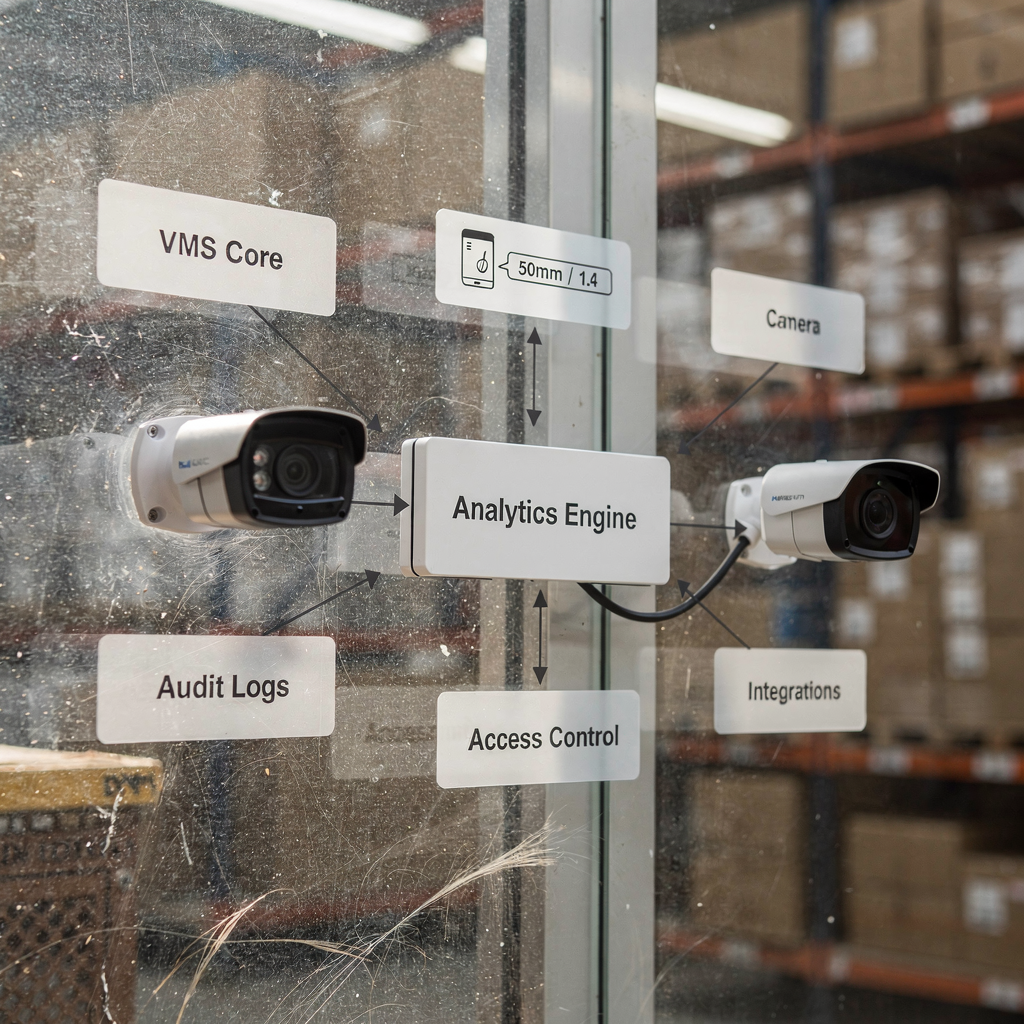
System architecture typically places BVMS at the core, IVA Pro as the analytics engine, and cameras as endpoints. Cameras deliver streams via ONVIF or RTSP and the VMS handles routing, recording, and playback. IVA runs either at the edge or on servers and it emits structured events. Management systems pick up those events, create audit records, and route alerts to operators or external workflows. This end-to-end picture supports scalable deployments and clear operational control.
Integration points are important. BVMS exposes APIs and event feeds, and IVA Pro integrates via standard interfaces. Systems often integrate with access control and license plate recognition so teams can correlate video events with entry logs. For ANPR or LPR use cases, license plate and license plate recognition metadata help locate vehicles in large yards. Our ANPR work at airports shows how LPR metadata speeds vehicle tagging and search ANPR/LPR in airports. The architecture also supports third-party VMS platforms like Genetec when sites require alternative deployments.
Operators rely on user roles, granular permissions, and audit trails to enforce policies. Those controls prevent unauthorized exports and they document who viewed or exported video footage. Integration with access control systems also enables cross-validation. For example, a badge read event that fails while a camera detects an unauthorized person increases confidence in a real incident. visionplatform.ai helps teams integrate sensors and data sources, and it adds reasoning that turns detections into actions.
Scalability matters too. The architecture supports multiple cameras and thousands of streams. Systems can deploy analytics on-premise or on GPU servers at the edge. This on-premise option reduces cloud exposure and supports EU compliance. Combining BVMS, IVA Pro, and intelligent video analytics provides a resilient, auditable, and efficient security stack for modern sites.
Smarter Artificial Intelligence in Real-Time Video Solutions
Smarter AI will push the next wave of capabilities for security and forensics. Predictive analytics, anomaly detection, and deep learning models will help teams spot rare events earlier. Models will learn from site-specific training data and they will adapt to changing conditions. That means fewer false positives and more relevant alerts for operators.
Ethical and privacy considerations must guide these advances. Bosch highlights product safety and data privacy as central design goals in its annual report. Systems should keep video data local when possible, and organisations should document processing and retention policies. visionplatform.ai’s on-prem Vision Language Model and VP Agent suite aim to keep data and models inside customer environments to ease compliance with the EU AI Act and similar rules. This approach reduces risk, and it preserves control over sensitive data.
Future AI models will support richer reasoning. Instead of just alerting, agents will explain why an event matters, and they will suggest actions. That reduces operator cognitive load and accelerates response. For example, a verified perimeter breach could trigger a recommended action, such as notifying guards and locking a gate. Those proactive workflows save time and improve outcomes.
Training data and model governance remain critical. Organisations should use representative datasets and they should test models in production. Continuous tuning helps keep detection rates high and false positives low. Combining IVA detections with supplemental reasoning layers produces actionable results and better business intelligence. visionplatform.ai integrates these elements so teams gain context, not just detections. As AI analytics mature, forensics will become faster, more explainable, and more defensible.
FAQ
What is BVMS and how does it differ from other VMS platforms?
BVMS is Bosch’s Video Management System that centralises camera feeds and metadata. It differs by offering tight integration with Bosch analytics engines and by supporting role-based audit trails for compliance.
How does Intelligent Insights improve forensic search?
Intelligent Insights tags video frames with metadata in real time, which enables fast filtering and locating of relevant clips. This reduces manual review time and increases search accuracy.
Can IVA Pro detect both people and vehicles?
Yes, IVA Pro includes detection for people, vehicles, and objects, and it offers specialised modules such as IVA Pro traffic and IVA Pro perimeter. The system provides events and alerts that integrate into operator workflows.
How do systems handle license plate recognition?
Systems integrate license plate recognition and license plate metadata to tag vehicles and speed up searches. For example, airport deployments use ANPR/LPR to correlate vehicle movements with gate times ANPR/LPR in airports.
Is on-premise deployment possible for AI models?
Yes, many deployments run analytics on-premise to reduce cloud exposure and to meet regulatory requirements. visionplatform.ai supports on-premise models and edge GPU deployments.
How does integration with access control work?
Analytics events can correlate with access control logs to validate incidents and to increase alert confidence. This integration helps automate incident verification and response.
What is forensic search in practice?
Forensic search combines indexed metadata, thumbnails, and timeline markers to quickly locate evidence. It lets investigators run targeted queries and to preview candidate clips rapidly forensic search in airports.
How do organisations reduce false positives?
They tune detection thresholds, combine multiple signals, and use reasoning layers to verify events. Systems that provide context and suggested actions reduce alarm fatigue and improve decision making.
Can BVMS integrate with third-party cameras and VMS platforms?
Yes, BVMS supports ONVIF and RTSP cameras and can integrate with third-party platforms like Genetec where required. This flexibility helps sites upgrade analytics without replacing cameras intrusion detection examples.
What role does training data play in AI analytics?
Training data shapes model accuracy and bias. Using representative and site-specific data improves detection of specific objects and behaviours. Continuous retraining and governance keep models effective.