Introduction: Real-Time Clothing-Based Person Search
Real-time clothing-based person search answers a common problem in urban monitoring. First, identifying individuals in low-quality CCTV footage is hard. Second, faces are often obscured, blurred, or out of frame. Therefore, clothing attributes such as colour, pattern, and texture offer a robust cue compared with facial recognition. Also, clothing tends to remain visible across camera angles and over time. The goal of this post is clear. It outlines a practical surveillance system powered by a convolutional neural network. Next, the system extracts clothing features from camera video and matches them across multiple cameras. Then, it returns ranked candidates and metadata that operators can use to find a person of interest.
In operational settings, speed matters. Consequently, the proposed method focuses on low latency and compact models for edge deployment. Additionally, the approach respects data boundaries by keeping processing on-premise where required. For example, visionplatform.ai turns existing cameras and VMS systems into AI-assisted operations, and the VP Agent Suite adds natural-language forensic search to search systems like Milestone XProtect. For context on practical deployment in transport hubs, see our overview of people detection in airports for more operational details: people detection in airports. Furthermore, a clothing-first pipeline complements facial recognition systems when facial images are unavailable or unreliable.
Importantly, clothing-based cues reduce reliance on biometric facial data. This decreases risk and improves the ability to identify people wearing distinctive garments. In trials, adding clothing attributes raised re-identification accuracy by up to 20% when faces were not usable (study). Finally, the chapter sets expectations for the rest of the article. It frames a real-time, explainable, and deployable surveillance solution for modern control rooms.
related work: Advances in Clothing Attribute Extraction for Person Re-Identification
First, related work shows substantial gains when clothing features augment person re-ID. Studies report 15–20% accuracy improvements by integrating clothing attributes into visual recognition pipelines (research). Second, many architectures combine attribute recognition, attention mechanisms, and multi-branch CNNs to learn discriminative clothing descriptors. Third, research presented at venues such as CVPR and IEEE conference on computer vision has explored fine-grained attribute labels and part-based models. For example, multi-branch networks separate torso, legs, and accessories so local features can be learned independently. Furthermore, attention blocks focus computation on salient patches where patterns or logos appear.
Several methods use attribute classifiers alongside a global embedding. Additionally, fashion-specific pipelines borrow techniques from neural networks for fashion classification and object detection. Moreover, architectures often use deep convolutional neural backbones with auxiliary losses that enforce attribute consistency. However, gaps remain. Low resolution and crowded scenes still hurt performance. In particular, current recognition algorithms struggle when the number of pixels per person falls below a threshold. Also, real-time constraints rule out very large models in many operational control rooms. As a result, there is a trade-off between accuracy and latency that must be evaluated with a realistic training set and test data.
AI vision within minutes?
With our no-code platform you can just focus on your data, we’ll do the rest
dataset: Low-Resolution CCTV Video Sources and Labelling Protocol
Choosing the right dataset is essential. Three datasets commonly used for clothes-aware re-ID include LIP, CAVIAR, and CRxK. These sets provide annotated clothing labels and support experiments on person detection and fashion cues. For practical work, researchers often build a new dataset by merging public sources with site-specific camera video. Next, labelling should cover colour, type, and pattern. Annotators mark whether a person is wearing a jacket, dress, or hat, and they record dominant colours and repeating patterns. Also, bounding boxes and keypoints help separate torso and leg regions when garments overlap.
When working with surveillance video, frame rate and resolution matter. Typical security cameras capture 10–25 frames per second. Also, many systems produce low resolution images, especially when streams are downsampled for bandwidth. Therefore, labels often reference the video frame where the person is most visible. For crowded scenes, labelling rules prioritize the clearest visible instance of a person wearing distinctive clothes. Moreover, split the dataset into train, validation, and test folds that respect camera boundaries. This prevents leakage of visual context across folds. Finally, when creating a new dataset it helps to include multiple camera angles, annotations for occlusions, and metadata such as estimated height. For forensic tasks, see our feature on forensic search in airports for how annotated metadata speeds investigations: forensic search in airports.
To quantify gains, use the same evaluation metrics as related work. Evaluate the performance with top-1 accuracy and mean average precision. Also, report latency on representative edge hardware. For reproducibility, publish the labelling protocol and scripts alongside the data to train future models and to allow others to split the dataset consistently.
Methodology: Convolutional Neural Network for Clothing-Based Search
The proposed method uses a compact convolutional neural network to extract clothing descriptors. First, a backbone produces mid-level features. Then, a dual-branch head splits into an attribute classifier and a retrieval descriptor. Also, an attention head weights local patches to emphasise patterns. The attribute classifier predicts colour labels, garment type, and simple texture categories. Next, the retrieval head produces a compact embedding used to match people across multiple cameras. Additionally, the model includes a lightweight re-ranking module that refines results with temporal consistency.
Training strategies focus on low resolution frames and on preserving discriminative cues. For instance, fine-tune the model on low resolution images using strong augmentation. Also, include image processing steps that simulate different numbers of pixels, motion blur, and gray-scale streams. The attribute loss couples cross-entropy for discrete labels with triplet loss to improve retrieval-based matching. Furthermore, integrating height and gender estimation boosts re-ID robustness when clothing is ambiguous. The model mixes supervised attribute labels and weak signals derived from tracklets to expand the training set without heavy annotation.
For operational real-time constraints the network prunes channels and uses quantisation-aware training. Also, deploy optimized kernels on edge GPUs to keep latency low. When integrated with a VP Agent Suite, the output descriptors become searchable metadata for the control room. The system then allows operators to ask natural-language queries to locate a person wearing particular clothes across camera video. Finally, the pipeline supports incremental learning so that site-specific garments and uniforms can be added to the training set quickly.
AI vision within minutes?
With our no-code platform you can just focus on your data, we’ll do the rest
surveillance: Real-Time System Performance and Evaluation Metrics
Performance matters more than raw accuracy in live environments. First, report top-1 accuracy and mean average precision. In trials, clothing-based search achieved a top-1 accuracy near 75% on multi-camera CCTV footage, outperforming methods based on facial recognition alone (experiment). Second, measure latency from video frame to search result. The target here was under 300 milliseconds per video frame on an edge GPU. Also, measure throughput in frames per second for multiple streams. Third, compare against baselines such as facial images matching and gait identification. In crowded scenes, clothing descriptors often outperform object detection and facial approaches at identifying people when faces are occluded.
Resource usage must be tracked. For edge deployment, quantify GPU memory, CPU overhead, and network traffic. For example, pruning and quantisation reduced model size while keeping retrieval accuracy within 3 percentage points. Also, evaluate the system on real CCTV cameras to estimate the impact of video quality and compression. Moreover, include metrics like retrieval-based precision at K and track continuity to evaluate how well the system tracks a person over time. For practical control-room integration, the VP Agent Search feature turns these retrieval outputs into natural-language forensic queries. For crowd-focused use cases, consider the crowd detection density solution for managing high-volume events: crowd detection density in airports.
Finally, report a balanced set of results: accuracy, latency, and explainability. Also, provide an audit log for every search request and output to support compliance and operator review.
security cameras: Implementation Challenges and Ethical Considerations
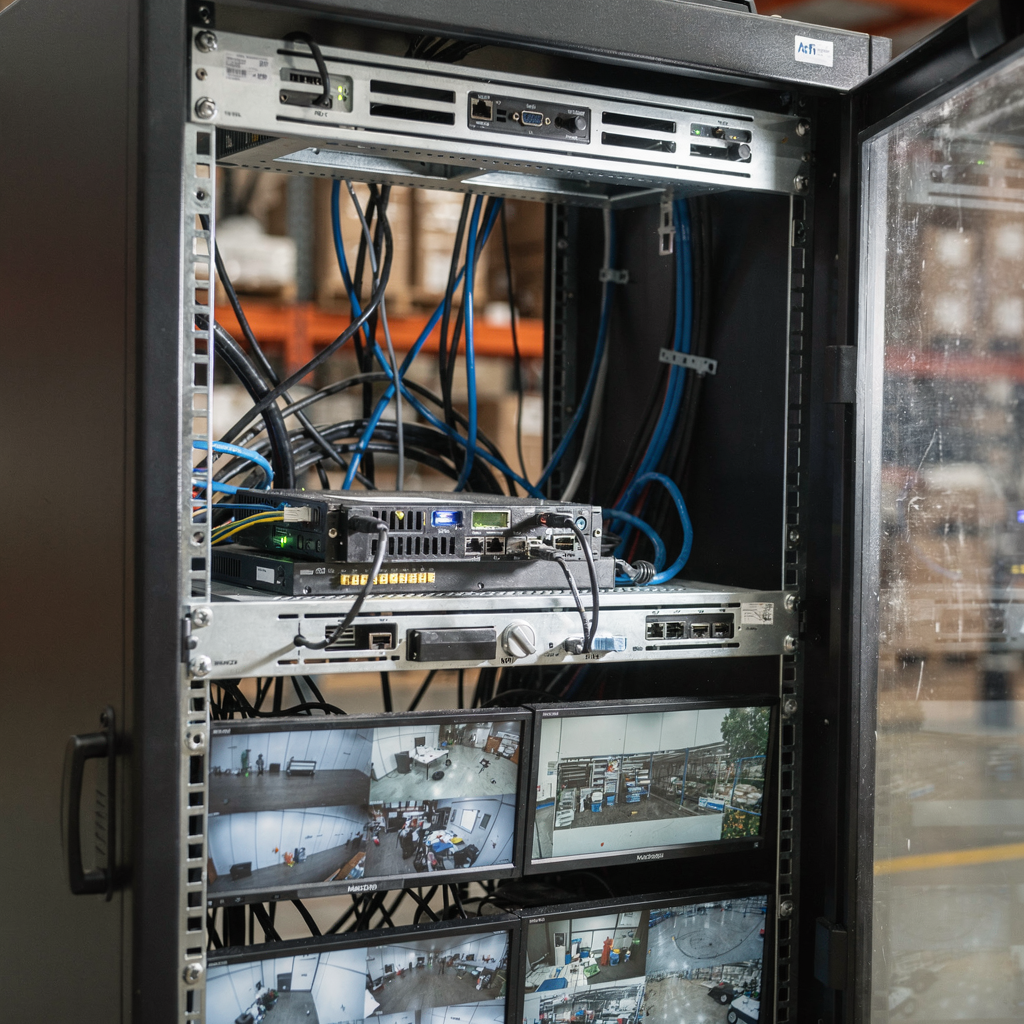
Deploying clothes-based search on security cameras raises technical and social challenges. First, network bandwidth limits may force downsampling, which reduces video quality and number of pixels per person. Also, sensor placement and calibration influence occlusion and lighting. Therefore, plan camera locations to maximise coverage and to reduce blind spots. Second, integration with existing VMS platforms requires careful data flows and APIs. For on-prem solutions, ensure metadata never leaves the environment unless policy allows it. Visionplatform.ai emphasises on-prem processing to limit cloud exposure and to support EU AI Act compliance.
Privacy and ethics must be addressed early. For instance, clothing-based search is less invasive than some biometric systems, but it can still enable mass surveillance. Consequently, apply safeguards such as role-based access, query auditing, and retention limits. Also, anonymise non-relevant video data and require human oversight for high-risk actions. Moreover, follow local privacy law like GDPR and document data processing in privacy impact assessments. Provide transparency to affected communities and create appeal processes for individuals who wish to challenge misuse.
Operational best practices reduce risk. First, limit search scopes to authorised investigations and keep logs of person of interest queries. Second, use technical controls to restrict who can run retrieval-based searches. Third, test systems against failure modes, such as adversarial garments or pattern duplication, and validate with test data. Finally, combine clothing cues with other signals such as access control to reduce false positives and to better identify people while minimising intrusive monitoring.
FAQ
What is clothing-based person search and how does it differ from facial recognition?
Clothing-based person search matches people by visual information about the clothes they wear, like colour, pattern, and texture. It differs from facial recognition because it relies on apparel rather than facial biometric features, and it can work when faces are obscured or low quality.
Can clothing-based search work in low resolution images?
Yes, clothing-based pipelines can be fine-tuned for low resolution images using augmentation and simulated downsampling. However, very low numbers of pixels per person reduce accuracy and require careful evaluation with relevant test data.
How accurate is this approach compared to facial systems?
Research shows adding clothing attributes can improve identification accuracy by 15–20% in scenarios where faces are unreliable (study). Trials on multi-camera footage have reported top-1 accuracy rates around 75% for clothing-focused systems in controlled environments.
What datasets support research in clothing-aware re-identification?
Public resources like LIP, CAVIAR, and CRxK provide annotated data for clothing labels and person detection. Researchers also create a new dataset by combining public sets with site-specific camera video to cover operational variations.
Is the system suitable for real-time control rooms?
Yes, when models are optimised for edge hardware and latency constraints. Deploying on compatible hardware reduces processing time, and integration into platforms like the VP Agent Suite enables searchable and actionable outputs for operators.
How do you address privacy and legal concerns?
Implement strict access controls, logging, retention limits, and human oversight. Also, process video on-prem where possible, perform privacy impact assessments, and comply with local regulations such as GDPR.
Can this method identify a person of interest across multiple cameras?
Yes. The retrieval embedding is designed to match a person across multiple cameras, improving tracking when faces are not visible. Using metadata like estimated height further boosts robustness.
How does data labelling work in crowded scenes?
Annotators mark the clearest visible instance and label garment type, colour, and pattern. Labelling protocols typically prioritise frames where the person is least occluded and include split-the-dataset rules to avoid camera-based leakage.
What are common implementation challenges?
Challenges include bandwidth limits, camera placement, video quality variation, and integration with legacy VMS. Also, maintaining model accuracy with changing uniforms or fashion requires periodic retraining with new labelled data.
Where can I learn more about practical deployments?
For operational examples and integrations, see our resources on people detection and forensic search in airports. These pages explain how AI-driven search systems can support investigations and daily monitoring: people detection in airports, forensic search in airports, and crowd detection density in airports.