Introduction to crowd detection and crowd densities in manufacturing
Manufacturing floors often host large numbers of workers, moving parts, and heavy machines in compact zones. This creates a constant tension between productivity and safety. Tracking crowd densities helps teams spot hotspots, reduce congestion, and keep evacuation routes clear. In fact, research found that overcrowding is a factor in nearly 60% of crowd-related incidents, a statistic that also applies to industrial sites where space is limited and risks multiply [source]. That same study underscores why monitoring density matters for injury prevention and compliance.
On the factory floor, real-world needs drive the adoption of automated systems. AI and computer vision run live analytics on CCTV streams, and then they flag unsafe areas. Vision systems process frames, map people, and estimate density in ways manual checks cannot match. Producers use those signals to alter shift patterns, change tool placement, or reassign staff during peak cycles. For example, keeping density below 1.5 persons per square metre reduces accident risks and smooths throughput, according to recent findings [source]. That target guides policy and threshold configuration in modern deployments.
Companies that control their video data get an operational edge. Visionplatform.ai turns existing CCTV into a sensor network, so facilities reuse cameras for safety and operations without moving data off-site. This lowers cost and supports GDPR and EU AI Act compliance by keeping models and datasets private. Using on-prem processing also means alerts can reach operations systems fast, and plant managers can act on near real-time intelligence rather than delayed reports.
Understanding crowd densities starts with clear objectives. First, define safe density ranges for each zone. Next, select the right mix of cameras and sensors to cover blind spots. Finally, integrate alerts with facility dashboards and emergency plans. When done well, the system prevents bottlenecks, enforces safety, and keeps production steady. These capabilities combine to make the plant both safer and more productive, and they let teams focus on improving processes instead of chasing incidents.
Real-time video analysis for crowd count and density estimation
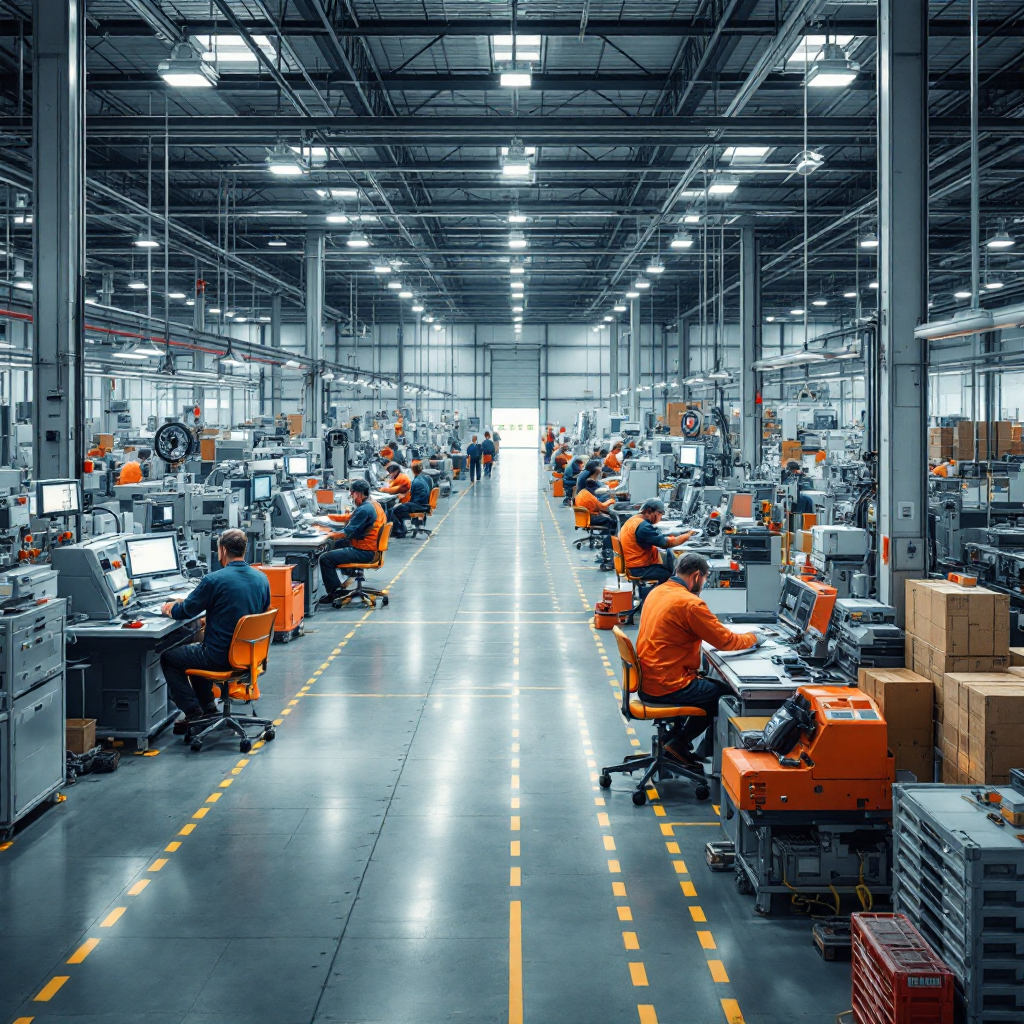
Real-time video analysis converts live camera feeds into actionable insights for plant supervisors. Modern systems process up to 30 frames per second and apply AI models to detect moving people, count them, and compute local density. These pipelines deliver a continuous view of who is where, and they do so with enough speed to trigger immediate responses when conditions change. Vision AI solutions claim crowd count accuracy above 90%, which supports confident decisions on the shop floor [source].
In practice, a monitoring system produces a crowd density map that highlights crowded zones and quiet areas. Operations staff then use that map to reroute traffic, pause non-critical tasks, or stage breaks. For example, if a line-side buffer becomes congested, the system sends an alert to supervisors so they can reschedule material pushes. Consistent use of these maps reduces congestion and improves takt time.
Latency matters in high-risk areas. Edge processing helps by running inference near the camera and then forwarding events to a central server. This architecture supports real-time triggers and reduces network dependence. For firms that need strict data control, on-prem edge deployment also keeps video inside the facility, which simplifies compliance with regional laws. Visionplatform.ai supports both edge and server options so teams can pick what fits their governance model, and then stream events into SCADA or BI stacks for operational use.
Beyond raw counts, detection models classify activity patterns and feed them into rule engines. A sudden build-up at a gate, for instance, generates an immediate alarm. Combined with schedule data and learned patterns, these systems predict likely crowd gatherings and help managers avoid them. When properly tuned, the monitoring system becomes part of daily operations, not just a safety add-on. For reference on real-time collaborative video analytics, see recent research on edge-cloud architectures that reduce latency in large facilities [source].
AI vision within minutes?
With our no-code platform you can just focus on your data, we’ll do the rest
Deep learning methods to estimate the density and object density on factory floors
Deep learning drives the most accurate density and object density estimates used on industrial floors. Teams combine detection and regression techniques to reconcile occlusions and varying perspectives. A comprehensive survey shows that hybrid models boost counting accuracy across layouts typical of manufacturing plants [source]. These models learn both where people are and how crowded areas become, and then they render a density map for each scene.
Convolutional neural networks extract key features from input images, even when workers are partially hidden by equipment. They output spatial maps that estimate local density, and then a counting model integrates that map into a total crowd count. Many systems use a combination of a convolution neural network for feature extraction and a fully connected neural network to output counts. This two-stage approach reduces error, so the plant gets accurate density estimation even under complex lighting.
Training requires diverse datasets that replicate factory conditions. For example, datasets that include occlusion, varying PPE, and different uniform colors produce more robust learning models. Manufacturers often retrain models on their own footage to handle site-specific challenges. Visionplatform.ai supports flexible model strategies: pick a model, extend classes, or build one from scratch using your VMS footage. This keeps training local and improves detection performance without sending data to external cloud services.
When systems must run continuous monitoring, efficiency matters. Lightweight neural network architectures run on edge hardware, and then they send events or density maps to central systems. That trade-off lets teams monitor many streams without massive compute costs. Finally, combining neural network outputs with simple spatial heuristics yields better operational rules. The practice of fusing deep learning outputs and rule-based thresholds is now standard for people counting and congestion control in manufacturing.
Detection using AI and sensor analytics for density level monitoring
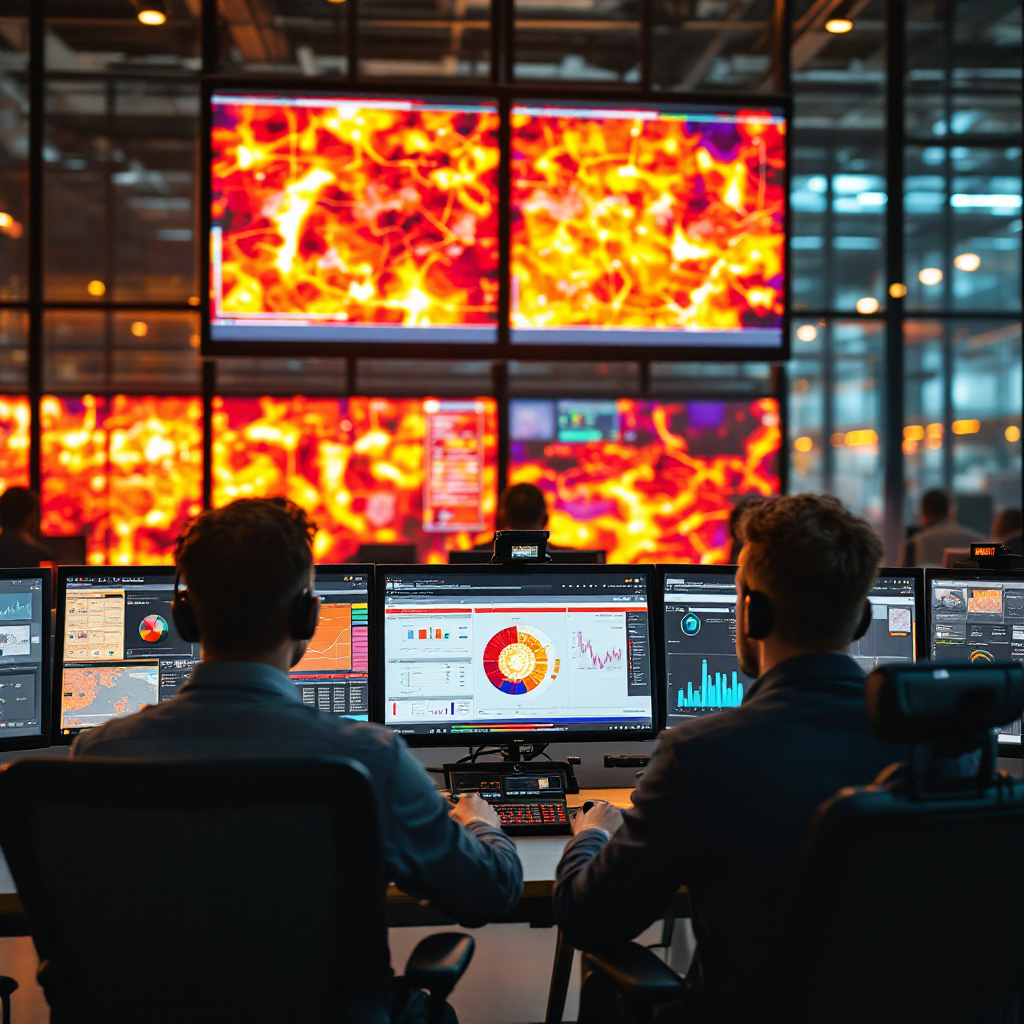
Using AI with sensor analytics creates a layered approach to density monitoring. Cameras provide visual confirmation, and environmental sensors add context. For example, temperature and noise sensors can highlight anomalous gatherings that visual models might miss in occluded zones. Research suggests that integrating environmental variables strengthens anomaly insights and improves the detection of unsafe conditions [source]. That makes responses faster and more precise.
Edge-cloud collaborative video analytics help scale these deployments. Placing inference at the edge reduces latency, while central servers handle aggregation and historical analysis. A recent review notes that edge-cloud systems are particularly useful in large facilities where network delay would otherwise affect response times [source]. This architecture supports real-time monitoring and offers a path to long-term trending and compliance reporting.
Sensor fusion also improves detection accuracy in high density or dense crowd scenarios. When cameras lose sight due to machinery, short-range sensors or badge readers can verify counts. Combining those signals with vision outputs produces a more reliable density level estimate. Automated alerts then notify supervisors when configured thresholds are breached. Companies often route those alerts into operations platforms so that actions are tracked and auditable.
From a compliance standpoint, on-prem systems reduce legal exposure and control data flows. Visionplatform.ai focuses on customer-controlled datasets, local training, and transparent event logs to align with EU AI Act requirements. This helps facilities get real-time monitoring without sacrificing governance. For implementations seeking occupancy analytics, see practical examples such as heatmap and people counting integrations for operational dashboards [internal].
AI vision within minutes?
With our no-code platform you can just focus on your data, we’ll do the rest
Applications of AI in crowd management and safety
AI enables multiple practical uses on the factory floor. First, it helps avoid congestion by rerouting staff and shifting tasks. Second, it improves emergency readiness by ensuring evacuation routes stay open. Third, it converts passive CCTV into an active sensor that feeds OEE and safety KPIs. In a manufacturing context, these capabilities translate directly into fewer stoppages and faster response times.
Real deployments link AI events to facility management systems, which lets teams coordinate actions. For example, a visual alarm can trigger shift managers to open a bypass lane or reassign loaders. Integrations with people counting modules help reconcile planned staffing with actual presence. For related examples of people counting use-cases, see our guide on people counting in security and operations settings [internal]. That page illustrates how counts become operational signals.
Experts argue that real-time density monitoring delivers dual benefits: safety and flow optimization. Dr Emily Chen notes, “Real-time crowd density monitoring in manufacturing not only enhances worker safety but also optimizes operational flow by preventing bottlenecks and ensuring compliance with safety protocols” [source]. That perspective reflects a broader shift: teams use AI to both protect people and improve throughput. In addition, AI crowd systems can be tuned to classify normal routines versus risky gatherings, so alerts are meaningful and not disruptive.
For operators who want to reuse CCTV for operations, Visionplatform.ai streams structured events via MQTT. This approach turns cameras into sensors for dashboards, SCADA, and BI tools. The result is more usable data and less alarm fatigue. It also supports efficient crowd management and keeps the control room focused on the events that matter most.
Future challenges in crowd density estimation and crowd control
Several technical and operational hurdles remain. Complex plant layouts cause persistent occlusions, and machinery creates variable lighting. These factors reduce detection performance and require more resilient models. Adapting models across plant zones and shifts requires continuous validation, too. Another challenge is balancing edge compute limits with the need for high accuracy on many streams.
Advances in anomaly detection aim to flag not only high density but also unsafe behaviors. Researchers propose frameworks that combine crowd dynamics and behavior analysis to detect risks before incidents occur [source]. Integrating these methods with sensor fusion and wearable signals creates richer context. That lets systems spot lingering groups near dangerous machinery, or detect unusual crowd movement patterns that precede congestion.
Data governance and compliance also influence deployments. Keeping datasets and models local addresses many privacy risks, and it aligns with EU AI Act expectations. Visionplatform.ai emphasizes on-prem control and auditable logs to help teams meet regulatory needs. Operational teams should plan for continuous retraining using facility-specific datasets to maintain detection performance over time.
Finally, human factors matter. Effective crowd control must combine automated alerts, clear SOPs, and trained responders. Systems should reduce false positives and provide clear next steps for operators. When these elements align, plants achieve safer, more efficient operations and better outcomes under pressure.
FAQ
What is the difference between crowd densities and density?
Crowd densities refers to how people distribute across space, while density usually denotes the number of people per unit area. Both concepts help teams understand where congestion forms and how to act.
How accurate is AI for crowd count on factory floors?
AI-based crowd count implementations can exceed 90% accuracy when models are trained on relevant data and cameras are well placed [source]. Accuracy depends on occlusion, camera angle, and dataset quality.
Can density estimation work in areas with heavy machinery?
Yes, but systems need robust models and sensor fusion to handle occlusion and variable lighting. Adding short-range sensors or badge reads helps verify visual estimates.
What is a density map and how is it used?
A density map visualizes local crowd density across an area. Operations teams use the map to reroute staff, prevent bottlenecks, and prioritize safety responses.
How does edge-cloud collaborative video analytics benefit large plants?
Edge-cloud setups reduce latency by running inference locally and aggregating results centrally. This architecture improves real-time monitoring while enabling long-term analysis [source].
What role does deep learning play in density estimation?
Deep learning, especially convolutional neural networks, extracts image features and produces spatial density maps. These maps feed counting models and improve estimates in complex scenes.
Can I keep video and models on-prem for compliance?
Yes. On-prem deployments keep datasets local and simplify GDPR and EU AI Act compliance. Visionplatform.ai supports on-prem and edge deployment to meet governance needs.
How do automated alerts help with crowd control?
Alerts notify supervisors when thresholds are crossed, prompting immediate actions like rerouting people or pausing tasks. They reduce reaction time and prevent incidents.
What datasets are needed to train models for manufacturing?
Datasets should include varied lighting, PPE types, occlusion scenarios, and different camera angles. Using your facility footage improves the learning model and detection results.
Where can I learn more about operational people counting and heatmaps?
For examples on integrating people counting and occupancy analytics into operations dashboards, see our heatmap occupancy analytics guide [internal]. For practical people counting use-cases, check our people counting resource [internal].