Crowd detection: ensuring safety in warehouse operations
Warehouses combine people, vehicles, and moving machinery in tight spaces, and so managers must monitor activity to ensure safety and efficiency. Real-time crowd detection systems help teams prevent collisions, reduce slips, and keep evacuation routes clear. For example, overcrowding contributed to roughly 60% of crowd-related accidents at large events, which highlights the need to detect surges early and act fast Vision AI for crowd management | Ultralytics. AI-driven monitoring can flag hazardous build-ups near conveyors, docks, or packing lines, and then trigger alerts or automated interventions.
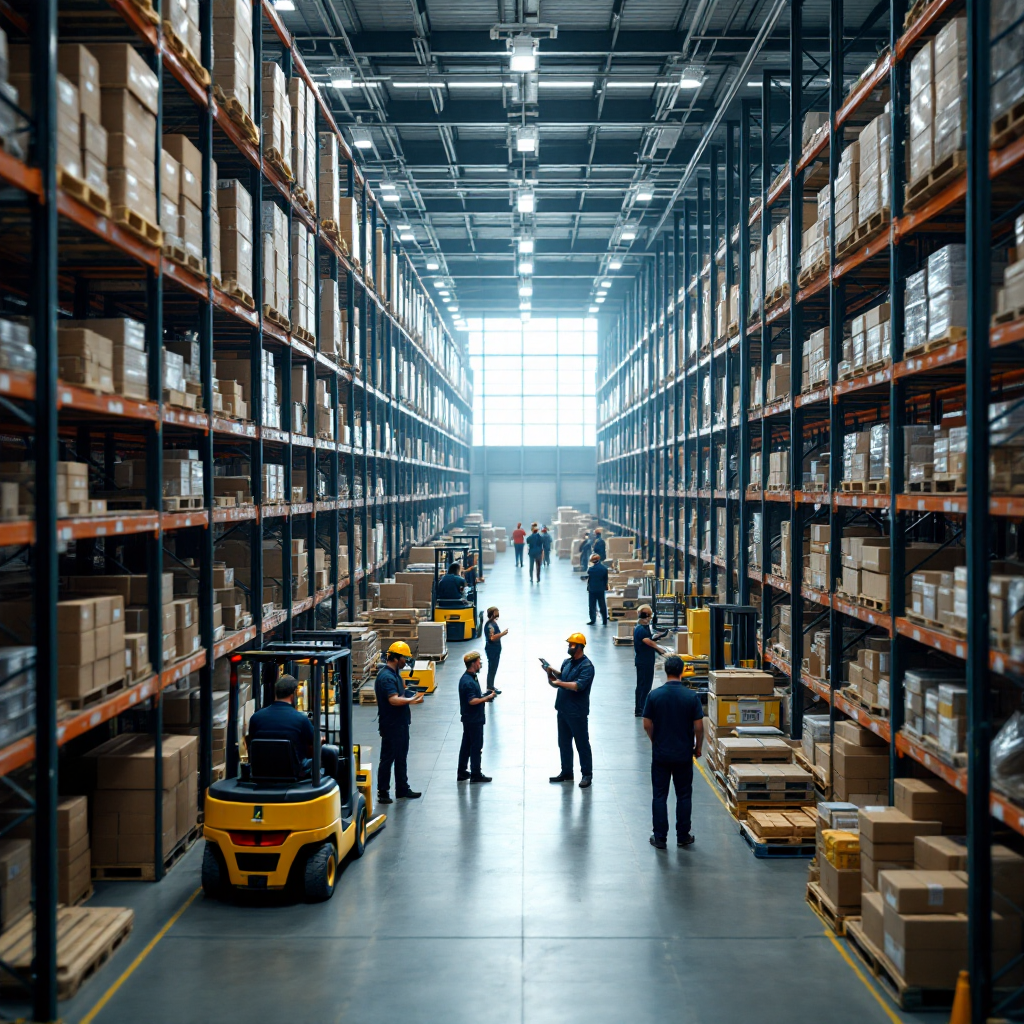
Warehouses pose unique hazards. Shelving and racking create occlusion, forklifts move unpredictably, and lighting often varies across shifts. These conditions increase the difficulty of accurate detection. Consequently, a detection approach must handle occlusion and varied viewpoints while preserving detection accuracy. Researchers note that “detection-based methods may lead to numerous missed detections when dealing with dense and occluded environments” in settings similar to warehouses Towards real-world monitoring scenarios: An improved point prediction …. Therefore, many teams combine density estimation with object-level detections to improve results.
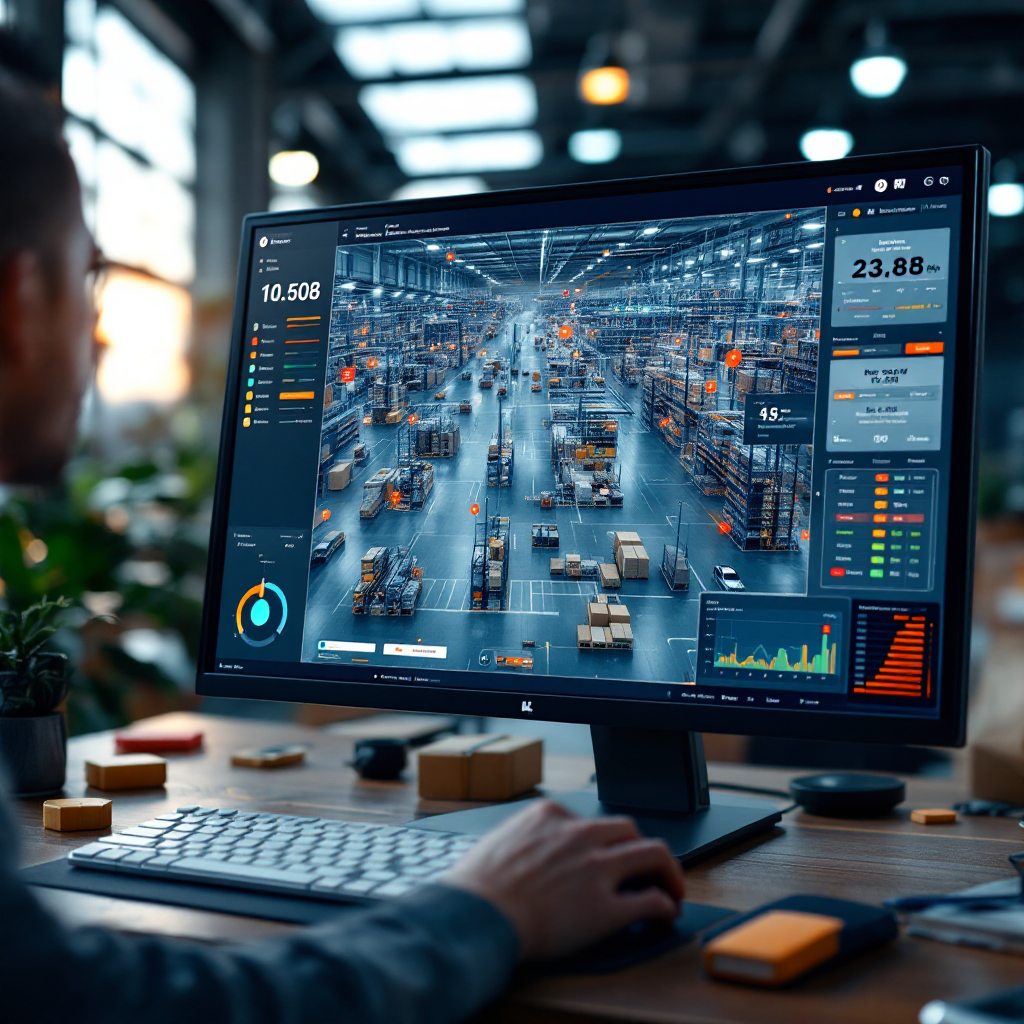
Real-time systems add operational value. They let supervisors watch density level trends, and they provide live dashboards for safety officers. They also integrate with alarms and building controls to isolate zones if needed. Visionplatform.ai uses existing CCTV to turn each camera into an operational sensor, and so facilities reuse their VMS feeds rather than rip and replace infrastructure. This approach keeps data local, and therefore supports GDPR and EU AI Act readiness while delivering practical monitoring systems. For short-term alerts and long-term analysis, these systems must be reliable and transparent, and they must integrate with operations beyond security to improve throughput and ensure safety.
Assessing crowd densities and density: key metrics and measurement methods
Defining crowd densities helps teams quantify risk. Practitioners express density in people per square metre, and they visualize spatial distribution with density maps. Density maps show hot spots, and they highlight areas where people cluster. In warehouses, density can vary quickly near loading bays or break zones, and so accurate, frequent updates will matter. Researchers use density-based techniques and detection models together to produce richer outputs, and so they can estimate both local counts and spatial distributions Crowd Density Estimation via a VGG-16-Based CSRNet Model.
Key performance metrics include mean absolute error (MAE), precision, and recall. MAE indicates how close the predicted counts are to ground truth, and top models can achieve MAE values below 10 in controlled scenes. Yet MAE often rises inside warehouses because occlusion and clutter make ground-truth labeling harder. For example, annotated datasets for public spaces differ from industrial layouts, and thus transfer learning becomes necessary when estimating crowd in warehouses. Ground-truthing itself poses challenges: annotators must mark people behind racks, and they must agree on what constitutes a person when partial views exist. This labelling ambiguity affects detection performance and detection accuracy.
Ground-truth strategies include manual point annotations, bounding boxes, and occupancy heatmaps. Each has trade-offs: point labels work well for crowd counting and crowd density estimation, while boxes enable object detection and tracking. Annotators often use multi-view or temporal verification to resolve occlusion, and so teams fuse video frames to improve label quality. For production, systems also rely on calibration with floor plans, and they may use lightweight sensors to validate people flow. Combining video with simple sensors reduces false positives and helps estimate crowd size in occluded aisles. For more on practical occupancy analytics and heatmaps, see Visionplatform.ai’s work on heatmap occupancy analytics heatmap occupancy analytics.
AI vision within minutes?
With our no-code platform you can just focus on your data, we’ll do the rest
AI and video analysis foundations for warehouse crowd monitoring
AI and computer vision form the backbone of contemporary monitoring systems. Convolutional neural networks power object detection branches, and models such as VGG-16-based CSRNet support density map generation. These convolutional neural networks extract multi-scale features, and they help estimate counts even in dense areas. The research highlights hybrid architectures that combine object detection and density estimation to improve robustness in crowded scenes Research on Crowd Tracking Methods. Deep learning and feature extraction steps make it possible to detect partially visible pedestrians and to infer hidden people behind racks.
Typical video analysis workflows start with preprocessing. Systems adjust contrast, normalize frames, and sometimes apply background subtraction to reduce noise. Then models infer detections or density maps at frame rates such as 15–30 fps to deliver real-time updates. Real-time monitoring requires optimized pipelines and occasionally lightweight models for edge devices. For example, deploying on NVIDIA Jetson or a GPU server lets teams scale from one camera to thousands while keeping latency low. Visionplatform.ai supports on-prem/edge deployments and integrates with VMS platforms so customers stream structured events to dashboards and MQTT endpoints for operational use.
Sensor fusion further improves measurement. Internet of things sensors and simple beacons can validate counts and reduce false alarms, and so integrating multiple data sources helps when lighting conditions change. This combination of video, sensor, and contextual data facilitates anomaly detection and enables better prediction of crowd movement. Teams also apply machine learning on aggregated crowd data to forecast peak periods, and to inform shift patterns and access control policies. For practical integration of people detection into broader airport-style operational systems, see our people-counting resource people counting in airports, which shares techniques that translate to warehouse settings.
State of the art techniques in density estimation for warehouses
Modern solutions use hybrid models that combine detection branches with density map estimation. These architectures yield both per-person bounding boxes and smooth density outputs. The hybrid strategy helps improving the detection of partially occluded people, and it also keeps counting errors low in high density areas. Researchers emphasize that “the integration of multiple detection branches, including individual pedestrian detection and density map estimation, is crucial for improving tracking accuracy in complex environments” Detection and Tracking of People in a Dense Crowd ….
Ensemble and transfer-learning strategies also shine. Teams often fine-tune pre-trained networks on small, annotated warehouse datasets. Transfer learning reduces training time, and it improves detection results when annotated data is scarce. Ensemble models can merge outputs from specialized detectors and density estimators, and so they increase robustness in varied lighting and occlusion. Multi-scale feature extraction and crowd density estimation techniques help detect both sparse and high density situations, and they deal with the multi-scale nature of people in camera views.
Real-time implementations use model compression, pruning, and optimized inference engines to reach 15–30 fps. These performance levels enable timely responses linked to density monitoring and real-time alerts. In practice, a deployment that processes streams at 20 fps can update dashboards and trigger zone restrictions within seconds of a surge. Research also reports that AI-enhanced surveillance has reduced crowd-related incidents by up to 40% in monitored facilities, which demonstrates the practical benefit of these techniques Vision AI for crowd management | Ultralytics. For developers, toolkits that allow retraining on local footage help improve detection results. Visionplatform.ai’s platform supports local retraining on your VMS footage so you can refine detection models without sending data to the cloud, and so you keep control over sensitive operational video.
AI vision within minutes?
With our no-code platform you can just focus on your data, we’ll do the rest
Managing density level and crowd control: strategies for real-time intervention
Effective crowd control requires clear thresholds and swift action. Operators set density level thresholds per zone, and then the system issues real-time alerts when counts exceed limits. Thresholds depend on floor layout, equipment, and safety rules, and so practitioners define them per site. Dashboards visualize people flow and provide trend lines, and so managers can spot recurring bottlenecks or emerging hotspots. When alerts trigger, staff can reroute foot traffic, restrict access to aisles, or throttle machine cycles to reduce crowding.
Automation enhances response. An intelligent monitoring system can close gates, change signage, or issue audio prompts automatically. Those actions help disperse crowd surges and restore safe spacing near conveyors and packing lines. AI-powered crowd insights inform operational decisions such as shift scheduling, staging areas for pickups, and locating temporary break stations. For facilities that already use ANPR/LPR or PPE detection, these integrations extend surveillance capability into operations and safety. You can explore integrated detection examples in our ANPR/LPR and PPE resources ANPR/LPR in airports and PPE detection in airports.
Real-time crowd monitoring supports tactical and strategic actions. Tactically, a brief zone restriction clears a choke point. Strategically, aggregated crowd data drives layout changes, and it improves throughput across shifts. Systems also support guided evacuation by indicating safe routes that avoid high density zones. For compliance and auditing, event logs capture detection results and operator responses, which helps ensure traceability. Finally, teams can combine anomaly detection with crowd movement models to predict crowd surges before they happen and so plan interventions early.
Conclusion and future directions in warehouse crowd monitoring
AI-based crowd monitoring yields safer and more efficient warehouses. Deployments that combine detection and density estimation can reduce incidents by up to 40% in monitored facilities, and they provide actionable intelligence for operations and safety teams Vision AI for crowd management | Ultralytics. Current systems leverage convolutional neural networks, density maps, and sensor fusion to detect and estimate people flow in real-world industrial environments. These approaches improve crowd safety and operational visibility while keeping detection latencies low enough for real-time interventions.
However, research gaps remain. A lack of specialised warehouse datasets limits supervised training, and occlusion from racks still challenges detection in crowded aisles. Future work will expand annotated datasets for warehouses, and researchers will refine multi-scale and occlusion-aware learning models. Semi-supervised learning and synthetic data generation will reduce the need for exhaustive labeling. Edge AI deployments and on-prem processing will grow, because they keep data private and they comply with regulatory frameworks such as the EU AI Act.
Looking ahead, platforms that let teams pick models, retrain on local footage, and stream structured events into operations will gain traction. Visionplatform.ai already supports this pattern by turning CCTV into an operational sensor network and by streaming events via MQTT to dashboards and SCADA systems. That approach improves the efficiency of crowd operations and helps ensure safety across shifts. In the near term, expect improved occlusion handling, lighter-weight models for edge inference, and more robust multi-sensor calibration. Together, these advances will make density monitoring more accurate, more private, and more actionable.
FAQ
What is the difference between crowd detection and crowd density estimation?
Crowd detection refers to identifying individual people or bounding boxes in camera frames, while crowd density estimation computes how many people occupy a given area and where they cluster. Both outputs complement each other because detection gives per-person locations and density maps highlight hotspots.
How accurate are AI models at estimating density in warehouses?
Top models can achieve mean absolute errors below 10 in controlled settings, but accuracy often drops in warehouses due to occlusion and clutter. Techniques such as hybrid detection-density architectures and transfer learning help improve detection accuracy in industrial layouts.
Can existing CCTV systems be used for density monitoring?
Yes. Systems like Visionplatform.ai convert existing CCTV into operational sensors so you can detect people and generate density maps without replacing cameras. This reduces cost and maintains on-prem data control.
How do warehouses handle occlusion from shelving when estimating crowd densities?
Teams use multi-scale feature extraction, temporal fusion, and sensor fusion to mitigate occlusion. Combining object detection with density maps and occasional simple IoT sensors improves robustness in occluded aisles.
Do these systems provide real-time alerts for crowd surges?
Yes. Many deployments run at 15–30 fps and issue real-time alerts when density thresholds hit. Those alerts can feed dashboards, trigger audio prompts, or automate zone restrictions to control crowd movement.
Is it necessary to send video to the cloud for AI processing?
No. Edge and on-prem solutions support local processing, which helps with latency and compliance. Keeping models and training local also helps companies meet GDPR and EU AI Act requirements.
How do models get trained for warehouse-specific scenes?
Practitioners use transfer learning and fine-tuning on local annotated footage, and sometimes they create synthetic examples to augment data. Platforms that allow local retraining make it practical to adapt models to site-specific conditions.
What role do IoT sensors play in density monitoring?
IoT sensors provide supplemental signals such as door counts or beacon-based location that validate video detections. Sensor fusion reduces false positives and improves confidence in crowd size estimates.
Can crowd monitoring help with operational planning?
Yes. Aggregated crowd data informs shift planning, staging area placement, and layout changes. Insight into people flow helps operations improve throughput and reduce bottlenecks.
Are these solutions useful beyond safety, for example in forensic search?
They are. Structured detections and event logs help with forensic search and post-incident analysis. For example, forensic search capabilities in similar domains demonstrate how detections support investigations and audits forensic search in airports.