warehouse environment and fire risk: detect fire threat early
Warehouses face a high fire threat because of size, storage density, and varied materials. For example, the National Fire Protection Association reports that there are over four warehouse fires each day in the United States, and the resulting losses add up to hundreds of millions of dollars in property damage annually (NFPA). Warehouse managers must act fast. Early detection limits spread, reduces damage, and preserves stock and continuity.
The layout of a typical facility includes endless rows of storage racks, tall shelving, and wide aisles. Those features improve storage efficiency, and they also create unique challenges for fire detection and suppression. Stored goods vary. Some items are flammable, some produce dense smoke when they burn, and some smoulder before flaming. Because of that mix, one detector type rarely covers every potential hazard. Risk increases when forklifts, batteries, or palletised chemicals share space with paper, textiles, or plastics.
Smoke in tall voids will often stratify rather than climb cleanly to the ceiling. Research explains that in large open spaces smoke can form layers, so ceiling-mounted smoke detectors may not sense a developing incident quickly (Large-Space Fire Detection Review). As a consequence, detection delays allow flames to spread. Early warning is therefore critical. An effective strategy combines placement, technology, and testing. It also meets legal obligations. Local codes and insurers typically require specific fire protection measures in warehouses. You must follow those standards to gain coverage and to ensure safe escape for staff.
When CCTV and analytics are part of the solution, vision data can add context. For example, systems like ours at Visionplatform.ai turn cameras into sensors so teams can spot operational anomalies that could become a potential fire, and then act. You can link video-derived events to alarm panels, and so improve situational awareness. For further illustration of how vision ties to safety programs, see our work on fire-smoke detection in airports fire-smoke detection in airports. In short, detect threats early, and then act decisively to protect people, property, and the supply chain.

fire detection and smoke detection: Challenges in large warehouse spaces
Large, open warehouse settings present specific obstacles for smoke detection. Smoke stratification and air currents can trap smoke below the ceiling. Consequently, a ceiling-mounted detector may not see smoke quickly. Tests and field studies show delayed alarm activation in high-ceiling and high bay areas, and that delay increases losses (Patol article). Therefore, designers must account for ceiling heights, ventilation, and rack geometry.
Choose the right technology for the risk. Ionisation detectors respond quickly to flaming fires that produce small particles, but they can miss smouldering fires that emit larger particles. Photoelectric detectors react faster to smouldering and dense smoke, so they often perform better in storage areas with combustible packing. Heat detectors activate only after significant temperature rise, and so they provide late notice for slow-developing blazes. In many warehouse projects, teams mix photoelectric and heat detectors to cover different scenarios. Beam and beam smoke detection systems can cover long spans, and they work well where one detector must serve a high bay. Still, beams can be unsuitable where dust or vibration constantly interferes.
Other factors affect performance. Ventilation systems, loading bays, and the movement of goods cause airflow that disperses smoke. Airborne dust, vehicle exhaust, and humid conditions can also reduce sensitivity or create nuisance activations. For that reason, designers should avoid placing one detector directly above forklift routes or high-traffic openings. Instead, plan zones and use addressable panels so you can isolate and examine an alarm quickly. When video analytics are active, operators get verification faster. You can review footage from linked cameras to confirm the incident and to reduce false alarms. Our platform integrates with VMS solutions to stream events and to help operators confirm alarms in real time people detection and analytics integration. In short, a layered strategy reduces risk, limits nuisance activations, and keeps the facility operating safely.
AI vision within minutes?
With our no-code platform you can just focus on your data, we’ll do the rest
advanced smoke detection and aspirating smoke detection: VESDA and XTRALIS Solutions
Aspirating smoke detection offers a way to achieve earlier notice in high-ceiling spaces. These systems draw air through a network of pipes, sample it, and analyse particles continuously. As a result, they provide very early warning of smouldering faults long before visible smoke reaches the ceiling. This principle underpins VESDA and XTRALIS solutions, which deploy sensitive air sampling, high-resolution particle counters, and staged alarm thresholds. Such systems detect minute particle concentrations and can therefore alert staff while a fire is still in the ignition or smouldering phase.
VESDA and XTRALIS aspirating smoke detection equipment uses active sampling and advanced algorithms to separate background dust from real threats. Installers route multiple pipes across racks and aisles so the system monitors many points simultaneously. In real projects, multi-draft pipe networks identified smouldering electrical faults and overheating pallets within seconds of particle release. That fast notice allowed teams to extinguish incidents before flames spread and before fire suppression discharged. The outcome: reduced business interruption and lower insurance losses.
Maintenance and false alarms matter. Aspirating systems reduce false alarms by offering multiple threshold levels and compensating for airborne dust. Routine filter replacement and clear sampling points are essential. Technicians should test flow rates, replace filters on schedule, and log the unit’s health. Systems like VESDA and the XTRALIS family often include built-in diagnostics to report blocked pipes or low sampling flow. When paired with camera verification and analytics, operators can confirm alarms quickly and then dispatch responders with confidence. For product-level context, market analysis shows strong adoption of smart connected systems in industrial applications as technology improves (MarketsandMarkets). Finally, aspirating smoke detection helps teams detect a potential fire early, and so it lowers the chance of major loss.
detection system, advanced detection and advanced fire: Designing smoke detection system
Designing an effective smoke detection system starts with understanding the environment and the stored materials. First, assess storage height, ceiling heights, and the layout, including endless rows of storage racks and loading bays. Next, map ventilation and the likely airflow patterns. These steps guide sensor placement, sampling point locations, and the choice between beam detectors, aspirating solutions, and conventional smoke detectors. For many warehouse facilities, a hybrid approach delivers the best coverage.
Combine multi-sensor detectors that measure smoke, heat, and gas for robust coverage. A sensor that merges inputs reduces false alarms and improves sensitivity to different fire modes. Also, consider beam smoke detection for long open aisles and high bay zones. If you use aspirating smoke detection or air sampling, locate inlet ports near potential ignition sources such as battery charging areas or electrical enclosures. Place heat detectors where smoke may be diverted by ventilation and where dense smoke could bypass ceiling detectors. Follow safety standards and local codes. Systems installed must meet EN 54-20, BS 5839, and other applicable rules for large open spaces so certification and insurance are easier to obtain.
Integration matters. Link the detection system to an addressable alarm system and to building management platforms. That way, operators get structured alerts, automated shutdowns of mechanical ventilation, and coordinated fire suppression actions. Visionplatform.ai connects video events to alarms and delivers MQTT streams for operations and BMS dashboards. If you want to add CCTV verification to a fire panel event, see our page on thermal people detection for methods that help confirm incidents in low-visibility conditions thermal people detection. Finally, ensure maintenance plans, commissioning tests, and regular drills are in place so staff know how to respond, and so the installation remains reliable.
AI vision within minutes?
With our no-code platform you can just focus on your data, we’ll do the rest
alarm, alarm system and fire alarm systems: Deploying fire alarms for high-ceiling warehouses
Selecting the right fire alarm systems requires attention to audio coverage, visual notification, and evacuation strategy. In a high bay warehouse, sounders must produce sufficient decibel levels to reach staff across long distances. For noisy operations, voice evacuation provides clear instructions and reduces confusion. Strobes are useful where hearing protection is worn. When planning, consider addressable panels to identify the exact zone of activation quickly. That approach reduces time to respond and helps avoid an unnecessary full-site evacuation for a localised incident.
Panels and wiring deserve careful thought. Redundant wiring loops and backup power ensure continuous signalling even during a power loss. In many warehouses, designers use fire alarm systems that include battery backups and alternative power sources so that the alarm and evacuation functions remain available. Manual call points and break glass units remain essential for staff to report a discovered flame. One detector alone is rarely enough. Networked alarm system topologies let multiple devices share status and provide robust fault tolerance.
Testing and training complete the deployment. Regular testing identifies malfunction and reduces the chance of accidentally activated circuits or nuisance triggers. Train staff on safe escape routes and on how to operate manual call points. Keep evacuation signage clear and unobstructed by stored goods. Also, perform functional drills that combine alarm activation with video verification and CCTV-based operational alerts. Our platform streams events and integrates with VMS so teams can see the alarm source and then coordinate evacuations and fire suppression. Compliance with safety standards and proper maintenance assures reliable operation and therefore a safe escape for personnel.
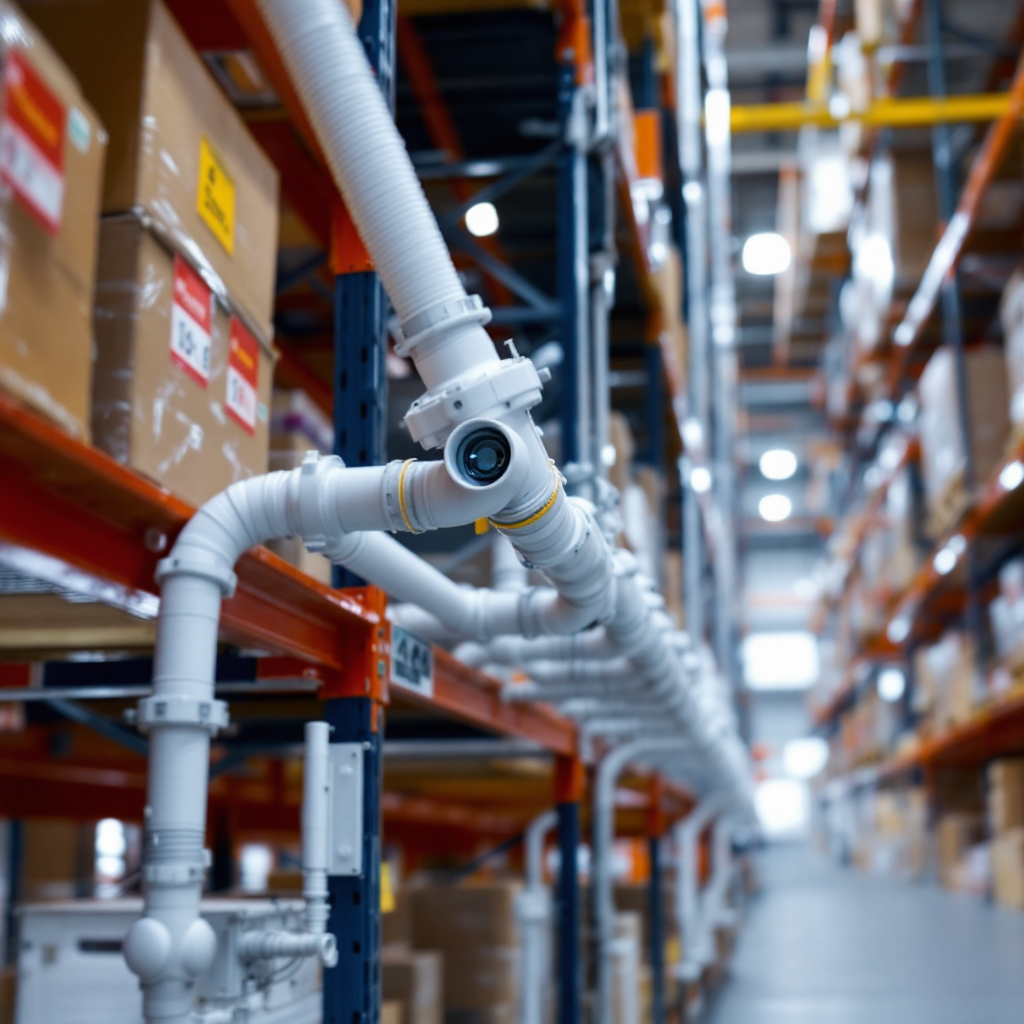
warehouse fire alarm system and aspirate: ensuring effective fire detection, fire safety and disruption prevention
Linking aspirating VESDA units to a warehouse fire alarm system gives teams early warning long before visible smoke appears. When the aspirator draws air and detects particles, the system reports to the control panel, and then the alarm activates pre-set responses. Those responses range from alert notifications to automated commands for ventilation and fire suppression. This staged reaction helps avoid full-scale suppression discharges on small, contained incidents.
Maintenance keeps systems reliable. For aspirating installations, replace filters regularly, inspect sampling holes, and test flow rates so the system draws air as intended. Schedule periodic health checks and use built-in diagnostics to monitor performance. Real-time monitoring and cloud reporting can escalate alerts to off-site responders, so you get faster intervention and reduced disruption. Studies show that smart, connected systems increase situational awareness and support faster decision-making (SDM Magazine).
Consider ROI. Early warning reduces downtime and business interruption. Reduced damage lowers insurance claims and restores operations faster. When alarms are verified by cameras or analytics, responses become more precise. For example, Visionplatform.ai streams structured events from existing CCTV and integrates with alarm panels so teams get video context and confirmation before dispatching a crew. That reduces false alarms and unnecessary activations, and it helps protect against accidental suppression discharges. Finally, pair aspirating smoke detection with heat detectors in battery charging zones, add beam smoke detection where dust permits, and include flame detectors near flammable storage for a comprehensive strategy. The investment in well-designed systems pays back through less disruption and better protection.
FAQ
How common are warehouse fires?
Warehouse fires are more frequent than many assume. The NFPA reports that more than four warehouse fires occur daily in the U.S., and those incidents contribute to significant annual property losses (NFPA). Because of this, warehouse managers must prioritise early detection and robust alarm systems.
What is smoke stratification and why does it matter?
Smoke stratification occurs when smoke forms layers in a tall void and does not rise uniformly to the ceiling. This effect delays activation of ceiling-mounted detectors and so makes early warning harder. Research on large-space fire detection explains how stratification affects sensitivity (Large-Space Fire Detection Review).
Are aspirating systems like VESDA worth the cost?
Aspirating smoke detection systems provide very early warning by drawing air and analysing particulates. They often detect smouldering faults before visible smoke appears, and so they can reduce damage and downtime. Case studies show that such systems detect incidents in seconds and lower overall losses.
Can CCTV help reduce false alarms?
Yes. Linking video analytics to alarms provides instant verification. Visionplatform.ai turns cameras into operational sensors and streams events to alarm panels so operators can confirm an incident before initiating full responses. That reduces nuisance alarms and improves response quality integration examples.
What detectors should I use in a high bay?
In high bays, consider beam detectors, aspirating smoke detection, and multi-sensor units. Beam smoke detection and air sampling work well at long spans. Also, include heat detectors near potential heat sources. Use a layered approach to address different fire modes.
How often should aspirating systems be maintained?
Follow manufacturer guidance, but typical practice includes filter replacement and flow tests at regular intervals. Technicians should inspect sampling points, test thresholds, and log system health to prevent downtime and to ensure reliable operation.
Do regulations require specific systems for warehouses?
Regulatory and insurance requirements vary by jurisdiction, but many codes mandate fire protection measures for large storage facilities. Common standards include EN 54-20 and BS 5839 for large open spaces. Always consult local authorities and insurers during design and installation.
What about false alarms in dusty warehouses?
Dust and airborne particles can trigger nuisance alarms. Use aspirating systems with filtration and multi-threshold logic, and place detectors away from dust sources. Regular cleaning and preventive maintenance also reduce false alarms.
Can alarm systems integrate with building management?
Yes. Modern fire alarm systems connect to BMS platforms, cloud reporting, and IoT dashboards. Integration allows automated ventilation control and faster coordination with suppression systems. Visionplatform.ai provides MQTT event streams to feed operational dashboards and BMS tools for broader situational awareness.
What is the ROI of installing advanced detection?
Advanced detection reduces business interruption, lowers insurance claims, and protects inventory. Early warning and camera verification lead to faster, targeted responses. Over time, reduced disruption and fewer large claims typically offset installation and maintenance costs.