ai-powered Security Center SaaS: Overview of Genetec Vision-Language Integration
Genetec has pushed its vision for a unified SECURITY CENTER SaaS that combines VMS, access, and analytics into one platform. The platform aims to help an OPERATOR see context, not just detections. It pairs video with language so teams can ask questions in NATURAL LANGUAGE and get clear answers. This approach uses an ADVANCED VISION LANGUAGE MODEL and other AI tools to interpret pixels and text together. The ability to turn footage into text-based descriptions provides CAPABILITIES IN SECURITY CENTER SAAS that change how incidents are handled.
The promise is faster event triage and more ACTIONABLE alerts. For example, AI can tag objects, summarize activity, and score risk. Studies show that well-applied analytics can cut false alarms sharply; one analysis cites up to a 90% reduction in false alarms in tested deployments (source). A GENETEC product manager described their approach as “a strategic blend of proprietary and open-source AI technologies” (source). That blend helps the platform remain open while allowing CUSTOM integrations.
visionplatform.ai complements that direction by adding an on-prem VISION LANGUAGE MODEL and AI agents so CONTROL ROOMS can reason locally. We focus on helping OPERATORS quickly verify alarms, and we keep video and models inside customer environments by default. That design helps with EU AI and compliance concerns, and it lowers data risk for organizations that cannot tolerate cloud video. The result is a unified SECURITY CENTER experience that supports both manual and automated response, while preserving operator control and auditability.
Security leaders should note that these changes affect SECURITY OPERATIONS and resource planning. The shift from raw detections to described events means fewer routine checks. It means incident timelines, SUMMARIZATION, and human-friendly transcripts become part of daily workflows. This change is a key step toward delivering more intuitive situational awareness for MODERN SECURITY teams.
Streamline Video Management and Advanced Video Analytics with Language Model
Language MODEL integration lets teams STREAMLINE video MANAGEMENT tasks in concrete ways. First, the VLM creates scene descriptions and automatic tagging. Then, operators can search by human phrases instead of camera names. This new intelligent approach reduces time spent scrubbing footage. It speeds investigations and improves evidence collection.
Advanced VIDEO ANALYTICS still plays a part, but the added language layer makes analytics results easier to act on. For example, an INTELLIGENT SEARCH query like “Find blue van at Gate 3” returns clips and timelines. The VLM also performs SUMMARIZATION to condense long clips into short, readable incident reports. This capability supports a tool for XProtect video MANAGEMENT and a VIDEO SUMMARIZATION FOR XProtect workflow in mixed environments.
Operators benefit from content based indexing and fast retrieval. visionplatform.ai provides a VP Agent SEARCH that lets OPERATORS quickly locate events across recorded footage. The same approach supports forensic workflows and reduces cognitive load during high-pressure incidents. You can read about forensic search approaches applied to airports as a practical example Forensic search in airports.
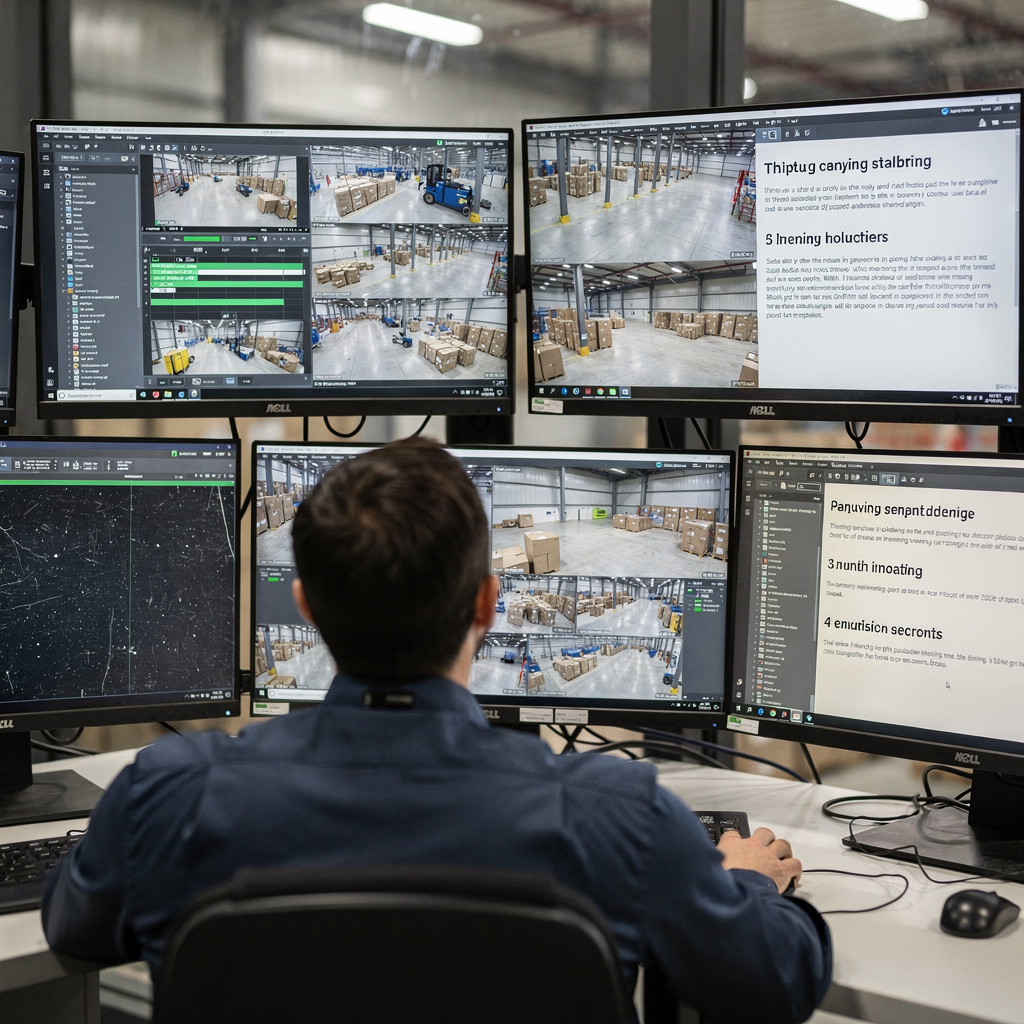
In addition, the integration reduces the need for bespoke retraining. A language model can generalize descriptions and support new queries without heavy model rework. It sits alongside existing analytics, so organizations avoid large upfront investments in new cameras. The open ARCHITECTURE makes it possible to INTEGRATE third-party detectors and to UNIFY metadata streams. As a result, teams can accelerate investigations and improve evidence quality with minimal disruption to current operations.
AI vision within minutes?
With our no-code platform you can just focus on your data, we’ll do the rest
Intelligent Search and ai-driven Analytics for Physical Security Operations
New INTELLIGENT SEARCH gives investigation teams a faster path from question to clip. The language interface understands context and returns ranked results. It also links related events and access logs. That linkage helps OPERATORS can quickly UNDERSTAND WHAT HAPPENED without flipping through hours of footage. The same capability supports cross-camera timelines and evidence exports.
This feature changes how PHYSICAL SECURITY shifts from reactive to proactive work. COMMAND centers gain SEARCH CAPABILITIES that surface threats earlier. A SECURITY TECHNOLOGY ANALYST has noted that having natural queries and context-aware results “accelerates investigations and democratizes access to complex data insights” (source). The combination of language and vision also lets teams correlate video with ACCESS CONTROL logs to verify identities or movements. That CORRELATION supports more reliable incident outcomes.
Operators and SECURITY TEAMS see immediate value in dashboards that summarize events and show trends. These AI-DRIVEN dashboards offer situational awareness and allow security leaders to allocate patrols more efficiently. The approach also reduces manual review. In many sites, it helps reduce time-to-find by orders of magnitude. For operational insight into people detection in crowded environments, see how these techniques apply at airports people detection in airports.
Finally, the system supports API ACCESS TO PRODUCTION-READY VIDEO so analytics and reporting tools can use structured descriptions. That API-based integration allows third-party BI and case management tools to ingest results. It therefore improves ANALYSIS AND REPORTING across security teams, and it enables automation that reliably elevates important incidents.
Intelligent Automation to Integrate and Accelerate Incident Response
Intelligent AUTOMATION ties detection to action. When the system detects a verified intrusion, an automated WORKFLOW can trigger alarms, call cameras to focus, and notify teams. The workflow logic can INCLUDE access control commands and integrate third-party sensors. This end-to-end integration helps OPERATORS respond faster and with better context.
For many organizations, that means INCIDENT HANDLING TIMES fall significantly. In practice, automated playbooks can reduce handling times by up to 50% for routine incidents. The playbooks follow policy and risk rules and they allow human oversight when needed. This model scales monitoring without requiring more staff.
visionplatform.ai emphasizes actionable automation that keeps decision-making clear. VP Agent ACTIONS pre-fills incident reports, closes false alarms with justification, and notifies external teams. The platform is designed to INTEGRATE with access control systems so doors can lock or open in response to verified situations. This tight INTEGRATION ensures that video and control systems act together, rather than in isolation.
Intelligent automation also supports scenarios that span devices and sites. You can chain actions ACROSS MULTIPLE camera feeds and sensors. For airports, this may include coordinating CCTV, ANPR, and gate control to manage vehicle and passenger flows. For example, you can learn how ANPR workflows apply to airports here ANPR/LPR in airports. The goal is to reduce operator load, speed decisions, and preserve audit trails for compliance and review.
AI vision within minutes?
With our no-code platform you can just focus on your data, we’ll do the rest
Video Analytics Solutions and Use Cases in Modern Security Scenarios
AI-powered solutions are practical across many use cases. Typical USE CASES include perimeter breach detection, crowd monitoring, and license plate recognition. In retail, VIDEO ANALYTICS SOLUTIONS support loss prevention. In transport hubs, they help manage flows and detect anomalies. Critical infrastructure benefits from perimeter and intrusion detection tied to operator workflows.
Field results show strong returns. One analysis notes that AI VIDEO SYSTEMS can cut false positives by up to 90% in live deployments (source). This drop reduces wasted patrols, and it improves trust in automated alerts. Systems that combine detection with a LANGUAGE MODEL produce summaries and short incident narratives, which allow staff to quickly analyze large datasets and prioritize action.
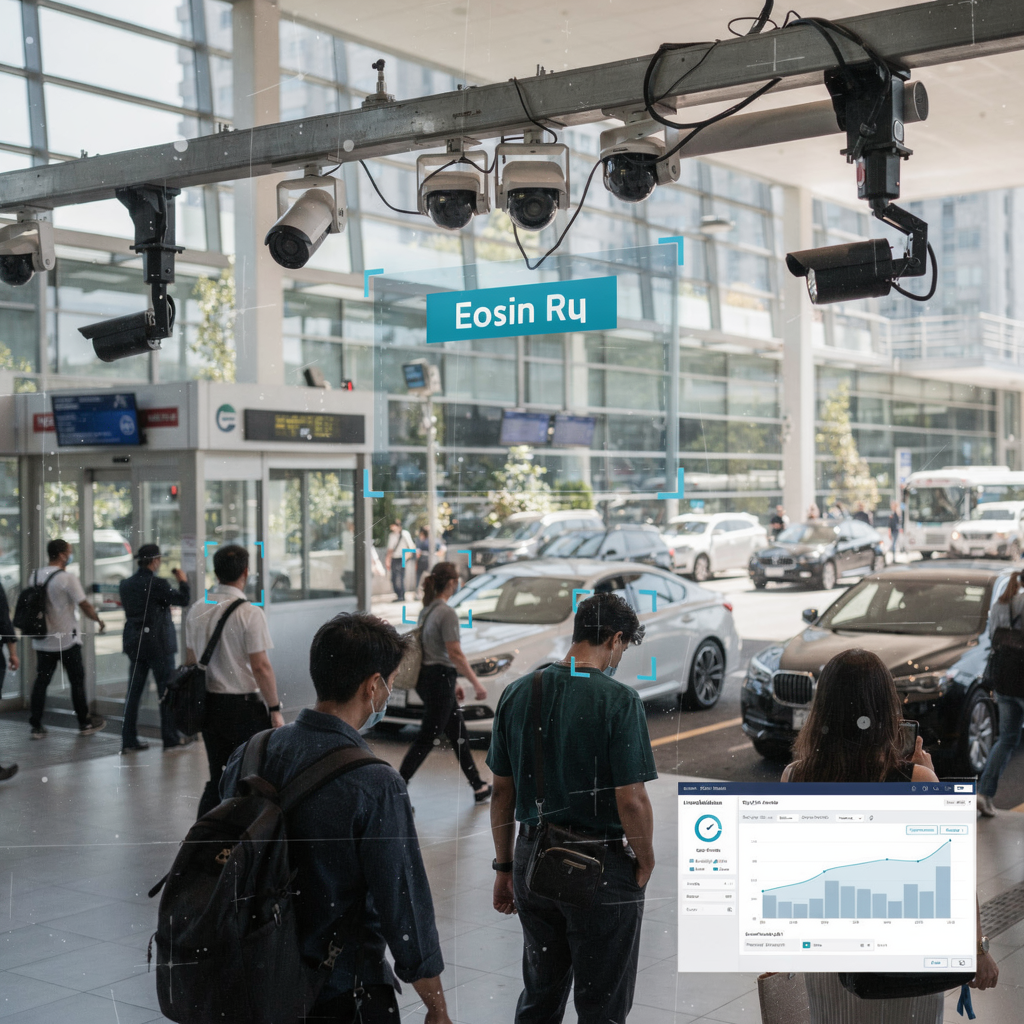
Practical examples are plentiful. Forensic search speeds airport investigations, and people-counting analytics support staffing and safety. For a view on crowd work and density monitoring at airports, see a reference implementation crowd detection & density in airports. These capabilities help SECURITY TEAMS to detect loitering, track suspicious vehicle movement, and tie camera evidence to access logs. The outcome is better security posture and more efficient operations.
To adopt these tools, organizations should favor OPEN ARCHITECTURE that enables integrations and prevents lock-in. That approach reduces the need for large upfront investments. It also supports intelligence without bespoke training when models are fine-tuned on responsibly sourced data. The result is scalable, compliant systems that deliver measurable returns on security investments.
hanwha Collaboration and Future of Genetec Automation in Security Center
Partnerships with camera vendors such as HANWHA strengthen the edge-to-cloud pipeline. HANWHA camera integration expands device compatibility and enables users to leverage enhanced analytics plugins at the camera level. Genetec and partners plan to add more AI models for behaviour prediction and anomaly detection. This roadmap includes deeper ties to VMS platforms such as MILESTONE SYSTEMS and client tools like XPROTECT SMART CLIENT for combined workflows.
Roadmaps also include tools like VIDEO SUMMARIZATION FOR XPROTECT and a SUMMARIZATION TOOL FOR XPROTECT VIDEO that make long recordings accessible. Vendors will offer a TOOL FOR XPROTECT VIDEO MANAGEMENT and elements of XPROTECT VIDEO MANAGEMENT SOFTWARE that integrate language-based search. In parallel, API ACCESS TO PRODUCTION-READY VIDEO will let integrators build custom dashboards and automation based on API CALLS. Production-ready video intelligence built into these APIs helps teams act faster and with better context.
Model training and safety remain priorities. Many providers commit to REAL-WORLD TRAFFIC VIDEO AND FINE-TUNED datasets and to VIDEO AND FINE-TUNED ON RESPONSIBLY selected corpora. Fine-tuned on responsibly sourced data reduces bias and helps comply with EU AI rules. The EU AI landscape, often referred to as EU AI, encourages local control and transparency. That is compatible with on-prem and edge approaches that avoid sending raw video to cloud providers.
Finally, product leaders emphasize practicality. A SENIOR PRODUCT GROUP DIRECTOR or ACTING CHIEF TECHNOLOGY OFFICER may stress DELIVERING A UNIFIED platform that balances automation with human oversight. Prompting the VLM and powering clients with technologies such as POWERED BY NVIDIA COSMOS REASON will continue to evolve. Many components may be offered free to download for trial, and vendors will minimize large upfront investments. The future blends generative AI-powered features, careful governance, and operational focus so operators can use new tools and help operators quickly achieve better security outcomes.
FAQ
What is a vision-language model and why does it matter for Security Center SaaS?
A vision-language model combines visual processing with NATURAL LANGUAGE understanding. It turns images and video into descriptions that OPERATORS can query in plain English, which speeds investigations and improves context.
How does intelligent search change daily work for operators?
Intelligent search lets an operator ask questions and receive clips and timelines as answers. This reduces manual review and helps OPERATORS CAN QUICKLY find critical evidence across recorded footage.
Can these systems reduce false alarms?
Yes. In practice, AI and advanced analytics can cut false positives significantly. One study reported reductions of up to 90% in tested deployments (source), which frees staff to focus on real incidents.
Are integrations with access control possible?
They are. Systems can INTEGRATE with ACCESS CONTROL so video events trigger coordinated responses. This creates end-to-end workflows and strengthens overall security posture.
What are common use cases for language-enabled video systems?
Common USE CASES include perimeter breaches, crowd monitoring, ANPR, and retail loss prevention. These solutions help teams find evidence and improve situational awareness quickly.
How does on-prem deployment affect compliance?
On-prem deployments keep SECURITY DATA local, which helps with EU AI requirements and data privacy. This approach limits cloud exposure and supports auditable model use.
Can these tools integrate with Milestone or XProtect?
Yes. Vendors work with Milestone Systems and provide features like a VIDEO SUMMARIZATION FOR XPROTECT and tools that fit XPROTECT VIDEO MANAGEMENT SOFTWARE. API ACCESS TO PRODUCTION-READY VIDEO supports custom workflows.
What role does hanwha play in these solutions?
Hanwha provides camera integrations and analytics at the device level. That integration enables users to deploy enriched video streams and benefit from edge analytics and broader system coordination.
How do automation playbooks affect incident handling times?
Automated playbooks can significantly reduce incident handling times by pre-filling reports, notifying teams, and verifying events. Many sites see measurable time savings and consistent responses.
How does visionplatform.ai complement existing Security Center deployments?
visionplatform.ai adds a reasoning layer and on-prem VISION LANGUAGE MODEL so video becomes searchable and actionable. It supports operators with search, recommendations, and controlled automation, which helps move from detections to AI-assisted operations.