Overview of the people counting solution in manufacturing
People counting in modern factories refers to systems that detect who is in a facility, where they move, and when they move. A people counting solution turns cameras and sensors into a business tool that tracks staff and machines. For manufacturers this means better visibility, faster decisions, and measurable gains. For example, accurate counts can reach up to 99% accuracy for many deployments, which creates trust in the numbers that drive operations.
At its core a people counter captures entries and exits and then aggregates that into reporting. First, the device or camera senses people who enter an area. Then, onboard processing or a local server transforms raw detections into counting data and people counting data that feed dashboards. This flow of information creates a reliable metric for workforce presence, dwell time, and zone occupation. As a result, teams can make informed decisions rapidly. In fact, factories that apply these insights often improve efficiency by measurable amounts, such as aligning labour to demand and reducing idle time by as much as 15%.
Different types of people counting exist and each has a specific use. Some sites use a simple customer counter at a gate while others deploy overhead sensor rigs across production lines. Choosing the right counting solution depends on the physical space and the business needs. For manufacturing, it also matters that data stays private and local. Visionplatform.ai helps enterprises reuse existing CCTV to count people, stream events to operations, and keep models on-premise, so teams retain control while they gain valuable insights. For manufacturers ready to start, this approach reduces risk and accelerates data-driven decisions.
Exploring sensor technology for accurate workforce tracking
Sensor technology comes in many forms. Manufacturers must compare options before buying. The range of technologies includes basic infrared beams, thermal imaging sensors, overhead sensor arrays, and camera-based AI. Each type of technology has trade-offs for cost, coverage, and installation process. For instance, thermal units excel in low-light areas and help preserve privacy, while overhead camera analytics deliver richer movement patterns that show where staff gather and how people walking through a zone creates flow.
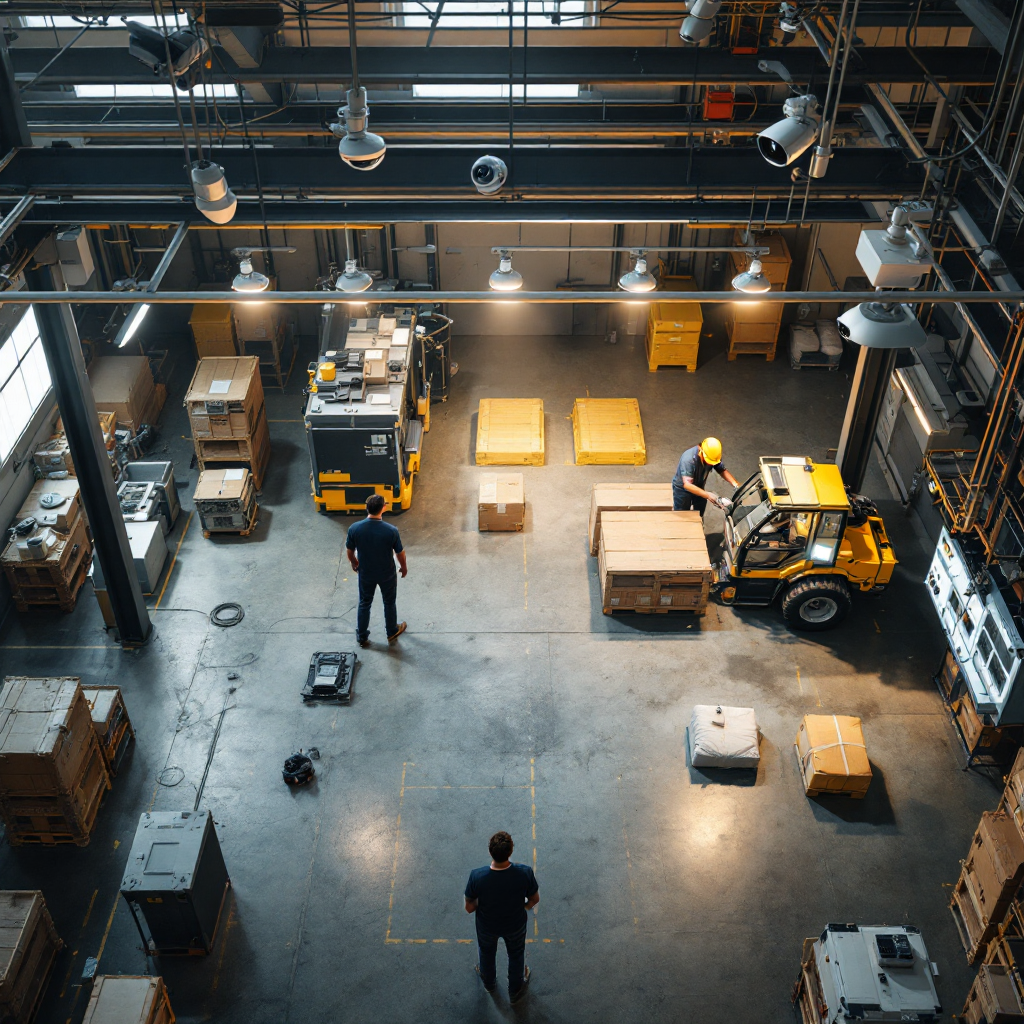
Door counters and counter sensors placed at an entrance remain a common first step. Door counters are low-cost and work well to measure the number of visitors and the number of visitors who move into a production cell. Alternatively, camera-based people counting sensors add context: they can distinguish a single worker passing from a group and can reduce double-count errors near busy gates. When choosing sensor technology, manufacturers should consider installation process details like mounting height, field of view, and false-positive sources such as forklifts or shadowing lighting.
Good practice calls for mapping high-traffic routes, then deploying redundant tracking sensors at chokepoints. This approach helps to monitor traffic flow and to gauge the effectiveness of coverage. Use people counters at primary thresholds and supplement with overhead sensor coverage for workcells. Testing during different times of day validates that the system delivers accurate foot traffic metrics under real conditions. Finally, integrate tracking sensors with operations systems so staff and supervisors can act on the data that the hardware captures.
AI vision within minutes?
With our no-code platform you can just focus on your data, we’ll do the rest
Leveraging ai-powered people counting for advanced analytics
AI-powered people counting on the edge is now feasible and practical. On-chip AI processing keeps video frames local, which protects identities while producing real-time alerts. This method supports privacy by design because “no identifiable image is recorded or transferred” in many modern solutions source. At the same time, doing inference at the edge reduces latency and streamlines how people counting software delivers dashboards and feeds.
People counting software modules translate detections into analytics. They offer real-time summaries of occupancy, trend charts, and alerts when thresholds are crossed. You can also combine this data with other sensors and systems to optimize staff schedules and to improve response times. For example, Visionplatform.ai converts existing CCTV streams into structured events and then publishes them to MQTT so operations teams can use the events beyond security. This allows data to make operational systems smarter and supports data-driven decisions across shifts.
Using AI lets you track tracking foot traffic and spot repeat patterns that manual logs miss. Then teams can use the data to optimize staffing, adjust layouts, and lower risks. AI models can be tuned to local conditions, which matters because environmental factors affect the accuracy of detections. Businesses that adopt ai-powered people counting often see both fewer false alarms and more reliable indicators to help businesses. Thus, the combination of edge AI, flexible models, and integrated software creates a practical path from raw video to actionable analytics.
Analysing foot traffic data to optimise production flow
Foot traffic and traffic data are related but not identical. Traffic data often refers to the raw counts of people who pass a point, while foot traffic analysis looks at movement patterns, dwell times, and interactions across multiple zones. In manufacturing this distinction matters. Counting data from a single gate tells you how many people arrived. Foot traffic data across aisles shows when and where queues or bottlenecks form. Combine both to form a fuller picture and to make informed decisions.
Key production metrics include the number of visitors, workforce utilisation rate, and dwell time. These metrics help teams optimize staff assignments and to balance workstations during peaks. Use foot traffic metrics to identify under-used zones and to reallocate equipment or staff. For instance, mapping when and where people gather can reduce transit time and improve throughput. Data can be used to adjust break times or to shift staff scheduling so that coverage matches demand. This lets operations optimize labour without guesswork.

Operators should monitor conversion rates as well. In a hybrid environment that includes retail or in-store supplier points, a customer counter can show how many shoppers or visitors convert into action, such as collecting materials or signing in for a shift. By tying conversion rates to production KPIs, teams can better gauge the effectiveness of layouts and process changes. Use people counting to measure conversion rates and to provide a clear metric that supports business decisions.
AI vision within minutes?
With our no-code platform you can just focus on your data, we’ll do the rest
Implementing real-time occupancy data for safety compliance
Real-time occupancy data is a core safety feature. It gives clear numbers during emergencies and supports evacuation planning. For example, real-time occupancy lets floor managers see how many people remain in a hazardous zone and then dispatch help rapidly. Integrate this data with alarm systems and safety dashboards to ensure that responses are fast and coordinated. In addition, real-time occupancy can enforce social-distancing rules when required and can flag overcrowding before it becomes unsafe.
Occupancy data also lowers operating costs. When linked to HVAC and lighting controls, systems follow actual presence rather than fixed schedules. The result is less wasted energy and lower utility bills. This integration makes it possible to reduce energy use during low-traffic periods and to increase ventilation when staff levels rise. In turn, these adjustments support compliance and comfort for staff on the floor.
To implement success, choose people counting system components that offer clear APIs and hooks to building management and VMS platforms. Visionplatform.ai publishes structured events so teams can feed occupancy signals to BMS and SCADA tools. Then facilities can automate ventilation or lighting based on real-time occupancy data, cutting energy waste while meeting safety obligations. Finally, test emergency scenarios and staff drills; validated data builds confidence and helps teams refine procedures.
Real-world use cases: optimising operations based on this data
Manufacturers report concrete gains when they use people counting to inform decisions. For example, some firms improved throughput and reduced downtime by aligning staff to demand and by scheduling maintenance during low occupancy. In one industry analysis, people counting insights helped operations optimize resource allocation by up to 15%. Those are measurable improvements that justify the investment.
Use cases include labour allocation, staff scheduling, and safety drills. With accurate people counters, supervisors can assign teams to the busiest lines, so work is balanced and output rises. Door counters and traffic counter units at staging areas show when deliveries will create congestion, so planners can shift arrival windows. In addition, monitoring people who enter hazardous cells enables rapid lockdowns and ensures that evacuation lists are accurate. These wins translate into ROI in the form of fewer stoppages, better staff utilisation, and lower overtime.
Deciding on the right technology requires choosing among different types of people counting and assessing the specific use you need. For many sites the best people counting approach mixes camera analytics, door counters, and thermal systems to cover all scenarios. Businesses can use this blended approach to monitor times of day when traffic peaks, to measure conversion rates at supplier kiosks, and to help businesses gauge compliance trends. Finally, pilot deployments let business owners test the system, measure accurate foot traffic, and gauge the effectiveness of changes before wider rollout.
If you want to explore further, read how people counting applies in transport and airport contexts and how heatmap occupancy analytics extend situational awareness. See related resources on people counting in airports and heatmap-occupancy-analytics-in-airports for techniques that translate to factory floors. For on-premise, GDPR-aware deployments that turn CCTV into sensors, Visionplatform.ai offers tools to stream events to BI systems and to support data-driven decisions at scale.
FAQ
What is people counting and why does it matter in manufacturing?
People counting is the process of detecting and recording the number of people in a place. It matters because accurate counts support labour planning, safety, and process improvements across the plant.
Which people counting technologies are common on factory floors?
Common types of sensors include infrared beams, thermal imaging sensors, and camera-based systems with AI. Each type of technology provides different coverage and privacy characteristics, so choose according to the site constraints.
How accurate are people counter systems?
High-quality setups can reach accuracy near 99% in controlled conditions, which makes metrics trustworthy for operations and safety. Accuracy depends on installation, lighting, and traffic patterns.
Can a people counter preserve worker privacy?
Yes. Many solutions process video on the edge so that no identifiable image is recorded or transferred. This protects privacy while still producing actionable outputs.
What is the difference between traffic data and foot traffic?
Traffic data often means raw counts at a point. Foot traffic includes movement patterns, dwell times, and multi-zone flows that reveal bottlenecks and utilisation.
How can people counting improve staff scheduling?
By showing when and where staff are needed, data helps managers align shifts and breaks with demand. This leads to more efficient staff scheduling and reduced overtime.
Are people counting systems useful for safety compliance?
Absolutely. Real-time occupancy and real-time occupancy data let teams verify evacuation counts and prevent overcrowding in hazardous zones. Integrations with alarms speed emergency responses.
What integrations should I look for in a people counting solution?
Look for APIs, MQTT, and VMS compatibility so events can feed BMS, SCADA, and BI platforms. Integration turns isolated counts into insights that influence business decisions.
How do I choose the right technology for my plant?
Start with a pilot that measures accurate foot traffic under real conditions. Then evaluate sensor placement, installation process, and the ability to monitor traffic flow before scaling.
Where can I learn more about applying people counting beyond factories?
Similar techniques apply in transportation hubs and airports where crowd density, PPE detection, and heatmap analytics matter. See resources on people detection and heatmap occupancy analytics for related methods and examples: people detection in airports, heatmap occupancy analytics, and people counting in airports.