warehouse: Understanding Modern Warehouse Environments and Risks
Also. Furthermore. In addition. Next. Then. Also. Therefore. Consequently. Thus. Hence. Meanwhile. Finally.
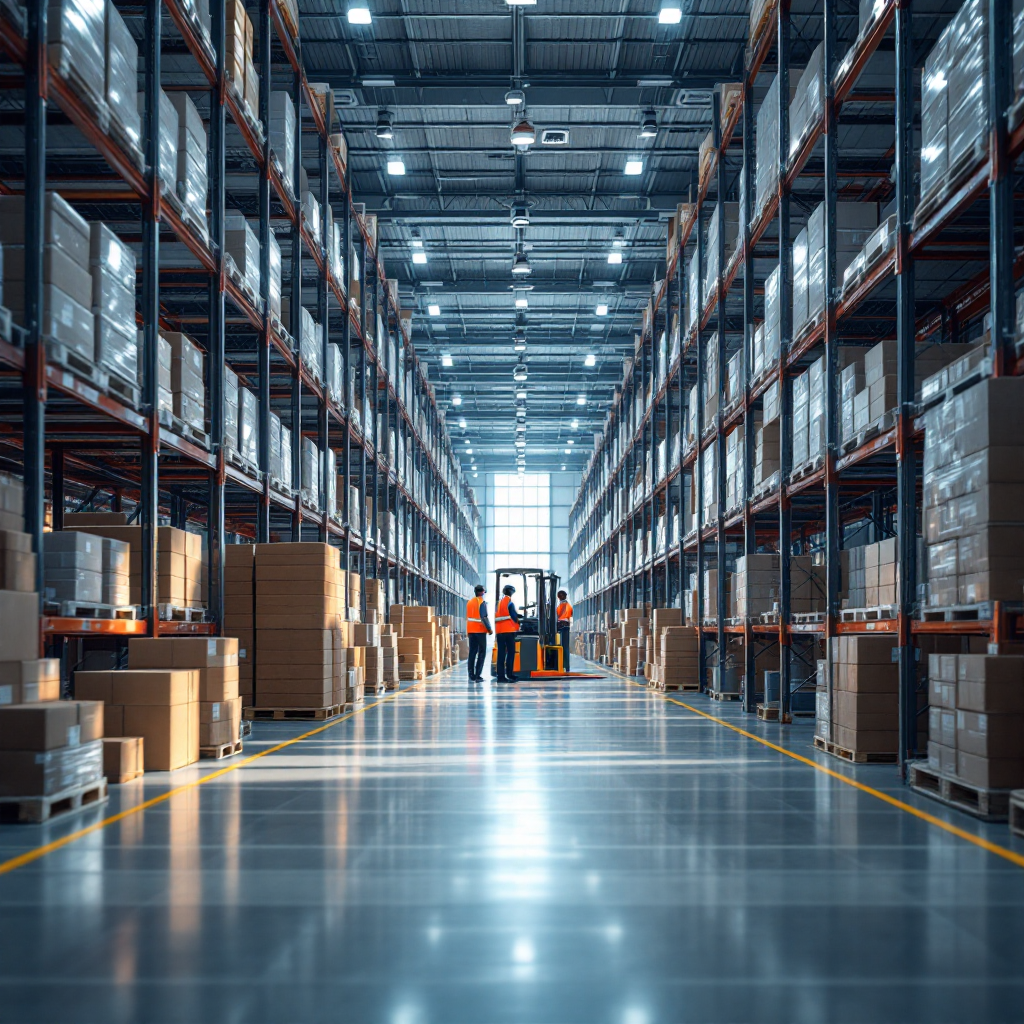
Warehouses are complex, fast-moving hubs where inventory, people, and machines share tight space. They vary from single-aisle storage rooms to multi-level distribution centers with high racks and automated systems. In these environments, high-risk zones include loading docks, narrow aisles, conveyor belts, pallet staging areas, and zones where forklifts operate. These are places where human workers and powered equipment meet in close proximity. As a result, accidents can occur quickly without warning. The U.S. Bureau of Labor Statistics reports about 4.7 injuries per 100 full-time workers annually, a stark reminder of the stakes.
Also. Then. Next. Therefore. Consequently. Thus.
Blind spots create recurring problems in many warehouse layouts. Blind spots hide workers from line-of-sight cameras or human supervisors. Shelving, stacked pallets, and equipment can obscure views. For that reason, strategically placed cameras and knee-high 2D range finders help reduce unseen areas. For example, research on knee-high range finders highlights the value of specialized datasets like FROG that improve sensor-based people detection in aisles and narrow corridors (FROG dataset). In addition, forklifts create concentrated risk. Poor communication, human error, and rushed turns near pallet zones increase collision likelihood. Forklift operators, pedestrians, and automated guided vehicles must share clear rules and visibility to reduce incidents.
Also. Next. Then. Consequently.
Warehouse managers must map risk by noting access points, staging zones, and areas with high foot traffic. A simple audit that marks blind spots, high-velocity aisles, and hotspot intersections yields quick wins. In the short term, administrative controls like signage and safety protocols matter. In the medium term, layered detection that uses cameras, sensors, and AI can fill gaps. Visionplatform.ai helps turn existing CCTV into an operational sensor network so sites can detect people, vehicles, and PPE in real time and avoid blind spots without replacing infrastructure. Finally, a combined approach improves worker safety and reduces downtime in busy logistics hubs.
warehouse safety: The Importance of Real-Time Person Monitoring
Also. Next. Then. In addition. Therefore. Consequently. Thus. Hence. Meanwhile. Finally.
Real-time person monitoring has a direct, measurable effect on warehouse safety and operations. For instance, one study of automated monitoring tools linked to operational processes found a 24% reduction in shipment damage and a 5% decrease in shipping costs after deployment (case study). Continuous monitoring also spots near-misses and rule breaches that human oversight often misses. When systems run 24/7, they flag risky patterns before a serious incident occurs. That kind of proactive alerting helps safety teams take corrective action fast.
Also. Then. Next. Consequently. Thus.
Manual oversight depends on people reporting events accurately and on time. As one expert noted, “Manual oversight depends heavily on people reporting events accurately and on time. In reality, things move fast. A pallet is relocated and not reported, creating blind spots in safety monitoring” (expert comment). Automated person detection and real-time monitoring reduce that dependence. Systems produce objective logs and alerts. They remove ambiguity and provide evidence for audits and corrective action. For safety teams, that means faster response and clearer incident records.
Also. Next. Then. Therefore.
In restricted areas such as truck dumper control zones or high-risk loading bays, deep learning models have proven effective at spotting humans in unusual locations (real-time human detection). Real-time detection in these areas prevents collisions and enforces access control. In addition, linking alerts to operational systems streamlines response. For example, an alert can pause an automated guided vehicle or alert a nearby supervisor. These integrations streamline communication between safety and operations, and they help maintain continuous workflow and worker safety.
AI vision within minutes?
With our no-code platform you can just focus on your data, we’ll do the rest
ai: How AI Sensors Transform People Detection
Also. Next. Then. Therefore. Moreover is banned. Consequently. Thus. Hence. Finally. Additionally.
AI turns ordinary cameras and sensors into intelligent tools that detect and classify people and hazards. AI-powered models analyze frames and range data to detect persons, classify posture, and flag unauthorized zones. Core approaches include spatial attention models like DR-SPAAM and auto-regressive algorithmic techniques that improve robustness against clutter and motion. Researchers reported that multi-camera systems using these methods deliver high detection rates and resilient tracking across viewpoints (multi-camera study). AI systems also learn site-specific patterns. They adapt to the cadence of a distribution center, the idiosyncrasies of pallet stacking, and the presence of autonomous mobile robots.
Also. Then. Next. Consequently. Thus. Hence.
One benefit of edge AI and on-prem AI processing is reduced latency. When models run near cameras, they process frames faster and then stream structured events to operations. That reduces the seconds between an incident and a corrective action. Also, this architecture helps keep data private and supports compliance with EU AI Act approaches. Visionplatform.ai exemplifies this pattern by letting sites own models and data on-prem, thereby avoiding cloud-only processing and vendor lock-in.
Also. Next. Then. Therefore. Consequently.
AI offers significant advantages over older approaches like simple motion sensors or RFID-only tracking. AI improves detection capabilities by combining spatial and temporal cues. For instance, computer vision can classify a person near a pallet differently than a pallet in an aisle, which reduces false positives. Also, fusing camera analysis with 2D or 3D range sensors and UW B anchors improves robustness in occluded areas. In short, AI helps detect people in real-time and supports automation while keeping worker safety central. Finally, the scalability of AI-driven solutions means sites can replicate successful configurations across multiple warehouses and scale models to new hubs with minimal friction.
computer vision: Tracking Workers with Camera-Based Systems
Also. Next. Then. In addition. Therefore. Consequently. Thus. Hence. Finally.
Computer vision deployed with ceiling-mounted wide-angle cameras gives a top-down view that simplifies tracking in dense warehouse areas. Studies using 19 wide-angle ceiling cameras revealed reliable, real-time worker tracking across multiple viewpoints and showed strong scalability (multi-camera tracking). These systems reduce blind spots when cameras are positioned strategically and integrated with VMS. Vision AI models then perform detection and segmentation, providing both object detection and spatial context for operations teams. This spatial awareness supports safer workflows and better coordination between human workers and automated systems.
Also. Then. Next. Consequently. Thus. Hence.
To handle occlusions, many teams deploy multi-sensor fusion. Combining camera feeds with lidar, 2D range finders, or UW B improves detection in crowded aisles and around racks. The FROG benchmark for knee-high 2D range finders demonstrates how alternative sensors can complement visual systems and improve person detection in tight spaces (FROG dataset). In practice, a camera may lose sight of a pedestrian behind stacked pallets, but a knee-level range sensor still senses movement, enabling reliable detection and tracking. This fusion reduces false negatives and speeds response.
Also. Next. Then. Therefore. Additionally.
For warehouses that already use CCTV, converting cameras into intelligent sensors is practical and cost-effective. Visionplatform.ai uses existing VMS footage, offering model choices from a library and tools to retrain models on-site. The result is improved detection and lower false alarms without sending data off-site. Integrations feed events to dashboards and OT systems so teams can automate responses and streamline workflow. When computer vision is implemented with attention to privacy and compliance, it becomes a cornerstone technology for revolutionizing warehouse monitoring and boosting overall efficiency.
AI vision within minutes?
With our no-code platform you can just focus on your data, we’ll do the rest
automate: Automating Alerts, Reports and Workflow Integration
Also. Next. Then. Therefore. Consequently. Thus. Hence. Finally. Additionally.
Automated alerting turns detection into timely action. Smart rules can trigger an alert when a person enters a restricted zone, when a forklift approaches a pedestrian, or when an aisle is blocked. Automated systems integrate with access control, AGVs, and MES platforms so that an alert can pause a conveyor, slow an autonomous guided or automated guided vehicle, or notify floor supervisors immediately. That reduces response time and helps avoid collisions and injuries.
Also. Then. Next. Consequently.
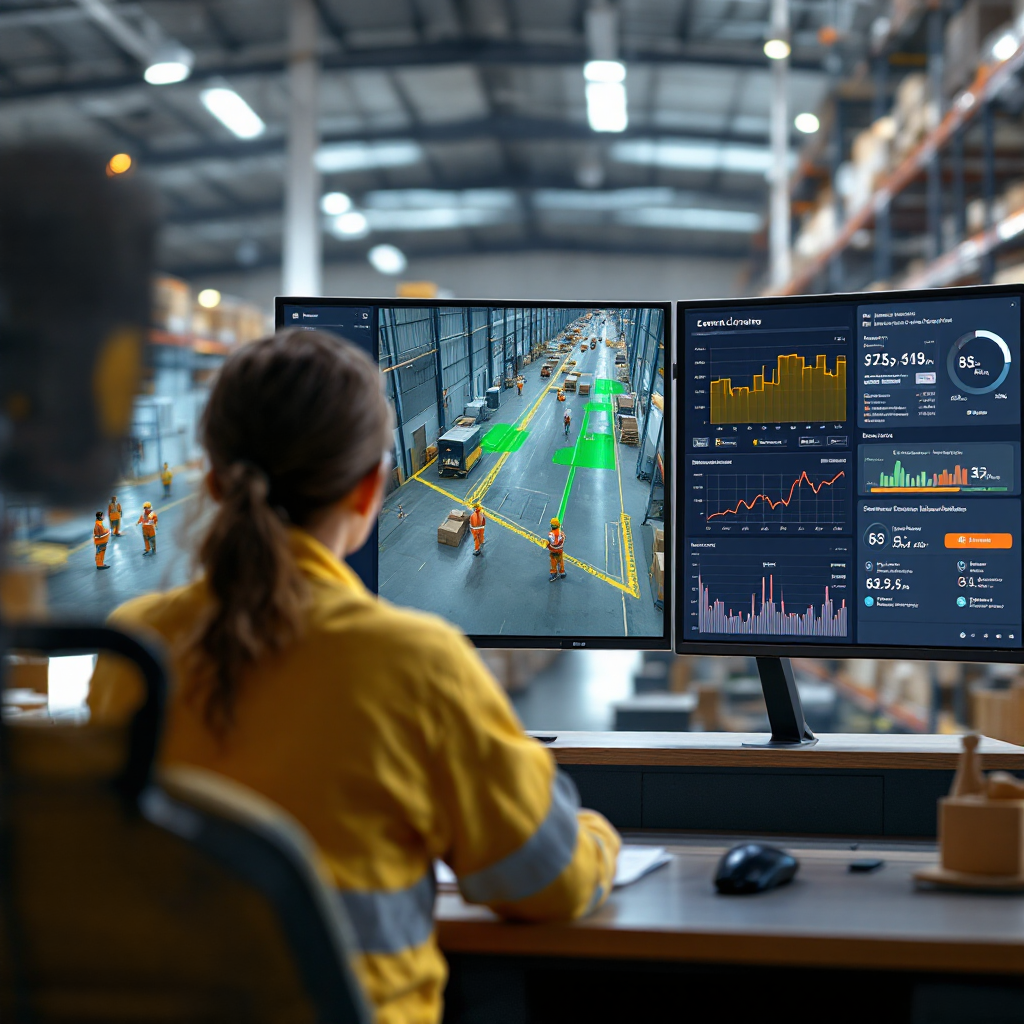
Real-time alerts feed dashboards and automated incident logs. For safety managers, that means fewer manual reports and more auditable records for OSHA reviews. Tools that publish structured events via MQTT allow operations teams to stream detections into BI and SCADA platforms. For example, events can update a heatmap used for occupancy planning or trigger corrective action in a warehouse workflow management tool. These connections streamline operations and improve worker safety while helping supply chain teams optimize throughput.
Also. Next. Then. Therefore. Additionally.
APIs and webhooks make integrations seamless. Visionplatform.ai, for instance, streams structured events into existing security stacks and business systems so teams can automate follow-up actions and integrate detections with WMS rules. This reduces manual work and helps optimize routing and pallet staging decisions. In effect, automating alerts and reports closes the loop between sensing, decision-making, and action, enabling highly responsive operations that still prioritize worker safety and compliance.
osha: Compliance, Privacy and Best Practices
Also. Next. Then. Therefore. Consequently. Thus. Hence. Finally.
Meeting OSHA requirements matters for legal compliance and for creating safer environments. When sites implement real-time monitoring, they must pair technology with clear safety protocols and training. Systems should generate auditable event logs and support corrective action workflows. That makes it easier to document incidents and prove compliance during inspections. In addition, maintaining regular audits of models and data pipelines preserves system integrity and helps maximize safety across shifts and sites.
Also. Then. Next. Consequently. Thus.
Privacy remains a top concern. Companies should adopt transparent policies, anonymize data where possible, and maintain control over on-prem processing. Edge AI and on-prem solutions keep footage inside a site’s environment, helping with GDPR and EU AI Act requirements. Visionplatform.ai supports this approach by enabling on-prem model training and auditable logs so organizations retain control of their data and models.
Also. Next. Then. Therefore.
Best practices include periodic validation of models, cross-checking alerts with human review, and updating safety protocols to reflect new detection capabilities. Integrating sensor fusion, segmentation, and mapping workflows enhances visibility and reduces latency in responses. Finally, mixing automated monitoring with robust training for human workers and forklift operators strengthens forklift safety and reduces human error. By pairing technology with strong safety protocols, warehouses can create safer, more efficient distribution centers that support both people and automation.
FAQ
What is the difference between a sensor and a camera-based people detection system?
A sensor often refers to a device like a 2D range finder or lidar that senses distance or motion, while a camera-based system captures visual frames for computer vision processing. Combining both through multi-sensor fusion improves reliability in occluded areas and boosts detection capabilities.
How does AI improve real-time monitoring in a warehouse?
AI analyses frames or range data to classify people, objects, and activities rapidly, reducing false positives compared with simple motion sensors. In addition, AI-powered models can run on edge devices to reduce latency and enable immediate alerts and corrective actions.
Can existing CCTV systems be converted into operational sensors?
Yes. Platforms like Visionplatform.ai turn existing CCTV into an operational sensor network by running models on VMS streams and publishing structured events. This approach avoids replacing cameras and supports on-prem data ownership.
How do multi-camera setups handle occlusion and blind spots?
Multi-camera configurations cover overlapping viewpoints so that if one camera loses sight, another can still track the person. Combining these feeds with range sensors or lidar further reduces blind spots and improves detection and tracking of workers in aisles.
What role does edge AI play in warehouse safety?
Edge AI processes video and sensor data near the source, which reduces latency and keeps sensitive footage on-site for privacy compliance. This approach supports fast alerting and aligns with regulations like the EU AI Act by limiting data transfer off-site.
How can automated alerts be integrated with warehouse workflows?
Automated alerts can trigger actions in WMS, pause AGVs or conveyors, and send notifications to supervisors through APIs or MQTT streams. These integrations streamline workflow and help operations respond quickly to safety events.
Are there standards for auditing detection models in warehouses?
Best practices include regular accuracy validation, logging of model decisions, and maintaining versioned model artifacts for audits. These steps help prove system integrity for OSHA and other regulators while supporting continuous improvement.
What technologies complement camera-based detection?
Complementary technologies include 2D range finders, lidar, UW B, and knee-height sensors. These devices help detect people in low-visibility locations and work well when fused with vision models.
How do AI systems reduce false alarms?
AI systems use contextual classification, temporal analysis, and site-specific retraining to distinguish harmless motion from safety-critical events. Retraining models on local data further reduces false detections and improves operational relevance.
How quickly can a warehouse scale a people detection solution?
Scalability depends on infrastructure and deployment model. Edge-first platforms let teams scale from a few camera streams to thousands while preserving on-prem control. In addition, model libraries and retraining workflows shorten time to value when expanding across multiple sites.