Real-time ai-powered video surveillance for forensic video analysis
Real-time AI systems that process multi-camera streams change how teams monitor and respond. They ingest live video streams, then parse events, translate them into human-readable descriptions, and surface what matters now. visionplatform.ai turns existing cameras and VMS into AI-assisted operational systems so that operators get context and reasoning instead of raw alerts. For example, the VP Agent converts streaming video into descriptions that let an operator query incidents in natural language. This approach supports faster, more intuitive decision making and reduces time spent on manual review.
Such systems run on-prem or at the edge and combine computer vision, an on-prem Vision Language Model, and agent logic to analyze events as they happen. They handle inputs from each camera, correlate detections, and push an alert when conditions match rules or patterns. The immediate benefit is rapid identification and response, which is critical in crowded public areas and transport hubs. In controlled tests, facial recognition modules have shown accuracy rates above 95% for identification tasks in ideal conditions, which helps with rapid suspect identification in live operations (research).
However, accuracy alone does not solve operational overload. Many organizations face thousands of hours of recorded video that cannot be searched like human memory. The VP Agent Search feature addresses that by indexing and enabling free-text searches across recorded video and timelines. This capability makes video searchable the same way an operator would describe an incident, for example, “person loitering near gate after hours.” It speeds post-incident queries and shortens investigation timelines.
Live monitoring in public safety scenarios shows clear advantages. For instance, control rooms using real-time analytics report up to 40% faster case resolution and reduced investigation time when video is correlated with other data sources (Interpol review). In practice, an operator gets an explained situation: what a detection means, what the cameras show, and what related systems confirm or contradict it. This reduces false alarms and helps teams act decisively while preserving chain of custody and data security.
Enhancing investigation with video analytics and license plate recognition
Video analytics detect objects, behaviours, and anomalies across a site. Algorithms track objects in motion and flag loitering, unattended items, or abnormal flows. For busy sites, rule-driven analytics filter routine activity so operators see only what requires attention. When you add license plate analytics, you gain the ability to trace a vehicle across multiple camera views. ANPR/LPR systems read plates and match them to watchlists or historical logs, enabling rapid vehicle tracing and mapping of a route across a facility.
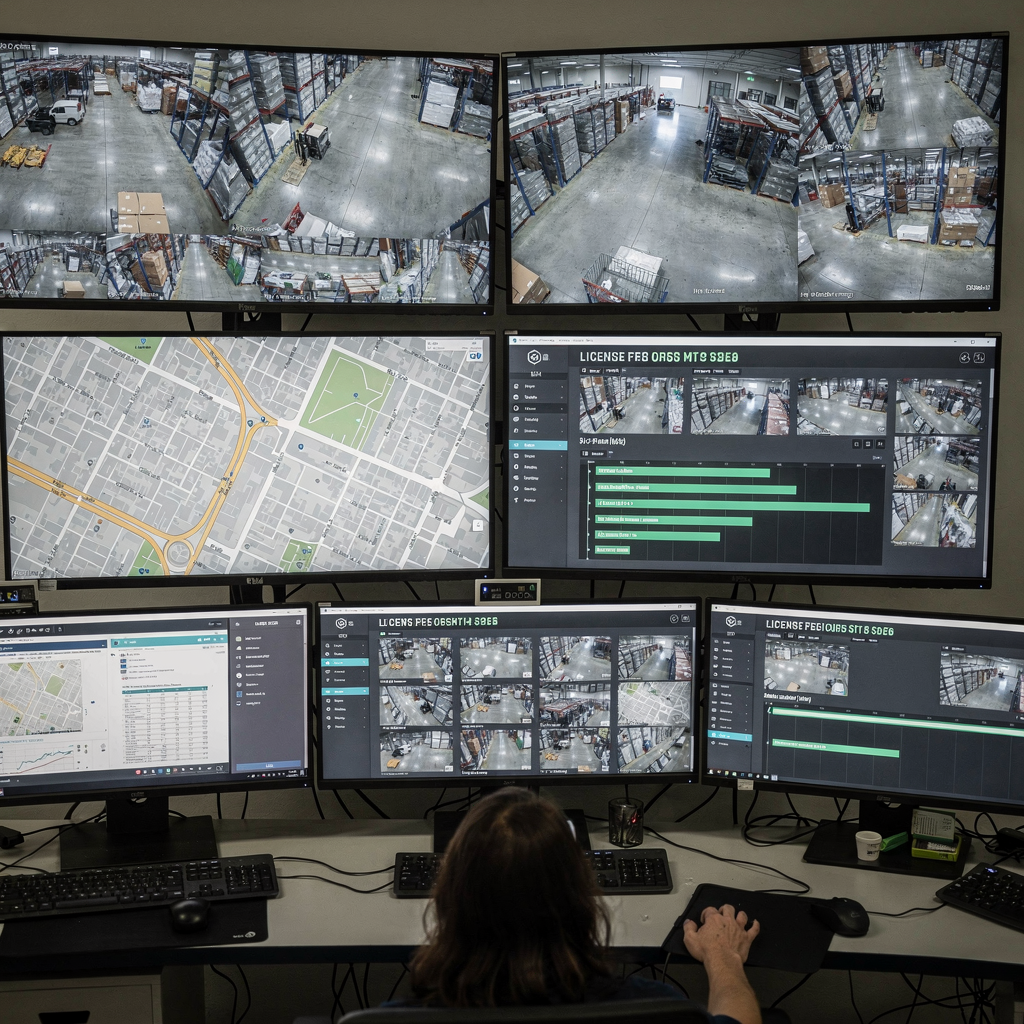
License plate recognition supports investigative workflows by linking a vehicle sighting to a timeline and to other digital evidence. Integrators can combine plate reads with GPS pings, access logs, and communication metadata to form a coherent investigative narrative. For example, linking ANPR hits to access control events speeds cross-checks and helps verify alibis. visionplatform.ai supports ANPR and LPR detection as part of its core suite and integrates with VMS events, so operators see both the visual proof and the associated metadata in one place. See how ANPR/LPR works for transport hubs in our technical overview on ANPR/LPR in airports (license plate analytics in airports).
Integration also accelerates mapping and cross-camera searches. A plate read from one camera can spawn a cross-camera query that pulls every sighting of that vehicle across time and space. This cross-camera capability reduces the hours of footage an investigator must watch. Control rooms that adopt unified analytics platforms report fewer manual steps and faster investigative cycles. For public safety, the practical outcome is proactive response and more rapid identification of suspects or missing assets.
Video analytics are not limited to vehicles. When paired with people-detection and crowd-density tools, they inform crowd control, flow optimization, and threat recognition. Our people-detection solutions show how object classification feeds operational decisions in airports and other critical sites (people detection in airports). By correlating plate reads with people movement, teams reconstruct who was where and when with greater speed and confidence.
AI vision within minutes?
With our no-code platform you can just focus on your data, we’ll do the rest
Advanced video analysis to automate real-world forensic investigations
Machine learning models power anomaly and pattern detection that scale across many cameras. Supervised models recognise known classes, while unsupervised models highlight deviations from a learned baseline. Together, they automate the search for relevant footage and reduce investigator workload. Forensic teams use these models to reconstruct sequences, map paths, and build timelines from raw recording. The output becomes structured evidence that supports investigative decisions and court processes.
Advanced video techniques also include enhancement and authentication. Enhancement raises clarity in low-light or compressed footage so that features like faces or license plates become readable. Authentication techniques verify that recorded video retains integrity by checking for tamper signs or synthetic manipulation. Detection of synthetically generated media remains a priority; new tools aim to spot deepfakes and doctored frames (research on synthetic media).
Case study: reconstructing a time-critical incident from raw footage. Investigators received hours of recorded video after an incident near a transport hub. They used an automated pipeline to index video, run object and face detections, and create a searchable timeline. The system filtered out irrelevant clips, highlighted objects in motion, and presented a compact, time-ordered narrative. This reduced investigation time and let analysts reconstruct the route of a suspect across multiple cameras and across time. The result was quicker identification and corroborated evidence for follow-up actions.
Practical deployments must balance speed with evidentiary standards. Systems like visionplatform.ai keep video and models on-prem to reduce exposure and to maintain clear audit trails. Auditable logs and exportable metadata support chain of custody. For forensic teams, automation speeds the repetitive tasks while humans verify conclusions and prepare material for legal processes. This blend of automation and human oversight preserves admissibility while delivering rapid investigative value.
AI-powered forensic video saves time for smarter investigations
Automation accelerates suspect identification using facial recognition and object matching. Systems perform rapid identification and then present verification steps for human review. Automated suspect ID reduces the hours of video an investigator must watch and shortens investigation time. In many police units, deploying AI analytics cut case turnaround by nearly 40% when video was correlated with other evidence (Interpol review).
Real-time alerts and dashboard reporting keep investigators informed. An operator receives a concise alert that explains what was detected, where it happened, and why it matters. VP Agent Reasoning goes further by correlating detections with VMS events and procedures to verify an alert before sending it. This reduces false positives and prioritises genuine incidents. Dashboards provide search results, timelines, and recommended actions so teams can respond efficiently.
Quantifying the time savings matters. Law enforcement agencies that adopt AI-powered video workflows report measurable improvements in case throughput and resource allocation. Automated searches and indexed footage mean that a single query can replace hours of manual review. visionplatform.ai also supports forensic search features so users can query using natural language, for example, “red truck entering dock area yesterday evening,” and get precise, ranked results (forensic search in airports).
AI analytics and automation yield smarter investigations by letting investigators focus on interpretation rather than rote review. Systems propose likely leads and provide supporting clips, metadata, and timelines. They also keep detailed logs for audits and legal compliance. As a result, teams spend less time on data handling and more time on investigative reasoning and follow-up steps, which makes the entire process both faster and more robust.
AI vision within minutes?
With our no-code platform you can just focus on your data, we’ll do the rest
Integrating video surveillance with analytics for comprehensive investigation
Linking multi-camera feeds in a unified platform transforms disparate streams into a single investigative fabric. Unified analytics index events across cameras and produce cross-camera views on demand. Cross-camera searches let investigators trace a person or vehicle across a site without manual hopping between feeds. That cross-camera capability shortens search and review radically, because it aggregates sightings and provides a timeline view to reconstruct movement.
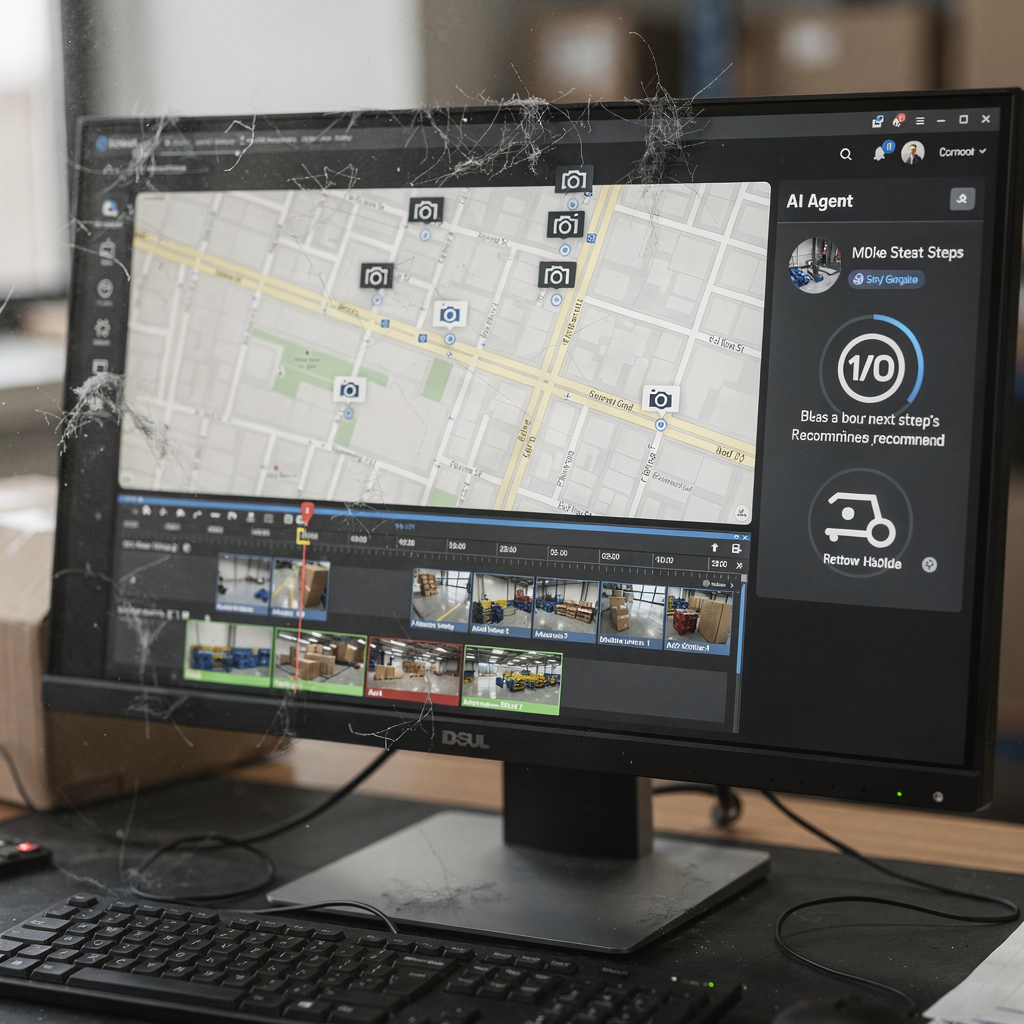
Integration also strengthens data security and chain of custody. By keeping video and analytics on-prem, organizations avoid cloud exfiltration risks and maintain control over metadata and logs. The VP Agent Suite exposes VMS events and analytics as structured data for AI agents, which lets workflows run with clear permission boundaries and audit trails. Operators can trigger actions, export incident packages, and preserve original recorded video along with derived metadata for court-ready evidence.
Unified platforms also support VMS integration, MQTT, and webhooks for system-wide automation. That connectivity powers automated workflows such as pre-filled incident reports and notifications to external teams. It also enables predictive mapping of movement by analysing patterns across cameras and over time. For sites with existing cameras, this integration approach avoids large hardware replacements and focuses on adding intelligence to what already exists. For more on integrating people detection and occupancy analytics, see our people-detection and heatmap solutions (people detection and heatmap occupancy analytics).
Finally, a unified system reduces operator cognitive load. Instead of juggling multiple apps, operators get a single dashboard that offers search, verification, and recommended actions. This improves decision speed and consistency, and it supports scalable monitoring without proportional increases in staff.
Mitigating bias and preserving the integrity of video footage in forensic video analysis
AI bias and fairness are serious concerns in forensic workflows. Models trained on limited or skewed datasets may misclassify people or behaviours. To mitigate bias, teams must use diverse training sets, perform ongoing audits, and apply explainable models that show confidence scores and rationale. Independent validation and routine software updates also help maintain performance across different site conditions and demographics. Interpol stresses that law enforcement must adapt investigative approaches as digital technologies evolve to verify the authenticity of media content (Interpol report).
Footage validation and tamper detection protect evidentiary integrity. Watermarking, cryptographic signing, and metadata preservation document the origin and chain of custody. Systems can log each access and transformation in an auditable trail so that any review documents who did what and when. For synthetic media, specific detectors examine inconsistencies in frame-level artifacts and compression traces to flag possible manipulation (synthetic media research).
Emerging standards and legal frameworks shape permissible uses and compliance. The EU AI Act and related guidance emphasise transparency, risk assessments, and human oversight. On-prem architectures reduce regulatory exposure by keeping data and models under customer control. visionplatform.ai’s on-prem design aligns with these requirements by default, and it creates auditable logs and clear permission boundaries to support legal admissibility.
Practically, bias mitigation and integrity controls work together. Teams use post-processing reviews, cross-checks with other data sources such as access logs or GPS, and human-in-the-loop verification to confirm automated findings. This hybrid approach both speeds investigative workflows and preserves the trustworthiness of the evidence, which is essential when video evidence goes into court or into operational decision making.
FAQ
What is real-time forensic video intelligence?
Real-time forensic video intelligence refers to systems that process live video streams and produce actionable insights for investigations and security. These systems combine analytics, AI, and forensic methods to detect events, index footage, and support rapid decision making.
How does license plate recognition help investigations?
License plate recognition automates plate reads and ties them to timestamps and camera locations. This enables investigators to trace a vehicle across multiple camera views and to correlate sightings with other data like access logs for a coherent investigative timeline.
Can on-prem video analytics preserve evidence integrity?
Yes. On-prem deployments keep raw footage and models inside the organization, which reduces exposure and supports clear chain-of-custody logs. This helps maintain evidentiary integrity and simplifies compliance with legal frameworks.
How do systems detect manipulated or synthetic footage?
Specialised algorithms analyze frame artifacts, compression inconsistencies, and temporal anomalies to flag potential manipulation. For high-risk cases, investigators combine automated detection with manual forensic review and metadata checks.
What role do AI agents play in a control room?
AI agents reason over video descriptions, analytics, and VMS events to explain alerts and recommend actions. They can automate routine workflows, pre-fill incident reports, and support operators with contextual verification.
How much time can AI save in an investigation?
Deployments report reductions in investigation time of up to 40% when analytics and cross-data correlation are used. Automation replaces many hours of manual review, allowing investigators to focus on interpretation and follow-up.
Are facial recognition systems reliable?
Facial recognition can be highly accurate in controlled environments, sometimes exceeding 95% for identification tasks. However, performance varies with lighting, angle, and image quality, so human verification remains important.
How do cross-camera searches improve evidence gathering?
Cross-camera searches collect all sightings of a person or vehicle across a site and present a unified timeline. This reduces the need to watch separate feeds manually and accelerates the reconstruction of movement across time and space.
What privacy safeguards should organizations use?
Organizations should adopt access controls, data minimisation, audit logs, and on-prem processing where possible. They should also perform regular bias audits and document model training data to support transparency and compliance.
How do I search recorded video using natural language?
Vision language models convert video into human-readable descriptions so operators can run free-text queries like “red truck entering dock area yesterday evening.” The system returns ranked clips and timelines, which makes post-processing fast and intuitive.