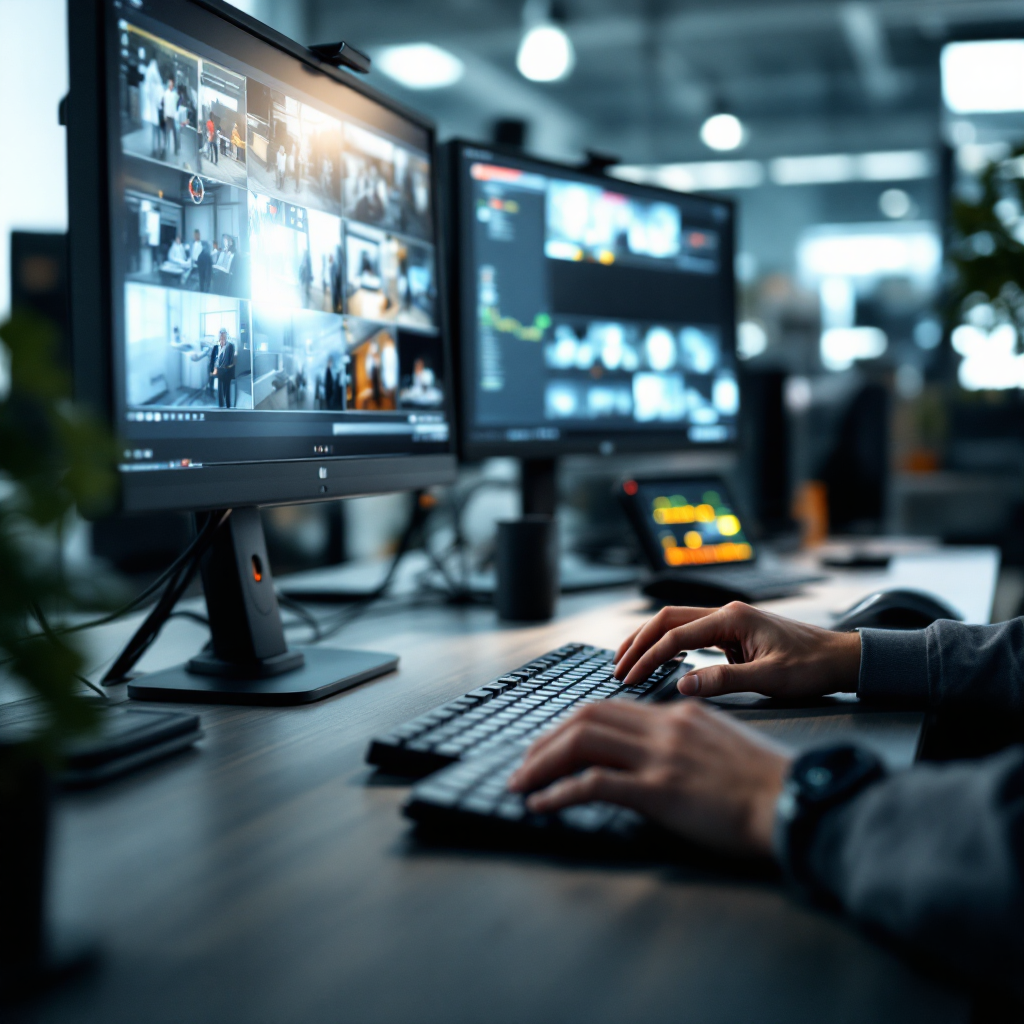
control room concept in modern operations center
A control room is the hub that binds technology, people, and process. In practice, the control room is a central location where staff monitor and manage security systems, CCTV, and alarms. For many organizations, the control room provides faster decision-making and reduced response times. For example, improved layouts and workflows can reduce response times by up to 30% according to industry research. Therefore, the control room supports corporate sites, transport hubs, critical infrastructure, and public safety environments. First, it centralizes feeds from cctv cameras and access control. Next, it helps security teams prioritize incidents. Then, it escalates incidents to field staff or dispatch within agreed procedures.
A modern control room also acts as an operations center for broader business functions. It can centralize video surveillance, operations control, and analytics so that supervisors can act quickly. The room is a central place for maps, logs, and live streams. In turn, this central point that monitors activity reduces blind spots across a large physical facility. For airports, for instance, Visionplatform.ai helps turn existing CCTV into an operational sensor network so that operators can detect people, vehicles, and ANPR in real-time while they retain data ownership. Also, organizations that centralize camera feeds can improve situational awareness, which supports faster incident response and better resource allocation.
Moreover, the control room supports continuity. It runs 24 hours a day in many sites and must be designed for long shifts. As a result, built-in redundancy and clear operating procedures matter. In this way, a control room provides a predictable, auditable environment for responding to security incidents. Finally, the command center role of the control room extends to cross-department coordination, so it ties into IT, facilities, and security teams across an enterprise.

type of control room and types of control employed
The type of control room you choose depends on scale, risk profile, and regulatory needs. At one end, a single-site monitoring room handles local CCTV and access control for a single building. At the other end, multi-site control centers centralize feeds from dozens of locations to support centralized control and cross-site analytics. In either case, planners must consider whether to centralize operations or distribute control across regional hubs. For example, a centralized control center may deliver economies of scale, while local control preserves fast on-site decision-making.
Control rooms use several types of control. Common items include access control panels, alarm systems, video management systems, and IoT sensors that feed status to consoles. These types of control also include control panels for perimeter gates and control systems for HVAC and lighting when integration is required. An integrated control room solution will often combine video surveillance systems with management software so teams can control and monitor multiple subsystems from one interface.
It helps to contrast a security control room with a network operations center or an emergency response center. A network operations center focuses on IT health, while an emergency response center emphasizes dispatch and field coordination. By comparison, a cctv control room focuses on cameras, video wall displays, and security-focused alerts. In this mix, security personnel and control room supervisors coordinate patrols and dispatch when required. Importantly, choices about access control systems and control panels shape the control room setup and the procedures used when a breach or other incident occurs.
Finally, plan for growth. Control rooms must scale from a single workstation to dozens of consoles. For airports, specialized modules such as vehicle-detection-classification and intrusion-detection help standardize responses. Where needed, vendors can centralize analytics to a software platform that integrates hardware and software while keeping critical video on-premise for compliance.
AI vision within minutes?
With our no-code platform you can just focus on your data, we’ll do the rest
main functions of a security control room: surveillance, cctv and video wall
The main functions of a security control room include continuous surveillance, alert triage, and coordinated incident response. At the heart, operators monitor live CCTV streams and review recorded surveillance footage. They use a shared video wall and individual monitors to maintain situational awareness. A video wall helps teams spot patterns that a single workstation might miss. In many sites, video wall management software connects the wall to the video management system so teams can pull up camera feeds instantly and replay events for investigations.
Within the control room, staff handle real-time alert management and incident logging. For each alarm, the control room staff confirm the alert, classify the threat, assign tasks, and escalate to field teams as needed. These processes use standard operating procedures and audit trails so that every step is recorded. The ability to play back surveillance footage supports forensic investigations and regulatory compliance. In practice, control rooms offer search, tag, and export features that accelerate investigations.
Operators must also monitor access control and alarm systems. For example, when an access control door opens unexpectedly, the operator will check nearby cctv cameras, tag the event, and initiate incident response. This cycle of monitor, verify, and dispatch reduces false positives and ensures that personnel monitor the most critical events. An effective security control room combines technology with trained personnel to respond to alarms and coordinate patrol or dispatch as required.
Moreover, in larger command center environments, a centralized control can coordinate response across multiple teams and external agencies. The control room provides a central point that monitors perimeter alarms, internal alarms, and environmental sensors. As a result, teams can respond to alarms faster, reduce security breaches, and improve the quality of incident reports for post-event review.
design considerations for security control room design and control room design
Design considerations for a control room range from ergonomics to redundancy and compliance. First, ergonomic seating and adjustable monitor arms reduce fatigue for operators who work long shifts. Lighting levels should be adjustable so operators can focus on screens without glare. Acoustic treatments and noise control prevent distraction. Additionally, climate regulation keeps equipment cool and operators comfortable, which supports 24 hours a day operations.
Room layout matters. A thoughtful room layout positions control room consoles to face the video wall while preserving sightlines for supervisors. Cable management and raised floors simplify maintenance and reduce trip hazards. Access control and physical security prevent unauthorized entry; locking doors, secure storage, and tamper-evident seals protect assets. Control rooms must also plan for redundancy in power, network, and storage so that video and logs remain available during outages.
Compliance is also crucial. Control room design must meet industry standards for data protection and physical security. For example, data integrity and on-premise availability are key reasons some organizations prefer hybrid or local architectures rather than pure cloud solutions as described in control room design guides. Control rooms must enforce clear operating procedures, staff rotations, and audit logs to satisfy regulators. In addition, security teams should include control room supervisors and well-documented operating procedures to manage crisis situations and reduce human error.
Finally, consider the technology stack. Use resilient hardware and management software that supports firmware updates and secure configurations. Implement video wall management software and software platform tools that let administrators centralize monitoring and configure alerts. In other words, good control room design delivers a safe, efficient space where operators can monitor, escalate, and resolve incidents reliably.
AI vision within minutes?
With our no-code platform you can just focus on your data, we’ll do the rest
control room software integration and technology in operations center
Control room software and integrations determine how effectively teams manage incident flows. A video management system (VMS) sits at the center, routing camera feeds to monitors, the video wall, and archival storage. In recent years, AI-driven analytics have entered the stack to reduce false alarms and detect patterns across camera feeds. Indeed, industry data shows that about 65% of control rooms now use AI-driven analytics to improve situational awareness and lower false positives according to a 2024 report.
Deciding between on-premise and cloud-based architectures affects data integrity and latency. Many sites choose hybrid deployments so they can keep sensitive footage local while using cloud services for aggregated dashboards. As one expert notes, “Data integrity and real-time availability are non-negotiable in control room environments, where every second counts” — an observation from control room design guidance. That is why organizations often retain hardware and software on-site while they centralize event streams to analytics platforms.
Cybersecurity matters. Use encryption, role-based access, and multi-factor authentication so only authorized personnel can access camera feeds and logs. A multi-layered approach reduces the risk of security breaches and helps protect audit trails. Additionally, integration with business systems allows cameras to act as sensors beyond security. For instance, Visionplatform.ai streams structured events via MQTT so teams can operationalize video for logistics, OEE, and safety dashboards while meeting EU AI Act considerations.
Finally, interoperability across various systems is essential. A well-integrated control room software stack connects cctv control room feeds, access control, alarm systems, and command center tools. Good management software and video wall management software make it easier for the operator to control and monitor many inputs from a single console. As a result, teams can standardize responses, improve incident response, and ensure the control room remains the central point for coordinated action.
control room operator role, training and human factors
The control room operator has a broad, critical role. They monitor camera feeds, verify alarms, and coordinate incident response with field teams. Control room operators also log events, escalate incidents, and support post-incident reviews. Clear job descriptions and training modules reduce ambiguity and help maintain high standards during crisis situations. Operators often work in shifts, which makes shift handover protocols and documented operating procedures essential.
Human factors are central to performance. Cognitive load and fatigue degrade performance, and research indicates fatigue can cut operator efficiency significantly in human factors studies. Therefore, ergonomics, scheduled breaks, and automated alert triage matter. Automation can filter low-priority alerts so personnel monitor the most meaningful events. For example, using custom AI models to flag only defined object classes can prevent alert overload and reduce false detections.
Training should cover technical skills, scenario drills, and communication protocols. Regular tabletop exercises and live simulations prepare control room staff and control room supervisors for major incidents. Performance metrics should measure detection accuracy, average time-to-respond, and quality of incident logs. In addition, mentorship and continuous improvement processes help teams learn from near misses and actual security incidents.
Finally, consider the human-machine interface. Simple, consistent dashboards reduce errors and help an operator remain focused. A compact workstation lets an operator view multiple monitors while keeping critical controls at hand. When teams invest in both people and technology, they create an effective security control room that reduces risk and supports reliable outcomes.
FAQ
What is a control room?
A control room is a centralized location where personnel monitor and manage systems, cameras, and alarms. It serves as the central hub for coordinating incident response and maintaining situational awareness.
How does a security control room differ from a network operations center?
A security control room focuses on physical security, CCTV, and access control, while a network operations center focuses on IT infrastructure and network health. The control room emphasizes real-time incident response and field dispatch coordination.
Which technologies are essential for a modern control room?
Key technologies include video management systems, AI analytics, access control systems, and robust management software. Additionally, redundancy in power and storage ensures continuous operation during outages.
How can control rooms reduce operator fatigue?
Ergonomic furniture, adjustable lighting, regular breaks, and automation of low-priority alerts all reduce fatigue. Training and shift planning also limit cognitive overload and improve long-term performance.
What role does AI play in video surveillance?
AI can detect objects, reduce false alarms, and prioritize events for human review. Many control rooms now use AI to improve situational awareness and accelerate incident response.
Should control rooms store video on-premise or in the cloud?
Both have merits. On-premise storage supports data privacy and low-latency access, while cloud services offer scalability and aggregated dashboards. Many sites use hybrid architectures to balance both needs.
How do control rooms support compliance?
Control rooms enforce operating procedures, maintain audit logs, and secure access to footage and data. These practices help meet regulatory requirements and provide evidence during reviews.
What training should a control room operator receive?
Training should include VMS operation, alarm triage, communication protocols, and scenario drills. Ongoing refresher courses and performance feedback rounds out a robust program.
How do I measure control room effectiveness?
Key metrics include response time to critical alerts, detection accuracy, and the quality of incident logs. Regular audits and drills also reveal improvement opportunities.
Where can I learn more about specialized analytics for airports?
Visionplatform.ai provides tailored solutions, including people detection, ANPR/LPR, and intrusion detection for airport environments. Explore practical guides like people detection in airports, ANPR/LPR in airports, and intrusion detection in airports for specific use cases: people detection in airports, ANPR/LPR in airports, intrusion detection in airports.