1. slip and fall accidents in a common warehouse: scope, common causes and fatalities caused by slips
Slip and trip risks in a busy warehouse drive a high share of workplace injuries and costs. According to national tracking, slips, trips and falls form one of the leading causes of injury in warehousing and storage operations, and they account for a large percent of reported incidents The Dangerous Reality of a Dirty Warehouse. In 2020, for example, there were 211,640 reported incidents across U.S. workplaces, and that year saw 805 deaths from falls to a lower level and 136 deaths from falls on the same level Prevent Slips, Trips, and Falls at Work | OSHA Safety Guide. Those figures show why a focused effort matters.
Common causes repeat across sites. Wet surfaces create a slip risk, and uneven floor patches increase trip potential. Cluttered aisles and poor stacking of merchandise lead to obstruction and trips. In addition, poor lighting prevents workers from spotting hazards early. These common causes make slips and falls frequent. For this reason, employers must act.
Analysis of fatalities reveals two distinct patterns. Some incidents involve same-level slips and trips that cause serious injuries and disability. Others involve falls to a lower level, often from elevated platforms, docks, ramps, or ladders. Both patterns appear in warehousing data and both demand controls. As the Occupational Safety and Health Administration explains, addressing these risks saves lives and reduces workers’ compensation costs OSHA Slips, Trips, and Falls Statistics.
To reduce harm we must identify which conditions drive incidents. Then we can set priorities. This includes housekeeping, lighting upgrades, and anti-slip surface treatment. Also, training helps employees recognise and report a hazard. Finally, engineering fixes such as floor resurfacing and clear traffic lanes bring durable gains. For practical detection and monitoring, modern camera analytics can alert teams to unsafe stacking or blocked walkways, linking security and operations to improve outcomes. For examples of vision-based fall and slip analytics, see the platform’s fall detection integration fall detection in airports and the slip-trip-fall analytics page slip-trip-fall in airports.
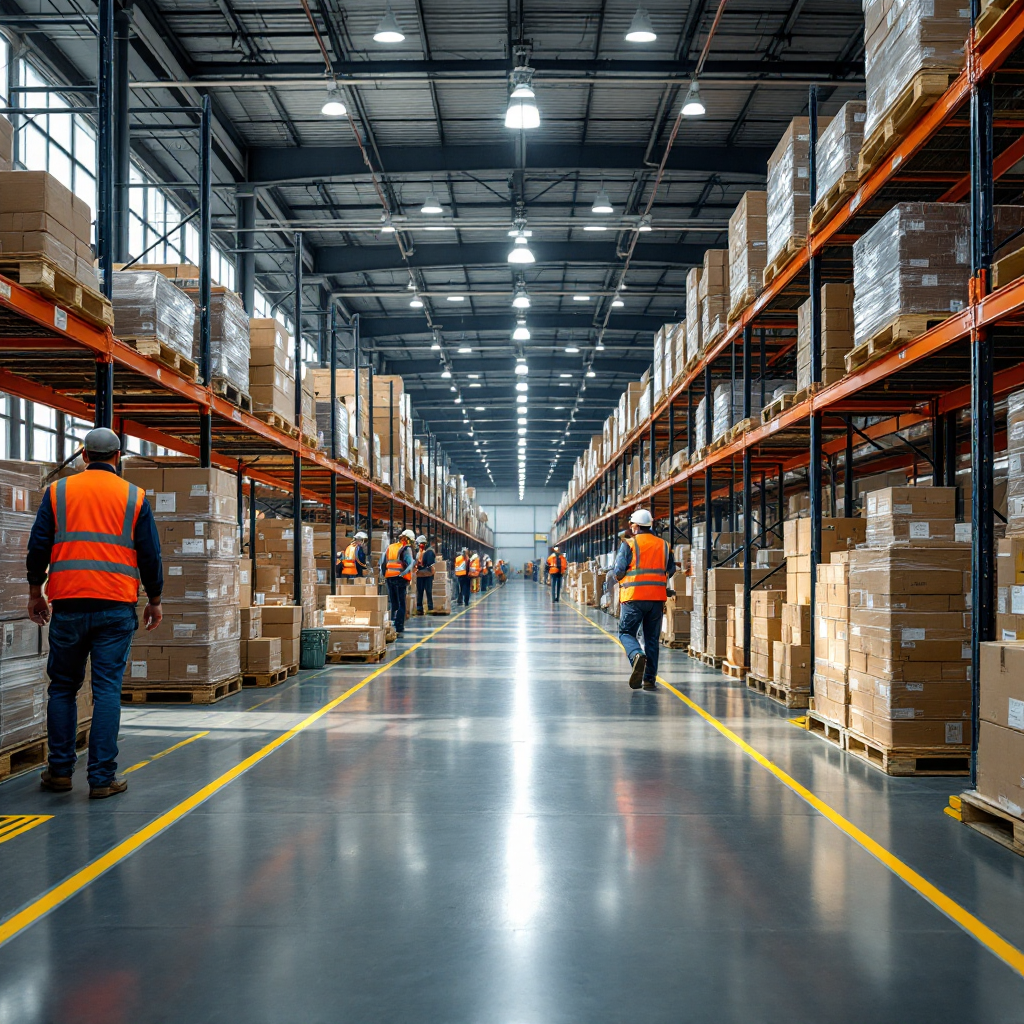
2. Identifying slip hazard, trip hazards and floor conditions: clutter, pallet issues and slippery surfaces
A focused inspection finds the root causes of slips and trips. First, walk every work area. Look for cracked or uneven floor sections. Check drain covers and transitions between different flooring types. Next, check for slippery coatings, standing liquid, or grease. Also, spot torn or worn anti-slip mat edges that can create a trip or slip hazard.
Clutter often hides risk. Poorly stacked pallet loads and loose packaging are common contributors. Pallet stacks that lean or extend into aisles create obstruction and block walkways. Therefore, ensure pallet placement meets stacking height and stability rules. Use clear floor markings to keep storage off pedestrian routes.
Lighting matters. Poor lighting lets risks hide in plain sight. Upgrade fixtures and replace bulbs promptly. In addition, perform a routine inspection to find shadowed zones near racks and docks. That simple step helps workers spot fallen objects and liquid before they strike.
Use an inspection checklist that covers these items. Include checks for wet surfaces, spilled product, torn mat edges, and unsecured pallet wraps. Include a verification of ladder condition and anchorage where ladders are used. Schedule inspections daily in high-traffic areas and weekly elsewhere.
When you find a spill or leak, respond quickly. Clean the liquid and then dry the area. Place temporary warning signs and barriers during clean up to prevent a secondary incident. Follow a documented spill response so employees act consistently.
To improve detection and record keeping, consider camera-based analytics. Visionplatform.ai turns CCTV into a sensor network that can detect blocked walkways, unsafe pallet stacks, and even PPE compliance. Integrating those events into a VMS or dashboard speeds corrective action and helps maintain a safer work environment. For related analytics that support operational safety, explore people-counting and heatmap occupancy tools people counting in airports.
AI vision within minutes?
With our no-code platform you can just focus on your data, we’ll do the rest
3. prevent slips and trips and falls: OSHA regulations and preventative measures to build a safer workplace
This section summarises the regulatory framework and the practical steps that build a safer workplace. First, know the key OSHA standards. The walking-working surfaces rules such as 1910.22 and the fall protection updates in 1910.29 set minimum requirements for general industry. Employers must keep walking surfaces clear and in good repair, and must implement fall protections where needed. For guidance and interpretation, consult authoritative resources and training materials OSHA safety guidance.
Housekeeping reduces slip hazard more than many expect. Set and enforce cleaning schedules for high-traffic aisles, entrance zones, and loading dock areas. Respond to every spill within a defined time, and then verify cleanup completion. Use absorbent products when needed and then apply non-slip coatings or non-slip mat where liquids are common.
Signage and physical controls help too. Use barriers and clear zoning to separate pedestrians from moving equipment. Mark traffic lanes and pedestrian walkways with paint and posts. This reduces collisions and prevents obstruction. Also, post warning signs at temporary wet areas and during maintenance activities to alert staff and visitors.
Layout and planning reduce recurring hazards. Design traffic flow so forklifts and people use separate paths when possible. Provide adequate maneuvering space to avoid last-second stops that lead to a loss of balance. Place storage so that material handling minimizes handling at heights and reduces the need for ladders.
Combine engineering steps with administrative controls. Train staff in safe work procedures and in rapid response to a spill or obstruction. Make sure PPE such as appropriate footwear is available and enforced. Use regular inspection rounds and document them to meet osha standards and to show due diligence. A proactive approach not only complies with regulations but helps prevent injuries and saves money by avoiding workers’ compensation claims. For an example of camera-based PPE detection to support compliance, see the PPE detection integration PPE detection in airports.
4. forklift and pallet handling in the warehouse: fall accidents and accident prevention strategies
Forklift operations present unique risks, and they often intersect with fall incidents. Falls can occur when workers ride on raised pallets or step onto forklift platforms. To reduce this, follow safe ingress and egress practices. Ensure operators maintain three points of contact and use designated steps and handholds. Keep platforms secure and avoid improvised riding on forks or pallet loads.
Safe pallet stacking and load securing prevent collapse and trips. Follow storage height limits and stack pallets evenly. Inspect pallets for broken boards and replace damaged units. Use load-securing checks and strapping where loads could shift. These steps reduce sudden collapses that create both a slip and a trip hazard.
Loading dock and ramp safety requires focused protocols. Use dock edge protection, wheel chocks, and communication signals between drivers and dock staff. During truck loading, control the gap between trailer and dock with plates or levelers. These controls prevent a fall from the dock edge and reduce fall accidents. Mark the dock edge with high-contrast paint and set speed limits for vehicles near the opening.
For elevated tasks, provide guardrails, fall arrest anchor points, and safe platforms. When ladder work is unavoidable, ensure ladders are the correct type and angle, and that users maintain three points of contact. Train operators and crew in safe ladder use and in recognizing when a job needs scaffolding or a properly rated platform.
PPE helps, and so does tooling. Use appropriate footwear and non-slip mats at entrances to trap moisture. Inspect forklifts daily for operational faults and maintain braking and steering systems to avoid abrupt movement that can cause loss of balance. For training that pairs visual detection with operational alerts, vision-enabled analytics can flag improper pallet handling or unsafe riding on forks and then stream events to operations dashboards. See object and vehicle detection integrations for examples vehicle detection and classification.

AI vision within minutes?
With our no-code platform you can just focus on your data, we’ll do the rest
5. safety training and fall prevention programmes: reducing the risk of slip and fall accidents
Training transforms rules into safe actions. Start with induction sessions that teach how to identify potential hazards, how to report hazards, and how to react to a spill or obstruction. Use short, frequent refreshers and hands-on drills. Practical drills build muscle memory so staff act quickly when they encounter a wet or slippery patch.
Design courses that emphasise hazard recognition and control. Include modules on ladder safety, correct footwear selection, and safe pallet handling. Offer scenario-based learning for dock operations and for pedestrian-forklift interaction. Encourage peer-to-peer observation and corrective feedback to sustain safe behaviour.
Near-miss reporting is essential. Create a simple process so workers report a near-miss without fear. Analyse near-misses to identify trends and then apply corrective actions. Tracking near-misses helps shift the culture from blame to continuous improvement.
Monitor training effectiveness by combining assessments and workplace observations. Use audits to confirm trainees apply new skills. Update training materials when equipment or layout changes. For workplaces that already use camera systems, integrate event alerts into training reviews so teams see real examples and learn from them. Visionplatform.ai can stream structured events to dashboards so safety teams review incidents and training gaps quickly.
Finally, pair training with first aid coverage. Give first aid training to designated staff and ensure the site has clear protocols for reporting an injury. This combination reduces the time to response for a fall injury and helps improve recovery outcomes. Through consistent training and feedback, organisations can prevent injuries and embed safer habits across shifts and teams.
6. Continuous improvement and monitoring: preventative measures to reduce fatalities caused by slips
Continuous improvement turns one-off fixes into long-term safety performance. Start by establishing KPIs that matter. Track incident rates, days away from work, number of spill responses, and audit completion. Use those metrics in weekly safety reviews. This keeps leaders focused on outcomes and not just activities.
Schedule regular audits and use a standard checklist for walking-working surfaces, dock areas, and storage zones. Ensure inspections include lighting levels, floor condition, mat integrity, and obstructions in walkways. Document results and assign corrective owners and deadlines. Then verify fixes close the loop.
Analyse incident data to find patterns. For example, if spills near an entrance cause repeated slips, consider a larger entrance mat or a covered entrance. If pallet collapses occur at a specific rack, reduce stacking height or replace damaged pallets. Data-driven fixes prevent repeat events and reduce fatalities caused by slips.
Share lessons learned across teams. Hold short debriefs after incidents and distribute concise summaries. Use imagery from CCTV analytics to illustrate root causes without violating privacy rules. That helps staff understand what changed and why. In many sites, camera analytics provide searchable records that speed investigations and training. Visionplatform.ai enables on-premise analytics so teams own their data and can stream events for operation dashboards and audit trails.
Engage employees in safety committees and invite frontline staff to propose practical controls. When workers help design controls, adoption improves. Finally, make risk management proactive. Use predictive trends and regular inspections to fix hazards before they cause an incident. Through monitoring, measurement, and staff involvement, organisations create a safer workplace and reduce serious injuries and fatalities.
FAQ
How common are slip and fall accidents in warehouses?
Slips and falls are among the most common incidents in the warehousing sector. For context, U.S. data recorded over 200,000 slip, trip, and fall incidents in a recent year, including hundreds of fatalities from falls to a lower level OSHA safety guide.
What are the usual causes of trips and falls?
Typical causes include wet surfaces, uneven floor areas, cluttered aisles, and poor lighting. These common causes increase the chance of an accident and are often corrected with better housekeeping and maintenance.
What regulations apply to walking surfaces and fall protection?
Key rules include walking-working surfaces standards and fall protection updates under OSHA, such as 1910.22 and 1910.29. These regulations require employers to inspect and maintain safe surfaces and to provide fall protection where needed.
How quickly should a spill be handled?
Spill response should be immediate, and the area should remain cordoned until cleaned and dried. A documented spill procedure speeds response and reduces the chance of a secondary slip.
Can cameras help reduce slip and fall risks?
Yes. Camera analytics can detect blocked walkways, unsafe pallet stacks, and unsafe behaviour. Integrating events into dashboards helps safety teams act faster. For examples of analytics that support operational safety, see slip-trip-fall analytics slip-trip-fall in airports.
What role do forklifts play in fall accidents?
Forklift misuse can cause falls when workers ride on forks or when loads shift and fall. Proper ingress and egress, operator training, and secure pallet handling reduce these risks. Regular equipment inspection also helps prevent accidents.
How often should inspections occur?
High-traffic areas need daily inspections and other zones at least weekly. Inspections should cover floor condition, lighting, mat integrity, and any obstruction in walkways.
What should a fall prevention training program include?
Training should cover hazard recognition, spill response drills, ladder safety, and safe pallet handling. Include hands-on practice, refresher sessions, and near-miss review to reinforce learning.
How do you measure whether safety training works?
Measure training effectiveness with workplace observations, audits, and by tracking KPIs such as incident rates and audit closure times. Use incident video and event logs to validate behaviour change.
Who should be involved in continuous improvement for safety?
Frontline employees, supervisors, safety professionals, and operations leaders should all participate. Employee involvement improves adoption of controls and helps create a proactive safety culture.