thermal and thermal imaging inspections for commercial and industrial terminals
Ports and terminals operate as dense, commercial and industrial hubs where equipment runs continuously and cargo moves around the clock. For safety and operational continuity, teams must monitor machines, tanks, cranes, and pipelines for signs of abnormal heating. Thermal inspections offer a non-contact and fast way to scan surfaces, and thermal imaging inspections help teams prioritize repairs without shutting down operations. For example, a thermographic study that examined damaged modules showed IR methods can reveal developing faults before they become visible, and “Thermal imaging provides a non-invasive, real-time method to monitor critical infrastructure” source.
Benefits include faster fault triage, reduced need for scaffolding, and lower risk to personnel. Also, routine inspections reduce the chance of catastrophic outcomes by catching early-stage insulation failure or oxidation on connectors. Regular temperature monitoring supports preventative maintenance and helps to schedule work during planned outages rather than unplanned downtime. In fact, studies in related industrial settings report a roughly 25% reduction in fire incidents over five years after adopting thermal-based monitoring study.
Regulatory and safety standards require documented inspection methods for hazardous-material storage, electrical rooms, and lifting equipment. Therefore, teams should combine high-resolution thermal imaging cameras with visual checks, and they should log results in a maintenance system. In ports, inspections on electrical gear and mechanical interfaces must follow defined intervals to prevent system failure. Visionplatform.ai integrates video events into operations, and the platform can stream real-time alarms so teams get prompt alerts and continuous context for decision-making. For more on how vision systems support fire detection and operations integration, see our discussion on fire and smoke detection for airside operations.

infrared cameras and handheld tools for inspection and leak detection
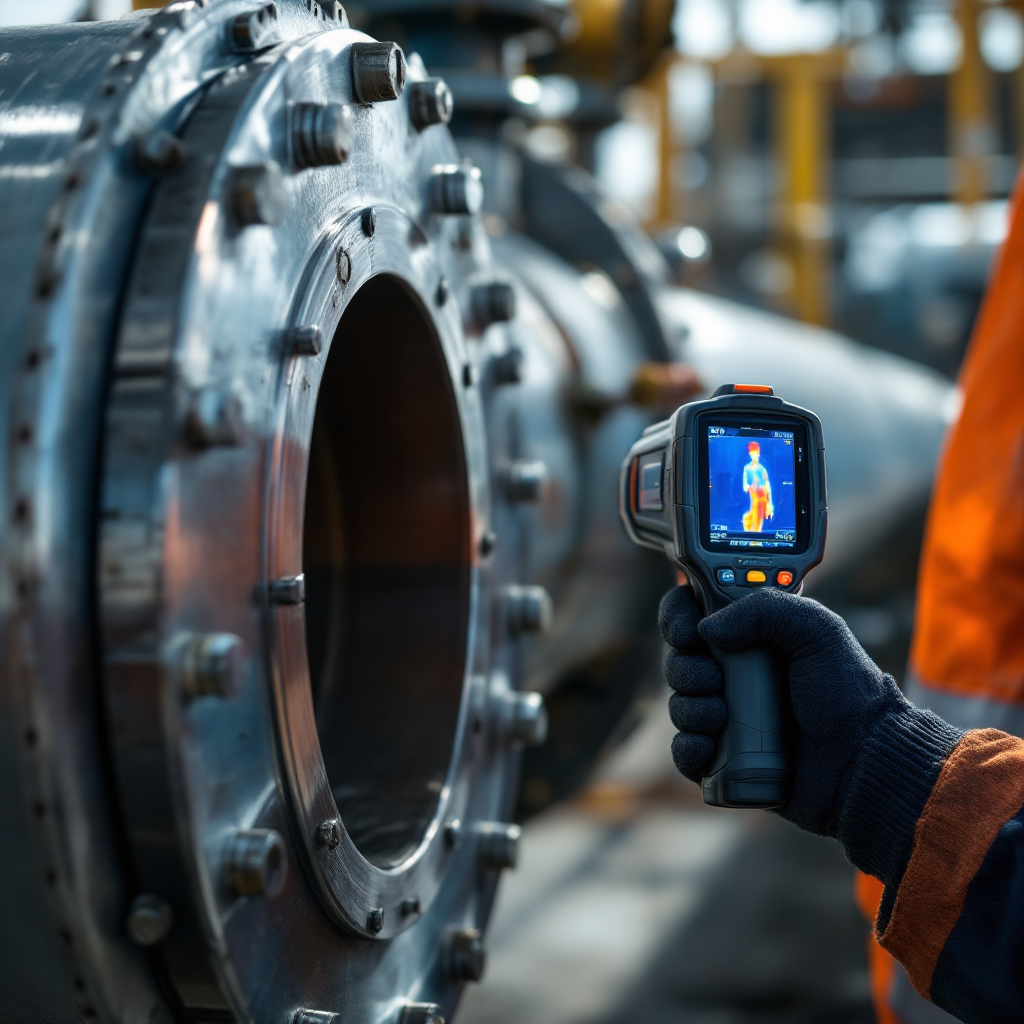
Selecting the right tools starts with understanding the trade-offs between fixed units and portable gear. Infrared cameras vary by spectral range, thermal sensitivity, and high-resolution optics. Handheld devices allow technicians to move close to target areas, and they work well for finding small leaks or local hot spots on fittings. Conversely, fixed systems provide continuous coverage and can stream thermal data into analytics platforms for long-term trend analysis. In one qualification programme, mobile test equipment proved scalable for large site assessments, which supports their use in on-site leak detection case study.
Best practices call for using a thermal camera that matches the task. For close-up inspections choose a unit with fine thermal sensitivity and a macro lens. For area scans pick a high-resolution model and position it to avoid reflections. Handheld operation requires trained thermographers who understand emissivity and can compensate for reflective surfaces, wind, and sun. Make sure to log temperature and to compare readings against baseline values so teams can detect even small temperature shifts. When teams need continuous monitoring, integrate an array of sensors and fixed imagers to enable early detection and automatic alerts.
Leak detection in piping and storage tanks relies on spotting temperature differences across seams, insulation, and valves. For example, a leaking seal may produce a high thermal contrast against colder insulation, and using infrared energy mapping makes that anomaly visible. Also, combining thermal readings with pressure and flow sensors increases confidence and reduces false alarms. When ports convert CCTV into operational sensors, they get more context: Visionplatform.ai can stream events from cameras so alarms are actionable, and this supports preventive maintenance and operational continuity. For related detection work and object analytics, our write-up on process anomaly detection shows how video events feed downstream systems.
AI vision within minutes?
With our no-code platform you can just focus on your data, we’ll do the rest
role of thermal imaging in predictive maintenance for critical infrastructure
Thermal methods play a clear role of thermal imaging in predictive maintenance by exposing trends long before a component fails. Teams record periodic scans, and they feed thermal data into analytics that flag temperature anomalies or gradual temperature rise in bearings, motors, and connections. Even small temperature changes matter because early detection can reduce equipment failure rates by up to 30%, which in turn lowers maintenance costs and outage risk evidence.
To integrate thermography into schedules, set baseline scans during normal operation, and then run routine inspections on a defined cadence. Use automated analytics to highlight abnormal heating or high thermal gradients so technicians can prioritize actions. Predictive maintenance strategies aim to replace corrective cycles with preventative maintenance and to reduce unplanned downtime. For instance, detecting a gradual temperature increase in a transformer will prompt inspections on possible oxidation or loose connections before a catastrophic failure occurs.
Data management matters. Store images with timestamps, and link them to asset IDs in the CMMS. Apply AI models to learn normal temperature patterns and to minimize false alarms. An ai-powered edge deployment keeps video and thermal analytics local, protecting data and ensuring GDPR and EU AI Act readiness. Visionplatform.ai supports this approach by turning cameras into sensors and publishing structured events via MQTT so teams can measure return on investment. In short, adding thermal surveillance to maintenance plans improves reliability, and it extends asset life while protecting the port’s critical infrastructure.
detect hotspots and thermal image detection for early risk management
Identifying signature temperature patterns is the first step to effective hot spot detection and early risk management. A thermal signature from a failing bearing differs from one caused by sun loading. Therefore, thermographers compare thermal image libraries with live readings to classify causes. Automated algorithms increasingly assist with anomaly detection by using thresholds, trend analysis, and pattern matching. These tools reduce false alarms and speed response because they can raise an alert when a temperature difference exceeds a set value.
Anomaly detection systems should include an alert hierarchy that distinguishes minor deviations from urgent faults that require immediate shutdown. For example, an isolated increase across a motor winding may need inspection during the next shift, while rapid abnormal heating in an electrical cabinet could justify an immediate outage. In many ports, integrating infrared thermal surveys with operational dashboards lets duty managers see context, video, and telemetry in real-time. This visibility helps identify and address risks such as insulation failure, excessive current, or small leaks before they escalate into catastrophic events.
To enable early detection, set dynamic thresholds that adapt to ambient conditions and apply algorithms that spot temperature anomalies even when absolute values change. Analytics can learn normal cycles and flag behaviors like high thermal gradients at night. Moreover, combining video analytics with thermal feeds allows teams to correlate visible smoke or sparks with a thermal hotspot. Visionplatform.ai’s edge-first model supports this by keeping models tuned on-site, and by exporting structured events for downstream operational use. For more on thermal people detection and combined sensing, consult our thermal people detection resource thermal people detection, which explains how visual context reduces false alarms.
AI vision within minutes?
With our no-code platform you can just focus on your data, we’ll do the rest
infrared thermal surveys to detect overheat and electrical hot spots in the electrical system
Electrical rooms and switchyards are common places to find overheat signatures. Infrared thermal surveys identify issues in switchgear, fuses, and transformers by mapping temperature and by comparing similar components. Common overheat scenarios include loose connections that raise contact resistance, insulation breakdown, and excessive current through aged components. Thermographers focus on joints, cable terminations, and the faces of circuit breakers because these locations reveal abnormal heating early.
When mapping electrical hot spots, document each scan and compare readings to baseline. Use temperature difference metrics to define severity, and note emissivity during measurement because it affects absolute values. Hands-on inspection methods should follow thermal results: tighten connections, replace deteriorated insulation, and retorque lugs where oxidation or loose connections show up. Preventive maintenance actions often prevent outages and reduce unplanned downtime caused by electrical equipment failures.
Electrical circuits must be inspected during normal load and while under typical environmental conditions to yield reliable results. Use infrared technology with calibrated instruments for consistent readings; this avoids false alarms from reflective surfaces. Also, involve electricians who understand circuit behavior so they can interpret thermal maps and propose corrective steps. Regular thermal imaging systems combined with electrical testing form a comprehensive strategy to find hot spots and to maintain operational continuity. For practical guidance on CCTV-based monitoring and object detection that augments thermal surveys, see our people detection overview people detection solutions, which explains how cameras and sensors collaborate in complex facilities.
hotspot and circuit breaker detection: principles of infrared imaging, emissivity and circuit analysis
Understanding emissivity is essential when using thermal methods for circuit breaker and hotspot diagnostics. Emissivity controls how surfaces emit infrared radiation, and it influences measured temperature values. If a technician ignores emissivity, readings may misrepresent true conditions. Therefore, thermographers should record emissivity assumptions, use reference stickers for low-emissivity metals, or apply correction factors to obtain reliable results.
Circuit analysis paired with infrared imaging helps to pinpoint causes of abnormal heating. For example, a hot breaker face combined with evidence of oxidation on the lug points toward a loose connection or corrosion. Conversely, a uniformly warm bus might indicate excessive current draw across multiple phases. Regular thermal imaging inspections of circuit breakers and connections enable preventive maintenance and reduce the chance of catastrophic failures. Use infrared cameras to find hotspots, and then follow up with electrical testing to confirm excessive current or insulation degradation.
Guidelines for corrective action include isolating the affected circuit, scheduling a controlled outage if necessary, and documenting repairs in the maintenance system. Routine inspections should focus on connections and components that historically fail and on areas exposed to moisture or salt spray common in ports. To lower false alarms, combine thermal scans with current sensors and with AI-powered analytics that learn normal patterns and only flag deviations that matter. Even small temperature rises can indicate impending problems, so timely identification and remediation improve return on investment and protect critical infrastructure. For expert guidance on integrating video analytics and thermal feeds into an operational workflow, consider how platforms like Visionplatform.ai publish structured events for SCADA and maintenance systems, thereby turning cameras into effective sensors and reducing false alarms.
FAQ
What is the main purpose of thermal inspections at ports and terminals?
The main purpose is to identify temperature anomalies that indicate failing equipment, insulation failure, or developing faults. By finding issues early, teams can schedule repairs during planned maintenance and reduce the risk of catastrophic incidents and unplanned outages.
How do infrared cameras differ from handheld thermal cameras?
Infrared cameras typically refer to fixed or high-spec imagers used for continuous monitoring, while a thermal camera often refers to portable handheld models for spot checks. Fixed cameras provide continuous trend data, and handheld units give targeted, high-detail readings during routine inspections.
Can thermal surveys detect small leaks in pipelines or tanks?
Yes, thermal surveys can detect small leaks because even small temperature changes create detectable contrasts against surrounding surfaces. When paired with pressure and flow measurements, leak detection becomes more reliable and reduces false alarms.
How does emissivity affect thermal readings?
Emissivity determines how much infrared radiation a surface emits and therefore impacts measured temperature. Accurate inspections require correcting for emissivity or using reference methods to avoid misreading metallic or reflective surfaces.
What role does predictive maintenance play in ports?
Predictive maintenance uses repeated thermal scans and analytics to spot trends that predict failures. This approach reduces downtime and lowers repair costs by enabling preventative maintenance before a system failure occurs.
Are thermal solutions compatible with existing CCTV systems?
Yes, thermal and visual analytics can be combined so that cameras act as operational sensors. Integrations allow events to stream into maintenance and security systems, creating a richer dataset for diagnostics and alerts.
How often should routine inspections be performed?
Inspection frequency depends on asset criticality, environmental exposure, and historic failure rates. Critical electrical components and switchgear require more frequent checks, while less critical assets can follow a longer cadence.
What is the difference between a hotspot and hot spots in reports?
A hotspot refers to a localized area of abnormal heating. The term hot spots (plural) is used when a survey identifies multiple such areas across a facility that need prioritization and follow-up.
How do automated algorithms help with anomaly detection?
Algorithms analyze trends and patterns to separate normal temperature cycles from true anomalies, which reduces false alarms and speeds up response. They can raise an alert when a reading crosses adaptive thresholds or when patterns deviate from learned baselines.
What should be done after a thermal survey identifies an overheat?
After identification, verify the reading, assess safety hazards, and isolate or schedule corrective work as required. Repairs should be documented and followed by a validation scan to confirm the issue was resolved, which helps maintain reliable records for compliance and preventive maintenance.