Warehouse environments for vehicle detection
Warehouse operations rely on fast decisions, and vehicle detection plays a central role in daily workflows. Warehouses often host Automated Guided Vehicles (AGVs), manual forklifts, pallet jacks, and other movers. These vehicle types operate in tight aisles and near human workers, and so safety and throughput matter equally. For safety, systems must improve pedestrian safety and reduce collisions. For throughput, operators want to optimize task flow and reduce idle time.
Indoor settings impose distinct constraints. Lighting can be dim or uneven. Shelving and stacked goods create occlusions. Congested lanes limit sight lines. As a result, conventional roadway detectors do not transfer easily to a warehouse environment. Systems must adapt to confined spaces, frequent turns, and mixed traffic. A detection algorithm trained on roadway scenes will often fail indoors unless retrained on relevant dataset samples.
Vision-based approaches using CONVOLUTIONAL NEURAL networks now support many warehouse deployments. These methods deliver high vehicle detection rates and they enable detailed classification. For example, recent work shows models like YOLO variants reach very high precision and recall in multi-vehicle tasks (YOLOv11 results). In parallel, multi-stage approaches have improved tracking and counting performance, producing error rates below five percent in controlled tests (multi-stage deep learning). These findings matter because warehouses need real-time analytics that meet operational SLAs.
Sensor diversity helps. Cameras excel at rich imagery. RADAR and LiDAR add depth and robust range. Ultrasonic distance readings add low-cost presence detection in narrow aisles. Loop-based systems still appear in some docks, and weigh-in-motion units can support load accounting. Warehouse teams often fuse multiple inputs to improve resilience to environmental changes.
Companies like Visionplatform.ai turn existing CCTV into actionable sensor networks so teams can reuse footage for operations and security. The platform helps integrate detection events into dashboards and operational streams. In this way, video becomes a source of analytics and alerts that feed WMS workflows and traffic management dashboards. For readers who want parallels to people analytics, see the people-counting solutions offered for high-throughput sites people-counting in airports. For vendors focused on vehicles in similar facilities, a deep dive into visual vehicle tracking shows design choices for indoor monitoring vehicle detection and classification in airports.
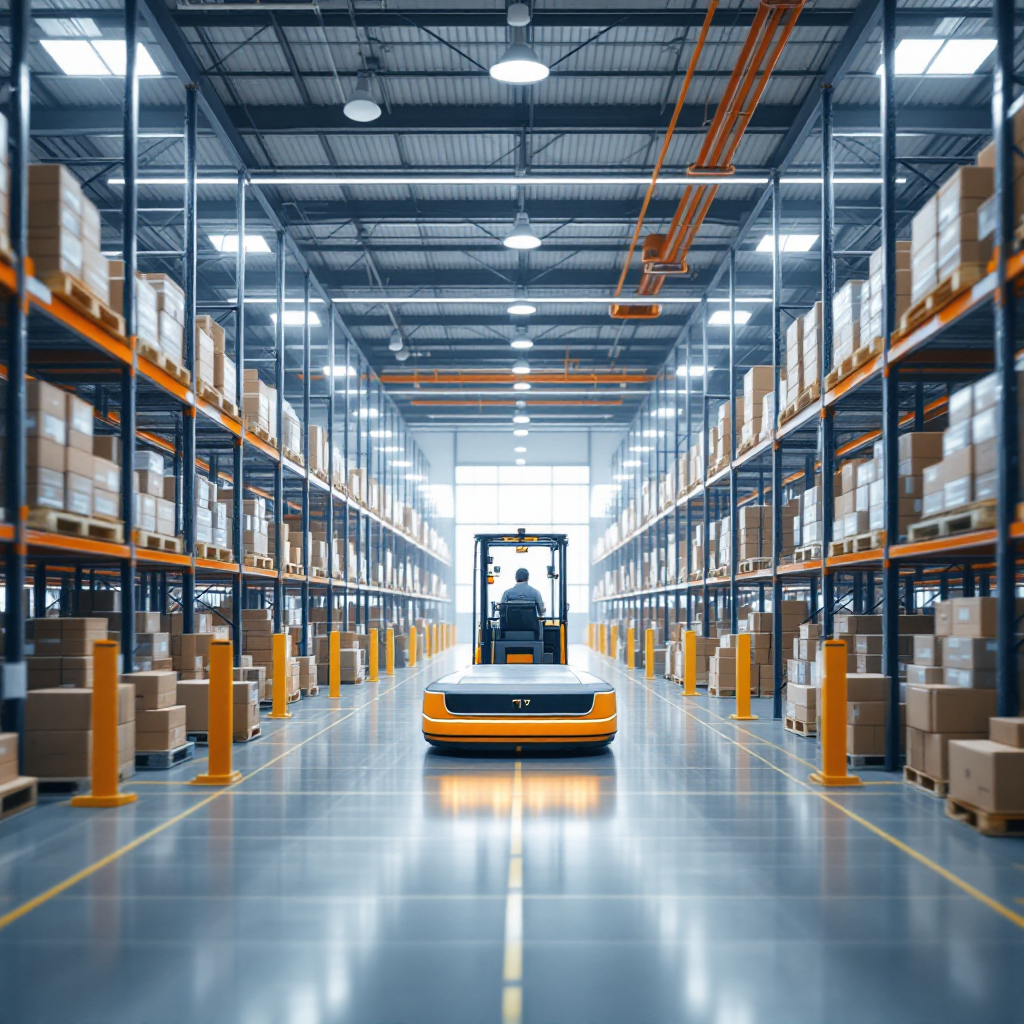
Ultrasonic sensor-based classification
Ultrasonic sensing offers a compact, low-cost option to detect objects and to estimate occupancy in narrow areas. The basic principle relies on measuring echo time and converting it to distance. Devices emit high-frequency pulses and then capture echoes to compute range. This method proves useful near loading zones, rack ends, and gate thresholds where cameras may suffer occlusion or glare. Ultrasonic is widely used for simple presence detection and for augmenting vision streams.
Strategic sensor placement matters. Install sensors along aisle entrances, at dock ramps, and at transfer points so they capture relevant crossings. Mount them to minimize false echoes from shelving, and orient them to avoid reflecting off metallic content in racking. For crowded docks, staggered sensors reduce simultaneous blind spots. In practice, people pair ultrasonic range points with a camera or a RADAR sensor to provide complementary measurements for better vehicle classification.
Signal processing converts raw echoes into usable signatures. First, systems filter noise and reject spurious spikes. Next, they perform peak detection to identify echo returns that correspond to object surfaces. Then, thresholding maps peaks into distance bins that represent typical vehicle profiles and occupancy levels. Features extracted from the ultrasonic signature include duration of echo, amplitude envelope, and rate of change. Aggregation of these features across multiple sensors forms a compact vector that supports downstream supervised learning.
Teams often calibrate thresholds to local conditions. Environmental factors such as temperature and humidity can change echo speed slightly. Consequently, occasional recalibration reduces drift. Low-power designs support long deployments and minimal maintenance. Ultrasonic arrays work well with loop-based systems and can act as a fallback for monitoring systems when video temporarily degrades.
AI vision within minutes?
With our no-code platform you can just focus on your data, we’ll do the rest
Machine learning for vehicle classification
Training robust models requires properly labelled examples. Teams collect training samples that include typical vehicle maneuvers, dock stops, and transient occlusions. Each sample pairs sensor traces with a ground-truth label. Careful annotation helps the training process and speeds up convergence. The training process benefits from both video frames and aggregated sensor vectors. A well-curated dataset improves generalisability.
Supervised machine learning works well in this setting. Practitioners try algorithms from k-nearest neighbours to support vector machines and decision trees. Ensemble methods often perform best when classical features combine with learned embeddings. For richer visual streams, a neural network or a convolutional neural backbone provides automated feature selection and strong detection performance. Teams balance model complexity against training time and computation available at the edge.
Feature extraction matters. For sensor arrays, features include echo amplitude, time-series slopes, and occupancy windows. For vision, features extracted from bounding boxes include aspect ratios, wheel spans, and the number of axles in clear views. These cues help a classifier distinguish AGVs from forklifts and pallet movers. When training, engineers also include negative samples, environmental changes, and partial occlusions to harden models.
Key metrics guide development. Detection accuracy and precision quantify correct labels and false alarms. Recall monitors missed vehicles. Processing latency measures how fast models produce outputs in real-time. In warehouse trials, real-time pipelines aim to run at or above 30 frames per second on camera feeds to meet operational needs (real-time target). Teams also measure training time and validate changes with a holdout dataset to avoid overfitting. Practically, models using backpropagation and a compact network structure often achieve the best trade-offs between inference speed and stability. For readers interested in the specifics of model improvement using attention mechanisms, an IEEE paper describes an improved YOLOv5s variant and training loss optimisation (improved YOLOv5s research).
Real-time vehicle count and alerts
Operational staff need a reliable vehicle count and immediate alerts when incidents arise. A streaming architecture takes camera frames and sensor streams and produces events in real-time. The pipeline typically includes ingestion, pre-processing, detector inference, lightweight tracking, and event publishing. Systems must process input at ≥30 fps so operators can act promptly. Many deployments use GPUs at the server or edge devices like NVIDIA Jetson to hit these targets.
Alert rules include boundary crossings, prolonged stops that indicate a stalled vehicle, and collision risks when two paths converge. Congestion warnings flag when occupancy and vehicle count exceed a threshold. Systems can also estimate vehicle speed and detect sudden decelerations that hint at near-misses. When an alert triggers, the platform sends an immediate notification to operator dashboards and to on-site controllers.
Integration matters for response. Teams stream events to MQTT brokers and to WMS platforms so supervision and task assignment align. For security teams who also handle people flow, Visionplatform.ai already supports streaming events into existing VMS and into operational dashboards. This allows events from vehicle detectors to feed into broader monitoring and into cross-domain analytics people detection examples. Also, linking vehicle events to ANPR/LPR lets operators reconcile vehicle identity with task records ANPR/LPR integration.
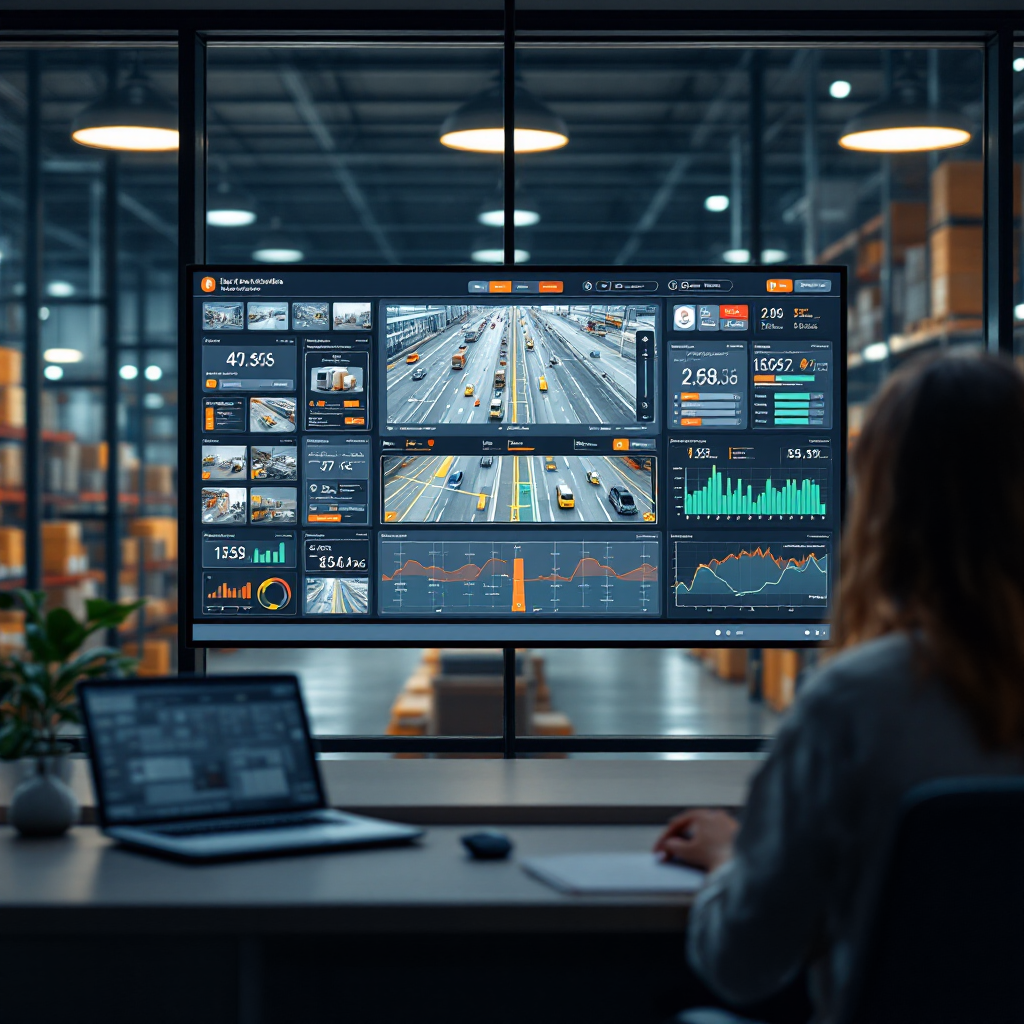
Streaming pipelines also support aggregation and analytics. Aggregate metrics include average vehicle count per hour, average dwell time, and occupancy ratios for aisles. These analytics help planners improve routing and scheduling. Systems can also integrate historic detection logs for forensic-search use cases to reconstruct an incident timeline forensic search reference. In practice, combining detection with actionable alerts reduces response time and helps improve safety records on site.
AI vision within minutes?
With our no-code platform you can just focus on your data, we’ll do the rest
Integration into warehouse operations
Detection data only yields value when systems integrate with business processes. Linking detection events to Warehouse Management Systems lets the WMS adjust routes and allocate tasks dynamically. For example, when a dock lane reports high occupancy, the WMS can postpone inbound tasks. When a slow-moving forklift triggers a collision-risk alert, the dispatch system can reroute other vehicles and assign a recovery task.
Route planning benefits directly from accurate vehicle classification. Knowing whether a unit is an AGV, a manual forklift, or a pallet mover helps the WMS decide travel speed limits and path priorities. Teams often build simple business rules that reduce cross-traffic and that prefer AGVs on scheduled corridors. These rules improve overall efficiency and reduce idle time. Case studies show throughput gains in pilots that pair visual detection with automated tasking. In industry, multi-sensor deployments that fuse camera and LiDAR inputs report substantial reductions in near-miss incidents and in average task completion time.
Operational integration also extends to analytics and reporting. Operators can aggregate detection events into KPIs for OEE, and they can correlate vehicle count and occupancy with shift patterns and throughput. Dashboards provide both live status and historical trends, and they support root-cause analysis for bottlenecks. For teams that must keep all processing onsite for compliance, Visionplatform.ai supports on-prem deployments that keep data and models local. This approach aligns with EU AI Act readiness and with GDPR controls, while still enabling streaming events to SCADA and BI stacks.
Several deployments show measurable improvements. One pilot reduced idle time by routing AGVs away from crowded aisles. Another improved pedestrian safety by issuing audible alerts when a forklift entered mixed-use zones. These outcomes demonstrate how detection systems can also transform daily operations and how they can feed continuous improvement cycles.
Challenges and future directions for warehouse detection and classification
Warehouses remain hard environments to monitor. Occlusion and clutter regularly block views, and variable lighting affects camera performance. Shelf reflections and metallic content can confuse range sensors. To overcome these limits, teams fuse signals from multiple modalities. A common architecture will fuse camera data with RADAR, LiDAR, and wireless tags so the system can better handle occlusion and environmental changes.
Data scarcity is another constraint. Well-annotated indoor datasets for vehicle classes lag behind roadway collections. Researchers recommend building site-specific datasets that reflect the site’s unique vehicle types and traffic patterns. Standardised indoor datasets would accelerate progress. Recent research emphasises the need for datasets and attention mechanisms to improve detection in dense scenes (attention mechanism study), while other work highlights the role of multi-stage models for robustness (multi-stage deep learning).
Future work will focus on several fronts. First, multi-sensor fusion will become standard, and systems can fuse per-frame features, loop counters, and RFID reads to better classify vehicles. Second, model architectures that incorporate temporal context and that use convolutional neural layers plus temporal modules will strengthen tracking. Third, standard tools for feature selection and for measuring training time and training samples will shorten deployment cycles. Finally, open indoor datasets would help compare detection algorithms and make replication easier.
Industry is already moving toward integration with Industry 4.0. One review notes that detection techniques can add “a new autonomous working mode” and thereby create safer, more efficient warehouse settings (AGV and Industry 4.0 analysis). As part of that trend, teams must pay attention to system using edge inference to reduce network load, to keep sensitive video local, and to maintain auditable logs. These steps help sites comply with regulations while they improve operational analytics and traffic surveillance.
FAQ
How does vehicle detection differ in warehouses versus roadways?
Warehouse settings have tighter spaces, more occlusion from shelving, and varied indoor lighting. Roadway datasets and models often fail indoors unless retrained on warehouse-specific dataset samples and scenarios.
Can ultrasonic sensors replace cameras for vehicle classification?
Ultrasonic devices work well for presence detection and distance estimation in narrow aisles, and they offer a low-cost complement to cameras. However, vision provides richer features for classifying vehicle types, so teams typically fuse both modalities for best results.
What is the minimum real-time processing rate for practical warehouse monitoring?
Many deployments target at least 30 frames per second for camera feeds to ensure timely alerts and tracking. This helps reduce latency in alerting and supports high-fidelity vehicle count metrics.
How do I integrate detection events with my WMS?
Detection events can stream to MQTT brokers or to webhooks that the WMS ingests. Visionplatform.ai, for example, publishes structured events so WMS and BI stacks can consume vehicle events and aggregate them into operational KPIs.
Do I need a large dataset to start?
You can begin with a few hundred labelled examples for initial models, but larger and more diverse datasets improve robustness. Include edge cases like partial occlusions and varied lighting to reduce false alarms during the training process.
What sensors should I consider in addition to cameras?
LiDAR and RADAR sensors add depth and resilience to adverse lighting. RFID tags and loop-based systems can provide identity and presence signals, while weigh-in-motion units help with load accounting.
How can detection systems improve safety?
Real-time alerts for boundary breaches and collision risks let operators intervene quickly, and analytics help identify repeat hotspots to adjust layouts. These changes help improve safety metrics and lower incident rates.
Are there privacy concerns with video analytics?
Yes. To reduce privacy risk, process video on-premise when possible and use privacy-preserving modes like blurring or event-only exports. Platforms that keep data local align better with GDPR and the EU AI Act.
What role does machine learning play in classifying vehicles?
Machine learning provides automated feature learning and robust classification through supervised models such as convolutional neural networks and lightweight classifiers. It helps distinguish AGVs, forklifts, and pallet movers from sensor signatures.
How do detection systems handle occlusions?
Systems fuse multiple sensors and use tracking across frames to recover from brief occlusions. They also train on occluded samples to make models resilient when parts of a vehicle are hidden by shelving or other objects.