video analytics and computer vision: Core Concepts and Differences
Video analytics and computer vision sit side by side in many technology stacks, yet they solve different problems. Video analytics refers to systems that process continuous video frames to detect motion, classify behavior, and trigger alarms. These systems focus on temporal continuity and the need to turn visual information into immediate, actionable output. In contrast, computer vision often targets image-based pattern recognition and feature extraction from single frames or still images. Computer vision excels at tasks such as image tagging, segmentation, and precise object classification. For example, CCTV feeds become a stream where video analytics identifies a person loitering, while an image-based computer vision model might only tag that individual in a photo.
Video analytics demands attention to frame rates, compression artifacts, and the high volume of video data that cameras produce. Systems must manage thousands of frames per second in aggregate across sites, and they must do so with low latency to support real-time decision-making. That need distinguishes video analytics from many classical computer vision tasks that tolerate batch processing and offline tuning. Real-time constraints push architects to use efficient neural networks and sometimes specialized hardware to process video streams without dropping detections.
Object detection and segmentation often form the building blocks for both fields. Video analytics systems use detection to create bounding boxes around people or vehicles. They then apply tracking to link those boxes across time. Computer vision research supplies the detection backbones, while video analytics adds tracking, temporal smoothing, and behavioral rules. Deep learning models underpin both disciplines, but the pipelines differ in how they handle continuity, drift, and scene changes.
Operationally, the difference shows up in examples. A retail chain uses video analytics to count people entering a store during peak hours and to alert staff when a queue grows too long. By contrast, a media company uses a computer vision model to tag product logos in images for content indexing. In safety-critical environments, video analytics integrates with VMS and access control to provide immediate alarms and context. visionplatform.ai converts existing cameras and VMS into AI-assisted operations, so cameras no longer just trigger alarms. They become searchable sources of understanding and assisted action, helping operators move from raw detections to reasoning and decision support.
advanced video analytics benchmark: Measuring Performance
Measuring advanced video analytics requires a mix of throughput and accuracy metrics. Common metrics include frames-per-second (FPS), precision, recall, and F1 score. FPS captures how many frames a pipeline processes under live load. Precision and recall reveal how often detections are correct or missed. F1 balances them. Benchmarks such as PETS, VIRAT, and CityFlow provide standardized scenarios for comparing models on multi-object tracking, re-identification, and congested traffic scenes. These public datasets have shaped how researchers evaluate trackers and detectors under varied lighting and occlusion.
Resolution and scene complexity strongly affect results. High-resolution input can improve small-object detection but increases compute cost and latency. Congested scenes reduce recall because occlusions hide subjects, and motion blur reduces precision. A recent market analysis shows the global market for video analytics was valued at roughly USD 4.2 billion in 2023 and is expected to grow rapidly, driven by demand for intelligent surveillance and automation; that trend pushes vendors to optimize both accuracy and cost Video Analytics Technology Guide: Benefits, Types & Examples.
Edge-optimised analytics are on the rise to reduce latency and decrease bandwidth to the cloud. Processing at the edge often uses NVIDIA GPUs or Jetson-class devices to run compact neural networks. This approach keeps video data local and helps meet compliance constraints. For model evaluation, the benchmark runs must include long-form video to catch temporal patterns, and they must measure how models handle changing camera angles and illumination. LVBench and VideoMME-Long are emerging resources that test models on longer durations and complex motion, though they remain less standardized than image benchmarks.
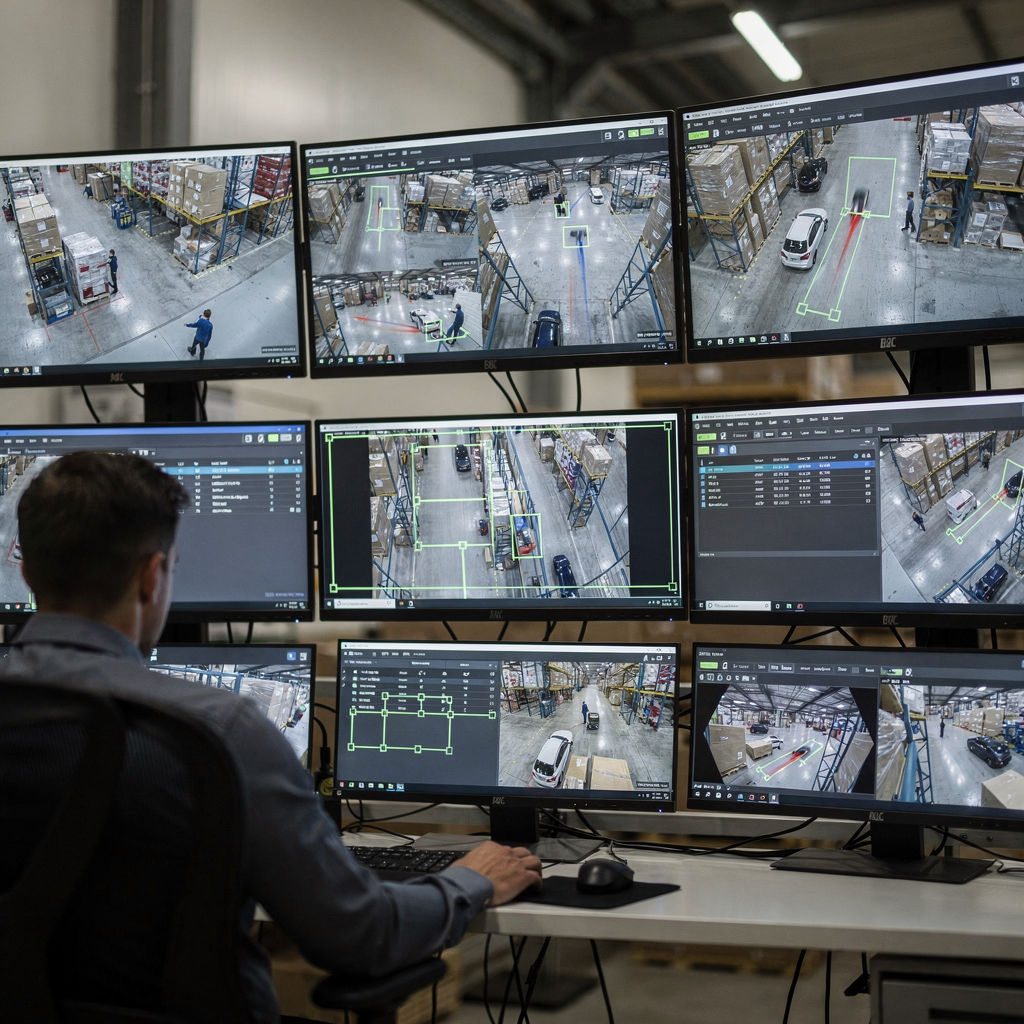
Best practices for deployment include testing on site-specific data, because a generic benchmark may not capture local scenes or camera placements. Using a predefine set of tests that mirror the expected video length, field of view, and lighting gives a realistic view of operational performance. Teams should measure both detection accuracy and system-level metrics such as end-to-end latency and false alarm rate. visionplatform.ai emphasizes on-prem evaluation so operators can validate models against historical footage and tweak thresholds for their environment.
AI vision within minutes?
With our no-code platform you can just focus on your data, we’ll do the rest
vision language models and language models: Bridging Visual and Textual Data
Vision language models such as CLIP, BLIP, and Flamingo merge vision and language to interpret images and generate descriptions. These multimodal models learn joint representations so that visual concepts and words share an embedding space. Large language models contribute the fluency and reasoning to turn those embeddings into coherent narratives or to answer questions about a scene. The result is a system that can create captions, respond to queries, and perform multimodal search without task-specific labels.
Compared with classic analytics, vision language models offer richer semantic insight and natural language output. Instead of a numeric alarm, a VLM can produce a short report that explains what was seen, where it occurred, and why it might matter. That natural language output facilitates faster triage by human operators and makes archives searchable by plain text queries. VLMs enable zero-shot generalization in many cases, which reduces the need for large labeled datasets for every possible object class. A comprehensive survey highlights the rapid growth of research in this area and notes the expanding set of benchmarks that probe multimodal reasoning A Survey of State of the Art Large Vision Language Models.
Vision-language models also face limitations. They inherit biases from training corpora and can produce unpredictable or harmful outputs without guardrails. Large language models carry similar risks, and research points out that scale alone does not eliminate bias Large Language Models Are Biased Because They Are Large …. To mitigate issues, teams should curate training data, apply filtering, and run adversarial tests before deployment.
Typical tasks for vision language models include image captioning, visual question answering, and multimodal retrieval. They also support retrieval-augmented generation workflows where a vision model finds relevant image patches and an llm composes a narrative. In production, these systems must manage latency, since a fluent natural language answer requires both vision inference and language processing. When tuned for on-prem deployments, vlms can operate within privacy and compliance constraints while providing semantic search over visual archives. This capability supports forensic workflows such as searching for a specific person or event in recorded footage, and it ties directly into the kinds of forensic search features offered by control-room platforms.
How advanced video analytics integrates vlms for Real-Time Insights
Integration patterns for analytics with vision language models vary by latency requirements and mission. A typical pipeline ingests video, runs detection and tracking, and then calls a vlm or vlms ensemble to add semantic labels or captions. The architecture often includes an ingestion layer, a real-time inference layer, and a reasoning layer where ai agents can make decisions. This setup can transform raw detections into human-readable incident reports that include a timestamp, description, and recommended action.
For example, an automated incident reporting application can generate time-stamped captions that describe what happened and who was involved. The pipeline might first produce bounding boxes and tracklets via object detection and then pass key frames to a vlm for captioning. The final natural language summary can be enriched by querying a knowledge base or a VMS timeline. That approach reduces the need for manual review and shortens the time between detection and resolution.
Synchronization challenges arise when combining frame-level analytics with large language models. Language models introduce latency that can exceed the tolerance of mission-critical workflows. To manage this, teams adopt hybrid strategies: run critical detection on the edge for real-time decision-making, and run vlm-driven summarization in short batches for context and reporting. Hardware acceleration, such as dedicated GPUs or inference accelerators from NVIDIA, helps reduce latency and enables more complex vlm models to run on site.
Best practices include choosing the right model size for the use case, predefine thresholds for when to call the vlm, and use streaming integration for continuous video. Where immediate response is essential, the system should fall back to an edge detection-only path. Where context is more important, batch summarization provides richer output. Organizations that want to integrate vlms will benefit from keeping video and models on-prem to control data flows, as visionplatform.ai does with an on-prem Vision Language Model that turns events into searchable descriptions. This pattern enables both real-time alerts and later forensic summarization of long recordings.
AI vision within minutes?
With our no-code platform you can just focus on your data, we’ll do the rest
agentic AI agents and agentic retrieval: Smart Video Processing
Agentic AI agents are autonomous systems that plan and execute tasks by reasoning over data sources. In video contexts, an agentic agent might monitor streams, verify alarms, and recommend actions. Agentic retrieval refers to context-aware fetching of relevant video segments, metadata, and historical incidents to provide a concise evidence package to the agent. Together, these components allow systems to act like a trained operator, but at scale.
An interactive video assistant is an immediate use case. A security operator can ask a question in natural language and the agentic agent will search across cameras, retrieve matching video clips, and summarize the findings. That retrieval may use embedding search to find similar events, and then the agent composes an answer using retrieval-augmented generation. This process reduces the cognitive load on humans and speeds decision-making during incidents.
Agentic retrieval helps when video length is long and the amount of visual information is vast. The agent selectively fetches short video clips that match the query, rather than scanning entire archives. Self-supervised learning models and multimodal models can index content and support efficient search over long-form video. The agent tracks context so that follow-up questions remain coherent and are grounded in the same evidence. These systems can also generate bounding boxes and visual grounding for evidence, which helps auditors and investigators verify claims.
There are practical challenges. Agents must respect predefined permissions and avoid unsafe automation. They must also operate within deployment constraints and handle limited context when available. Still, the potential is large: agentic ai supports automation that reduces time per alarm and scales oversight with consistent decision logic. visionplatform.ai embeds ai agents inside control rooms to expose VMS data as a real-time datasource. This design lets agents reason over events, procedures, and historical context to verify alarms and suggest actions.
real-world use cases: Combining AI, video analytics and vlms
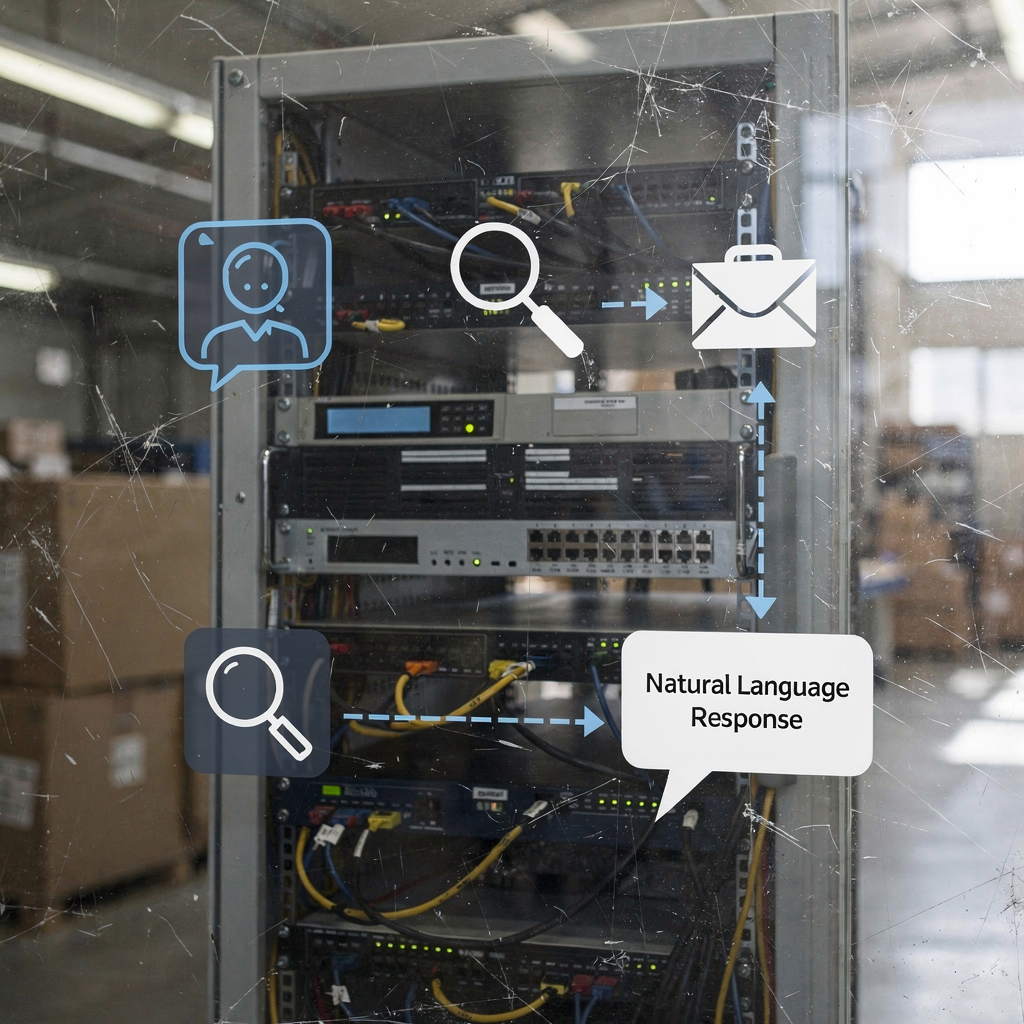
Combining ai, video analytics, and vision language models unlocks practical applications across sectors. In security and surveillance, systems can provide natural-language alerts that explain suspicious behavior and include short, relevant video clips. This reduces false alarms and gives operators clear context. Forensic search becomes faster because operators can use plain queries to find events, eliminating the need to memorize camera IDs or exact timestamps. For example, a control room can query for “person loitering near gate after hours” and receive a short list of candidate clips and summaries.
Retail analytics benefits as well. Beyond counting footfall, a system can produce descriptive trend reports that explain customer flow patterns and identify areas of frequent congestion. Those reports can include both statistical counts and natural language insights, making the output easier to act on for store managers. Related use cases include behavior analytics and heatmap occupancy analytics, which can feed operations and business intelligence dashboards. For airport environments, features such as people-counting and perimeter breach detection integrate with VMS workflows to support both safety and efficiency; readers can find more on people-counting in airports and perimeter breach detection in airports for concrete examples.
Traffic and transportation also gain value. Incident detection coupled with automatic text summaries speeds operator handoffs and supports emergency response. Healthcare monitoring systems can detect falls, flag anomalous patient movement, and present voice-driven video review for clinicians. Systems that incorporate two key innovations—agentic retrieval and vlm-based summarization—can turn hours of footage into actionable information from video without overwhelming staff.
Deployments must address bias, data retention, and compliance. Keeping processing on-premises helps with EU AI Act concerns and reduces cloud dependency. visionplatform.ai emphasizes on-prem deployment models that preserve control over training data and recorded footage. The platform integrates with existing systems and supports tailored models and custom workflows. In practice, solutions can be tailored to specific use cases so operators get fewer false positives and more explainable output. This shift transforms video inputs from raw detections into assisted operations that scale monitoring while reducing manual steps.
FAQ
What is the difference between video analytics and computer vision?
Video analytics focuses on continuous video processing to detect motion, events, and behaviors over time. Computer vision often addresses single-image tasks like tagging, segmentation, or object classification.
Can vision language models work in real-time?
Some vision language models can run with low latency when properly optimised and deployed on suitable hardware. However, language generation often introduces additional latency compared with pure detection pipelines, so hybrid designs mix edge detection with batch semantic enrichment.
How do benchmarks like PETS and VIRAT help evaluate systems?
Benchmarks provide standardized tasks and datasets so researchers and vendors can compare tracking, detection, and multi-object performance. They also reveal how models handle occlusion and crowded scenes.
What role do ai agents play in video operations?
AI agents can monitor feeds, verify alarms, and recommend or execute actions. They act like an assistant, fetching relevant clips, reasoning over context, and helping operators decide quickly.
Are vlms safe to deploy in sensitive environments?
VLMS can introduce bias and privacy concerns, so on-prem deployment, curated training data, and robust testing are recommended. Systems should include audit trails and guardrails to ensure responsible use.
How does integration with VMS improve outcomes?
Integrating with VMS gives ai systems access to timelines, access logs, and camera metadata. That context improves verification and enables the system to pre-fill incident reports and trigger workflows.
What hardware is recommended for edge analytics?
Devices with GPU acceleration, such as NVIDIA Jetson-class modules or server GPUs, are common choices for running efficient detection and vlm components on site. Hardware selection depends on throughput and latency needs.
Can these systems reduce false alarms?
Yes. By combining detections with contextual verification and multimodal descriptions, systems can explain alarms and filter out routine events, which reduces operator workload and false positives.
How does retrieval-augmented generation help with video search?
Retrieval-augmented generation fetches relevant clips or metadata and then composes natural language summaries, improving both accuracy and the user experience when searching archives. It makes long-form video more accessible.
What are typical use cases for this combined technology?
Common use cases include security and surveillance with natural-language alerts, retail analytics with descriptive trend reports, traffic incident summaries, and healthcare monitoring that supports voice-driven review. Each use case benefits from reduced manual steps and faster decision-making.