vlms and ai systems: architecture of vision language model for alarms
Vision and AI meet in practical systems that turn raw video into meaning. In this chapter I explain how vlms fit into ai systems for alarm handling. First, a basic definition helps. A vision language model combines a vision encoder with a language model to link images and words. The vision encoder extracts visual features. The language model maps those features into human-readable descriptions and recommendations. This combined model supports rapid reasoning about events in a scene and helps operators know what’s happening.
At the core, the model architecture pairs a convolutional or transformer-based vision encoder with a language model that understands context windows and long context. The vision encoder creates embeddings from video frames. Then the language model composes those embeddings into a caption or an explanation. A single vlm can provide a descriptive and actionable output that operators trust. This structure supports downstream tasks like search, summarisation, and contextual verification.
vlms can be used to reduce noise by grouping related events. For example, an object appears near a perimeter gate and then moves away. The vision encoder flags the movement and the language model explains intent, so a control room need not escalate every trigger. If you want technical background, read research showing high accuracy for intelligent alarm analysis in optical networks where systems achieved classification accuracy above 90% in one study. That study demonstrates how models achieve faster fault localization and fewer false positives.
vision-language models also enable search. At visionplatform.ai we turn cameras and VMS systems into AI-assisted operational systems. Our VP Agent Suite uses an on-prem vision language model to convert video into searchable descriptions and to expose those descriptions to AI agents for reasoning. This approach keeps video and models inside a customer environment and supports EU compliance. For practical reading on multimodal healthcare and design recommendations, consult this review Multimodal Healthcare AI.
language model and llms: contextual and temporal understanding in alarm analysis
The language model drives context and timing in alarm interpretation. In multimodal settings, language model outputs add narrative that links events across minutes and hours. A llm can summarise a sequence of frames, list related alerts, and recommend actions. For time-series events, temporal reasoning matters. It helps to distinguish a person passing by from someone loitering. It helps to correctly identify repeat triggers that indicate real incidents.
LLMs bring large-context reasoning and work with visual embeddings. They use prompts to query visual summaries and then generate human-readable explanations. You can use prompts to ask for a timeline, for example: “List events before and after the intrusion.” That prompt yields a concise timeline. When integrated with camera feeds the system supports both instantaneous verification and brief forensic summaries. Research shows that large language models can align with expert human assessments when prompted correctly, with strong correlations to expert thematic categorization in an evaluation.
Temporal data improves accuracy for network monitoring and for other domains. For optical networks, combining sequence data with textual logs allowed systems to reduce false alarms and speed up root-cause analysis. One implementation achieved classification accuracy above 90% when models used both textual and visual logs as described in a study. In practice, the language model formats explanations so operators need fewer clicks and less cognitive load. The capability to learn how vision language models map visual sequences to textual summaries lets control rooms move from raw detections to meaning.
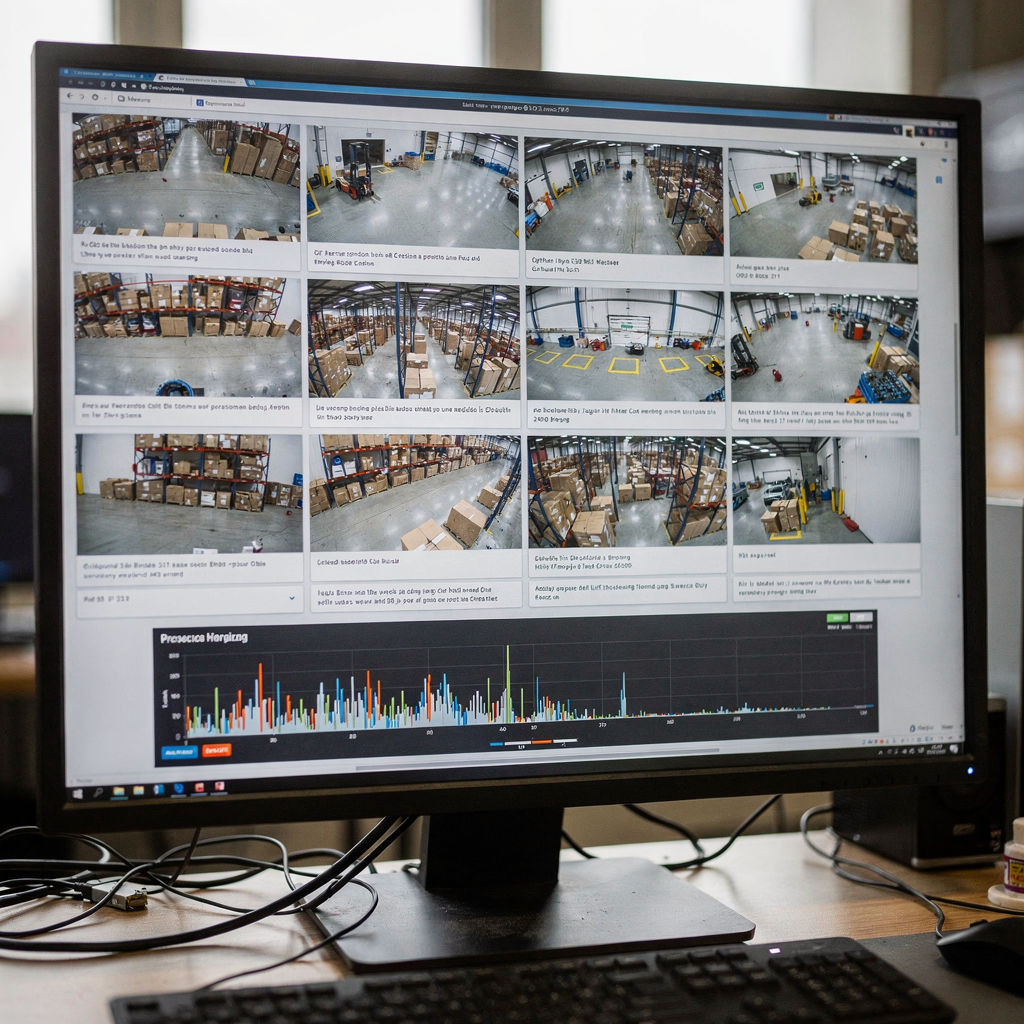
To support complex monitoring tasks we use both llm and targeted models like domain-specific classifiers. These models may be trained with paired images and texts to improve visual understanding. In our platform, the VP Agent exposes VMS data so the llm can reason over events and give actionable guidance. This makes the operator’s job easier. In summary, a language model in a multimodal pipeline gives contextual understanding and temporal clarity that raw sensors cannot provide.
AI vision within minutes?
With our no-code platform you can just focus on your data, we’ll do the rest
computer vision and dataset integration for real-time event detection
Computer vision supplies the raw signals that feed vlms. Traditional computer vision pipelines use convolutional neural networks for object recognition and for segmentation. Modern pipelines also use transformer-based computer vision models for richer feature extraction. In alarm contexts the goal is to detect relevant objects and behaviours, then pass that information to the language model for explanation and escalation. Real-time processing demands efficient models and careful system design.
Dataset curation matters. Label quality and class balance directly affect performance. For a control room, curate datasets that include normal behaviour and edge cases. Use annotated sequences that show what’s happening before and after events in a video. That helps both supervised models and zero-shot components generalise. Always include negative examples. For example, include people walking near a gate at shift change so models learn context and avoid false alarms.
Latency matters. Real-time systems balance accuracy and speed. One option is to run a lightweight detector on the edge and a larger model on local servers. The edge reports candidate events, and the on-prem vlm or AI agent verifies them. This hybrid approach reduces bandwidth and keeps video on-site. visionplatform.ai follows this pattern. We stream events via MQTT and webhooks while keeping video processing on-prem to satisfy compliance and reduce cloud dependencies.
When you design for real-time video analytics, consider model update cycles and training data pipelines. Fine-grained labels improve downstream analytics. Data-efficient training methods like few-shot tuning accelerate deployment. Also, use data augmentation to cover lighting and weather changes. For best results, include a dataset that mirrors the operational environment and predefine classes for critical events. That way, computer vision systems can detect and then hand off to the language model for richer situational outputs.
fine-tuning ai agent for precise alarm use case identification
An AI agent provides decision support and action suggestions. In our architecture the ai agent reasons over the VLM outputs, VMS metadata, procedures, and historical context. The agent can verify whether an alarm reflects a real incident. Then it recommends or executes predefine workflows. This controlled autonomy reduces operator workload while keeping audit trails and human oversight options.
Fine-tuning the model on site-specific data improves performance. Start with a base vlm or language model and then fine-tune it on labelled video and logs. Use examples of correct and false alarms. Use the same vocabulary your operators use. That shifts the agent from generic responses to domain-specific recommendations. We recommend a staged fine-tuning process: pretrain on broad paired images and texts, then fine-tune on domain-specific clips, and finally validate with operator-in-the-loop testing.
Performance metrics must drive decisions. Measure precision, recall and F1 score for the use case. Report false alarm rates and time-to-resolution. In an optical network study systems reduced false positives significantly and improved classification accuracy above 90% by combining textual logs and visual patterns as reported. Use confusion matrices to find systematic errors and then collect additional training data for those cases.
When you fine-tune an ai agent, monitor drift. Models may perform well initially and then degrade as the environment changes. Establish retraining schedules and feedback loops. Also log human overrides and use them as labelled examples for further training. The AI agent should not only suggest actions but also explain why. This descriptive and actionable output increases trust and acceptance. For teams that need forensic search there are effective internal tools; see our VP Agent Search feature and explore how natural language search ties to model outputs on our Forensic Search page forensic search.
AI vision within minutes?
With our no-code platform you can just focus on your data, we’ll do the rest
real-world deployment: how vlms revolutionize alarm management
Real-world deployments show measurable benefits. In healthcare and industrial settings these systems reduce operator load and improve situational awareness. For example, multimodal pipelines that combine visual and textual logs can verify alarms faster than manual workflows. The literature notes that augmenting interventions with AI tools can significantly enhance alarm response strategies as discussed by experts. That expert view supports on-site trials and stepwise rollouts.
vlms can interpret complex scenes and reduce false alarms. Our VP Agent Reasoning verifies and explains events by correlating video analytics, VLM descriptions, access control, and procedures. This reduces unnecessary escalations and gives operators a clear explanation of what was detected. For perimeter concerns, combine intrusion detection with the VLM’s visual understanding so security teams get context rather than raw triggers. See our intrusion detection use case for a practical example intrusion detection.
Quantitative gains vary by domain. One optical network project reported classification accuracy above 90% and faster fault localization when models used combined modalities in their evaluation. In other trials large language models aligned with human experts with correlation coefficients near 0.6 for thematic tasks as evaluated. These numbers support investment in on-prem vlms and agent frameworks. Real deployments also show reductions in mean time to decision and in operator cognitive load.
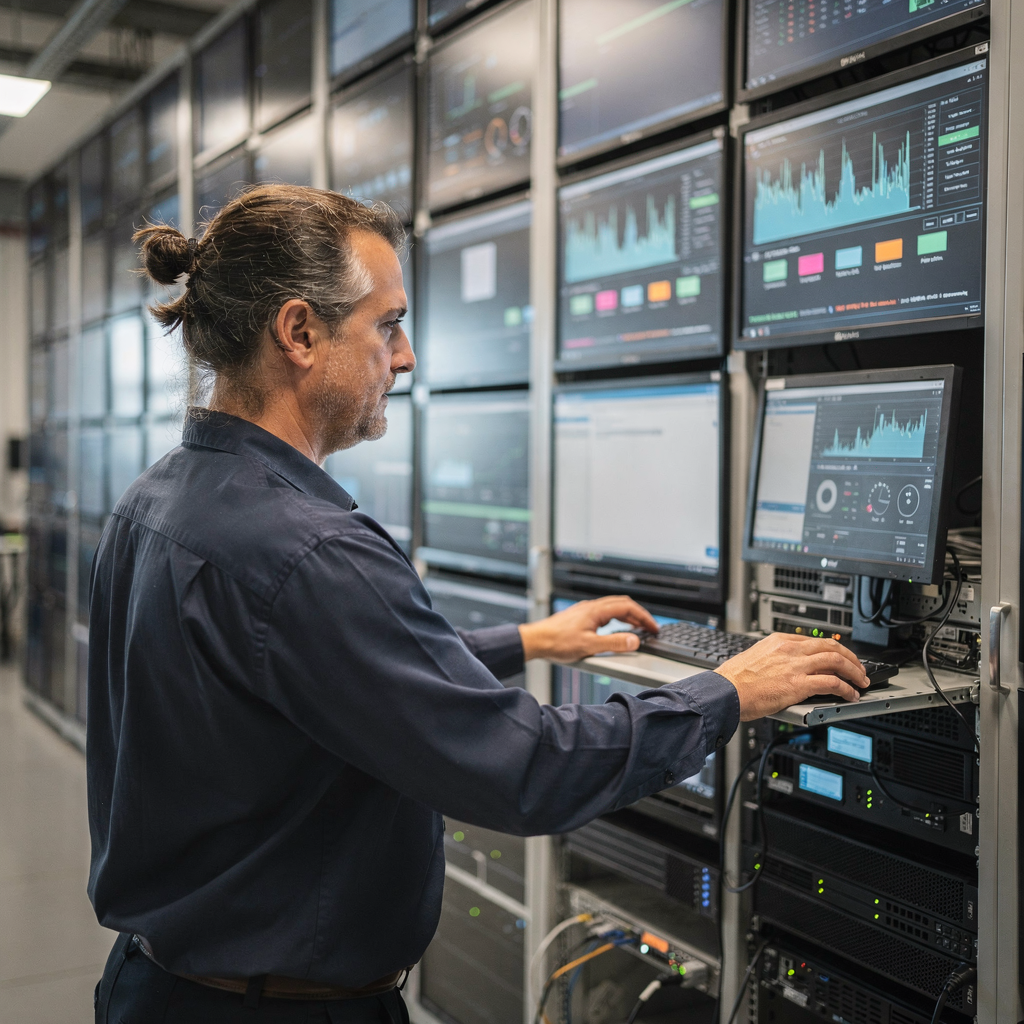
Operational benefits include faster decisions, fewer manual steps, and searchable historical context. For airport operations, combining people-detection and forensic search helps teams verify incidents and reduce alert fatigue; see our people detection and forensic search pages for details people detection and forensic search. When deployed correctly, vlms bring both visual understanding and textual summaries that operators can act on, which revolutionize how control rooms operate in practice.
ai and llm synergy with computer vision for next-generation alarm solutions
AI, llm and computer vision together create next-generation alarm solutions. The three modules collaborate: computer vision models find objects and behaviours, vlms map those findings to language, and AI agents recommend or take actions. This workflow supports both immediate verification and historical search. It also supports downstream tasks like incident report auto-generation and workflow triggering.
Emerging architectures mix on-device inference with on-prem servers. Large vision-language models grow in capability, and teams often use a smaller on-site vlm for privacy-sensitive applications. For systems that need zero-shot recognition, combine general pretrained models with domain-specific fine-tuning. This hybrid design balances flexibility and accuracy. The architecture can also include convolutional neural networks for low-latency detection and transformer-based encoders for rich visual understanding.
Research directions include improving contextual understanding and extending context windows for long incidents. Advanced vision-language techniques aim to understand both visual and textual signals over long durations. That helps to correctly identify complex incidents that span minutes. For security teams, the ability to search video history in natural language and to reason about correlated systems is game-changing for operations. Our VP Agent Search and Reasoning features show how to combine computer vision and natural language to give operators concise, actionable intelligence.
Future applications span smart facilities and critical-care environments. In hospitals, combined systems can flag patient distress by fusing camera cues with monitors. In industrial sites, they can predict equipment faults by combining visual inspections with sensor logs. AI models should remain auditable and controllable. We emphasise on-prem deployment, transparent training data, and human-in-the-loop controls so that AI supports safer, faster decisions across models and teams.
FAQ
What are vlms and how do they apply to alarms?
VLMS combine visual encoders and language models to turn video into words and actions. They help control rooms by providing context and reducing false alarms through richer explanations and searchable summaries.
How does a language model improve alarm interpretation?
A language model organises events into timelines and explains causality. It also uses prompts to summarise sequences so operators quickly understand what occurred and why.
Can computer vision work in real-time for alarm systems?
Yes, computer vision with efficient models can run in real-time on edge devices or on-prem servers. Hybrid setups let lightweight detectors flag events and then hand off to larger models for verification.
What is the role of dataset curation in deployment?
Good dataset curation ensures models learn site-specific patterns and avoid false alarms. You should include normal behaviours, edge cases, and negative examples to improve robustness.
How do you measure performance for alarm use cases?
Use precision, recall and F1 score, and also track false alarm rates and time-to-resolution. Confusion matrices help find specific failure modes so you can collect more training data for them.
What is fine-tuning and why is it needed?
Fine-tuning adjusts a pre-trained model to your environment and vocabulary. Fine-tuning the model on local recordings improves domain-specific accuracy and reduces irrelevant alerts.
Are there privacy or compliance benefits to on-prem vlms?
On-prem deployment keeps video and models within the customer boundary and supports EU AI Act concerns. It reduces cloud transfer risks and gives teams direct control over training data and storage.
How do AI agents help operators?
An AI agent verifies alarms, explains the evidence, and recommends or executes predefined workflows. This reduces manual steps and supports consistent, fast decision making.
What domains benefit most from these systems?
Airports, healthcare, industrial sites and critical infrastructure gain immediate benefits. For airports, specific features like people detection and forensic search speed up investigations and reduce operator fatigue.
How do I start a pilot with vlms?
Begin with a focused use case, collect representative training data, and deploy an on-prem pipeline that combines edge detection and a local vlm. Monitor metrics and iterate with operator feedback for reliable results.