Understanding vlms and vision language model Foundations
Vision-language models, often shortened to VLMS in conversations about AI, merge visual perception with textual reasoning. They differ from single-modal AI systems that handle only image classification or only text processing. A single camera feed processed by a computer vision algorithm yields labels or bounding boxes. By contrast, vlms create a joint representation that links images and tokens from a language stream. This lets an operator ask a question about an image and get a grounded answer. For control rooms this fusion is valuable. Operators need fast, contextual answers about camera footage, diagrams, or instrument panels. A vision-language model can translate a complex scene into an operational summary that supports rapid action.
At the foundation, a vlm uses a vision encoder to map pixels into features and a language encoder or decoder to handle tokens and syntax. These two pathways form a shared latent space. That shared space supports tasks such as visual question answering, report generation, and cross-modal retrieval. In critical operations, that means an AI can spot an anomaly and describe it in plain terms. It can also link a visual event to log entries or SOPs. For example, Visionplatform.ai turns existing CCTV into an operational sensor network and streams structured events so operators can act on detections without chasing raw video.
Control rooms benefit because vlms speed situational awareness and reduce cognitive load. They extract semantic cues from image and text inputs, then present concise outputs that fit operator workflows. Early research highlights the need for “cautious, evidence-based integration of vision-language foundation models into clinical and operational practice to ensure reliability and safety” [systematic review]. That caution echoes across utilities and emergency centers. Nevertheless, when tuned to site data, vlms can reduce false positives and improve the relevance of alerts. Transitioning from alarms to actionable events improves uptime and decreases response time. Finally, vlms complement existing analytics by enabling natural-language queries and automated summaries of what cameras record, helping teams maintain situational control and speed decisions.
Integrating llms and language model with computer vision and ai
LLMS bring powerful textual reasoning to visual inputs. A large language model can accept a textual description derived from image features and expand it into an operational sentence or checklist. In practical pipelines, a vision encoder converts video frames into mid-level features. Then an llm interprets those features as tokens or descriptors. Together, they produce human-readable explanations and suggested actions. Recent studies show that combining LLMs with physics-informed simulations improved grid control predictions by roughly 15% while cutting operator response time by up to 20% [NREL].
Common AI pipelines that merge vision and language follow a modular design. First, a camera feeds image frames into a pre-processing stage. Next, a vision model or vision encoder performs detection and segmentation. Then a language model ingests the detection metadata, timestamps, and any operator queries. Finally, the system outputs a structured report or an alert. This pattern supports both automated reporting and natural language question answering. For complex scenes, a pipeline can also call a specialty module for semantic segmentation or a fault classifier before the llm composes the final message.

In control scenarios, natural language prompts steer the system. Operators might type a clarifying language instruction like “summarize events in camera 12 since 14:00” or speak a command: “highlight vehicles that crossed the perimeter.” The AI converts the prompt into a structured query against vision-language data and returns time-coded outputs. This approach supports visual question answering at scale and reduces routine work. Integrations often include secure message buses and MQTT streams so events feed dashboards and OT systems. Visionplatform.ai, for instance, streams detections and events to BI and SCADA systems so teams can use camera data as sensors rather than as siloed recordings. Carefully designed prompts and prompt templates help maintain reliability, and fine-tuning on site-specific dataset examples improves relevance and reduces hallucination. Combined llms and vlms create a flexible interface that improves operator effectiveness and supports trustworthy automation.
AI vision within minutes?
With our no-code platform you can just focus on your data, we’ll do the rest
Designing Architecture for robotics Control with vlm and vision-language-action
Designing robust robotic systems requires decisions about architecture. Two common patterns are modular and monolithic. Modular architecture separates perception, planning, and control into distinct services. Monolithic architecture tightly couples vision and action in a single model. In control rooms and industrial settings, modular setups often win because they allow independent validation and safer updates. A modular design lets teams swap a vision encoder or a local detector without retraining the entire model. That matches enterprise needs for on-prem strategies and GDPR/EU AI Act compliance, where data control and auditable logs matter.
The vision-language-action workflow connects perception to motor commands. First, a camera or sensor supplies an input image. Next, a vlm processes the frame and generates semantic descriptors. Then a planner converts descriptors into action tokens, and an action expert or controller converts those tokens into actuator commands. This chain supports continuous action when the controller maps action tokens to motion primitives. The vision-language-action model concept allows an llm or policy network to reason about goals and constraints while a lower-level controller enforces safety. That split improves interpretability and supports staging for approvals in control rooms, especially when commands affect critical infrastructure.
Integration points matter. Perception modules should publish structured outputs—bounding boxes, semantic labels, and confidence scores. Controllers subscribe to those outputs and to state telemetry. The architecture needs clear interfaces for tokenized actions and for feedback loops that confirm execution. For humanoid robots or manipulators, motor control layers handle timing and inverse kinematics while the higher-level model proposes goals. For many deployments, teams use pre-trained vlms to speed development, then fine-tune on site footage. Models like RT-2 show how embodied AI benefits from pre-training on diverse image and text pairs. When designing for robotic control, prioritize deterministic behavior in the control path, and keep learning-based components in advisory roles or in a supervised testbed before live rollout.
Building multimodal dataset and benchmark Methods for evaluating vision language models
Training and evaluating vlms requires robust multimodal dataset resources. Public datasets provide images and annotations that pair visual elements with text. For control-room tasks, teams build custom dataset splits that reflect camera angles, lighting, and operational anomalies. Key sources include annotated CCTV clips, sensor logs, and operator-written incident reports. Combining these creates a dataset that captures both images and language used in the data domain. Pre-training on broad corpora helps generalization, but fine-tuning on curated, site-specific dataset samples yields the best operational relevance.
Benchmarks measure capability across vision-language tasks. Standard metrics include accuracy for visual question answering and F1 for detection-based reports. Additional measures look at latency, false alarm rate, and time-to-action in simulation. Researchers also evaluate semantic alignment and grounding using retrieval metrics and by scoring generated reports against human-written summaries. A recent survey of state-of-the-art models reports visual-textual reasoning accuracies above 85% for top models on complex multimodal tasks [CVPR survey]. Such benchmarks guide deployment choices.
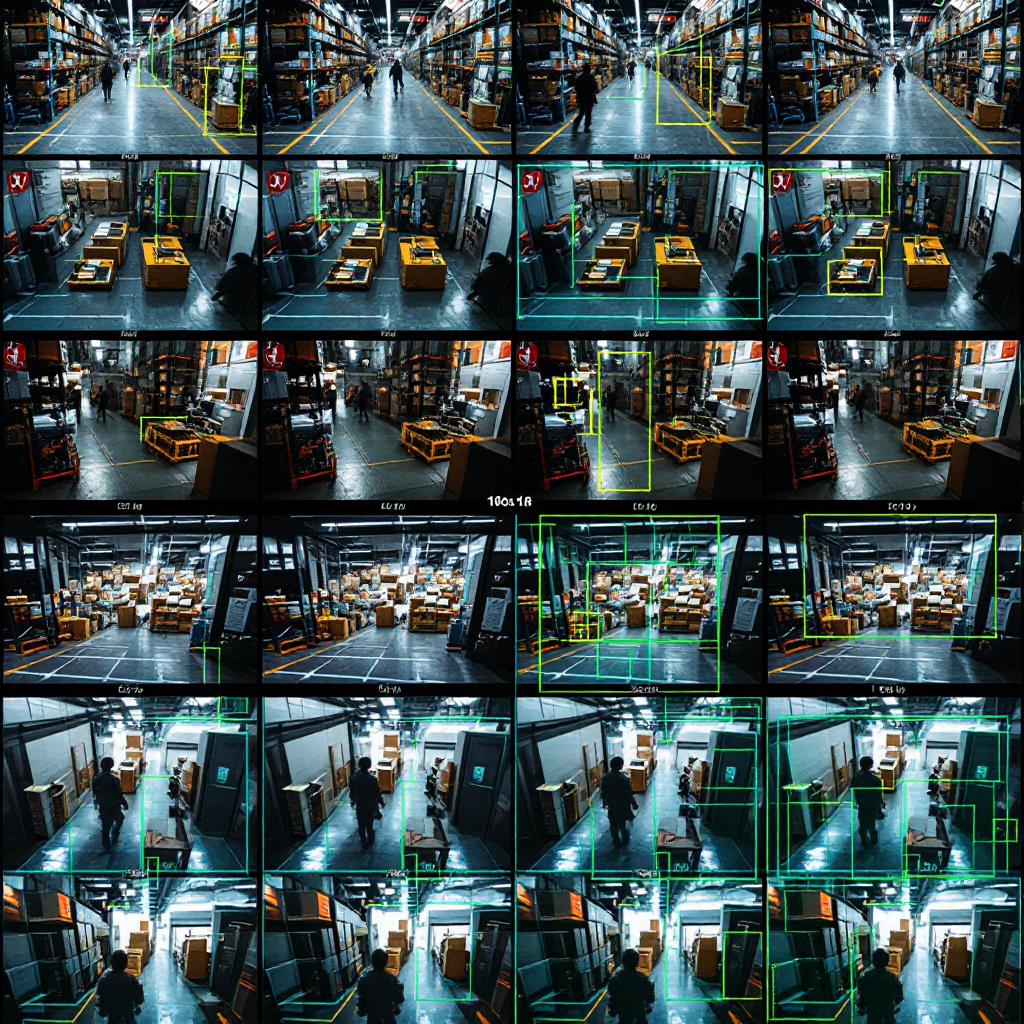
When evaluating vision language models in control-room workflows, follow procedures that mimic real operations. First, test in a simulated environment with replayed video and synthetic anomalies. Second, run a shadow deployment where the AI produces alerts but operators remain primary. Third, quantify performance with both domain metrics and human factors measures such as cognitive load and trust. Include bench checks of pre-trained vlms and measure how fine-tuning on site footage reduces false positives. Also, include a benchmark for visual question answering and automated report generation. For safety and traceability, log the model input and output for each alert so teams can audit decisions. Finally, consider how to measure generalization when cameras or lighting change, and include periodic revalidation in the lifecycle plan.
AI vision within minutes?
With our no-code platform you can just focus on your data, we’ll do the rest
Deploying open-source models actually in real-world control rooms for robot control
Open-source toolkits let teams experiment with vlms without vendor lock-in. Toolkits such as OpenVINO and MMF provide deployment-ready primitives and often support edge inference. Using open-source models helps organizations keep data on-prem and meet EU AI Act concerns while improving customization. When teams deploy open-source models they often adapt models to local datasets, retrain classes, or integrate detection outputs into business systems. Visionplatform.ai exemplifies this approach by offering flexible model strategies that let customers use their VMS footage and keep training local.
Real-world case studies show how robots and agents benefit from vision-language models. For instance, industrial pick-and-place robots use a vlm to interpret scene context and a planner to pick correct parts. Emergency response robots combine camera feeds and report text to triage incidents faster. In airports, vision-based detection paired with operational rules helps with people-counting and perimeter monitoring; readers can explore examples such as our people detection and PPE detection pages to see how camera analytics move from alarms to operations people detection in airports and PPE detection in airports. These deployments show the value of streaming structured events instead of siloed alerts.
Deployment challenges include latency, robustness, and model drift. To mitigate these, use edge GPUs for low-latency inference, include health checks, and schedule regular fine-tuning cycles. Also, verify that the model outputs useful structured output so downstream robotic controllers can act deterministically. For robotic control, incorporate a hard safety layer that can veto commands that risk damage. Integrations should use secure messaging like MQTT and provide audit logs. Finally, some teams use open-source models as a baseline and then move to hybrid models for mission-critical duties. Practical deployments also consider operational metrics like false alarm reduction and overall cost of ownership.
Charting future research and vla model Innovations in vision-language-action Systems
Future research must close gaps in robustness and interpretability for vla systems. Current models sometimes produce fluent outputs that lack grounding in real sensor data. That risk is unacceptable in many control rooms. Researchers call for methods that fuse physics-informed models with VLMS to anchor predictions in the physical world. For example, combining simulators with large language model reasoning improves reliability in grid control and other operational settings [eGridGPT]. Work must also improve generalization across camera views and changing lighting conditions.
Emerging trends include hybrid architectures that mix transformer-based perception with symbolic planners, and the use of action tokens to represent discrete motor intents. These action and state tokens help align a language model’s recommended steps with real actuator commands. Research into continuous action spaces and continuous action policies will enable smoother motor control. At the same time, teams must address safety and regulatory needs by building auditable logs and explainable outputs.
We expect more work on pre-training that combines images and language with temporal signals from sensors. That includes pre-training and pre-training on video clips with paired transcripts, so models learn how events unfold over time. Vision-language-action research will also explore how to make vla model outputs certifiable for critical use. For those developing practical systems, focus areas include prompt engineering for low-latency control, robust fine-tuning on edge dataset collections, and modular pipelines that let an action expert validate commands. Finally, as the field progresses, research should prioritize reproducibility, standard benchmarks for evaluating vision language models, and human-in-the-loop workflows so operators stay firmly in control.
FAQ
What are vlms and how do they differ from traditional AI models?
VLMS combine visual processing and textual reasoning in a single workflow. Traditional AI models typically focus on one modality, for example, either computer vision or natural language processing, while vlms handle both image and text inputs.
Can llms work with camera feeds in a control room?
Yes. LLMS can interpret structured outputs from a vision encoder and compose human-readable summaries or suggested actions. In practice, a pipeline converts camera frames into descriptors that the llm then expands into reports or responses.
How do vlms help with robotic control?
VLMS produce semantic descriptors that planners convert to actions. These descriptors reduce ambiguity in commands and let controllers map recommendations to actuation primitives for robot control.
What benchmarks should we use for evaluating vision-language models?
Use a mix of standard visual-question-answering metrics and operational metrics such as false alarm rate, latency, and time-to-action. You should also test in shadow deployments to measure real-world behavior under production-like conditions.
Which open-source models or toolkits are recommended for deployment?
Toolkits such as OpenVINO and MMF are common starting points, and many teams adapt open-source models to local dataset collections. Open-source models help keep data on-prem and allow tighter control over retraining and compliance.
How do you build a dataset for control-room vlms?
Create a dataset that pairs images and operational text, such as incident reports and SOPs. Include edge cases, varying lighting, and anomaly types so models can learn robust patterns for visual-language tasks.
How does Visionplatform.ai fit into a vlm pipeline?
Visionplatform.ai converts existing CCTV into an operational sensor network and streams structured events to BI and OT systems. That approach turns video into usable inputs for vlms and for downstream robotic systems.
What safety measures are essential for vision-language-action systems?
Include a hard safety layer that can veto unsafe commands, maintain audit logs of model input and output, and run models in shadow mode before granting them control privileges. Regular fine-tuning and validation on site-specific dataset samples also reduce risk.
Are there proven accuracy gains from combining LLMs with physics models?
Yes. For example, NREL reported improved grid control predictions by about 15% when integrating LLM reasoning with physics-informed simulations, and they noted up to a 20% reduction in operator response time [NREL].
How do I start evaluating vision language models for my control room?
Begin with a shadow deployment using replayed video and curated anomalies. Measure detection precision, latency, and operational impact. Then iterate with fine-tuning on local dataset samples and integrate outputs into dashboards or MQTT streams for operators to review.