port Monitoring with Satellite Imagery and Satellite Images
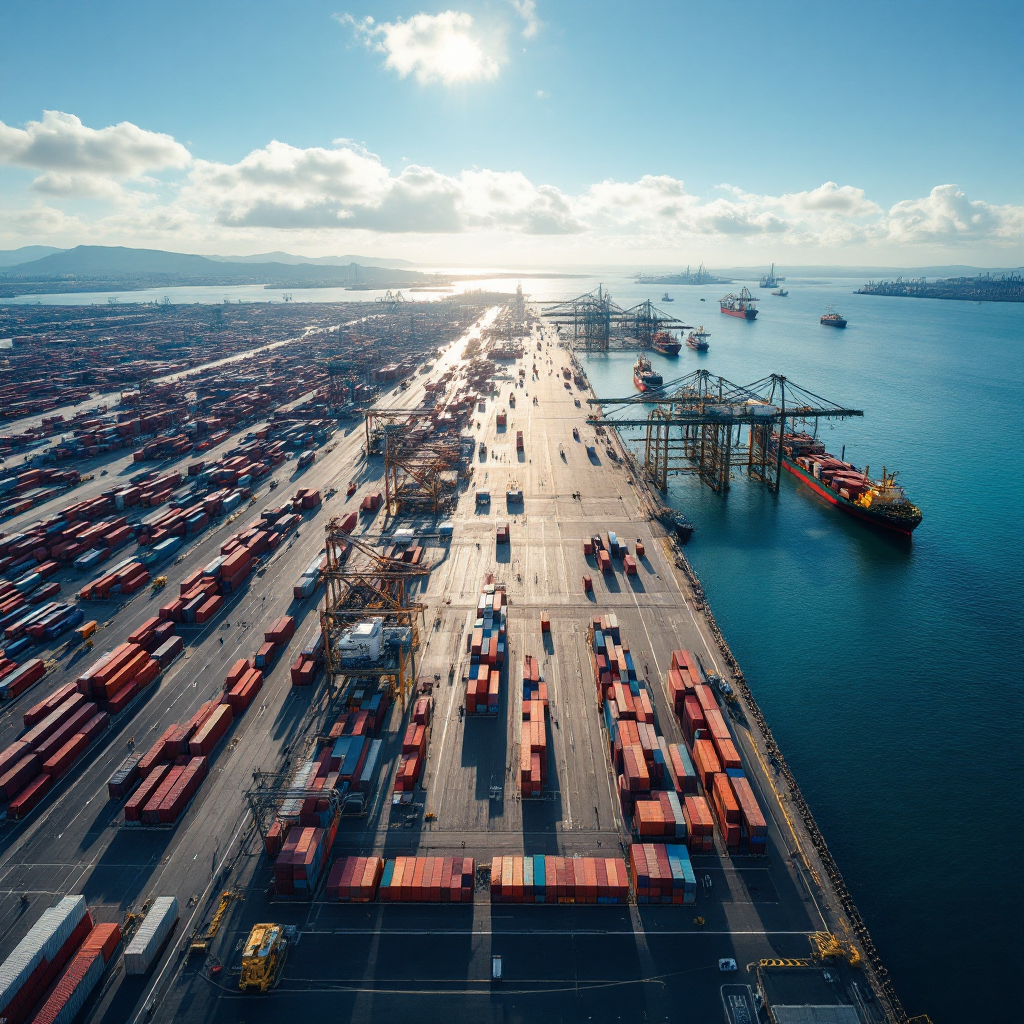
First, ports often depend on high-resolution satellite imagery to get broad situational awareness. Also, satellite images give a bird’s-eye view of container yards, quay cranes, vessel traffic and intermodal links. Furthermore, satellite imagery complements cameras on the ground, because satellites can cover large areas and provide periodic updates. For example, operators can compare a recent orbit to yesterday’s pass to spot unexpected stacking patterns or environmental changes. In addition, satellites are used to track ship arrivals and berth allocations, and to help port authorities plan tug and pilot resources. The Port of Rotterdam uses layers of remote sensing and local feeds to manage berth scheduling and cargo flow; this approach supports global trade and local planners alike.
Next, satellite images support environmental monitoring. Also, they flag oil sheens, wake patterns, and shoreline change. Therefore, satellite feeds become inputs for image analytics pipelines that feed AI agents. As a result, control rooms can combine these feeds with VMS cameras and drones. visionplatform.ai integrates such inputs to turn detections into context, and to reduce manual searches across video history.
Additionally, coverage and revisit rates matter. For major shipping lanes, constellation revisit times are improving, and satellites now revisit key lanes multiple times per day. For instance, large multisensor constellations support frequent passes that reduce blind spots and improve temporal resolution. Moreover, research shows that large pretrained datasets improve model robustness for variable scenes in ports; see research on zero-shot robotic perception for details Vision-Language Representations for Zero-Shot Robotic Perception. Also, deployment teams use satellite snapshots to plan crane placements, yard reshuffles, and to aid quay-side logistics. Cameras capture local detail, while satellite images add scale, and together they reduce delays on arriving and exiting berths. Finally, satellites are used to monitor weather-driven closures and to inform predictive maintenance windows for quay equipment, which helps optimise crane cycles and reduce idle time.
computer vision and dataset Preparation for Port Scenarios
First, creating a robust dataset is essential when you use computer vision for port tasks. Also, teams combine camera feeds, drone footage and optical sensors into a single multimodal dataset to capture both detail and context. In addition, labels must include cargo types, container IDs, vehicle classes and safety conditions. Therefore, labelling standards specify bounding boxes, segmentation masks and textual annotations so a language model can link visual observations to natural language. vision language models help bridge images and text, and they improve language understanding about the port scene.
Next, data augmentation reduces sensitivity to weather and occlusions. Also, teams simulate glare, motion blur and partial occlusion to teach models to identify patterns even in cluttered terminals. Furthermore, labellers apply consistent taxonomies so models can classify container types and risky placements. Public and proprietary dataset sources are used to bootstrap training. For example, some projects use open benchmarks and then augment them with site-specific clips to reflect local operations. Also, using a dataset that mixes image and video yields better temporal reasoning for moving cranes and vehicles.
Additionally, best practices call for cross-modal alignment. Also, when images carry textual metadata such as timestamps and berth IDs, the team links those fields to visual frames. Thus, computer vision models learn not only to localise objects, but also to map them to operational labels that a decision-maker can consume. Using a computer vision approach that supports natural language search makes video searchable and actionable. Finally, crowdsourced labels and automated heuristics speed annotation, while careful quality checks and review cycles keep label drift under control. For a practical example of searchable video and forensic search, see visionplatform.ai’s forensic-search capabilities forensic search in airports. This helps teams iterate faster and tune the dataset to actual port environments.
AI vision within minutes?
With our no-code platform you can just focus on your data, we’ll do the rest
ai and machine learning Models for Cargo Handling and Security
First, AI and machine learning pipelines detect misplaced containers, forbidden items and abnormal yard patterns. Also, object detection models run on camera feeds to flag anomalies. In addition, teams layer rule-based checks with neural networks to reduce false positives. vision models trained on multimodal data can highlight a suspicious crate and provide a textual explanation. For port security, combining detections with procedure lookup helps operators decide next steps quickly.
Next, zero-shot and few-shot learning approaches let models adapt to new cargo types without massive retraining. Also, models like recent VLMs demonstrate the ability to generalise from limited samples. Furthermore, research reports up to a 25% boost in detection accuracy when pretrained vision-language models are used for object recognition in complex settings zero-shot robotic perception. Consequently, ports can deploy smarter AI faster. The pipeline typically integrates anomaly detection, container tracking, and access control signals, which helps port operators reduce manual checks and speed throughput.
Additionally, AI algorithms support port safety by spotting safety risks such as improper PPE, vehicle encroachment, and unauthorized areas. For PPE detection examples in similar domains, see visionplatform.ai’s PPE detection page PPE detection in airports. Also, neural networks assist with facial recognition concerns and access control, but privacy and compliance must guide those efforts. Data-driven policies balance vigilance and rights. Finally, automation is used to route alarms to human operators, and ai-powered agents can propose corrective actions to reduce human intervention. This approach shifts control rooms from alert overload to reasoned responses, and it increases operational resilience across the supply chain.
artificial intelligence for Real-Time Inference and optimise Efficiency
First, meeting latency requirements demands careful inference planning. Also, teams choose between edge, on-premise and cloud inference to match security, cost and speed needs. For port control rooms that must keep video on-site, on-premise GPU servers or edge devices such as NVIDIA Jetson provide low-latency inference. visionplatform.ai supports such deployments and keeps data in the facility to meet EU AI Act constraints. Furthermore, balancing model complexity and throughput determines compute budgets and hardware choices.
Next, AI-driven scheduling optimises crane cycles and yard moves. Also, predictive maintenance reduces downtime for cranes and quay cranes by flagging wear patterns before failure. As a result, many pilots report cutting idle time by up to 20% when schedules and maintenance windows are optimised with AI agents. In addition, throughput gains come from aligning berth allocation with real-time yard topology. Teams tune the model to local rhythms and to external factors such as tidal windows.
Also, the choice of types of AI affects cost. For example, small transformer-based models can run on GPU servers for batch analytics, while lightweight models run at the edge for real-time detection. Therefore, the decision-maker must weigh computational cost against latency. Additionally, inference pipelines include batching policies, model quantisation and pruning to reduce GPU usage. Finally, ports that adopt ai-driven orchestration can simulate scheduling scenarios to minimise conflicts and to improve berth utilisation, which helps ports meet demand during busy seasons.
AI vision within minutes?
With our no-code platform you can just focus on your data, we’ll do the rest
classify Cargo Types with Checkpoint and Benchmark Strategies
First, checkpointing practices help teams iterate safely. Also, storing model checkpoints after each training epoch lets engineers revert to a known-good state when a new update degrades model performance. Furthermore, continuous model updates rely on a steady stream of labelled port imagery and periodic evaluation against a held-out benchmark. The benchmark reports precision, recall and F1 scores for key classes so teams can measure progress objectively. In addition, teams log batch size, learning rate and hyperparameters alongside checkpoints to aid reproducibility.
Next, best practices define retraining intervals based on drift detection. Also, if a port changes container types or a new crane model arrives, the team will tune the model and update checkpoints. Therefore, benchmark runs validate that a model can classify new containers and detect misplacements without harming baseline performance. For reproducible work, some groups share code and model snapshots on github while keeping sensitive video private.
Additionally, evaluating model performance needs clarity. Also, one should measure both model performance and operational impact. Consequently, monitoring confusion matrices helps engineers see which container classes are often mistaken. Also, VLMS and LLMs sometimes help by turning visual outputs into text summaries; this supports human review and faster retraining. Finally, the right cadence for retraining depends on data volume and the speed of operational change. Regular checkpointing and scheduled benchmark evaluations keep updates safe and ensure better performance over time.
case study of Vision-Language Models on Specific Tasks in Complex Environments
First, a practical case study shows autonomous ship navigation and collision avoidance using vision-language models in mixed-traffic settings. Also, combining radar, AIS and visual feeds allows a VLM to provide short text explanations of collision risk and to suggest evasive maneuvers. In pilots, AI support reduced near-miss incidents by about 30% in deployments that integrated computer vision and decision rules systematic review on human-AI interaction in autonomous ships. Furthermore, ports that integrate these systems report clearer situational awareness for pilots and tug teams. This illustrates the potential of vision for maritime safety when models are grounded in operational rules and tested under stress.
Next, a second case study covers robotic cargo inspection in low-visibility, high-occlusion zones. Also, robots with thermal cameras and depth sensors scanned container blocks at night, and a VLM produced textual anomaly descriptions for human inspectors. Additionally, teams used sensor fusion to compensate for occlusions, and the robotic stack could flag containers that required manual checks. As a result, the inspection throughput increased and fewer containers were missed during audits.
Also, lessons learned include the need to tune the model to port environments and to design systems that minimise human intervention. Moreover, integrating AI agents with existing VMS and procedures helps operators accept suggestions and act faster. To summarise, vision-language models and vlm approaches can scale across terminals, but they need robust datasets, careful benchmarking, and clear operational boundaries. For a view on broader technology trends, see Accenture’s technology vision Technology Vision 2025. Finally, research on price prediction for freight shows how language models can support logistics and supply chain decisions fine-tuning LLMs for price prediction.
FAQ
What is the role of satellite imagery in modern port monitoring?
Satellite imagery provides wide-area situational awareness and complements local camera feeds. It helps port authorities monitor vessel positions, environmental changes and yard layouts across large areas.
How do computer vision datasets for ports differ from generic datasets?
Port datasets mix camera feeds, drone footage and optical sensors and include annotations for cargo types and terminal equipment. They also require augmentation to handle occlusions, glare and vessel motion specific to port environments.
Can vision-language models improve cargo handling accuracy?
Yes, vision-language models can link visual detections to textual labels and procedures, which helps reduce misplacements and speeds inspections. They also support few-shot adaptation to new container types.
Where should inference run for port applications—edge or cloud?
Inference location depends on latency, cost and compliance. Edge or on-premise inference keeps video in-site and reduces latency, while cloud can offer scale but may raise data governance concerns.
How often should I checkpoint and retrain port models?
Teams often checkpoint every training epoch and retrain on drift detection or scheduled intervals. The right cadence depends on operational change and the volume of new labelled data.
What are common benchmarks for cargo classification?
Standard metrics include precision, recall and F1 score for each class, plus confusion matrices and operational KPIs. Benchmarks should reflect both visual accuracy and real-world impact on throughput.
Are there examples of vision-language models used for ship safety?
Yes, pilots integrating vision outputs with language explanations have helped reduce near-miss incidents and supported collision avoidance. See academic reviews for reported safety improvements here.
How do port teams handle occlusions in crowded terminals?
They use multimodal sensors, simulated augmentations and sensor fusion to compensate for occlusions. Drone footage and thermal imaging also help inspect occluded areas.
What integration points exist for AI in control rooms?
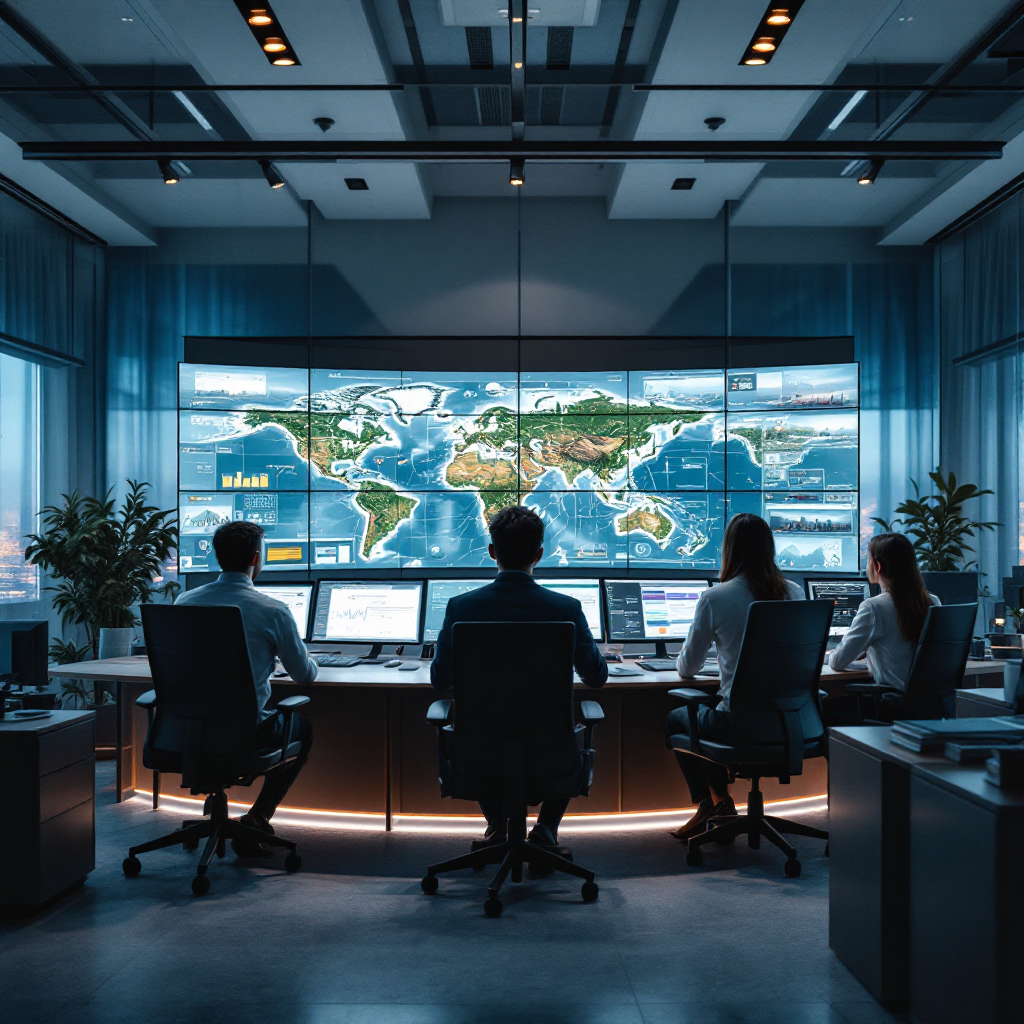
AI integrates with VMS, alarms, procedures and databases via APIs and agents to provide searchable video, recommendations and automated actions. visionplatform.ai, for example, exposes video and events for AI agents to reason over.
How does AI affect long-term port efficiency?
AI can optimise scheduling, reduce idle time and enable predictive maintenance, leading to measurable gains in throughput and lower operational costs. Over time, these efficiencies support more resilient global trade.