ai agent in the control room – Definition and Benefits
An AI AGENT is a software component that senses, reasons, and acts in an environment. In a modern control room, an ai agent takes telemetry, video, logs, and rules. Then it evaluates that data and proposes or executes steps. VP Agent fits this role as a control room AI that focuses on operational oversight, not only on raw detections. As Relevance AI explains, “VP of Sales AI Agents analyze pipeline data, provide real-time insights, and handle complex forecasting to help sales leaders focus on strategic growth” https://relevanceai.com/agent-templates-roles/vp-of-sales-ai-agents-1. This show helps clarify how a VP Agent can act as a virtual operations leader.
Think of a control room as the central nerve center for operations. It aggregates cameras, sensors, VMS, access control, and dashboards. Control room operators monitor events, manage incidents, and escalate when necessary. An ai agent for control room shifts repetitive analytical load from humans to software. It runs continuous checks, reduces manual control, and helps teams make informed decisions quickly. In addition, VP Agent Reasoning verifies alarms and provides contextual explanations. This reduces cognitive load and reduces false positives.
Key benefits include real-time situational awareness, centralized oversight, and faster decision cycles. The agent provides verified context about detections, so operators see what matters. Visionplatform.ai turns cameras and a VMS into AI-assisted systems that explain events, not just flag them. The platform supports an on-prem vision language model so video stays inside the customer environment. Operators gain search and reasoning, and teams gain operational cost savings and efficient operations. For readers looking for examples of camera-based detection applied to people and crowds, see the people detection and crowd analytics resources for airports such as People Detection in Airports https://visionplatform.ai/people-detection-in-airports/.
Finally, VP Agent integrates with workflows and role-based permissions to ensure the right user sees the right data. It pre-fills incident reports and links to access logs for quick context. Thus, an ai control room can augment human operators while retaining supervision and exception handling. The result is more consistent outcomes, fewer missed signals, and measurable operations benefit across sites.
control room automation powered by ai – Streamlining Alerts and Actions
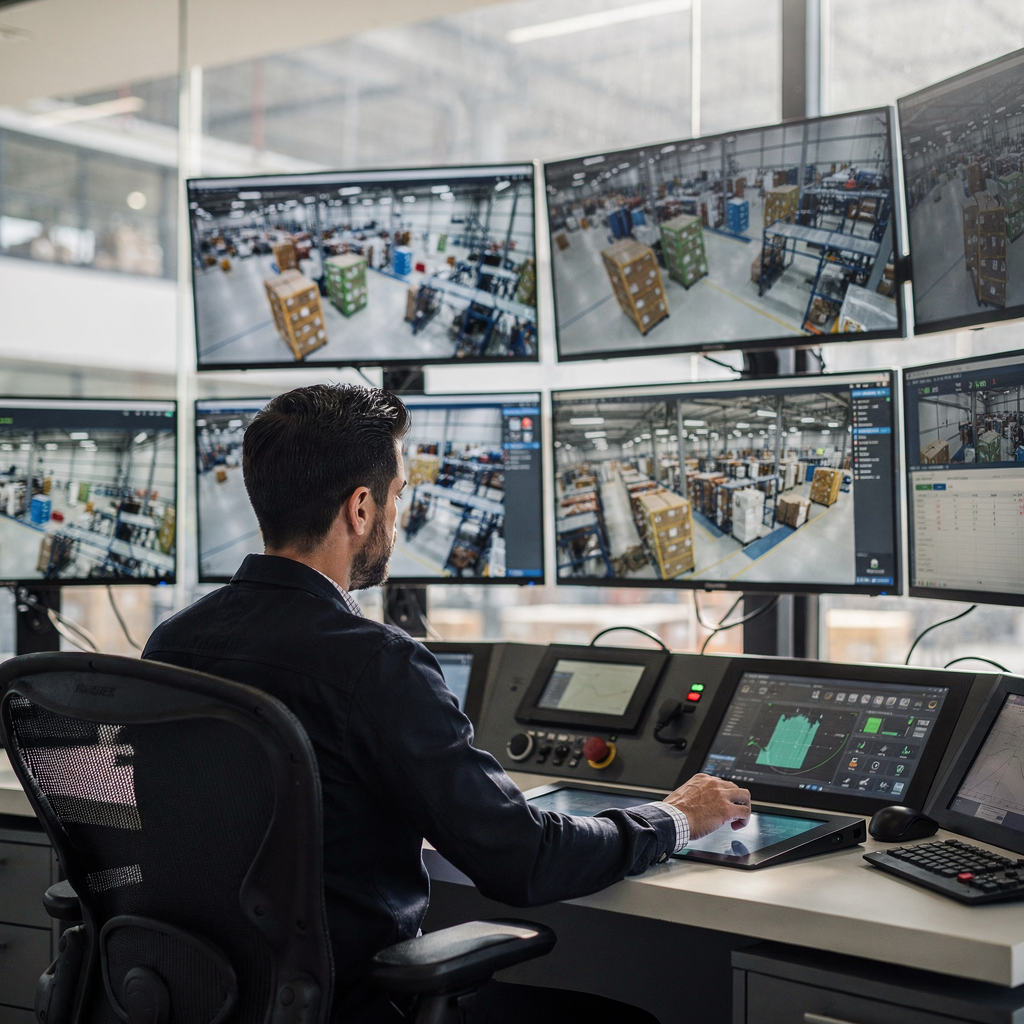
Control room automation powered by AI transforms how teams handle alerts and alarms. Instead of flooding operators with raw detections, an ai-powered control plane verifies events, filters noise, and recommends corrective actions. VP Agent Actions supports guided responses that range from suggested steps to fully automated workstreams. For routine tasks, the system can automate ticket creation, notify guards, and pre-fill incident reports. The VP Agent suite enables this by exposing VMS data as a structured datasource so AI agents verify alarms and then act.
First, the platform reduces alert fatigue. An agent correlates video and access control events, checks historical context, and decides whether an alert needs escalation. Second, operators gain situational awareness with a clear explanation of why an alarm matters. Third, the system saves time: organizations report up to a 25% reduction in time spent on data analysis tasks when AI agents handle verification and simple actions https://relevanceai.com/agent-templates-roles/vp-of-sales-ai-agents-1. The result is fewer interruptions and faster resolution.
VP Agent Actions also reduces false positives by correlating multiple inputs. It uses the on-prem vision language model to turn video into human-readable descriptions and then cross-checks access logs and other evidence. When an alert matches a low-risk pattern, the agent can close the alarm with justification or route it for human review. This makes the control system more resilient while keeping humans in the loop for high-risk events. A working example is forensic search in airports where operators combine video and access logs to verify incidents quickly; see Forensic Search in Airports https://visionplatform.ai/forensic-search-in-airports/.
Finally, the architecture supports legacy systems and new sensors alike. The agent captures events via MQTT, webhooks, and APIs, and then it triggers role-based workflows that reflect local policy. This enables automated corrective actions while preserving audit trails and a clear chain of custody for regulatory review.
AI vision within minutes?
With our no-code platform you can just focus on your data, we’ll do the rest
analytics and predictive maintenance for full control – Data-Driven Insights
Analytics form the backbone of VP Agent’s ability to deliver full control. The agent ingests video metadata, sensor readings, and system logs. Then it runs trend detection, anomaly detection, and forecasting. Because the agent reasons over multiple signals, teams detect anomalies earlier and reduce downtime. Companies that deploy AI agents report improved forecast accuracy and faster decision-making. For example, some deployments show up to a 30% increase in forecasting accuracy for pipeline and operational metrics https://relevanceai.com/agent-templates-roles/vp-of-sales-ai-agents-1.
Predictive maintenance is a key use case. VP Agent predicts failures by spotting drift in sensor patterns, abnormal motion in cameras, or repeated door faults. The agent then recommends or triggers maintenance workflows to prevent downtime. This reduces operational cost and accelerates mean time to repair. The system also shortens investigation time by surfacing the most relevant video clips and by enabling natural language search. VP Agent Search supports forensic search so teams find the right footage without timestamps or camera IDs.
To keep the system reliable, vp agent reasoning verifies signals before action. It correlates the vision language model output with access logs and device telemetry to confirm an incident. This reduces false positives and helps audit outcomes. A well-architected control plane also keeps models and video on-prem to limit data exposure and to comply with regulations such as the EU AI Act. visionplatform.ai keeps video and reasoning inside the customer environment to support this approach.
Finally, analytics enable continuous improvement. Teams can evaluate the impact of automated responses, adjust thresholds, and retrain ai models with local data. As a result, the platform supports use cases across security and operations, from slip-trip-fall detection to perimeter breach alerts and to vehicle classification. This creates a feedback loop that improves accuracy and yields measurable operations benefit over time. For more on related detection capabilities, see Unauthorized Access Detection in Airports https://visionplatform.ai/unauthorized-access-detection-in-airports/.
workflow to automate enterprise ai – Enhancing Efficiency at Scale
Before automation, control room workflows often follow rigid, manual stages. An operator receives an alarm. Then they pull up video, check procedures, consult access logs, and either escalate or close the event. Each step adds delay and risk. After automation, an ai agent can automate hand-offs, route approvals, and pre-fill incident records. The result is faster outcomes and fewer manual errors. VP Agent Actions automates many of these steps while keeping humans in the loop when policy requires supervision and exception handling.
A typical automated workflow looks like this: detect, verify, classify, recommend, and act. The agent first verifies an alarm using contextual data. Next, it recommends an action or triggers a role-based approval. Then it logs the decision for audit and compliance. Role-based access and role-based policies ensure only authorized staff can approve sensitive steps. This preserves security while reducing administrative burden.
Enterprises deploying these workflows also manage agents centrally. They can update policies, manage agents, and scale AI across sites. The platform supports deployment to edge devices or servers so teams can deploy ai where it makes sense. It also supports legacy systems by mapping new automation steps to existing control loops. An audit agent records who did what and when, enabling forensic search and quick regulatory review. These features help compliance teams satisfy internal and external auditors.
Operationally, automation reduces investigation time and operational cost. It accelerates incident closure and reduces repetitive routine tasks. Generative AI can draft incident narratives while VP Agent pre-fills incident reports with evidence. Humans then review and finalize the report. This hybrid pattern augments human judgment and speeds throughput. Overall, enterprise ai helps organizations scale monitoring without linear increases in headcount, and it reduces delays that harm service levels.
AI vision within minutes?
With our no-code platform you can just focus on your data, we’ll do the rest
agentic ai and agents at scale for grid operator tasks – Autonomous Operations
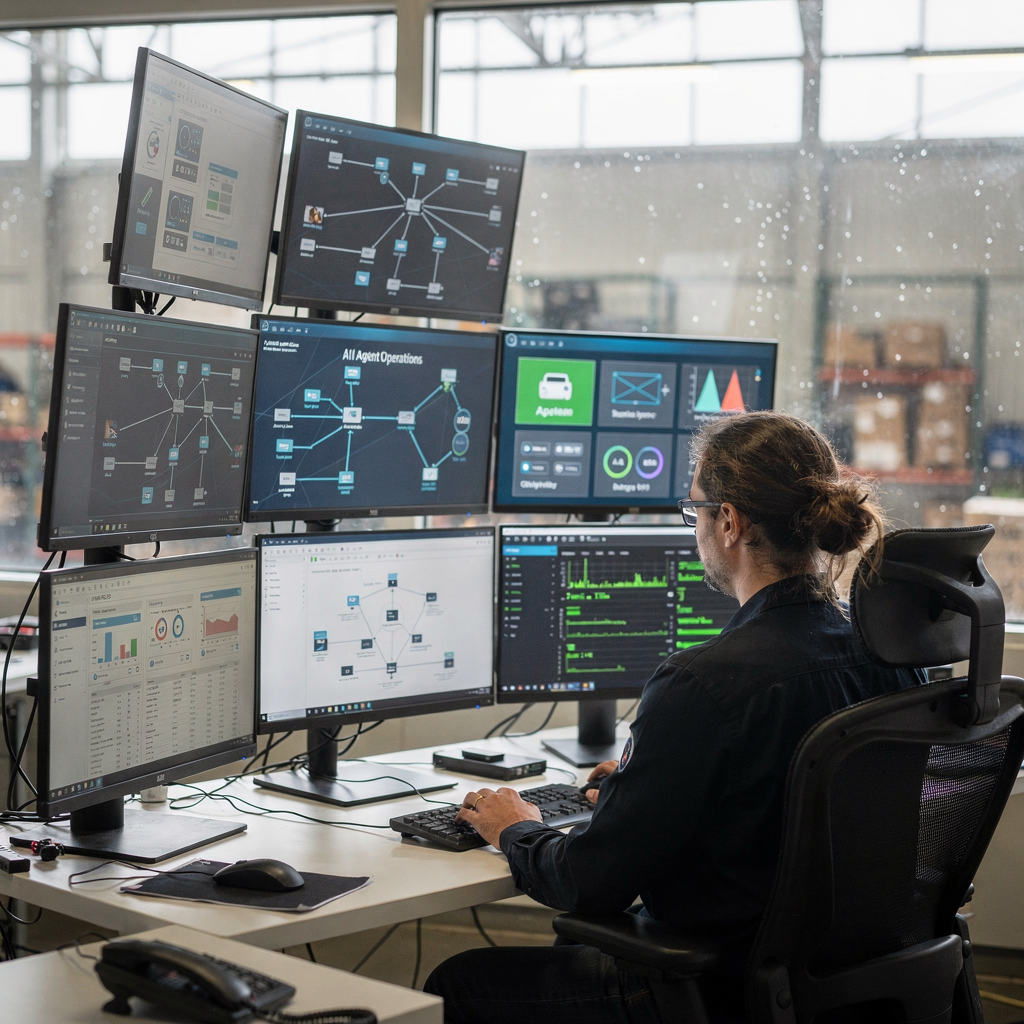
Agentic AI describes systems where software agents act autonomously under governance. The term captures a shift from passive analytics to active, autonomous digital work. In control room environments, agentic AI can verify alarms, route tasks, and even trigger control system adjustments within set limits. Infor explains that “AI agents are architected as autonomous digital workers with core capabilities and safeguards required for reliable adoption” https://www.infor.com/blog/rise-of-ai-agents-autonomous-workers. This architecture matters for grid operator environments where reliability and safety matter.
Grid operator teams need agents at scale to monitor substations, distribution networks, and field devices. Agents operate continuously, detect anomalies, and notify technicians. They also integrate with maintenance systems to schedule repairs. By running many agents in parallel, organizations can scale ai to cover large, distributed infrastructures. This scale ai pattern reduces mean time to detect problems and improves situational awareness across the network.
Governance plays a central role. Teams must govern agent behavior, set escalation rules, and ensure humans can override actions. A robust govern model includes audit trails, role-based approvals, and regulatory review logs. It also enforces limits on autonomous control loops so the system never exceeds safe operating envelopes. Humans in the loop remain essential for high-risk events, and supervision and exception handling maintain accountability.
Security and compliance also matter. For grid operator use, teams need on-prem inference and explicit policies that control data exposure. visionplatform.ai’s on-prem vision language model and VP Agent Auto concepts highlight how agents at scale can operate while keeping video and reasoning inside the customer environment. This approach supports regulatory frameworks such as the EU AI Act and reduces the risk of uncontrolled data flows. Finally, agentic systems can accelerate routine responses while preserving operator oversight. They improve efficiency and make distributed grid operations more resilient to faults and threats.
ai integration with microsoft 365 and microsoft agent 365 for seamless access control and alarm management – Deployment Guide
Integrating VP Agent into Microsoft 365 environments can unlock seamless access to calendars, communications, and role-based access lists. Microsoft Agent 365 can link alarm workflows to Microsoft Teams, ticketing, and scheduling. For example, an agent can post a validated alert to a designated Teams channel, attach the linked video clip, and tag the on-duty responder. This seamless integration reduces hand-offs and speeds response times.
Start with a clear deployment plan. First, map data sources and permissions. Include VMS, access control, and identity directories so the agent can cross-check events against access logs and role assignments. Next, set policies for role-based access so only authorized staff receive sensitive alarms. Then, configure connectors for Microsoft 365 to route notifications and approvals. Visionplatform.ai supports this architecture by exposing VMS events as structured inputs that AI agents can reason over. The platform supports seamless integration with existing Microsoft 365 tenants and on-prem workflows.
Security is critical. Keep video and models on-prem when regulations or risk demand it. The on-prem vision language model reduces data exposure and aligns with the EU AI Act requirements. Also, implement audit trails so every alarm, action, and approval is recorded. An audit agent can help produce logs for forensic search in airports and for other regulated environments where investigators need video and access logs together.
Finally, test and iterate. Deploy a pilot that automates low-risk scenarios, then expand. Use performance metrics to measure investigation time, false positives, and operational cost. Over time, you can deploy ai across sites and manage agents centrally. This methodical deployment reduces disruption and ensures the agent provides consistent, explainable results. If you want to explore related camera-based capabilities, see Thermal People Detection in Airports https://visionplatform.ai/thermal-people-detection-in-airports/.
FAQ
What exactly is a VP Agent?
A VP Agent is an advanced AI AGENT designed to act as a virtual operations leader in a control room. It verifies events, explains context, and recommends or executes actions while maintaining audit trails for compliance.
How does a VP Agent reduce false positives?
VP Agent Reasoning correlates video, access logs, and other telemetry to verify alarms before action. This contextual verification reduces false positives by checking multiple signals rather than relying on single raw detections.
Can VP Agent work with legacy control systems?
Yes. The platform supports integrations through MQTT, webhooks, and APIs so it can ingest events from legacy systems and modern sensors. This enables a gradual deploy that respects existing investments.
Is video processed in the cloud or on-prem?
visionplatform.ai supports on-prem processing by default, including an on-prem vision language model. This keeps video and reasoning inside the customer environment and reduces data exposure and compliance risk.
What role does Microsoft 365 play in deployment?
Microsoft 365 can handle notifications, approvals, and collaboration for alarm handling. Microsoft Agent 365 connectors enable the agent to route validated alerts into Teams or ticketing systems for faster resolution.
How do agents at scale help grid operators?
Agents operate continuously across distributed assets to detect anomalies, schedule maintenance, and alert technicians. At scale, they improve situational awareness and reduce investigation time for network faults.
How does the system support forensic investigations?
VP Agent Search turns video into searchable descriptions via a vision language model so investigators can find events with natural language. The system links video and access logs for rapid forensic search and reconstruction.
What safeguards exist for autonomous actions?
Teams configure governance, role-based permissions, and escalation rules. Human overrides, audit trails, and supervision maintain control and allow regulated autonomous actions within defined bounds.
Can VP Agent pre-fill incident reports?
Yes. VP Agent Actions can gather evidence, summarize observations, and pre-fill incident reports for human review. This saves time and improves consistency in reporting.
How do I get started with deployment?
Begin with a pilot that automates low-risk routine tasks and integrates a few cameras and access control systems. Measure outcomes, refine policies, and then scale ai across more sites while maintaining strict governance and auditability.