ai control room: Achieving full control with VP Agent
The role of a control room AI agent has grown fast as operations scale. A control room must handle more detections, more data feeds, and more decision points than before. VP Agent acts as an ai agent for control room teams. It turns raw feeds into explained events so control room operators can focus on what matters. This ai control room approach gives teams situational awareness, and it allows them to reach full control over operations.
VP Agent provides real-time monitoring and status updates. It ingests video and telemetry and updates a dynamic dashboard that shows live health, alarms, and pending tasks. The dashboard gives operators a single pane of glass where they can see production control states, recent alerts, and corrective actions. VP Agent Search and VP Agent Reasoning work together so humans in the loop get quick context for each alarm and can verify incidents faster.
VP Agent connects to legacy systems, VMS streams, and control system endpoints to collect context. It supports role-based access so that supervisors see different items than field technicians. With role-based access and role-based access policies, teams keep data exposure under control. VP Agent also links video and access logs so investigators can run a forensic search across cameras and events without leaving the control room. For example, operators can run a natural language query that finds a person near a gate and then replay the video segment immediately. visionplatform.ai builds this flow with an on-prem vision language model to keep video local and compliant with the EU AI Act while enabling powerful search.
VP Agent reduces manual control steps and lets teams scale ai. It replaces frequent context switching with a coherent workflow and a clear provenance trail. Because the agent provides prioritized tasks, control room operators spend less time on routine tasks and more time on decisions that require judgment. By combining ai systems, dashboard clarity, and tight access control, organizations reach a higher level of efficient operations and can operate with full control without adding headcount.
automation and workflow: automate complex tasks in the control room
VP Agent excels at workflow automation. It can automate how alarms flow through triage, verification, and response. The agent pre-fills incident forms, flags priority items, and suggests corrective actions. Operators get next steps that match policy. For repetitive tasks the agent will automate them when policy and risk allow. This reduces manual control and supports consistent outcomes across shifts.
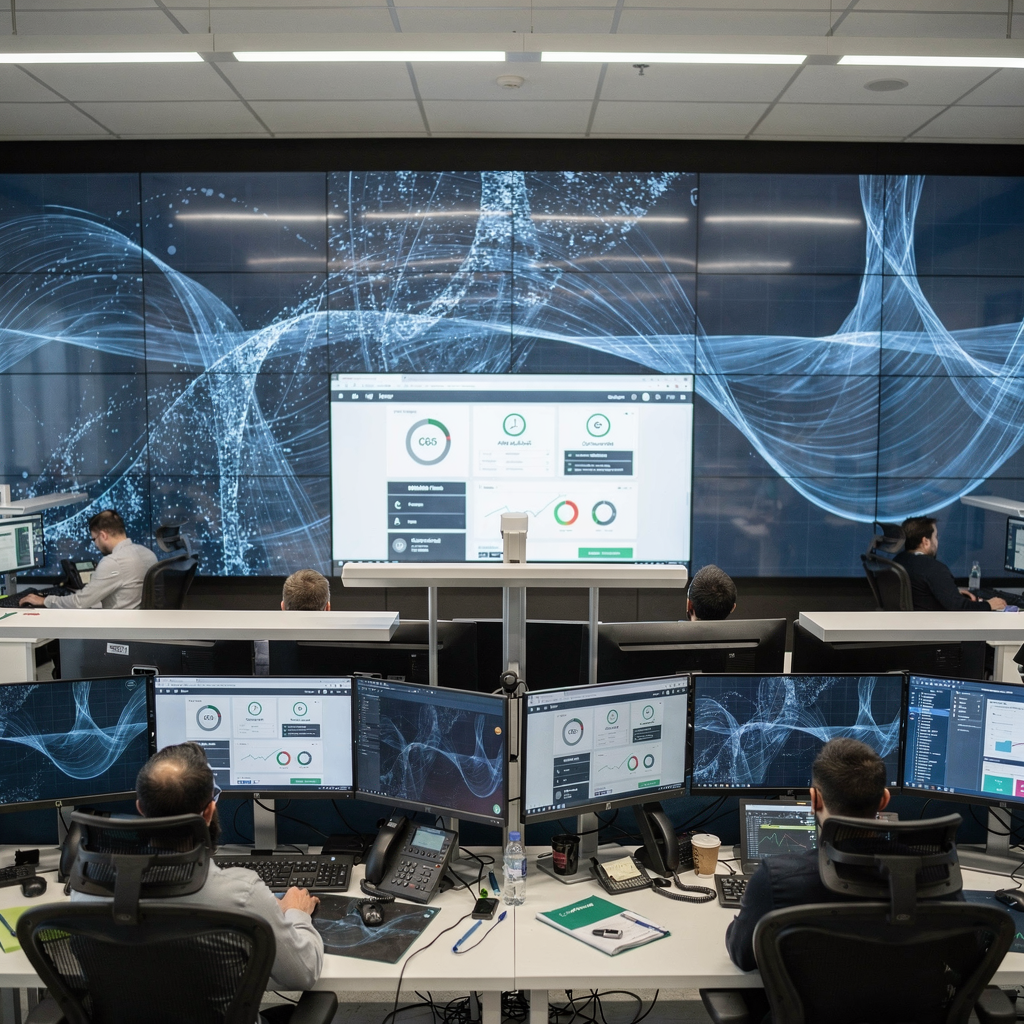
Common routine tasks VP Agent can automate include pipeline updates to incident trackers, report generation for daily shift handovers, and closing false alarms with justification. It can pre-fill incident reports and trigger downstream systems such as ticket platforms or dispatch services. The VP Agent Actions capability supports human-in-the-loop choices or fully automated replies for low-risk scenarios. This model lowers investigation time and reduces the chance of error in repetitive documentation.
Quantitative impact matters. Organizations that deploy agents report faster, more accurate forecasting and pipeline handling; some report a 25% increase in conversion rates and up to a 30% reduction in forecasting errors when AI agents assist sales pipelines, which mirrors time savings in operations reported by industry studies. Additionally, a PwC survey found 88% of senior executives plan to increase AI spending, driven by gains in efficiency and faster decision cycles according to PwC. These figures translate into lower operational cost per alarm and fewer hours spent on routine tasks per week.
Automation also reduces human error. VP Agent integrates rule checks, anomaly detection, and audit logs so teams spot reduced false positives and focus on genuine incidents. By automating rote steps, the control room can accelerate response time and maintain consistent handling of common events. The result: faster closure of low-risk items, and more time for operators to manage exceptions and complex investigations.
AI vision within minutes?
With our no-code platform you can just focus on your data, we’ll do the rest
ai-powered integration: seamless ai integration and access control for enterprise ai
Seamless integration is central to effective enterprise AI. VP Agent integrates with CRM, ERP, VMS, and access control platforms so data becomes actionable. The agent exposes events through MQTT, webhooks, and APIs. This lets teams build composite views that combine video, ticket history, and procedural context. Such integration reduces friction when shifting from observation to action.
When systems share context, teams make informed decisions faster. VP Agent connects to legacy systems while protecting data via role-based policies and role-based access. The platform supports access logs and video correlation so auditors can trace who viewed what evidence and when. For compliance needs, the VP Agent Suite can keep video on-prem and avoid unnecessary data exposure to the cloud. This design supports regulatory review and helps align deployments with the EU AI Act.
Security and access control features limit who can trigger automated actions. The platform supports access control models including role-based access, and it keeps detailed access logs for every command. These records function as audit trails that simplify forensic review after an incident. In this way, VP Agent acts as an audit agent and as a control point that verifies permissions before agents operate on live production systems.
The benefits of seamless integration include faster escalation, fewer manual handoffs, and clearer data provenance. For example, combining access logs and video with ticket metadata speeds investigations and reduces investigation time. visionplatform.ai focuses on on-prem vision language model deployments so video and metadata stay inside a customer’s environment. The result is enterprise AI that scales without sacrificing security or control.
analytics and predictive maintenance: artificial intelligence for real-time insights
Contextual analytics drive better forecasting and trend detection. VP Agent applies contextual reasoning to video, sensor streams, and historical records to spot trends and to forecast potential issues. This contextual view helps teams prioritize maintenance before failures appear. Predictive maintenance becomes practical because the agent combines anomaly detection with scheduled checks and equipment history.
Real-time analytics let operations spot subtle shifts in behavior. For example, a queue that grows slowly over an hour may indicate a downstream delay. VP Agent flags that trend early and can suggest corrective actions. The platform integrates with other ai systems and provides a single real-time feed for alerts, dashboards, and decision workflows. These insights lower downtime and improve efficient operations.
Predictive maintenance reduces operational disruptions. The agent models wear patterns and alerts staff to schedule repairs during low-traffic windows. That lowers live production impact and reduces operational cost over time. A controlled predictive strategy often yields measurable reductions in downtime and in unplanned maintenance, which drives clear operations benefit.
Case studies support the approach. Organizations using agent-assisted analytics reported improved forecast accuracy and faster incident resolution. AI agents verify signals across multiple inputs, reducing false positives and increasing trust in automated alerts. The VP Agent Reasoning feature explains why an alert matters by correlating video, historical patterns, and site rules so operators can take informed decisions quickly. For teams that need searchable video, VP Agent Search enables forensic search across recorded footage with natural language queries, which speeds root-cause analysis and shortens investigation time.
AI vision within minutes?
With our no-code platform you can just focus on your data, we’ll do the rest
agentic ai agent: manage agents and enhance strategic decision-making
“Agentic” describes AI that plans, acts, and learns in service of goals. An agentic AI acts with autonomy while following governance. VP Agent is an agentic AI that can suggest actions, assign tasks, and adapt policies as conditions change. This agentic ai behavior enables the system to escalate issues, recommend resources, and even deploy ai models for new tasks.
VP Agent can manage agents at scale. The platform lets supervisors assign work to other agents, track performance, and audit outcomes. A manager can see which agents operate on which workflows and can adjust parameters to improve results. These manage agents capabilities keep work organized and measurable. Teams can also set supervision and exception handling rules so humans in the loop can intervene when risk thresholds hit.
Autonomy does not imply unchecked action. VP Agent supports humans in the loop and enforces approval gates for high-risk tasks. For lower-risk routine tasks the agent can automate decisions, and for higher-risk ones it will prepare options and a recommended course of action. The VP Agent Actions feature can pre-fill incident reports, trigger notifications to external teams, or initiate controlled corrective actions. These steps accelerate response while preserving human oversight.
Continuous learning matters for long-term accuracy. VP Agent adapts to new patterns by retraining ai models and by logging outcomes. This cycle reduces false positives and improves trend detection. Since agents learn from verified outcomes, the platform can scale ai without multiplying errors. The design supports deploy ai processes that keep training data on site and aligned with compliance needs like the EU AI Act.
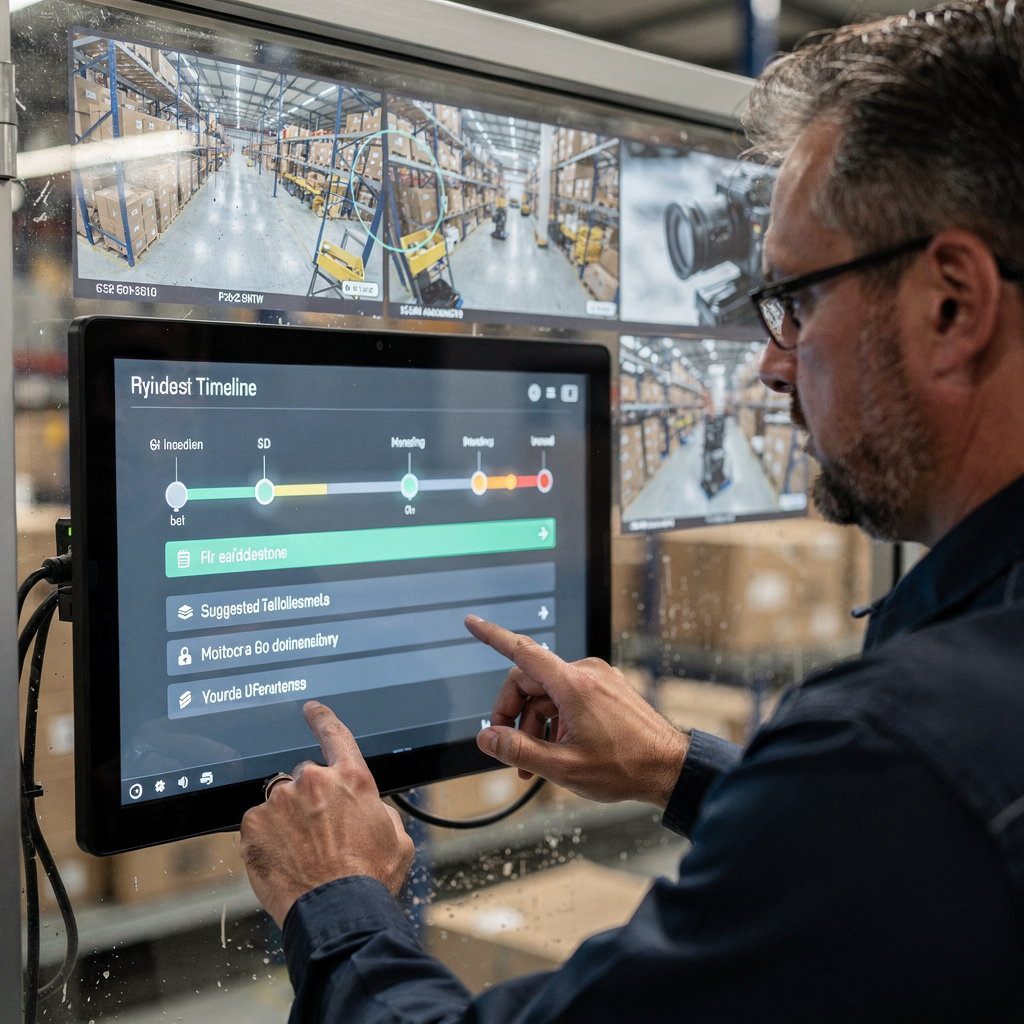
control room automation and alarm: audit trails powered by ai in VP Agent
Alarm handling and incident management form the backbone of control room operations. VP Agent automates triage and classification for alarms, and it enriches each alert with contextual evidence. When an alarm fires, the system pulls related video, access logs, and procedure steps and presents them as a single incident package. This reduces the time to verify an alarm and lowers the number of escalations to senior staff.
Audit trails are essential for compliance and for learning. VP Agent writes immutable audit trails that record who viewed evidence, what actions an agent took, and why those actions occurred. These audit trails support regulatory review and provide a forensic search index that investigators can use to reconstruct timelines. The platform includes forensic search and on-prem vision language model capabilities so teams can search video and access logs without moving data offsite.
AI-powered monitoring yields better signal fidelity. VP Agent uses anomaly detection to suppress repeated nuisance alerts and to surface the most critical items. It aims for reduced false alarms, and it provides operators with recommended corrective actions backed by evidence. When a false positive does occur, the system notes it and uses the outcome to reduce similar errors later.
Accountability remains central. VP Agent logs role-based decisions and keeps access logs and video tied to each action. This makes it easier to audit decisions and to answer questions from auditors or legal teams. The architecture supports production control and integrates with existing VMS platforms and workflows. That means organizations can improve control loops, keep manual control where required, and enable ai-driven control where policy allows. In short, VP Agent supports efficient operations by turning alarms into explainable incidents and by providing trustworthy audit trails for every action.
FAQ
What is a VP Agent?
VP Agent is an AI agent designed to act as a control-room assistant that provides monitoring, reasoning, and action. It correlates video, sensor data, and procedures to support informed decisions and to reduce routine tasks.
How does VP Agent improve alarm handling?
VP Agent enriches alarms with video, access logs, and procedural context to reduce investigation time. It offers suggested corrective actions, which helps teams close low-risk items faster and focus on true incidents.
Can VP Agent work with legacy systems?
Yes. VP Agent supports integration with legacy systems, VMS, and control system endpoints via APIs, webhooks, and MQTT. That seamless integration lets teams avoid rip-and-replace efforts.
Is video stored in the cloud?
No. visionplatform.ai emphasizes on-prem solutions and an on-prem vision language model so video and metadata can remain inside customer environments. This reduces data exposure and helps with EU AI Act compliance.
Does VP Agent support role-based access?
Yes. The platform supports role-based access and keeps access logs so auditors can review who accessed video and who approved actions. That design supports secure deployments and regulatory review.
How does VP Agent help with predictive maintenance?
VP Agent combines anomaly detection with historical patterns to forecast equipment issues and recommend scheduled maintenance. This reduces downtime and lowers operational cost.
What is VP Agent Search?
VP Agent Search lets operators perform forensic search across recorded video using natural language queries. The function turns video into human-readable descriptions, which makes investigations faster.
Can VP Agent run autonomously?
VP Agent Auto is a planned feature that enables autonomous handling of low-risk, recurring incidents. Human oversight remains configurable, and audit trails document every automated action.
How does VP Agent reduce false positives?
By correlating multiple data sources and by applying contextual analytics, VP Agent reduces false positives and restores trust in automated alerts. The system learns from verified outcomes to improve accuracy over time.
Which integrations does VP Agent support?
VP Agent integrates with leading VMS platforms, ticketing systems, and access control products. For airport and facility security use cases, see related resources on people detection and intrusion detection for deeper examples: people detection in airports, intrusion detection in airports, and forensic search in airports.