ai control room: Foundations and Core Capabilities
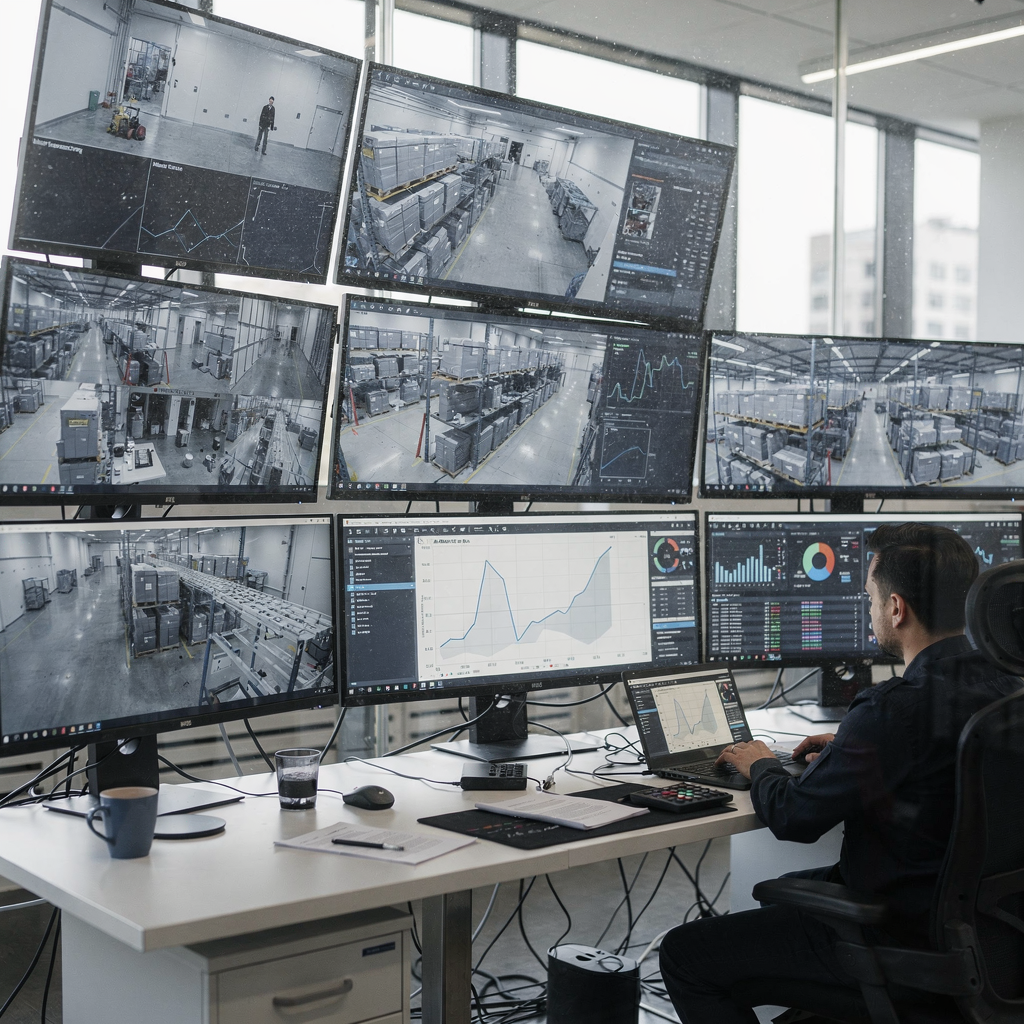
An AI control room anchors modern enterprise decision-making, and it does so by consolidating data, context, and action. First, the control room aggregates feeds from cameras, sensors, VMS, and business systems to create a single pane of situational awareness. Second, the platform runs continuous analysis so leaders and the operator on duty can see what matters now and what will matter next. This foundation combines enterprise AI, AI systems, and domain-specific AI models to support informed decisions and consistent outcomes. For example, the VP Agent Suite converts detections into explainable insights so teams can focus on strategy rather than sifting through raw alerts.
Core functions include real-time data aggregation, continuous learning, and predictive analytics. Real-time pipelines enable fast correlation between video and access logs, while continuous learning refines models from operator feedback and labeled incidents. Predictive analytics anticipates issues such as equipment failure or crowd clustering so teams can act before problems escalate. A control system that supports this must be resilient and auditable: secure role-based access, forensic logging, and audit trails are essential to maintain trust and regulatory readiness.
Architecture requirements prioritize reliability, security, and scalability. On-prem compute and an on-prem Vision Language Model reduce cloud risk and help comply with the EU AI Act while keeping video inside the perimeter. APIs, MQTT, and webhooks connect to legacy systems and VMS platforms, enabling seamless integration without ripping and replacing stacks. visionplatform.ai demonstrated this pattern by exposing VMS events as structured inputs for AI agents so the control room operator gets context rather than noise.
To manage growing volumes, teams must adopt modular deployment patterns and clear verification points. Systems should include health checks, rollback mechanisms, and supervised learning loops where humans validate agent outputs. Finally, the environment must support both autonomy and human oversight so AI can augment human work while preserving accountability and governance.
control room automation: Seamless Integration with Enterprise ai
Control room automation depends on seamless integration with core business platforms, and it must work with CRMs, ERPs, IoT, and VMS. When a control room connects to these systems, data flows become actionable. For example, tying access control events to video streams reduces investigation time and improves situational clarity. visionplatform.ai supports API-driven pipelines and tight VMS integration to turn metadata into searchable context so operators can quickly verify incidents.
Integration is more than plumbing. It requires semantic mapping, schema alignment, and consistent timestamps so a single alarm can be cross-checked against access logs and telemetry. Middleware frameworks, such as API gateways, message brokers, and standardized webhooks, make that possible. In practice, organizations adopt microservices to host connectors and use MQTT or REST for events. This approach helps legacy systems remain useful while enabling modern AI workflows and a scalable automation platform.
One concrete pattern is an API-driven pipeline that ingests VMS events, annotates them with a Vision Language Model description, and forwards verified events to BI or incident management. That pipeline reduces false positives and accelerates corrective actions. Such pipelines also let teams deploy AI progressively: start with assistive features like VP Agent Search, then expand to VP Agent Actions.
Security and governance must be designed into integration. Role-based access and encrypted channels protect data in motion, while forensic search capabilities and access logs preserve evidentiary trails for regulatory review. This design supports on-prem deployments where video and sensitive metadata never leave the environment. By embracing these integration patterns, control rooms can scale AI while keeping operators in the loop and maintaining compliance with policies such as the EU AI Act.
AI vision within minutes?
With our no-code platform you can just focus on your data, we’ll do the rest
ai agent and agentic ai: Automating Workflows for Operators
An AI agent transforms raw detections into useful actions, and a VP Agent is a practical example of an AI agent for control room contexts. The agent provides reasoning, verification, and suggested responses so the operator can confirm or let the agent execute. Agentic AI characteristics — autonomy, actionability, and adaptive learning — let agents recommend or carry out routine operations while escalating higher-risk situations to humans. This balance allows the system to automate tasks safely and to augment human capacity without removing essential oversight.
Agent assistants for live production and other live production scenarios highlight the value of AI in time-sensitive contexts. In a broadcast or event scenario, the AI agent can pre-fill incident reports, cue camera operators, and trigger production control actions. The VP Agent Actions feature demonstrates how an agent provides guided workflows and can even execute low-risk corrective actions automatically. These features cut investigation time and reduce operator cognitive load, so teams handle more events with the same staff.
Workflow automation examples include scheduled report generation, anomaly detection on video streams, and task assignment to response teams. An agent can watch a perimeter, correlate a vehicle with ANPR/LPR logs, and then open a ticket with pre-filled data. That saves operational cost and enables faster, evidence-backed responses. To achieve this, AI agents verify events across multiple sources; for instance, an AI agents verify an intrusion by checking VMS timestamps, access logs, and recent activity patterns.
Designing agentic AI requires transparent decision-making and clear policies for escalation. Agents must log their reasoning steps so operators see why an action is suggested. The VP Agent Suite keeps video and reasoning on-prem, which improves trust and supports forensic search in airports and other regulated environments. With proper safeguards, AI agents can automate routine tasks while preserving human oversight and ensuring that deployment remains manageable.
access control and alarm: Ensuring Secure and Responsive Operations
Access control and alarm management are central to safe control room operations. Effective systems combine role-based permissions, access logs, and audit trails so each action in the control room can be verified during an investigation or regulatory review. Role-based access restricts who can approve autonomous actions, while access logs and video provide the forensic records needed to support compliance and incident handling. These elements are especially important when AI-powered decisions affect security outcomes.
Alarm management must balance sensitivity with operational noise. Threshold settings, anomaly detection models, and context-aware verification reduce false positives so operators focus on real incidents. When an alarm triggers, the AI agent correlates video, VMS metadata, and access events to present a contextual summary. That contextual verification shortens investigation time and reduces operator workload, which is critical in high-volume environments such as airports. For example, linking a detection to unauthorized access detection in airports and to people detection in airports can quickly confirm whether an alarm warrants response.
Escalation paths should be clear and configurable so corrective actions follow policy. Systems can escalate incidents automatically when certain conditions are met, or they can route events to humans in the loop. Forensic search and video and access logs must be readily available to investigators; this supports faster post-incident reconstruction. visionplatform.ai’s approach includes on-prem Vision Language Model capabilities that convert video into searchable descriptions, so teams can find relevant footage with natural language queries.
Security controls also include periodic audits and verification checkpoints to validate model behavior. These audit processes, combined with supervised deployment cycles, reduce drift and ensure that the system adheres to internal governance and external standards such as the EU AI Act. Together, these measures make control room operations more secure, faster, and reliable.
AI vision within minutes?
With our no-code platform you can just focus on your data, we’ll do the rest
predictive maintenance and decision-making: Real-time Monitoring and Full Control
Predictive maintenance drives significant value in control rooms by turning sensor and video data into proactive work orders. Predictive maintenance monitors equipment health, anticipates failures, and prioritizes repairs so teams avoid costly downtime. When predictive signals are combined with video and VMS telemetry, the control room can escalate maintenance tickets with precise context, images, and suggested spare parts.
Linking insights to decision-making improves resource allocation and risk mitigation. A VP Agent can highlight high-risk assets, recommend reallocation of personnel, and suggest temporary controls to avoid escalation. These informed decisions reduce mean time to repair and improve uptime. Organizations report forecasting accuracy improvements that translate into better planning, and AI-driven control logic reduces unnecessary manual control interventions.
Metrics for this use case include reduced downtime, improved forecasting accuracy, and faster decision cycles. For instance, companies deploying VP Agent reasoning and predictive models see measurable reductions in investigation time and operational cost: teams spend up to 30-40% less time on analysis and reporting while forecasting accuracy improves significantly. This kind of outcome explains why 88% of senior executives plan to increase AI budgets in the near term, as noted in a PwC survey AI agent survey: PwC.
To deliver full control without sacrificing flexibility, systems must include control loops, safe rollback procedures, and human supervision and exception handling. On-prem vision language model deployments keep sensitive video inside the perimeter and support fast, contextual reasoning. When teams pair predictive maintenance with VP Agent Actions, they get both proactive alerts and the option to automatically schedule interventions, thereby reducing manual steps and improving operational resilience.
powered by ai: ai-powered Automation and Live Show Applications
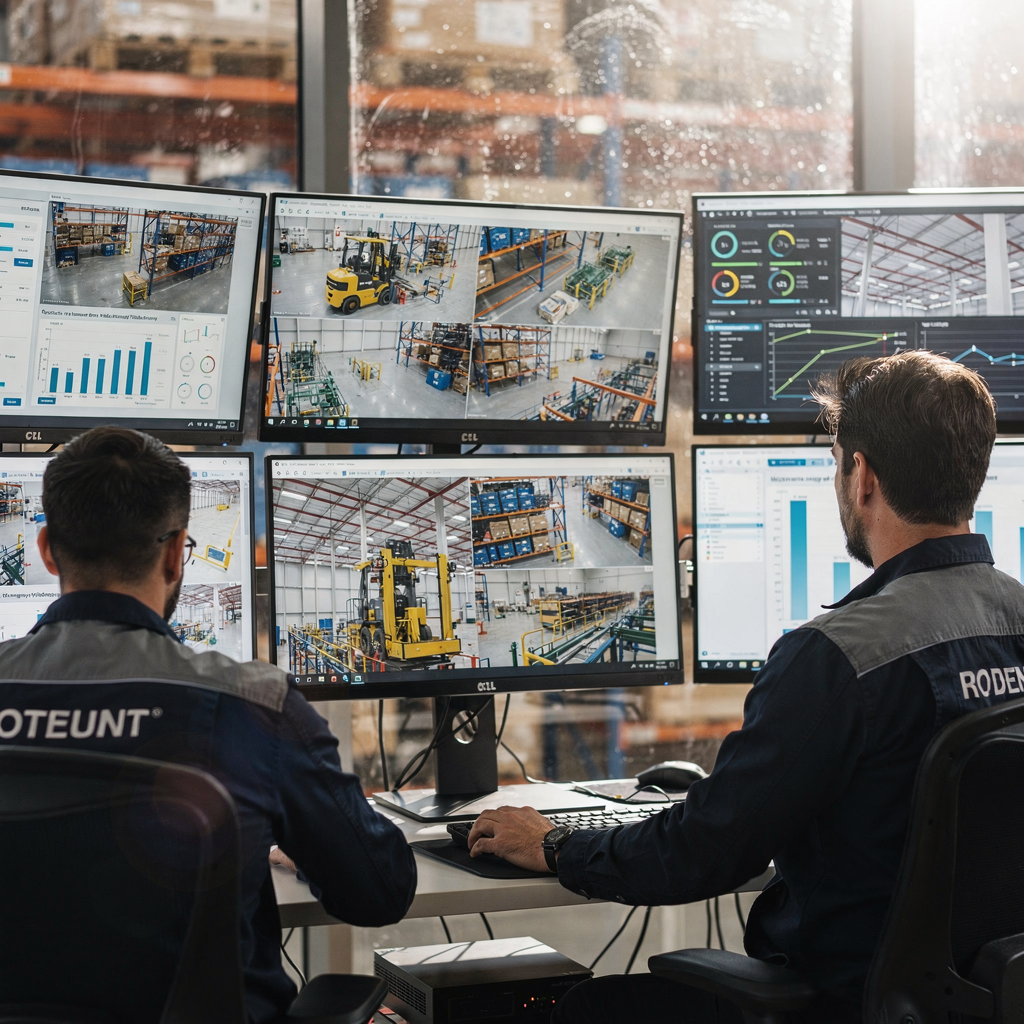
Powered by AI, modern control rooms extend beyond security to production control and live show orchestration. In broadcasting and events, AI-powered orchestration schedules camera cues, selects optimal feeds, and supports an AI assistant director to speed decisions under pressure. Agent assistants for live production can detect crowd density trends, optimize camera coverage, and recommend cut sequences to human directors so the broadcast quality improves while the crew stays lean.
These use cases also show how AI-assisted automation scales monitoring and reduces operational cost. For live show scenarios, a VP Agent suite can manage camera priorities, integrate VMS with production systems, and pre-fill incident reports when issues occur. The same AI architectures handle both perimeter breach detection in airports and production control in studios, which highlights the flexibility of AI models and the importance of AI integration design.
Safety and compliance remain central. For media and transport hubs alike, systems must support supervision and exception handling, keeping humans in the loop for sensitive decisions. Visionplatform.ai keeps video and reasoning on-prem so teams maintain control over data and reduce cloud exposure. The platform also supports forensic search in airports and other regulated environments where investigation time and accurate evidence matter.
Ultimately, organisations that scale AI thoughtfully can accelerate response times, reduce false positives, and deliver consistent handling of routine incidents. With the right automation platform and agentic design, control rooms gain efficient operations and robust decision support, enabling staff to focus on judgement rather than monotonous tasks. These benefits underline the operations benefit of moving from simple detection toward contextual, agent-driven workflows.
FAQ
What is a VP Agent and how does it fit in a control room?
A VP Agent is an AI agent that acts as a control room assistant and reasoning layer. It analyzes video, VMS events, and external data to verify alarms, suggest responses, and pre-fill incident reports so operators can make faster, informed decisions.
How does the VP Agent Suite help reduce false positives?
The VP Agent reasoning correlates multiple data sources to verify alarms before escalation. By checking video, access logs, and procedures, the agent reduces false positives and shortens investigation time.
Can AI agents operate on-prem to meet compliance needs?
Yes. On-prem vision language model deployments keep video and sensitive metadata inside your environment. This supports compliance with regulatory review requirements such as the EU AI Act and reduces cloud dependency.
How do AI agents interact with legacy systems and VMS?
AI agents connect via APIs, webhooks, and MQTT to expose VMS data as structured inputs. This seamless integration allows agents to reason over video, events, and logs without disrupting legacy systems.
What role do operators play when agents automate workflows?
Operators remain central for supervision and exception handling. Agents can automate routine tasks but escalate complex or high-risk incidents to humans in the loop to ensure accountability and correct outcomes.
How does predictive maintenance benefit from AI in the control room?
Predictive maintenance uses continuous monitoring and anomaly detection to forecast failures and schedule repairs. Tying those alerts to video and VMS metadata enables faster corrective actions and reduced downtime.
Are forensic searches possible across video and access logs?
Yes. With technologies like VP Agent Search, teams can perform forensic search in airports and other sites by querying natural language descriptions of events. This capability links video and access logs for efficient investigations.
What security controls protect AI-driven actions?
Role-based access, access logs, and audit trails ensure actions are traceable and verifiable. Verification checkpoints and periodic audits validate models and maintain trust in automated workflows.
Can AI assist live production and broadcasting?
Absolutely. Agent assistants for live production can recommend camera cuts, manage production control logic, and support an AI assistant director to improve broadcast quality while lowering crew load.
How do organisations start deploying AI agents in control rooms?
Begin with targeted use cases such as alarm verification or VP Agent Search, then expand to VP Agent Actions and controlled autonomy. Pilot deployments, clear governance, and phased deployment reduce risk and accelerate value.