ai in the modern control room
AI now sits at the center of modern control rooms, and it transforms how teams manage live feeds and incidents. In live production and broadcasting, AI provides fast detection, classification, and context. It turns raw video into searchable text, so operators can find events using natural language. For example, platforms that convert camera streams into descriptions support faster forensic search and content discovery. visionplatform.ai builds on this idea by adding an on-prem Vision Language Model and AI agents to move control rooms from detections to reasoning. This approach keeps video securely inside the site and supports EU AI Act alignment, which helps broadcasters meet regulatory needs and avoid cloud dependency.
VP Agent is a specialised control room AI tool designed for executive-level oversight and operational orchestration. It acts like a control room operator that scales, so teams handle more incidents without growing staff. The VP Agent Suite ties video analytics, VMS events, and procedures into an agent that can verify alarms, recommend actions, and optionally execute them with defined permissions. That creates an end-to-end path from detection to action and makes the production stack more consistent. The agent supports role-based access, audit trails, and verification of actions to maintain accuracy and confidence.
Market adoption of AI in broadcasting is rising rapidly, and enterprise leaders are increasing investment. A survey shows 88% of senior executives plan to increase AI-related budgets within a year, driven by AI agents that help decision-makers scale operations and improve forecasts (PwC). Analysts at Relevance AI highlight that VP-level AI agents “analyze pipeline data, provide real-time insights, and handle complex forecasting” which demonstrates the move to agentic systems (Relevance AI). At the same time, broadcasters can integrate AI without replacing legacy systems by exposing VMS data to agents for reasoning, which helps with system integration and vendor-agnostic deployments. For practitioners seeking practical examples, visionplatform.ai offers forensic search capabilities that map video to human language, which supports newsroom workflows and content discovery forensic search in airports.
ai agent operator: from support to strategy
An AI agent operator evolves from a support tool into a strategic collaborator. At first, AI assists operators by surfacing anomalies and contextual clues. Then, it grows into an assistant that coordinates actions across systems. The AI agent monitors video, access control, and telemetry. It flags anomalies, runs quick verification, and pre-fills incident reports. This reduces cognitive load for the human operator and speeds response. Operators remain in control, and they can take over the workflow at any point.
VP Agent autonomously handles many routine checks and provides contextual explanations. For example, it can validate an intrusion alarm by correlating video, access control logs, and historical patterns, then recommend whether to escalate. This reduces false positives and helps teams focus on real threats. The agentic nature of VP Agent supports agent-to-agent orchestration across different tools, and it connects to APIs and VMS data so automation works without breaking production control. VP Agent exposes the why behind an alert, which is critical for human decision-making in high-pressure environments like live news.
Human–AI hand-offs are essential. In a typical workflow, the operator receives a confirmed event with suggested steps. The operator accepts, edits, or rejects the suggestion. Next, the agent can notify response teams, create logs, or trigger downstream systems. For production teams this might mean a workflow that changes camera presets, updates graphics, or alerts a field crew. For security teams it might close a false alarm with justification. visionplatform.ai’s VP Agent Actions feature supports these transitions and ensures actions follow policy and role-based access.
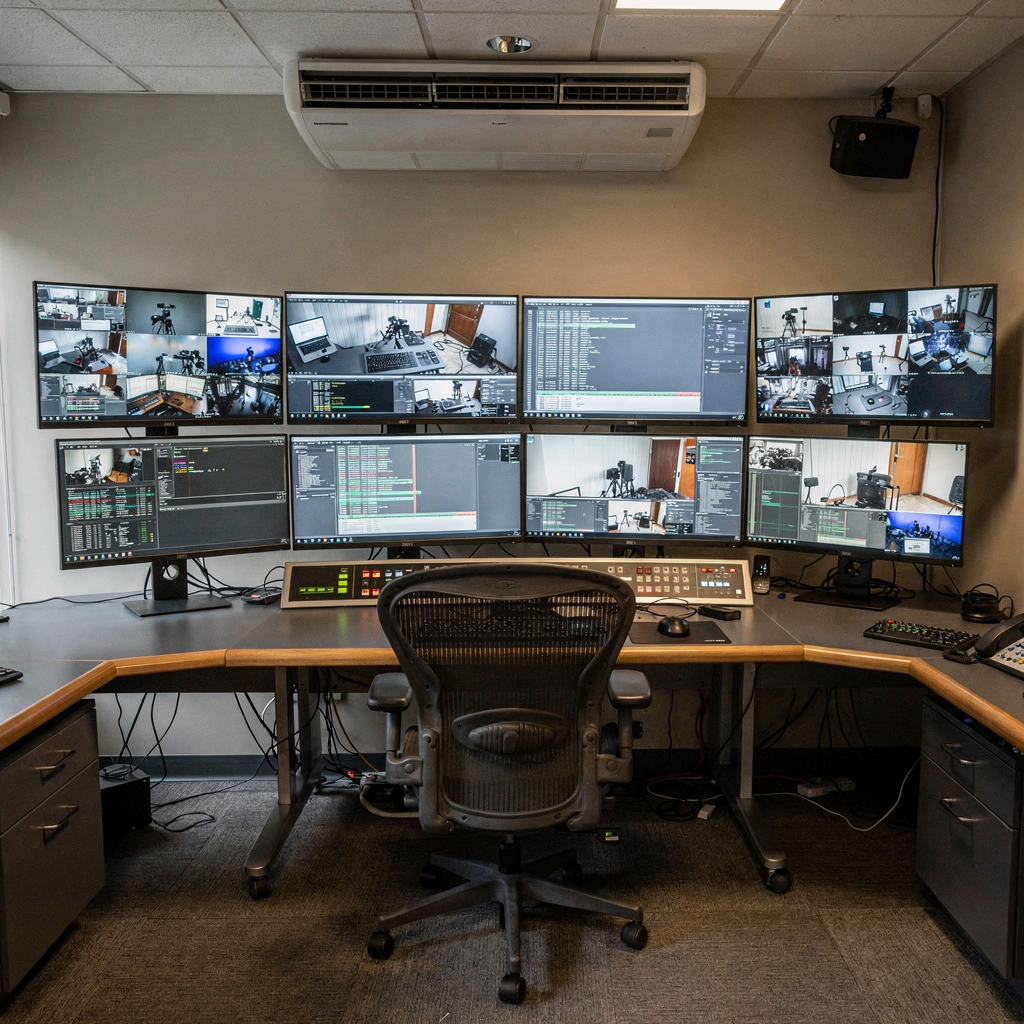
This model reduces time spent on routine tasks, and it lets human operators focus on strategy and editorial judgement. It also helps integrate existing systems and legacy systems, so organisations can deploy AI without large rip-and-replace projects. For organisations exploring practical deployments, see intrusion detection examples that show how verification and action reduce needless escalations intrusion detection in airports. That makes AI an assistant and an orchestration layer, rather than a black box.
AI vision within minutes?
With our no-code platform you can just focus on your data, we’ll do the rest
automation and workflow optimisation
Automation in the control room streamlines operations, and it saves time on repetitive workflows. AI can automate cue-lists, resource checks, and graphics triggers so production runs smoothly. A VP Agent can schedule and manage cue sequences, verify camera availability, and trigger overlays when metadata matches content policies. For example, including cuez and automated graphics routines helps teams keep shows on time. In broadcast contexts, these features reduce human error and speed board ops.
VP Agent acts as an orchestration layer that reduces delays and standardises responses. It maps procedures to automated actions, so agents can execute simple interventions under human supervision. The system can also pre-validate resources before a live show, check audio chains, and confirm that external feeds are present. These checks cut setup time and eliminate common staging mistakes. The result is a production stack that runs with fewer interruptions, and teams gain consistent outcomes across shifts.
Metrics show clear benefits. Companies using agentic AI report improved forecast accuracy and efficiency gains; for sales agents the forecast precision rose up to 20–30% and sales cycles shortened by about 15% (Relevance AI). Translating that to live production, similar process improvements reduce downtime and manual handoffs. visionplatform.ai measures reduced time per alarm and faster incident resolution when VP Agent Reasoning verifies events and suggests actions. That helps teams be scalable and consistent. In addition, automation supports audit trails and role-based access, which helps with governance and regulatory review.
Operationally, this approach lets broadcasters integrate tools such as EVS and graphics servers, and it coordinates playback, camera control, and logging. For stadiums and newsrooms, AI-enabled workflows mean fewer missed cues and better synchronization across teams. Vendors such as CuePilot, Amira Labs, Moments Lab, and Highfield-AI highlight similar use cases, and many integrators now plan deployments that pair agentic systems with traditional production control. For teams that need to deploy fast, having a clear mapping from procedural steps to agent actions accelerates rollout and reduces friction.
ai-powered decision-making in live show production
AI-powered decision-making gives producers real-time insights that guide camera cuts and audio levels. The VP Agent analyses feeds and metadata, and it recommends camera switching when a primary subject moves or when audio clarity drops. The agent supports informed decisions with visual context and confidence scores, which helps the director choose the right shot in a high-pressure moment. The agent also annotates feeds with contextual cues, so the production team understands why a recommendation appears.
Predictive adjustments are possible during a live show. For instance, agents can detect increasing crowd density, predict where action will move, and advise camera repositioning. They can also forecast audio peaks and suggest gain adjustments, which keeps levels within safe ranges. These predictive models operate in real time, and they help maintain production quality when human attention is split. A VP can use agent outputs to balance editorial goals and operational constraints, so the broadcast remains engaging and compliant.
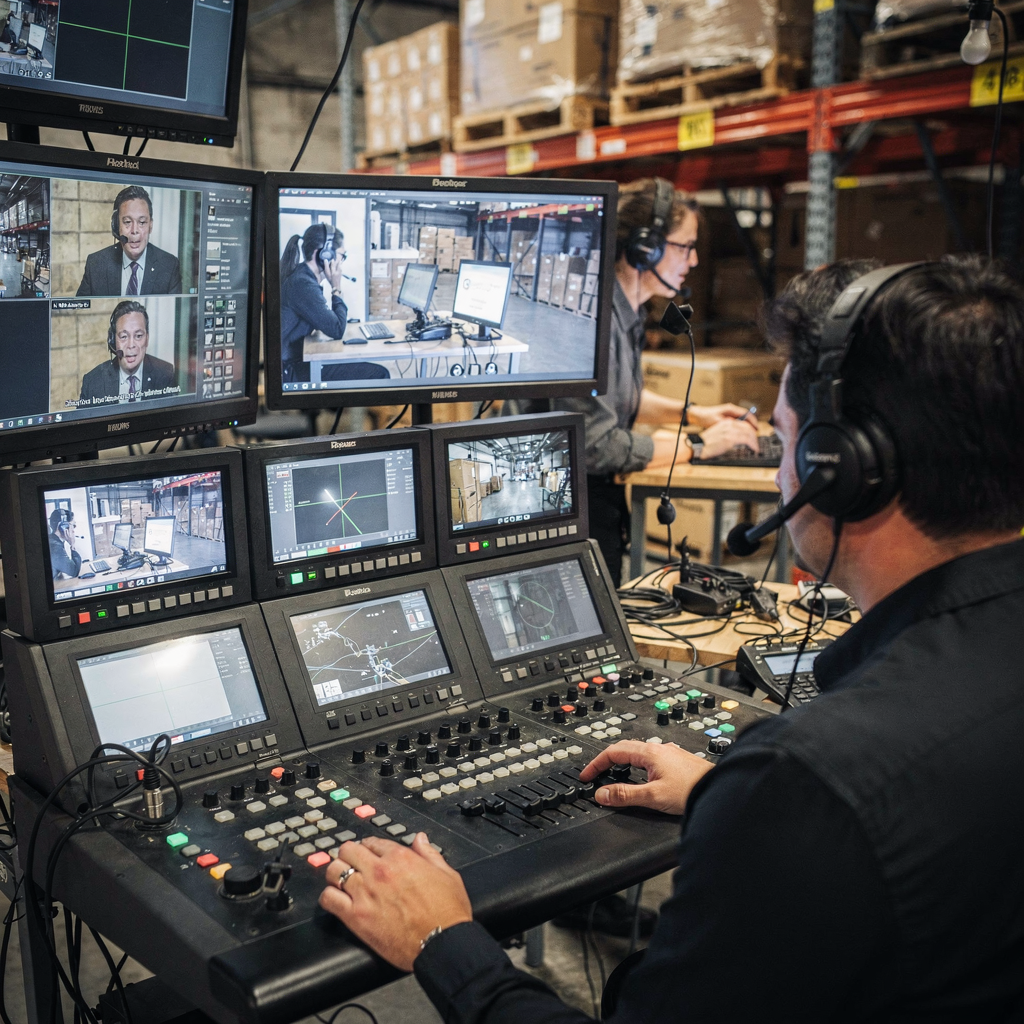
Case study: a broadcaster used an AI assistant director to implement dynamic content switching during a morning show. The agent monitored feeds, identified low-engagement segments, and proposed alternate content clips. The director accepted some switches and the agent executed lower-risk transitions automatically. This combination cut filler airtime and increased viewer retention. The project required careful system integration and clear rules for escalation, but it demonstrated how agent-to-agent orchestration can improve both agility and creative control. Integrations often leverage language models and natural language interfaces to let crews query past footage or request a specific camera angle.
These capabilities help reduce cognitive load for crew and augment human roles rather than replace them. The AI assistant helps coordinate cues, suggest retakes, and manage complex tasks like multi-camera timing. It also supports content discovery for editorial teams and provides a searchable timeline for forensic review. Live news environments benefit when AI-driven tools surface the right clips and metadata fast, which keeps editorial workflows nimble and responsive to breaking stories.
AI vision within minutes?
With our no-code platform you can just focus on your data, we’ll do the rest
How artificial intelligence can redefine live production
Artificial intelligence reshapes creative processes and operational models in broadcasting. New creative possibilities emerge when agents suggest alternate edits, generate personalised overlays, or adapt graphics to demographic signals. Producers can test variant sequences in real time and then let an agent pick the best-performing option. That creates adaptive content delivery and personalised viewer experiences that scale across platforms. It also opens paths for targeted sponsorship, where graphics adapt to regional audiences.
AI enables adaptive content delivery by sampling viewer signals and adjusting streams dynamically. For example, an AI-powered system might offer alternate camera angles or caption styles depending on network conditions or audience preferences. This capability supports content discovery and personalised playback. Vendors are exploring gemini integrations and on-prem language models to keep processing local. For newsrooms, the result is a more responsive editorial pipeline that can surface contextual clips for breaking stories.
Impact on crew roles is significant but manageable. AI will reduce routine tasks, so teams can focus on higher-value editorial work. Roles such as camera operators and editors shift toward supervisory and creative decision-making. Intelligent assistants and agent assistants for live production will coordinate many lower-level tasks, while human teams remain responsible for final editorial judgement. This dynamic encourages training and new skill sets, and it supports a more collaborative production control environment.
Beyond creative change, AI also supports safety and operations. Systems to create contextual alerts and anomaly detection help security teams respond faster. For example, people detection and perimeter-breach analytics support simultaneous safety and production goals people detection in airports. Streaming environments become more scalable when automation reduces manual handoffs. As organisations deploy agentic AI, they should plan governance, audit, and role-based access to ensure actions remain accountable and securely logged.
Ensuring governance for ai agent in the control room
Governance matters when deploying AI agents in a control room. Data quality, security, and ethical oversight must be integral to any deployment. Teams should implement frameworks for verification, audit, and access control. For example, role-based access and audit trails let operators and managers trace why an agent acted and who authorised it. That transparency supports regulatory review and helps maintain accuracy and confidence in decision outcomes.
Start with a clear data mapping and keep processing on-prem where required. visionplatform.ai emphasises on-prem Vision Language Models to keep video data inside the environment, which helps meet EU AI Act obligations and supports secure operations. Organisations should define acceptance criteria for agent recommendations, set escalation rules, and require human sign-off on high-risk scenarios. For lower-risk routine tasks, agents can automate responses but only with constrained permissions. This tiered approach balances autonomy and oversight and helps govern agentic systems effectively.
Best practices include continuous evaluation, role-based training, and periodic audit. Use metrics that track false positive rates, response times, and human overrides. Conduct a regulatory review before full deployment, and maintain logs for external scrutiny. Vendors and broadcasters can adopt vendor-agnostic APIs and system integration patterns to preserve choice and prevent lock-in. Also, include verification steps in the UI so operators understand the agent’s confidence and context. That encourages informed decisions and supports human decision-making under pressure.
Looking ahead, standards such as IBC sessions and the IBC2025 accelerator will likely shape common approaches for agent certification and mapping of responsibilities. Programs like the ibc accelerator media innovation programme encourage interoperable designs and best practices for agent-to-agent orchestration. Finally, teams should plan for continuous learning, safe deploy cycles, and technical reviews. This keeps agents up to date with new use cases and reduces drift. With the right governance, AI can safely accelerate operations, reduce cognitive load, and augment human expertise across both newsroom and production control environments.
FAQ
What is a VP Agent in a control room?
A VP Agent is an AI agent tailored for executive-level oversight and operational orchestration in control rooms. It verifies events, recommends actions, and can execute low-risk workflows while preserving audit trails and role-based access.
How does AI improve live production quality?
AI improves live production quality by offering real-time insights, suggesting camera cuts, and automating routine tasks like graphics triggers. It reduces mistakes and lets crews focus on editorial decisions and creative choices.
Can VP Agent work with legacy systems?
Yes. VP Agent integrates with existing VMS platforms and legacy systems through APIs and webhooks, enabling vendor-agnostic system integration without ripping out current infrastructure. That makes deployment faster and less disruptive.
Is on-prem processing supported for compliance?
On-prem options are available to keep video and metadata secure and aligned with regulations such as the EU AI Act. On-prem language models and local processing reduce cloud dependency and help teams govern data securely.
How does an AI agent handle false alarms?
Agents use contextual verification by correlating video, access control, and historical patterns to reduce false alarms. They can close events with justification or escalate them based on configured policies and audit requirements.
What are common use cases for AI in broadcasting?
Use cases include automated cue-lists, content discovery, adaptive graphics, and live decision support for camera switching. AI also supports security tasks like perimeter-breach and people detection in parallel with production needs.
How are human roles affected by AI agents?
Human roles shift from routine execution to supervision and creative decisions. Operators move toward higher-level coordination and editorial judgement while agents manage repetitive and time-sensitive tasks.
What governance measures should be in place?
Governance should include verification procedures, audit trails, role-based access, and continuous evaluation. Regular regulatory review and clear escalation rules ensure safe and accountable operation.
Can VP Agent automate entire workflows?
VP Agent can automate routine tasks and execute low-risk workflows under defined permissions. For complex or high-risk scenarios, human-in-the-loop processes remain the recommended approach.
How do I start a VP Agent deployment?
Begin with a pilot that maps procedures to agent actions and includes performance metrics and audit logging. Use on-prem integration with your VMS and test with controlled scenarios before a wider rollout.