detection system, detection technology and detector for warehouse security
Warehouses present broad floors and many entry points. Therefore, a robust detection system must combine sensors, cameras, and alert channels. Also, operators need a clear rule set to reduce false alarms and speed up response. The core components are simple to name: cameras that stream video, analytics that analyze footage, and a control layer that routes events to a security team. For on-prem deployments, Visionplatform.ai turns existing CCTV into an operational sensor network that can analyze site-specific footage and stream events to operations or security dashboards. Additionally, the platform lets you choose a model from a library or build a new ai model trained on your site data, so the system provides tailored results while you retain data control.
Detection technology has evolved from single-sensor detectors that only flagged metal to layered systems that interpret context. For example, a camera with simple motion detection once only logged movement. Now, AI can classify people, PPE, vehicles, and custom objects in real time and help detect suspicious items before escalation. This evolution lets staff detect and verify rapidly. At the same time, installation on large floors poses challenges. Lighting changes, occlusion by racks, and high throughput traffic cause more complex scenes. Therefore, you must place detectors strategically. Also, you should mix fixed cameras with edge processing to keep latency low and maintain GDPR compliance.
Contrast helps explain the shift. Older detectors gave an on/off signal, triggering an alarm that required human review. By contrast, modern analytics add context and reduce false alarms. For further reading on people and behavior models applied to facilities, see our work on people detection. Finally, regulation and safety standards guide any deployment. Follow local health and safety rules and privacy law. For EU sites, on-prem processing and auditable event logs can help meet the EU AI Act. In short, combine clear placement, active monitoring, and a flexible detection system to get reliable detection across large facilities.
weapon detection system and metal detectors in existing security systems
Traditional metal detectors screen individuals for metal objects at controlled chokepoints. However, a weapon detection system uses multiple inputs and context to identify potential threats before they escalate. For example, metal detectors will flag a toolbox. By contrast, a weapon detection system can spot a hand-to-waist motion, cross-check with a camera, and identify whether a person moves toward a restricted area. This context reduces false alarms and improves the quality of responses. Also, concealed weapons detection can work with screening lanes and perimeter cameras to build layered defense.

Integration with existing security systems matters. Integration with existing alarms, visitor logs, and access control allows alerts to follow a known workflow. For example, when a detector senses a threat, the alert can pop in the VMS and also publish an event to MQTT so operations can act. Systems that integrate sensors, metal detectors, and video analytics provide a faster, clearer chain of evidence for security personnel.
Performance metrics matter at scale. Detection accuracy and response times determine whether a solution delivers value. In trials, facilities using AI solutions reported a 50% faster response to weapon-related incidents within six months of deployment, illustrating measurable operational gains reported reductions in response time. Also, pilot programs in transit hubs showed that AI gun detection systems could identify threats up to 30 seconds earlier than traditional methods, which can matter in high-risk zones for public space security. Finally, compliance with data-protection regulations and health and safety rules must guide system configuration and logging.
AI vision within minutes?
With our no-code platform you can just focus on your data, we’ll do the rest
ai-powered weapon detection, AI models for ai gun detection and ai-powered gun detection
AI models such as YOLOv3 and newer architectures power most ai-powered weapon detection solutions today. These models run on edge GPUs or servers and quickly classify objects in frames. For example, academic surveys show that YOLOv3 and similar models achieved over 90% accuracy in controlled firearm detection tests in a survey of real-time approaches. Therefore, selecting the right ai model and training data matters greatly. Also, advanced ai can adapt to site conditions, reducing false alarms that come from common tool shapes or cafeteria knives.
AI uses multimodal signals to improve reliability. Thermal imaging, audio cues, and visual analytics combine so systems identify weapons more robustly under varied lighting. For research on combining thermal and visual input, see recent findings on multimodal weapon detection AI-based weapon detection for surveillance. Additionally, systems that analyze behavior patterns can spot suspicious motion before a weapon is drawn. This immediate threat identification lowers risk and helps security personnel prioritize responses.
Common sources of false alarms include occlusion, unusual silhouettes, and benign objects that resemble weapons in a single frame. Continuous model training and dataset diversity are therefore essential. For sites that must keep data in-house, Visionplatform.ai supports local retraining so models improve on your footage without moving data offsite, supporting both accuracy and privacy. Also, an effective evaluation plan tracks false alarms, detection rates, and analyst review time, so teams can iterate quickly.
detection, alert and real-time security technology in warehouse operations
When a system detects a potential threat, it must trigger a clear alert to the right people. The alert should include a thumbnail, a camera ID, and a recommended action. Also, it should link to the live stream and recent seconds of footage so analysts can verify the event. In many deployments, systems provide both an alarm on the VMS and an event stream to operations dashboards. This approach helps security staff and operations teams work from the same facts.
Real-time workflows matter in busy sites. For example, facilities that deployed AI-based alerting reported incident response times that fell by roughly 50% within months of rollout case data on faster response. The system provides instant routing so a security staff member sees the event and the nearest guard receives a mobile alert. Also, central monitoring dashboards show active incidents, historical trends, and camera health so managers can allocate resources effectively.
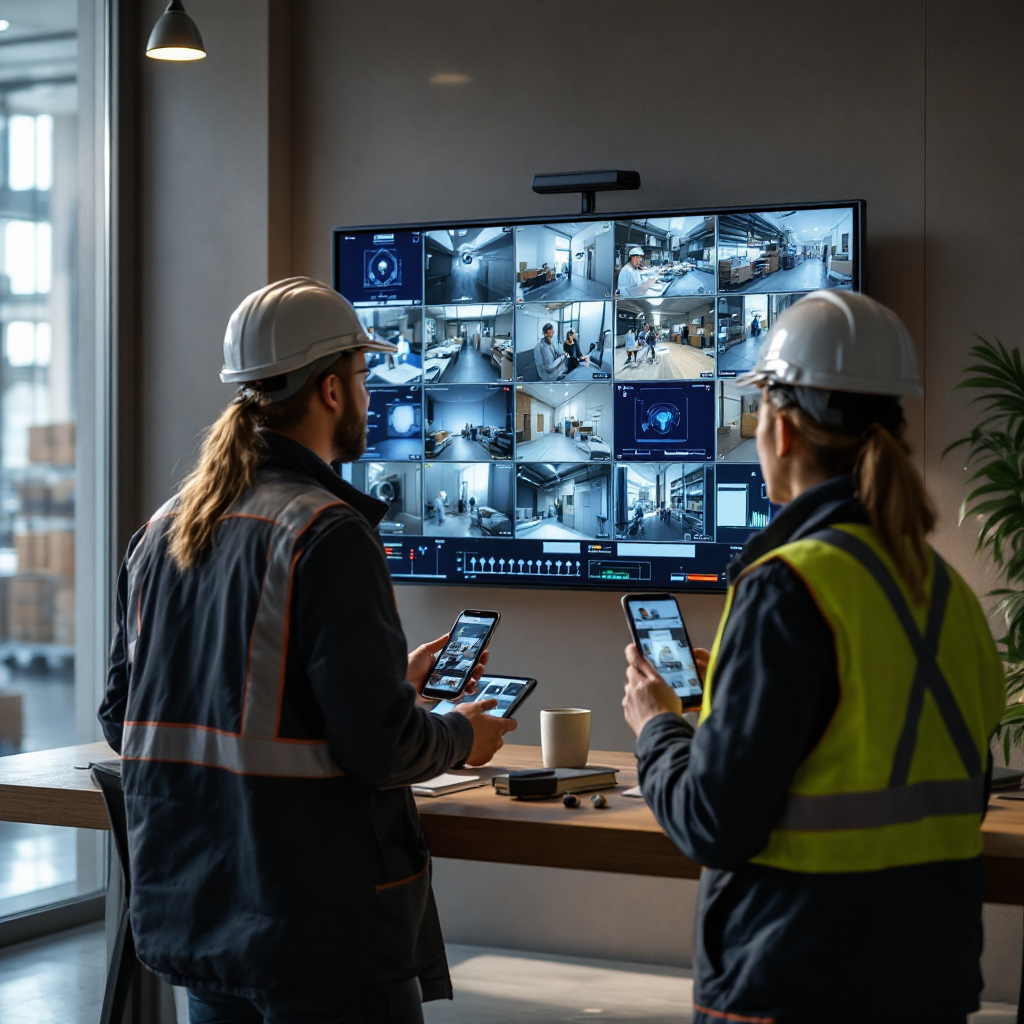
Integration with warehouse operations is often seamless. For example, streaming structured events into MQTT can allow cameras to act as sensors for BI and SCADA systems. This tight linkage helps with both safety and throughput. Additionally, when an event triggers, the recommended action can include locking a door through access control, dispatching a nearby guard, and flagging footage for forensic search. For guided forensic search of recorded incidents, see our resources on forensic search and case review. Overall, a clear alert flow reduces confusion and supports an appropriate response.
AI vision within minutes?
With our no-code platform you can just focus on your data, we’ll do the rest
security solutions, ai-driven security and effective security
Modern security solutions in large facilities combine sensors, analytics, and policies. AI-driven security adds a layer that interprets scenes and identifies potential threats without needing constant human monitoring. When choosing a solution, measure coverage, reliability, and scalability. Coverage ensures all critical zones, such as loading docks and entrances, have visibility. Reliability keeps false alarms low so staff can trust alerts. Scalable platforms let you add streams without breaking workflows.
Cost-benefit analysis often favors AI upgrades over older, purely manual systems. Upfront investment in compute and software can be offset by reducing guard hours, lowering response time, and reducing losses from theft or violence. For instance, systems that combine cameras and analytics can reduce operational costs by automating routine monitoring tasks. Also, operators report improved situational awareness and a stronger security presence.
Experts highlight practical gains. Security consultants note that contextual detection reduces false alarms and improves response quality ambient.ai on contextual awareness. At the same time, vendors like Evolv promote screening tech for high-throughput entry points; mention of evolv and evolv technology reflects the trend toward hybrid screening and analytics. For a balanced approach, pair screening lanes with video analytics that identifies weapons at distance. This combination lets you screen individuals quickly and also monitor broader areas.
automation, gun detection technology and gun detection system to prevent security incidents
Automation reduces human error and speeds response. When a system automatically routes an alarm, a guard can move immediately. Also, automation helps scale monitoring across many cameras and shifts. Gun detection technology and gun detection system modules apply classifiers tuned to firearms and related motions. In practice, when a weapon is detected the system signals a protocol and attaches video evidence so analysts review the event and security personnel act.
Practical deployments show measurable reductions in security incidents. For example, pilot programs that combined screening tech with analytics reduced time-to-intervention significantly and improved coordination across security operations DHS research on screening systems. Also, systems that publish structured events allow operations teams to use the same alerts for both safety and business continuity, enhancing safety and maintaining safety during disruptions.
Looking ahead, tighter AI integration with access control and employee monitoring will deliver faster, contextual responses. When integration with existing door systems and personnel lists is in place, a triggered alarm can lock doors, notify managers, and start a recorded chain of custody. Systems that combine ai analytics with access logs and behavior models can better identify potential threats and recommend an appropriate response. At the same time, operators must balance rapid action with privacy and compliance. To read about screening and people-focused detection methods, consider our pages on thermal people detection and PPE detection. Finally, when a weapon is detected in a live feed, workflows that push mobile alerts within seconds of detection help to reduce harm and protect people at scale.
FAQ
How does AI change traditional weapon screening?
AI adds contextual analysis to screening, letting systems classify objects and motion rather than only sensing metal. As a result, teams can detect potential threats earlier and reduce false alarms, which improves resource allocation.
Can AI systems work with my current CCTV and VMS?
Yes. Platforms like Visionplatform.ai integrate with common VMS and ONVIF/RTSP cameras and can run on-prem to meet compliance needs. Integration lets you reuse existing video and improve detection without vendor lock-in.
What accuracy can I expect from AI gun detection?
Laboratory tests of models such as YOLOv3 have shown detection rates above 90% in controlled settings, but real-world accuracy varies with lighting and occlusion source on YOLOv3 performance. Continuous training on site data improves results.
How do systems reduce false alarms?
They combine modalities such as thermal, audio, and visual analytics and add behavior analysis to distinguish benign objects from threats. Also, local retraining on your footage reduces misclassification over time.
Will weapon detection systems comply with privacy laws?
Yes, when configured appropriately. On-prem processing, auditable logs, and minimized data sharing help meet regulations such as GDPR and the EU AI Act. Work with vendors to keep data local and transparent.
How fast do alerts reach security staff?
Alerts can reach mobile devices and control rooms in seconds. Systems that publish events to MQTT and VMS allow security teams to receive context-rich notifications within seconds of detection, enabling rapid, appropriate response.
Do these systems work in loading docks and high-throughput areas?
Yes, but placement and model tuning matter in areas like loading docks where occlusion and motion are high. Use a mix of fixed cameras, edge processing, and screening lanes to maintain coverage.
Can automation remove the need for human guards?
No. Automation augments guards by reducing monitoring load and improving situational awareness. Human judgment remains essential for verification and tactical decisions.
How do I measure ROI for AI-driven security?
Track reduced response times, fewer false alarms, lower guard overtime, and prevented incidents. Case data shows that AI-based alerts can cut response times by roughly 50% in months, which translates into measurable savings reported improvement.
Where can I learn more about integrating video analytics into operations?
Explore vendor resources and case studies, and check pages on forensic search and thermal detection to understand practical integrations. See our resources on forensic search for guidance on event review and evidence workflows.